
Japanese grammar · ≈ JLPT N3 · Intermediate 2
〜ことから~koto kara
based on the fact
Use 「〜ことから」 after a plain-form fact to explain a cause, origin, or judgment based on it.
How it works
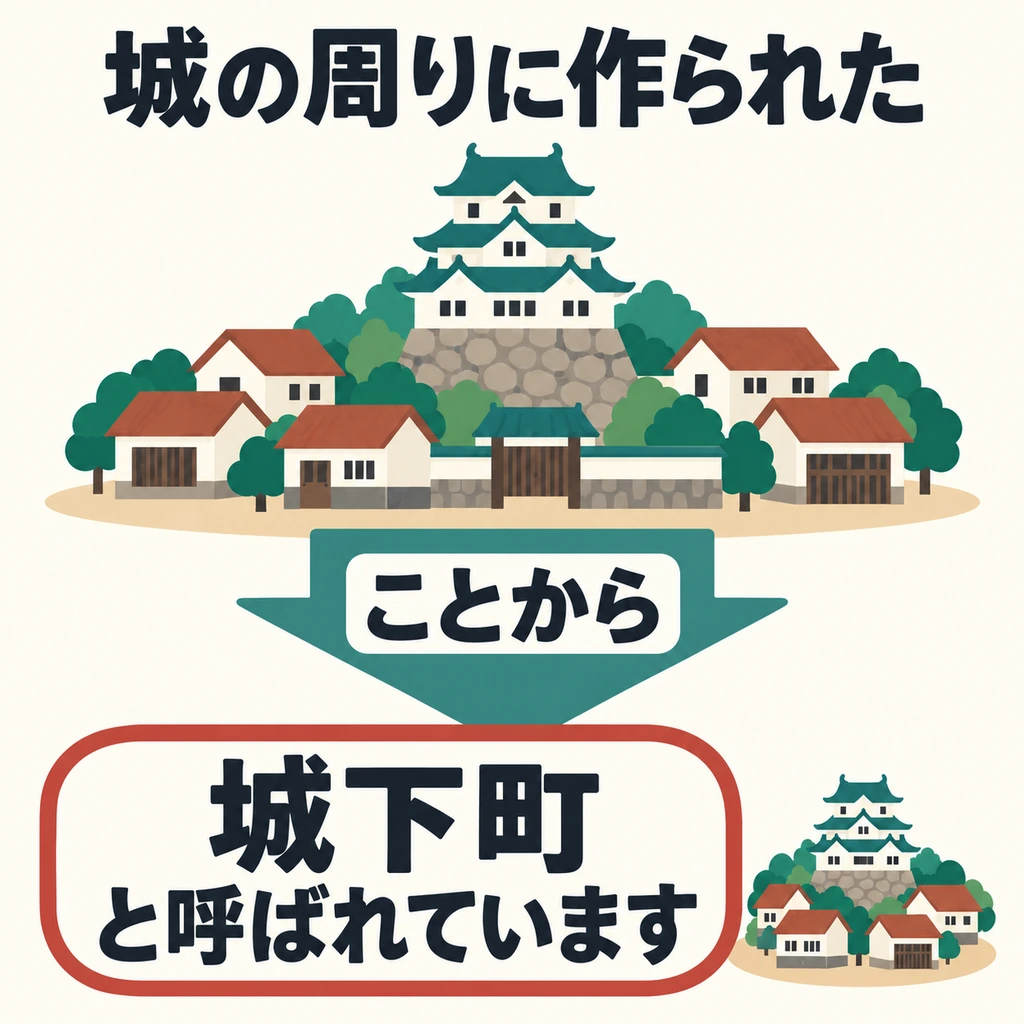
Why is it called 「城下町」 (castle town)? Houses grew up around the castle; this fact explains the name.
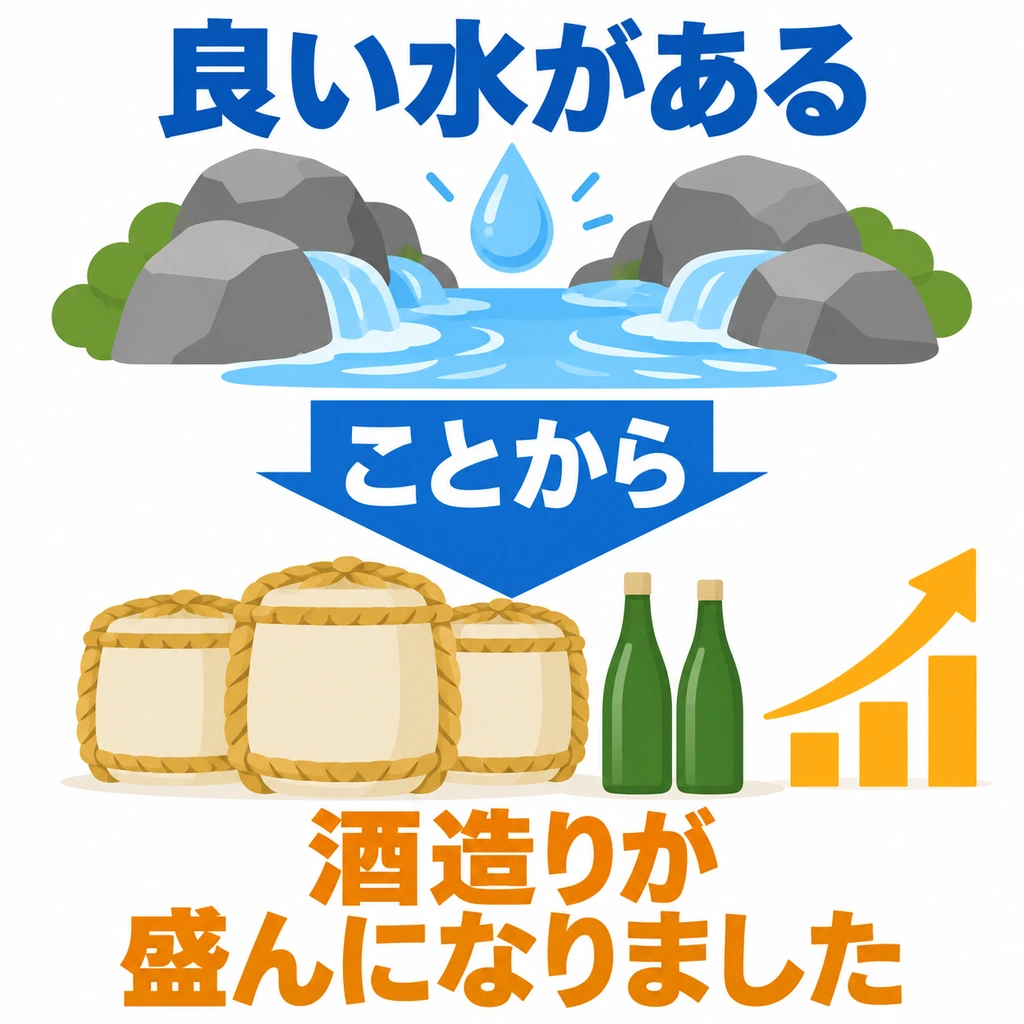
Good water helped sake brewing flourish. The first fact is the cause; what follows explains the result.
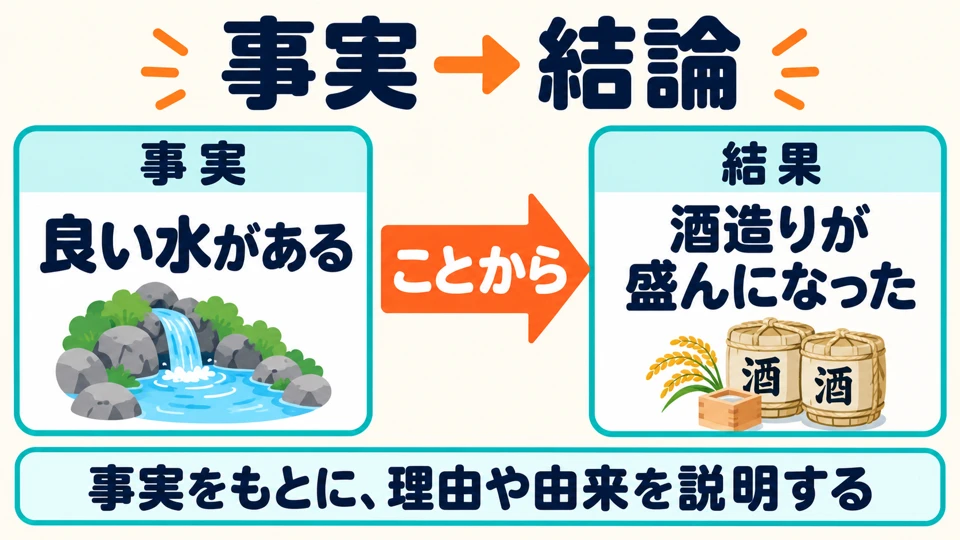
Use a known fact as a basis to explain a cause, origin, or judgment. The sense is “based on this fact.”
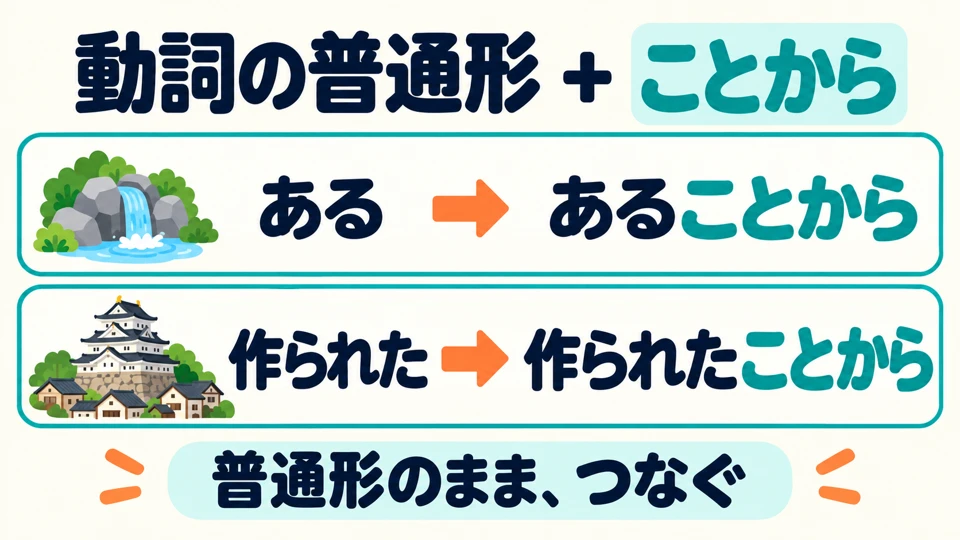
Attach 「ことから」 to the plain form of a verb, as in 「あることから」 or 「作られたことから」.
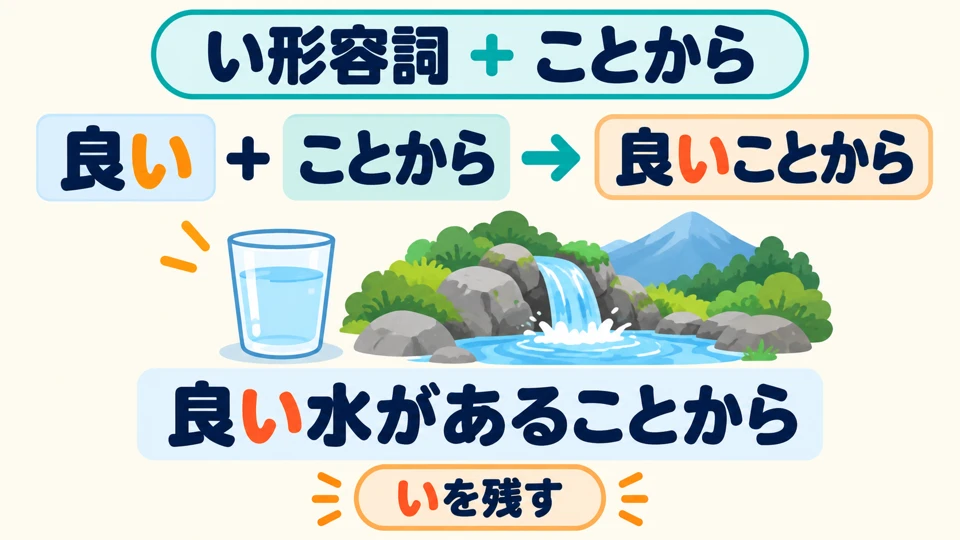
Keep the ending of an い-adjective, as in 「良いことから」. Treat the quality as a fact first.
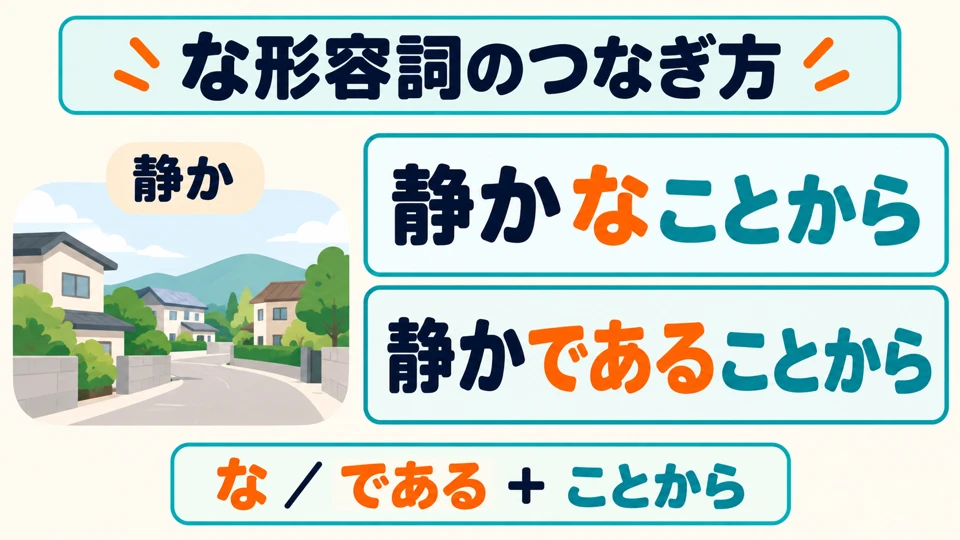
With a な-adjective, use 「なことから」 or 「であることから」. First state the condition that forms the basis.
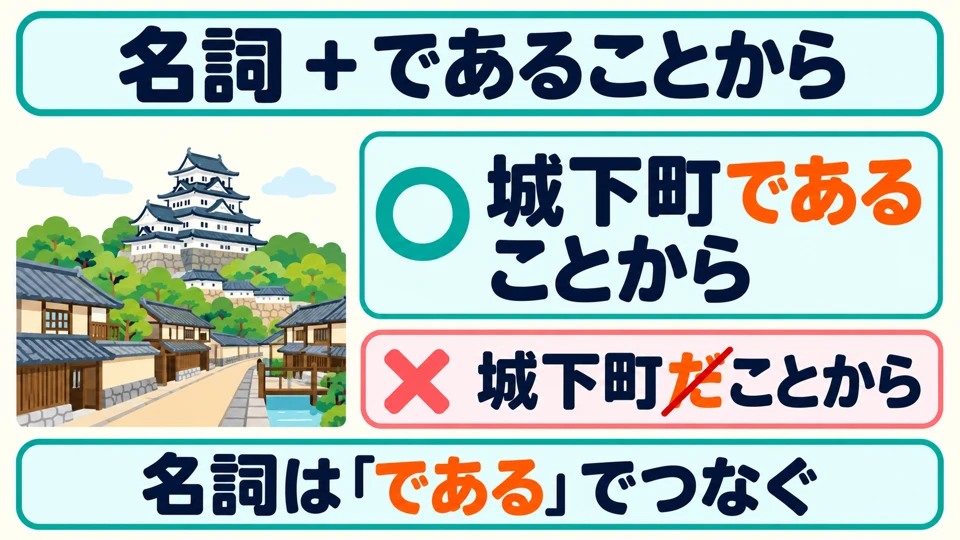
With a noun, use 「であることから」. Do not use 「だことから」; change the form when connecting.
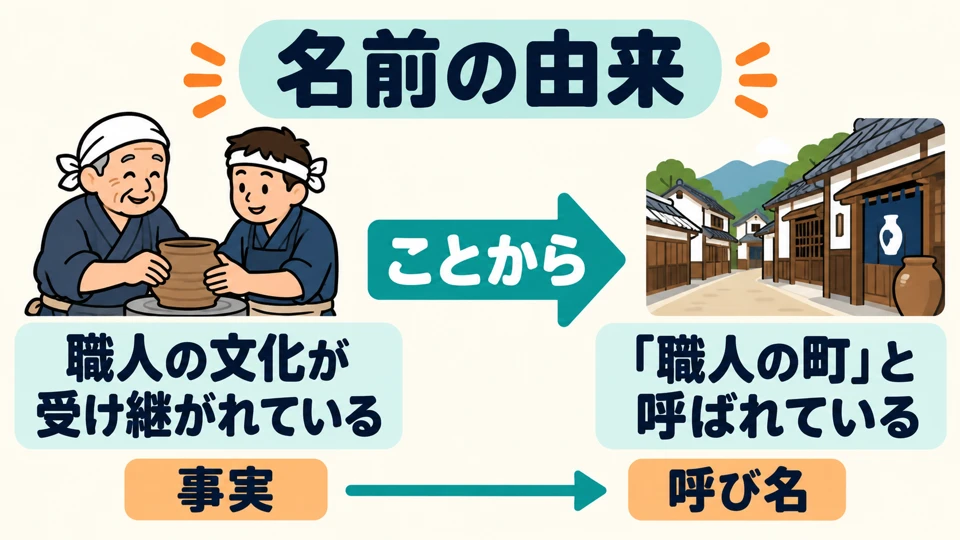
The same applies to “town of artisans”: the fact that it preserves a craft tradition explains the name.
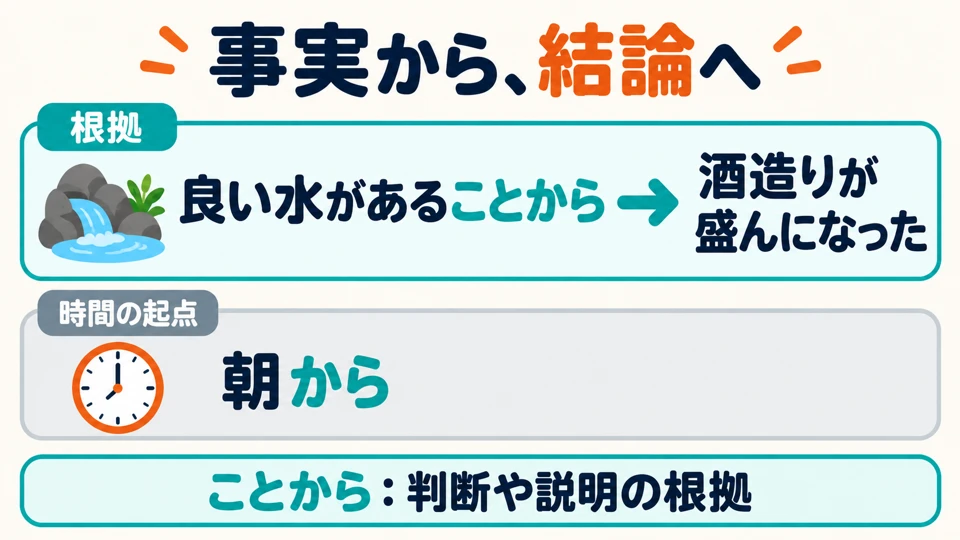
Here, 「から」 introduces a basis, not a starting point in time. Find the fact first, then the conclusion it supports.
Example sentences
- このkono町machiはwa昔、mukashi、城shiroのno周りmawariにni作られたことtsukuraretakotoから、kara、城下jouka
In a conversation

Check yourself
Level 1 · Recognise
Which sentence is correct?
Level 1 · Recognise
Listen and choose the meaning
Level 2 · Build
Put the words in order
Because this town developed in front of a temple, it is called a temple town.
Level 3 · Use
What goes in the blank?
この町は昔、城の周りに作られた____、城下町と呼ばれています。
This town is called a castle town because it was built around a castle long ago.
More grammar in this theme
- 〜ことからbased on the fact