
Japanese grammar · ≈ JLPT N3 · Intermediate 3
〜ほど〜はない~ hodo ~ wa nai
nothing is as … as
Use 「〜ほど〜はない」 to say that nothing else is equally important or reassuring.
How it works
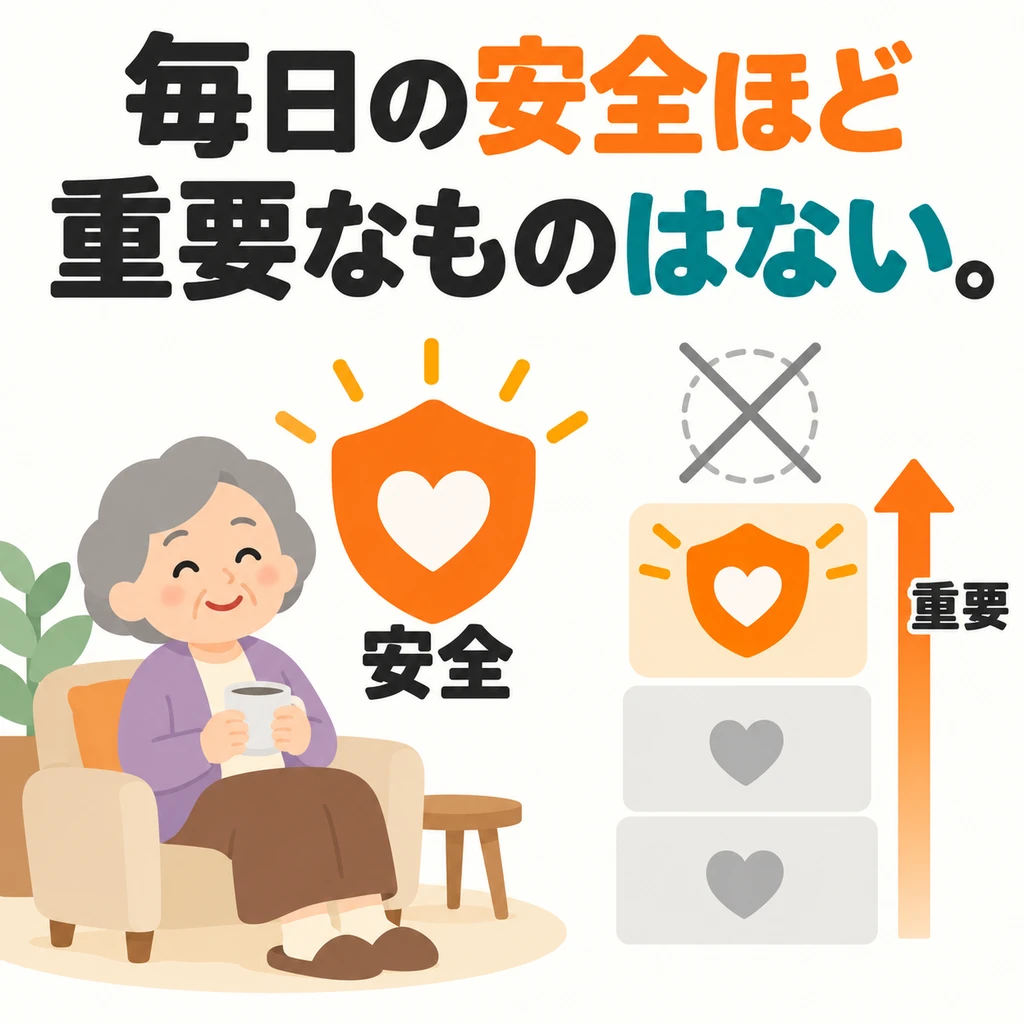
Safety is most important in the picture. Is anything else equally important? The speaker thinks there is nothing, emphasizing the highest degree.
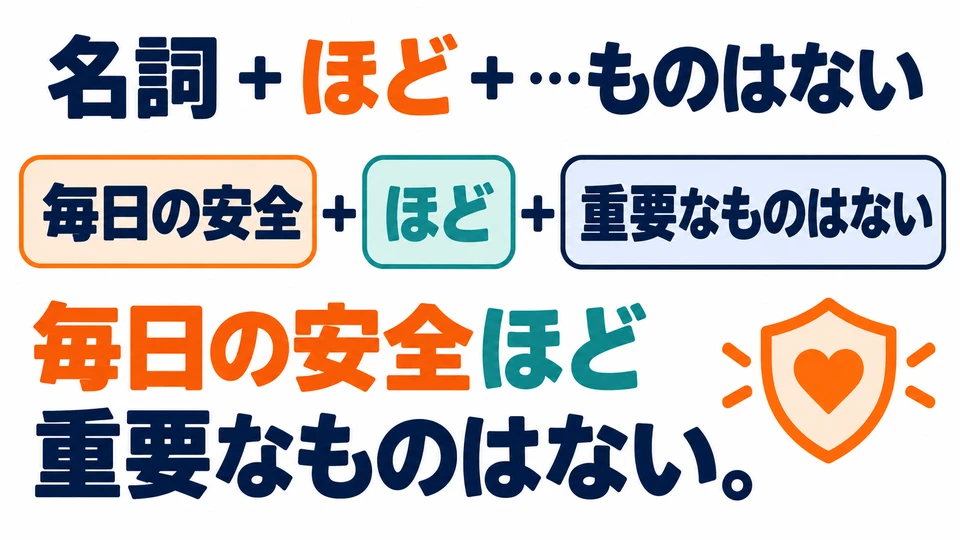
A common pattern is “noun + ほど + …ものはない”, as in 「毎日の安全ほど重要なものはない」.
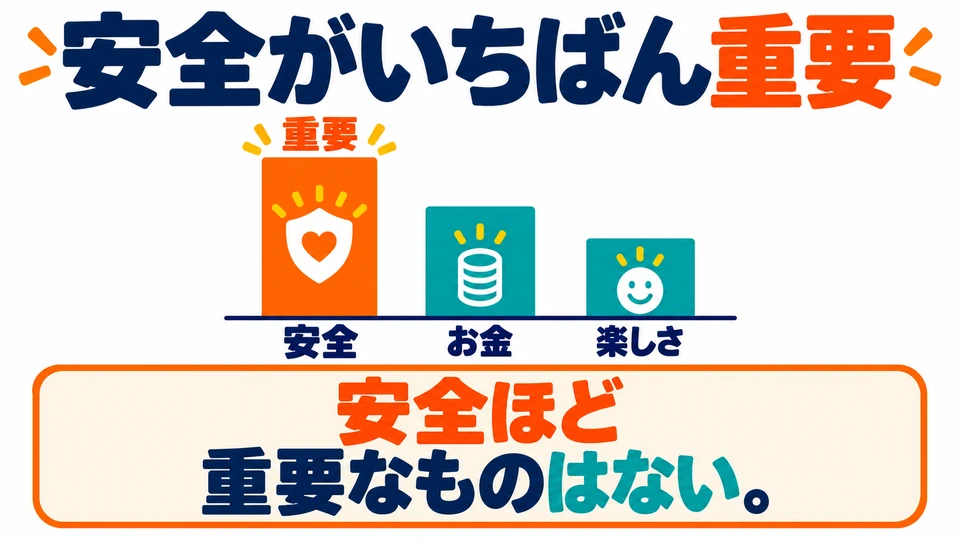
「はない」 does not mean that no important things exist. It means nothing else is equally important, highlighting the thing named before ほど.
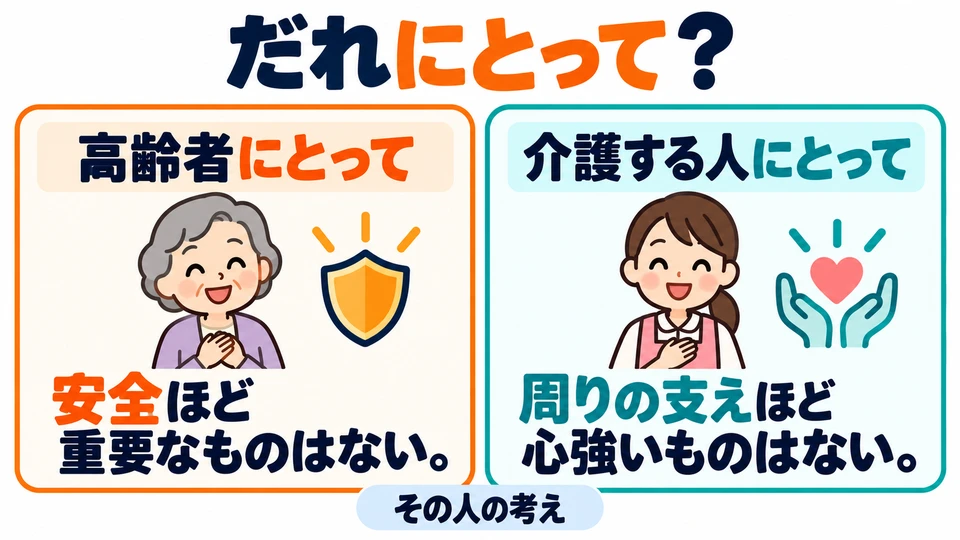
In the examples, 「にとって」 shows whose perspective is being expressed. “Most important” and “most reassuring” are often personal judgments.
Example sentences
- 高齢者koureishaにniとっtotて、te、毎日mainichiのno安全anzenほどhodo重要なものjuuyounamonoはwaないnai
In a conversation

Check yourself
Level 1 · Recognise
Which sentence is correct?
Level 1 · Recognise
Listen and choose the meaning
Level 2 · Build
Put the words in order
For elderly people, I think nothing is more important than daily safety.
Level 3 · Use
What goes in the blank?
高齢者にとって、毎日の安全____重要なものはないと思います。
For older adults, I think nothing is more important than daily safety.
More grammar in this theme
- 〜ほど〜はないnothing is as … as