
Japanese grammar · ≈ JLPT N4 · Intermediate 1
〜のに/〜に~noni / ~ni
purpose or goal
Use verb-dictionary-form 〜のに or noun 〜に to state a purpose or goal.
How it works
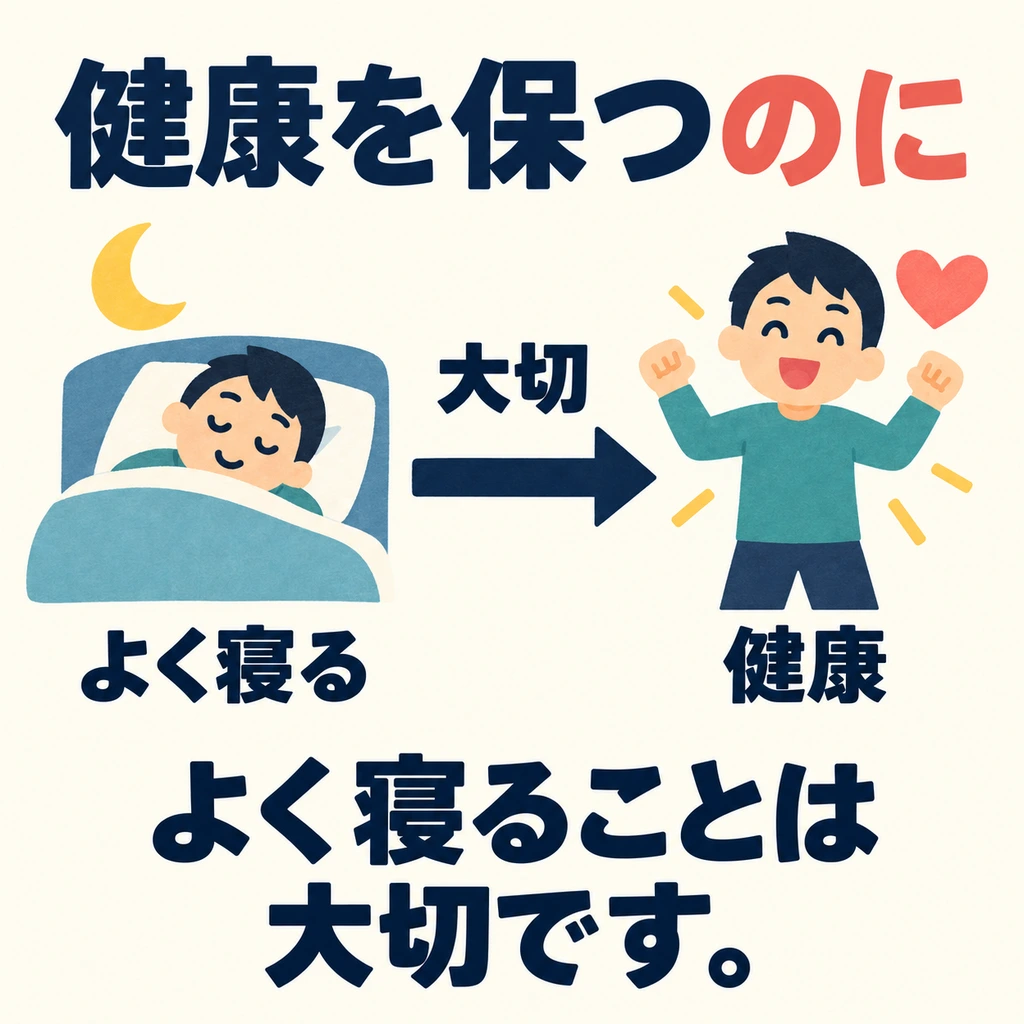
What matters for staying healthy? Follow the arrow from sleep to good health and first identify the goal.
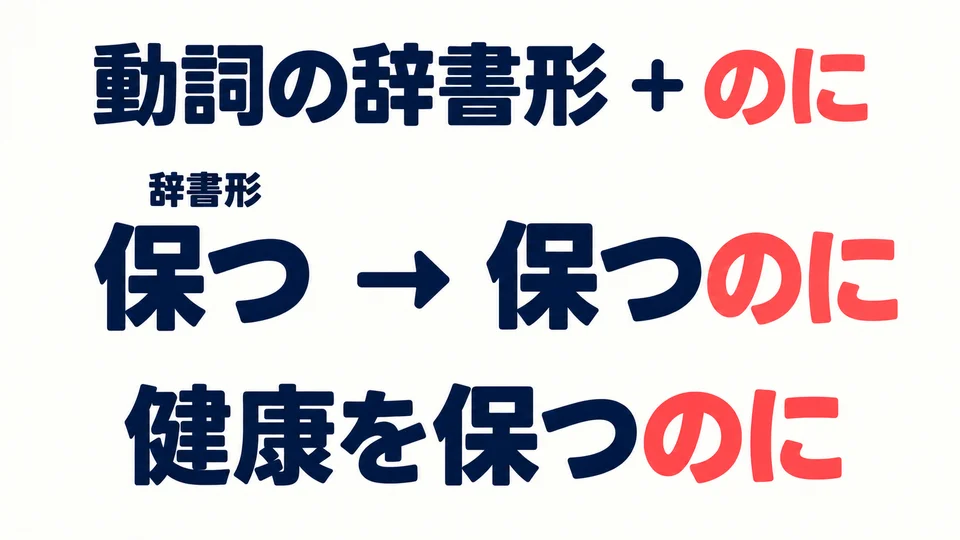
When an action expresses the goal, add 「のに」 to the verb’s dictionary form: 保つ→保つのに.
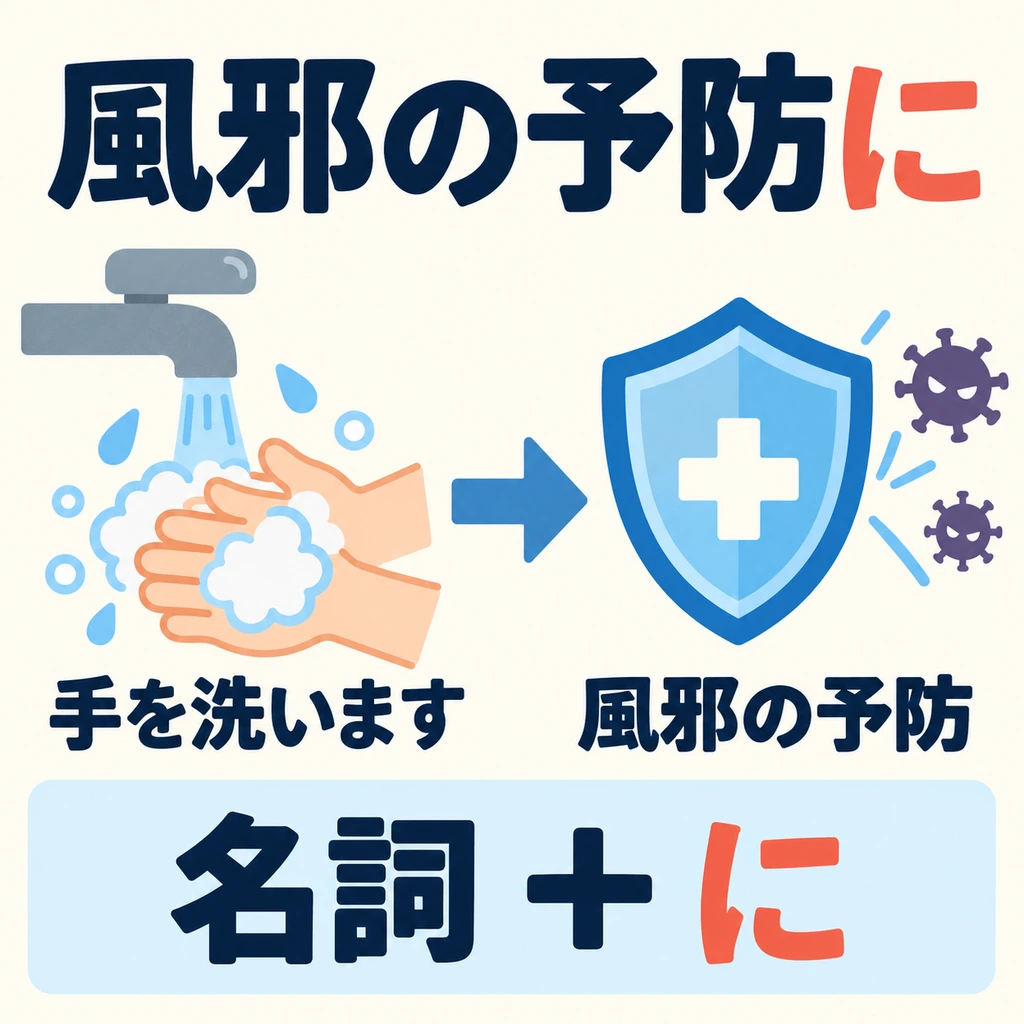
Why wash your hands when you come home? 「風邪の予防」 tells us the purpose: preventing colds.
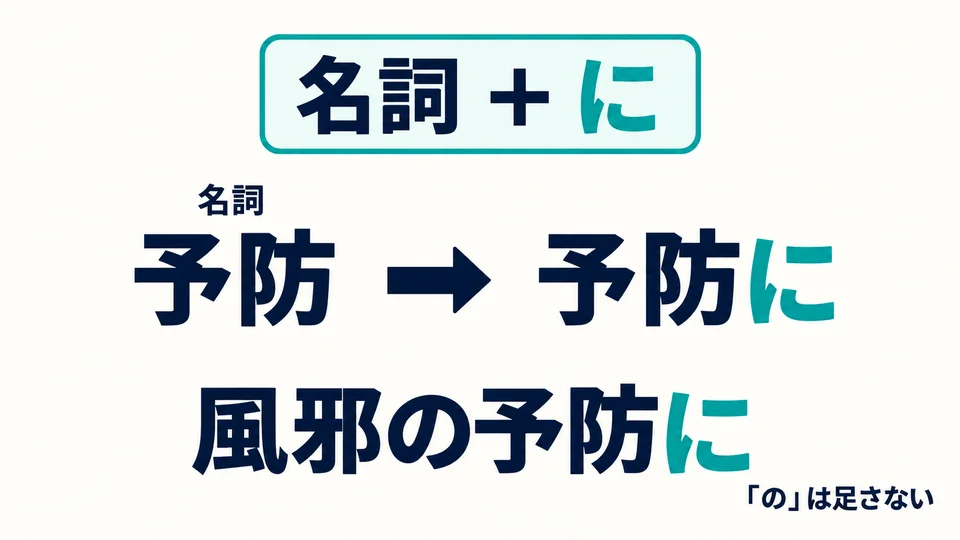
When a noun expresses the purpose, add 「に」 directly: 予防→予防に. Do not add 「の」.
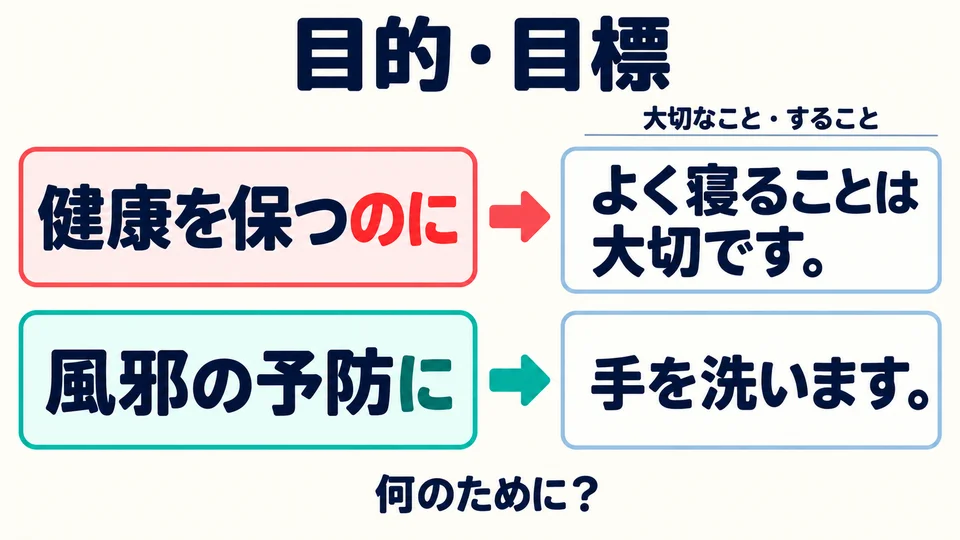
Both patterns introduce a purpose or goal. The rest of the sentence says what we do for it or what is important for achieving it.
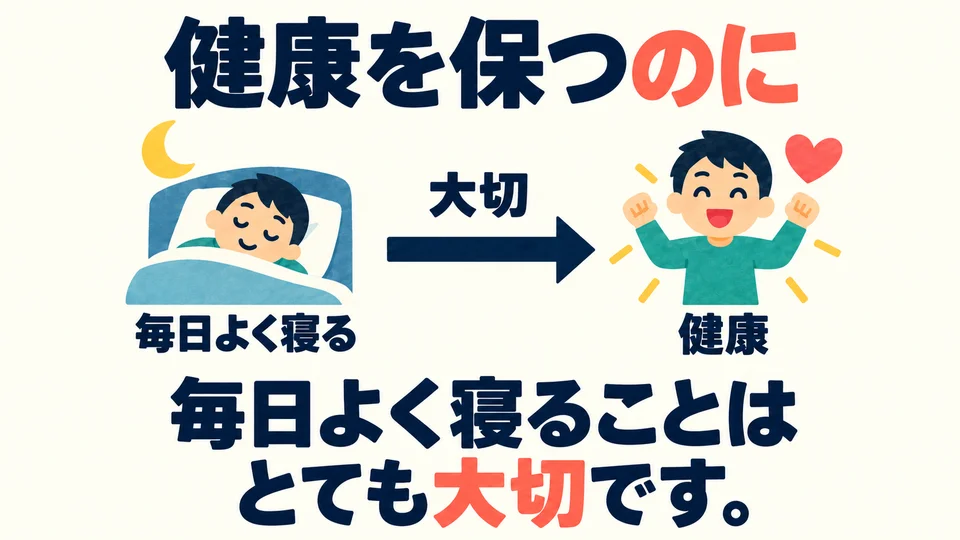
In the health example, 「大切です」 tells us how important an action is for reaching the goal: sleeping well every day matters.
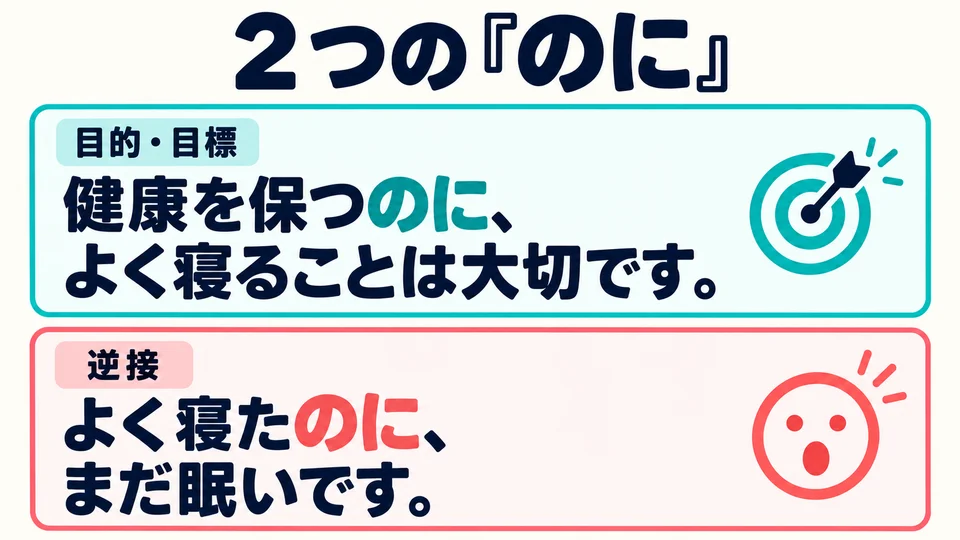
Here we discuss what is needed to stay healthy. The contrasting 「のに」 you learned earlier introduces a result that goes against expectations.
Example sentences
- 健康kenkouをo保つtamotsuのnoに、ni、毎日mainichiよくyoku寝るneruことkotoはwaとてもtotemo
In a conversation

Check yourself
Level 1 · Recognise
Which sentence is correct?
Level 1 · Recognise
Listen and choose the meaning
Level 2 · Build
Put the words in order
I stretch every day to improve my posture.
Level 3 · Use
What goes in the blank?
____、毎日よく寝ることはとても大切です。
To stay healthy, getting good sleep every day is very important.
More grammar in this theme
- 〜のに/〜にpurpose or goal