
JPEDLAB iconJPEDLAB
Save history

Create an account and play

Explore first, then save your progress whenever you are ready. No email address is required.

Start free
Read as articleCards
1/8

There are four activities in the picture. Which two does the speaker mention? Are those all the activities?

››

Lesson notes · ≈ JLPT N4 · Intermediate 1

〜とか〜とか~toka ~toka

examples among other things

Use 〜とか〜とか in casual conversation to name a few examples without giving a complete list.

How it works
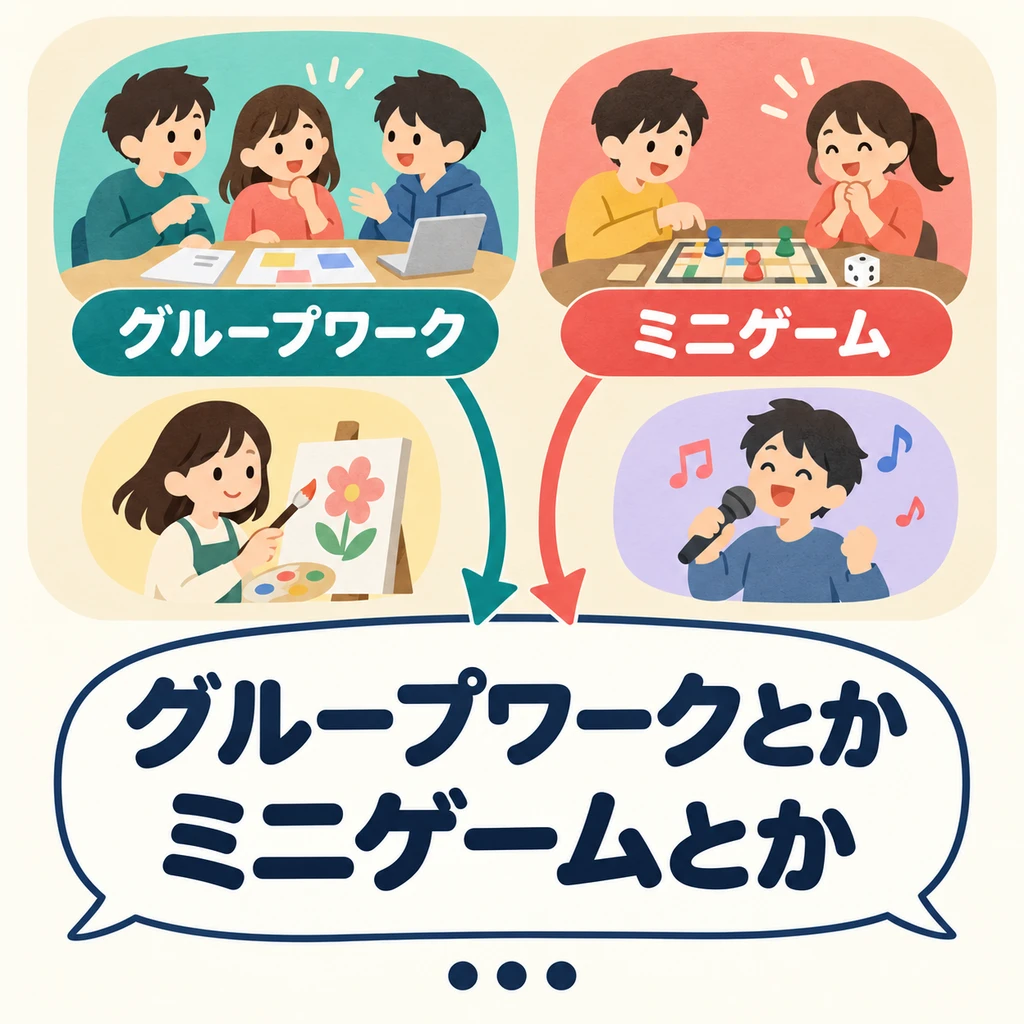
  1. There are four activities in the picture. Which two does the speaker mention? Are those all the activities?
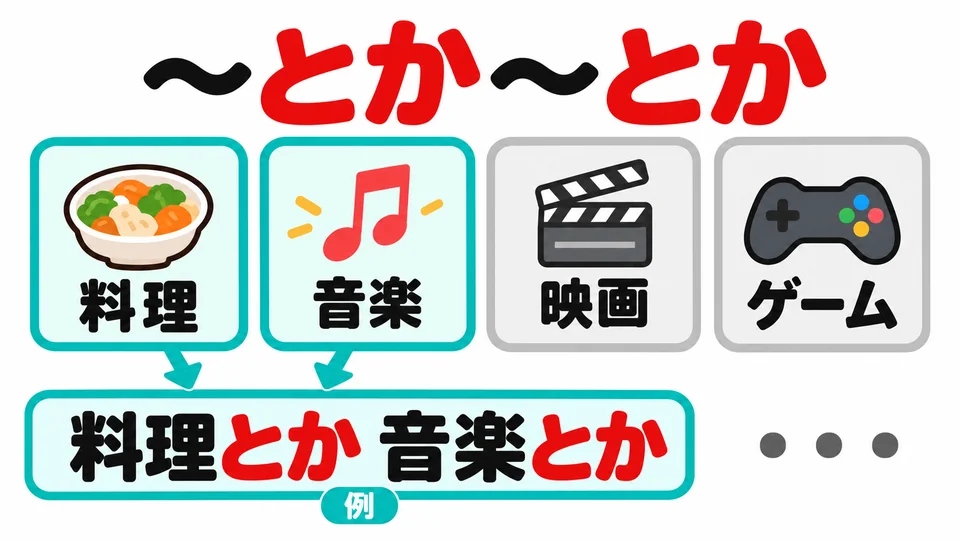
    There are four activities in the picture. Which two does the speaker mention? Are those all the activities?

  2. 「~とか~とか」 gives just a few examples, meaning “things like…”. It is not a complete list.
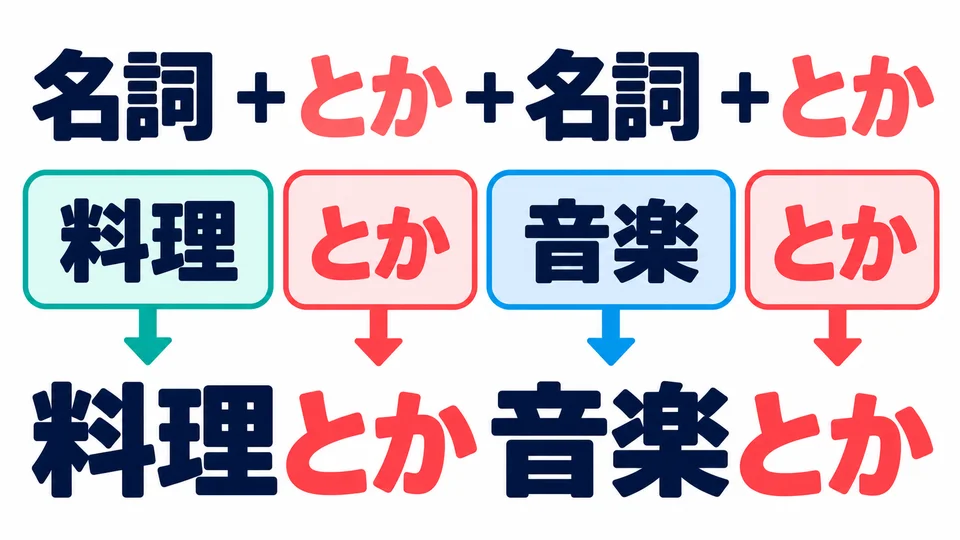
    「~とか~とか」 gives just a few examples, meaning “things like…”. It is not a complete list.

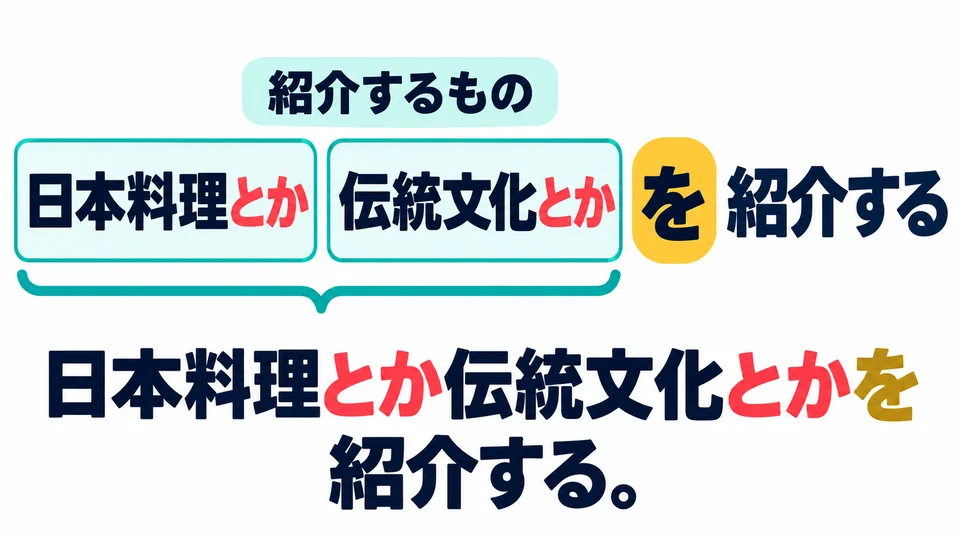
  3. To list nouns, add 「とか」 after each one: noun+とか+noun+とか.
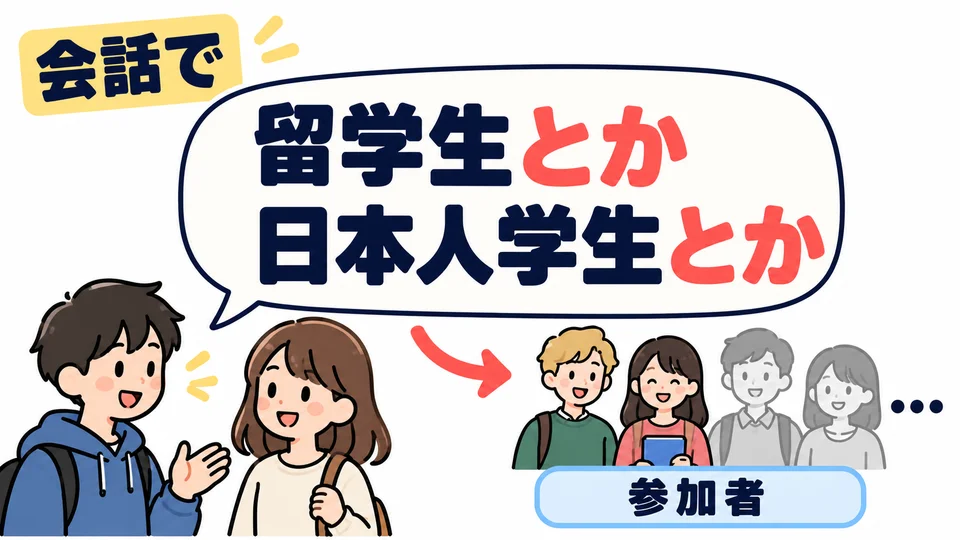
    To list nouns, add 「とか」 after each one: noun+とか+noun+とか.

  4. In casual conversation about activities or participants, use this pattern to give examples without listing everyone or everything.
    In casual conversation about activities or participants, use this pattern to give examples without listing everyone or everything.

  5. In the example about cuisine, 「を」 follows the last 「とか」. Everything listed is something being introduced.

    In the example about cuisine, 「を」 follows the last 「とか」. Everything listed is something being introduced.

Example sentences

  • 会場かいじょうkaijouでdeは、わ、wa、日本にっぽんnippon料理りょうりryouriとtoかka伝統でんとうdentou文化ぶんかbunkaとtoかkaをo紹介しょうかいshoukaiするらしいです。sururashiidesu。

    I heard they will introduce things like Japanese cuisine and traditional culture at the venue.

  • 参加者さんかしゃsankashaは、わ、wa、留学生りゅうがくせいryuugakuseiとtoかka日本人にほんじんnihonjin学生がくせいgakuseiとtoかkaいろいろな人いろいろなひとiroironahitoがgaいます。imasu。

    The participants include various people, such as international students and Japanese students.

  • In a conversation

    • A
      今回こんかいのワークショップわーくしょっぷは、わ、グループぐるーぷワークわーくとかミニゲームみにげーむとかがあって楽したのしそうだね。

      A: This workshop looks fun with things like group work and mini-games.

    • B
      本当ほんとうだね。体験型たいけんがたとか参加型さんかがたとかのイベントいべんとは、わ、みんなと話しやすいはなしやすいから好きだすきだな。

      B: True. I like hands-on or participatory events and such, because they make it easy to talk with everyone.

    • A
      そうだね。じゃあ、友達ともだちを誘いさそい合うあうとかして、みんなで一緒いっしょに参加さんかしようよ。

      A: Right. Then let's do something like invite our friends and all go together.

    Check yourself

    1. Level 1 · Recognise

      Which sentence is correct?

    2. Level 1 · Recognise

      Listen and choose the meaning

    3. Level 2 · Build

      Put the words in order

      It seems they will introduce things like Japanese cuisine and traditional culture at the venue.

    4. Level 3 · Use

      What goes in the blank?

      会場では、日本料理____を紹介するらしいです。

      I heard they'll introduce things like Japanese cuisine and traditional culture at the venue.

    More grammar in this theme

    • 〜において・〜におけるformal setting or field
    • 〜上でconditions for doing something
    • 〜た上でcomplete a step before deciding
    • 〜てほしいwant someone to do
    • 〜てもらいたいwant to receive someone’s help
    • 〜よねseek agreement or confirmation
    • 〜とか〜とかexamples among other things
    • 〜だけ・〜だけのonly; just enough for
    • 〜でしょう・〜だろうlikely; probably
    • 〜から〜にかけてapproximate time or place range
    • 〜とcondition and natural result
    • 〜がきっかけでtrigger for a change
    • 〜っぽいcharacteristic or impression
    • 〜でもeven in a situation
    Previous〜よねNext〜だけ・〜だけの

    Keep practising

    Test your Japanese vocabulary12 adaptive questions, freeCheck your pronunciationRead aloud and get a scorePractise verb forms10-question conjugation quizSee the whole courseGrammar, vocabulary and quizzes by theme
    See the whole course
    Intermediate 1
    New Environments and Self-Introduction