
JPEDLAB iconJPEDLAB
Save history

Create an account and play

Explore first, then save your progress whenever you are ready. No email address is required.

Start free
Read as articleCards
1/10

In a weather forecast, use 「~から~にかけて」 to describe roughly when rain is expected.

››

Lesson notes · ≈ JLPT N3 · Intermediate 1

〜から〜にかけて~kara ~ni kakete

approximate time or place range

Use 〜から〜にかけて for an approximate span of time or place, without stressing exact boundaries or continuous events.

How it works
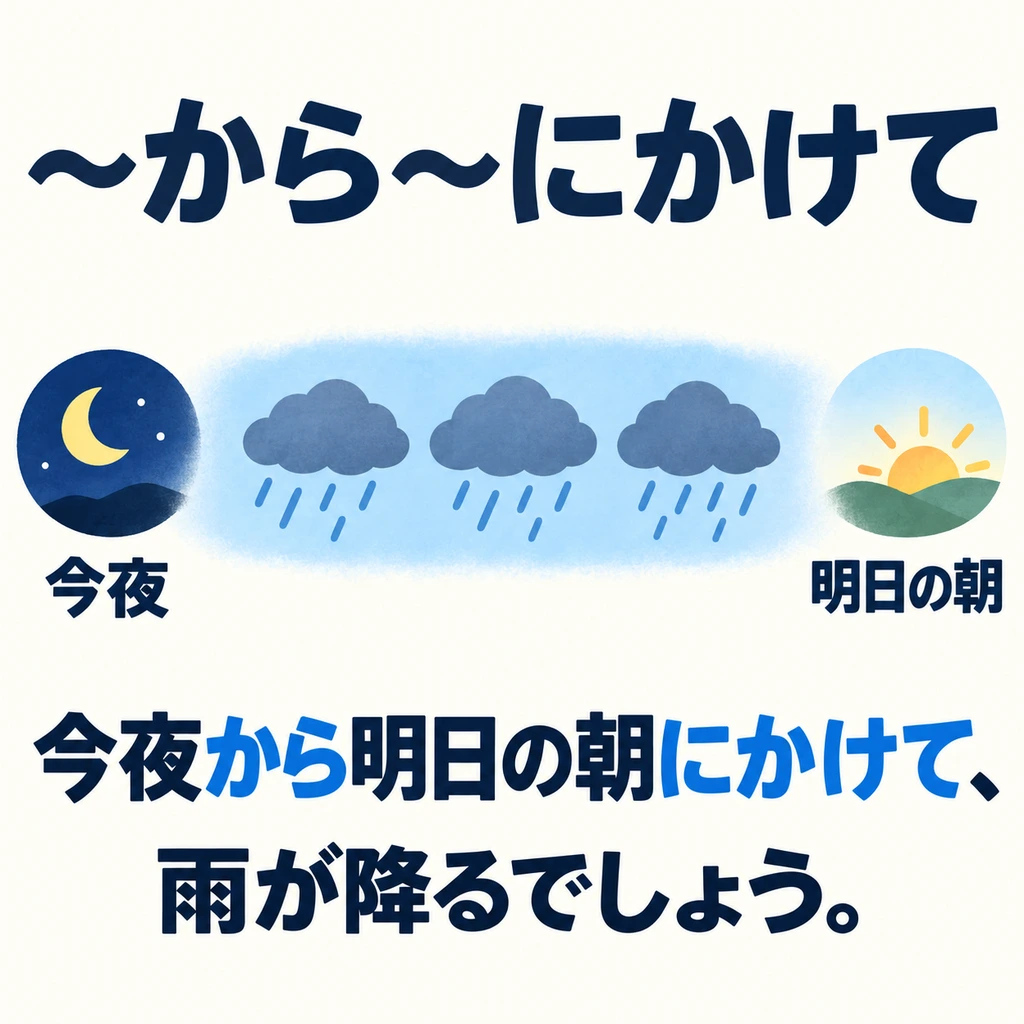
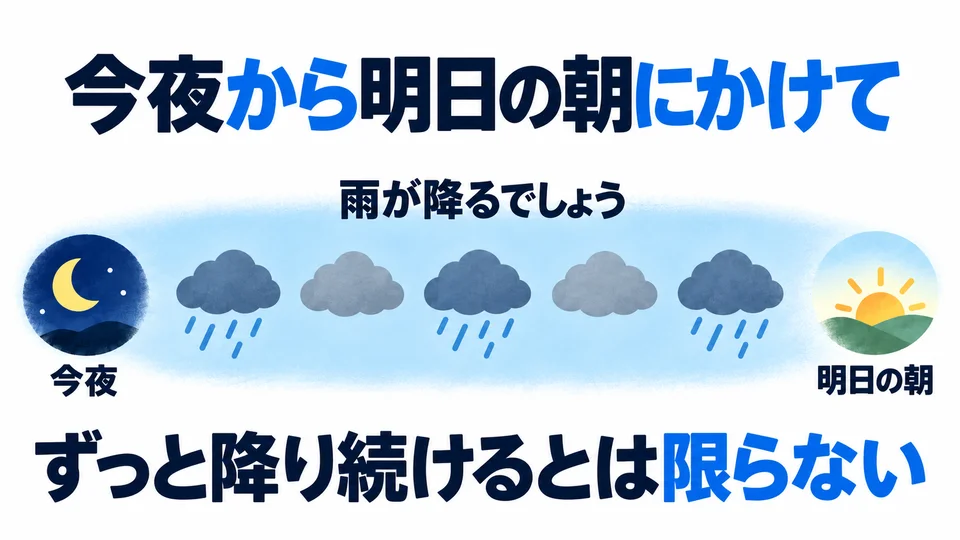
  1. In a weather forecast, use 「~から~にかけて」 to describe roughly when rain is expected.
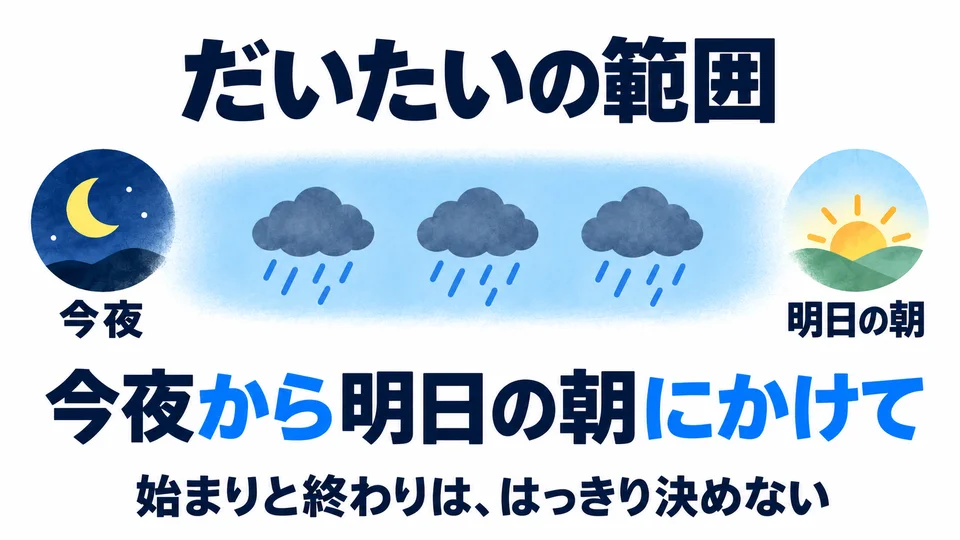
    In a weather forecast, use 「~から~にかけて」 to describe roughly when rain is expected.

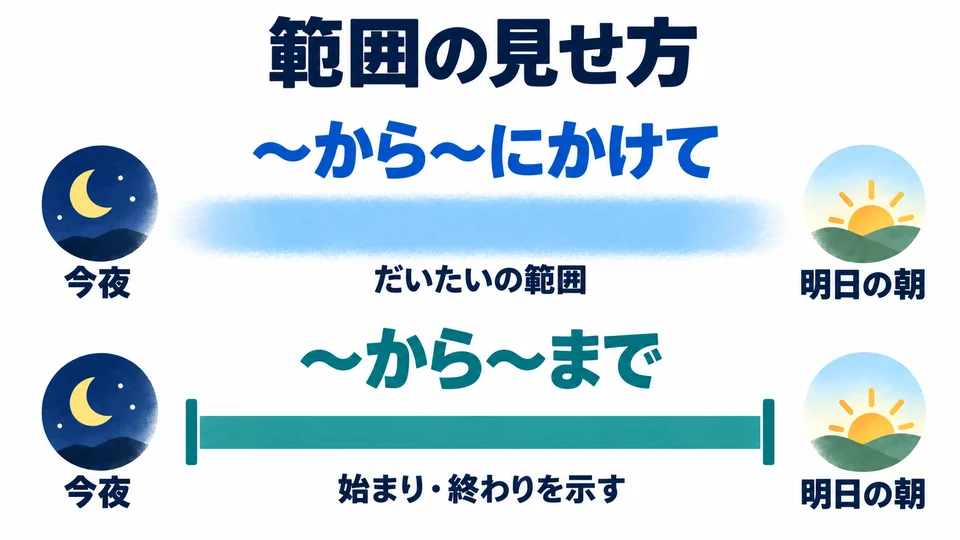
  2. The blue band fades at both ends: it shows an approximate range, without emphasizing an exact start or end.
    The blue band fades at both ends: it shows an approximate range, without emphasizing an exact start or end.

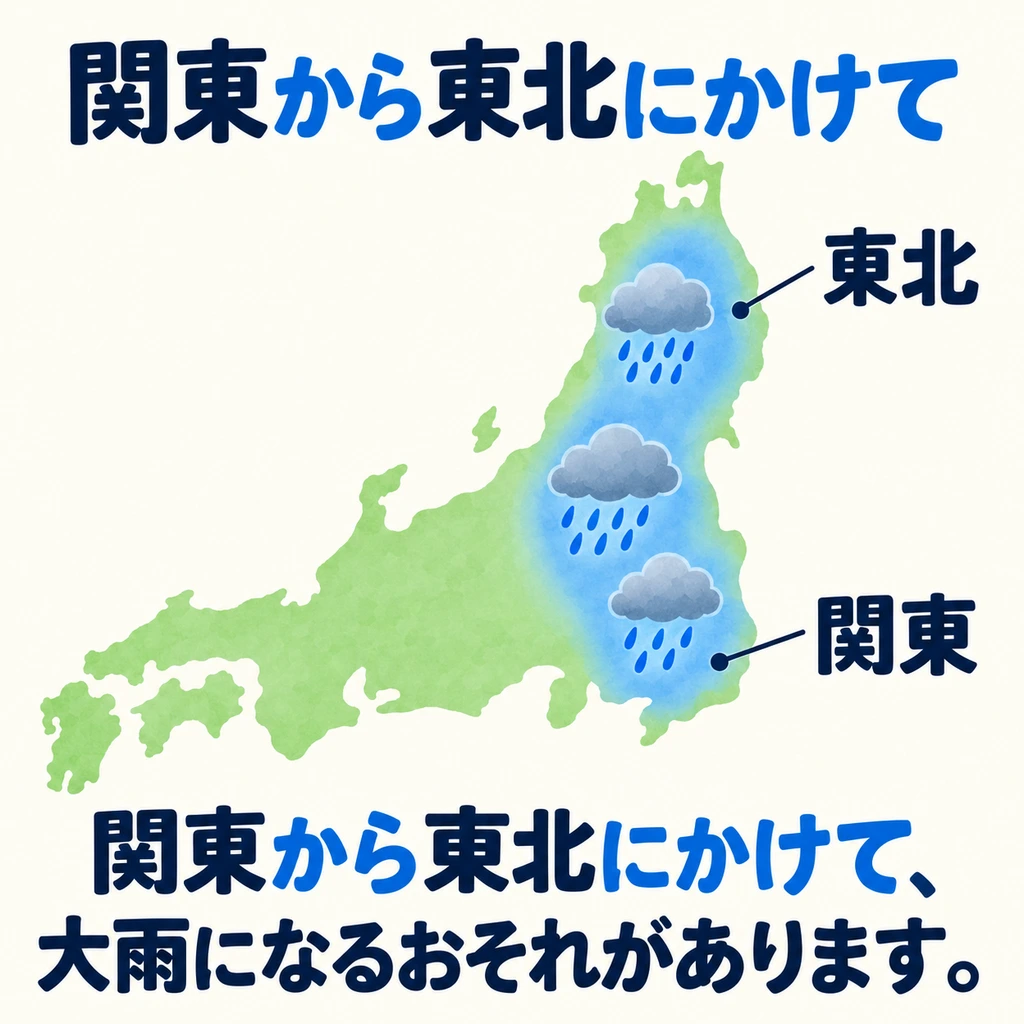
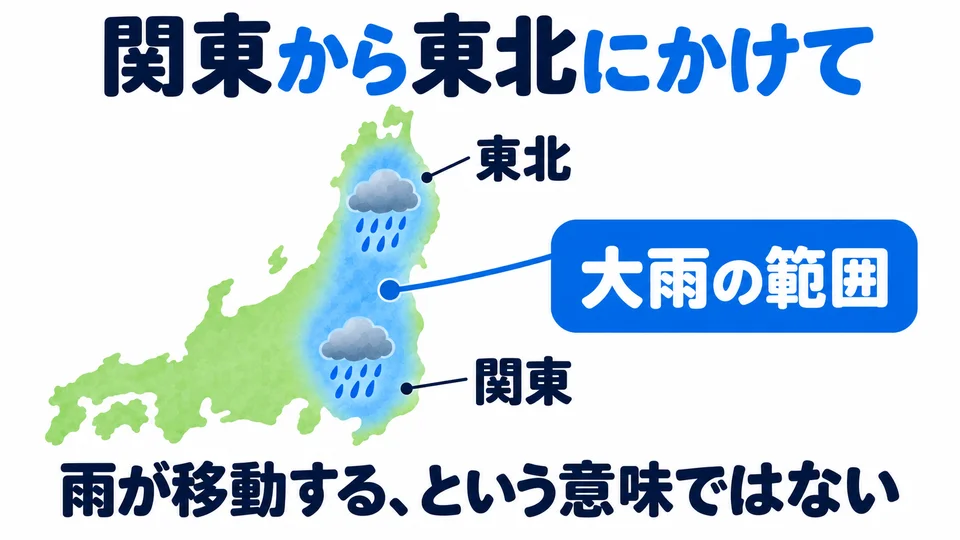
  3. You can use it for places too. The blue rain area stretches from around Kanto to around Tohoku.
    You can use it for places too. The blue rain area stretches from around Kanto to around Tohoku.

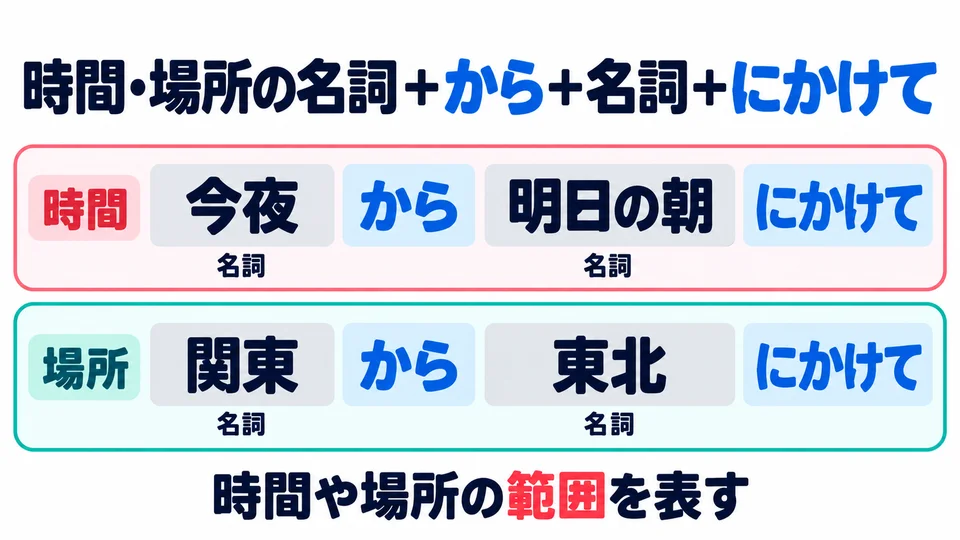
  4. Use nouns for times or places on both sides: starting point + から + ending point + にかけて.
    Use nouns for times or places on both sides: starting point + から + ending point + にかけて.

  5. Compared with 「から~まで」, this pattern focuses more on an overall range, with less precise boundaries.
    Compared with 「から~まで」, this pattern focuses more on an overall range, with less precise boundaries.

  6. The example about tonight through tomorrow morning says rain is expected during that period. It does not guarantee continuous rain throughout.

The example about tonight through tomorrow morning says rain is expected during that period. It does not guarantee continuous rain throughout.

  • The Kanto-to-Tohoku example describes the area affected by heavy rain, not rain moving from Kanto to Tohoku.

    The Kanto-to-Tohoku example describes the area affected by heavy rain, not rain moving from Kanto to Tohoku.

  • Example sentences

    • 今夜こんやkonyaからkara明日あすasuのno朝あさasaにniかけkakeて、te、雨あめameがga降るでしょう。ふるでしょう。furudeshou。

      It will probably rain from tonight through tomorrow morning.

    • 関東かんとうkantou地方ちほうchihouからkara東北とうほくtouhoku地方ちほうchihouにniかけkakeて、te、大雨おおあめooameにniなるnaruおそれosore

    In a conversation

    • A
      この地域ちいきは、わ、いつからいつにかけて雨あめが多いですおおいですか。

      A: From when to when does this area get a lot of rain?

    • B
      だいたい6ろく月がつから7しち月がつにかけて、大雨おおあめの日ひが多くおおくなります。

      B: Generally from June through July, there are many days of heavy rain.

    • A
      そうですか。じゃあ、その時期じきはわレインコートれいんこーとが必要ひつようですね。

      A: I see. Then you'll need a raincoat during that period, right?

    Check yourself

    1. Level 1 · Recognise

      Which sentence is correct?

    2. Level 1 · Recognise

      Listen and choose the meaning

    3. Level 2 · Build

      Put the words in order

      It will probably rain from tonight through tomorrow morning.

    4. Level 3 · Use

      What goes in the blank?

      今夜____、雨が強くなるでしょう。

      The rain will get heavier from tonight to tomorrow morning.

    More grammar in this theme

    • 〜において・〜におけるformal setting or field
    • 〜上でconditions for doing something
    • 〜た上でcomplete a step before deciding
    • 〜てほしいwant someone to do
    • 〜てもらいたいwant to receive someone’s help
    • 〜よねseek agreement or confirmation
    • 〜とか〜とかexamples among other things
    • 〜だけ・〜だけのonly; just enough for
    • 〜でしょう・〜だろうlikely; probably
    • 〜から〜にかけてapproximate time or place range
    • 〜とcondition and natural result
    • 〜がきっかけでtrigger for a change
    • 〜っぽいcharacteristic or impression
    • 〜でもeven in a situation
    Previous〜でしょう・〜だろうNext〜と

    Keep practising

    Test your Japanese vocabulary12 adaptive questions, freeCheck your pronunciationRead aloud and get a scorePractise verb forms10-question conjugation quizSee the whole courseGrammar, vocabulary and quizzes by theme
    See the whole course
    Intermediate 1
    New Environments and Self-Introduction
    がga
    あります。arimasu。

    There is a risk of heavy rain from the Kanto region to the Tohoku region.