
Japanese grammar · ≈ JLPT N3 · Intermediate 1
〜でも~de mo
even in a situation
Use 「〜でも」 after a noun to stress that an action continues even in a difficult or unusual situation.
How it works
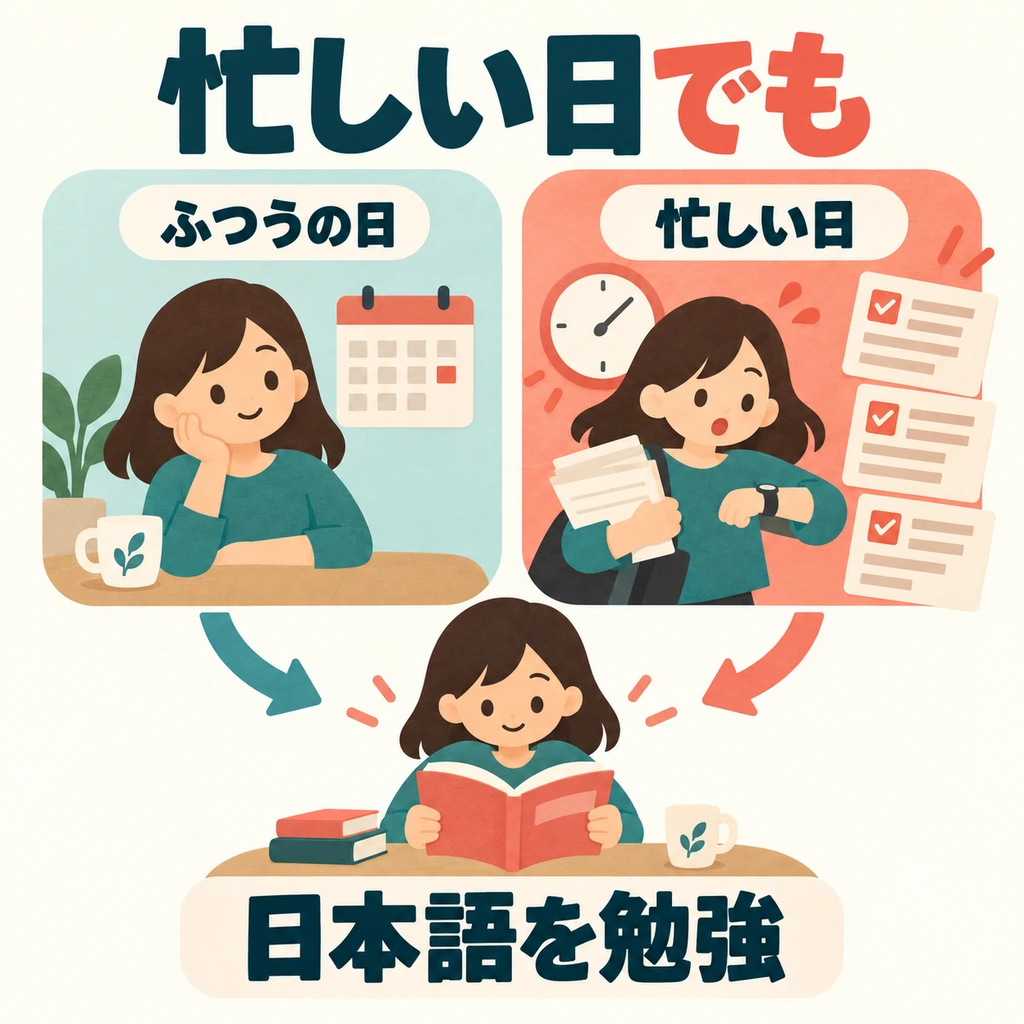
Look at the two arrows: they study on ordinary days and still study on busy days.
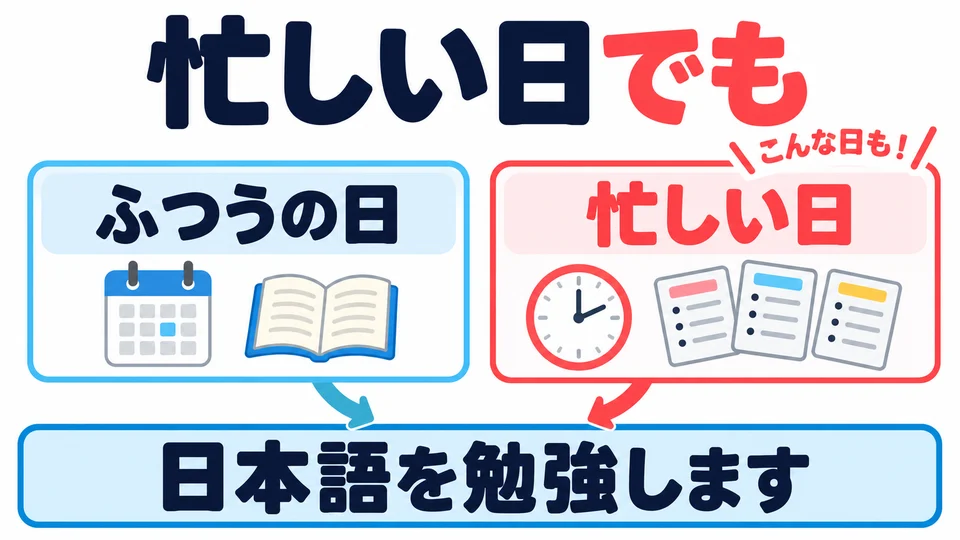
Include even a situation where doing it is difficult, stressing that it happens even then.
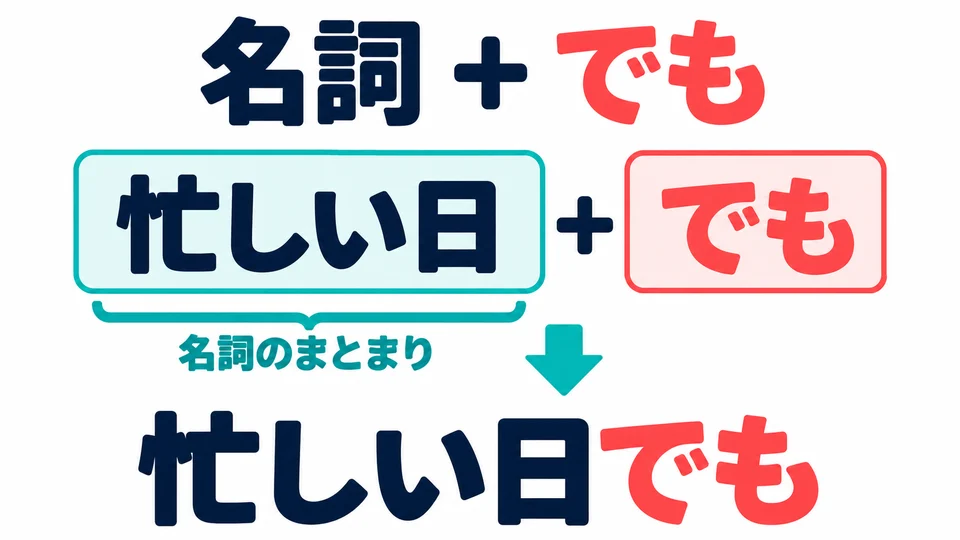
Attach 「でも」 to a noun. 「忙しい日」 is a noun phrase, so 「でも」 follows the whole phrase.
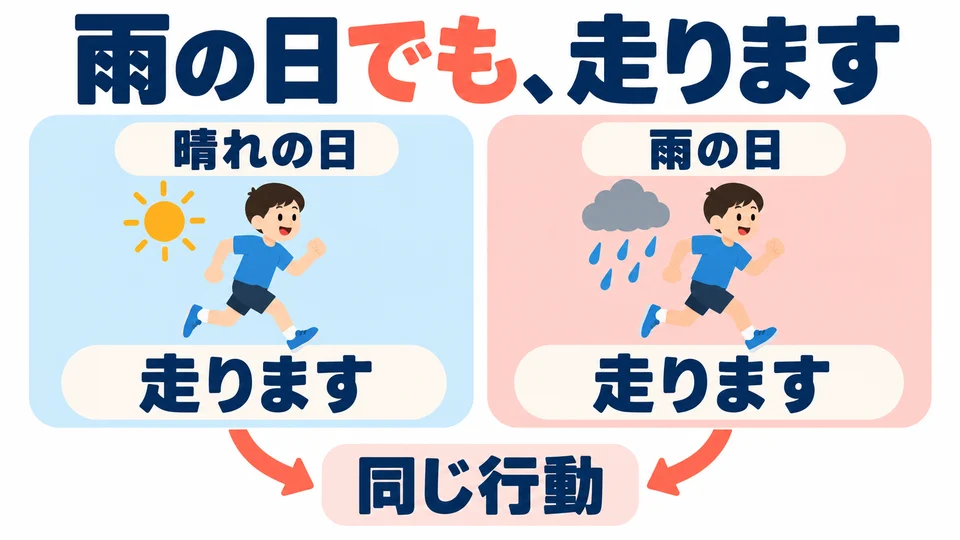
The action stays the same even in special circumstances. Use this to emphasize keeping something up.
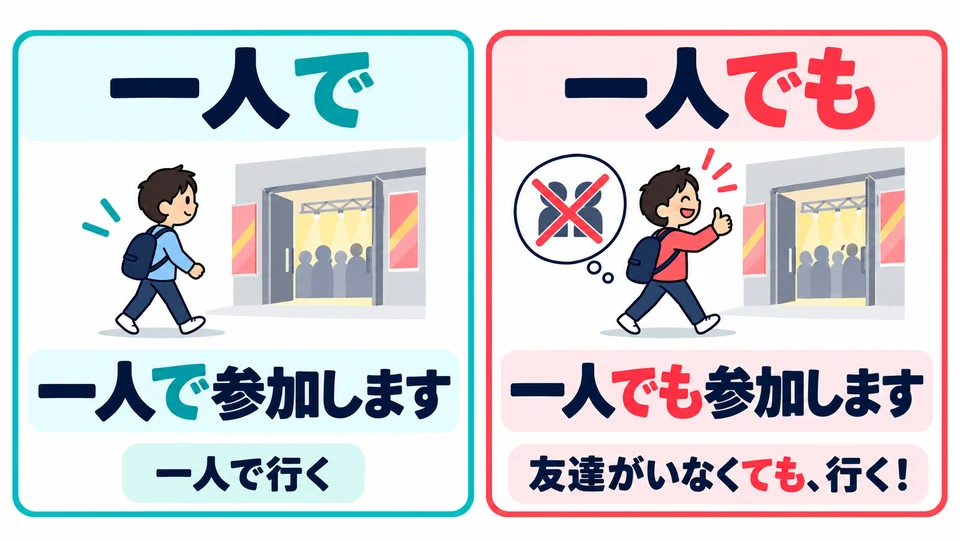
「一人で」 simply says you attend alone; 「一人でも」 stresses that you are willing to attend even without anyone to go with.
Example sentences
- 忙しいisogashii日hiでdeも、mo、毎日mainichi少しsukoshi日本nihon語goをo勉強benkyouしshi
In a conversation

Check yourself
Level 1 · Recognise
Which sentence is correct?
Level 1 · Recognise
Listen and choose the meaning
Level 2 · Build
Put the words in order
Even on busy days, I study a little Japanese every day.
Level 3 · Use
What goes in the blank?
忙しい日____、寝る前に少しだけ単語を復習します。
Even on busy days, I review a few words before going to bed.
More grammar in this theme
- 〜でもeven in a situation