
Japanese grammar · ≈ JLPT N3 · Intermediate 1
〜向け~muke
intended for
「〜向け」names the intended audience of a shop, product, or service.
How it works
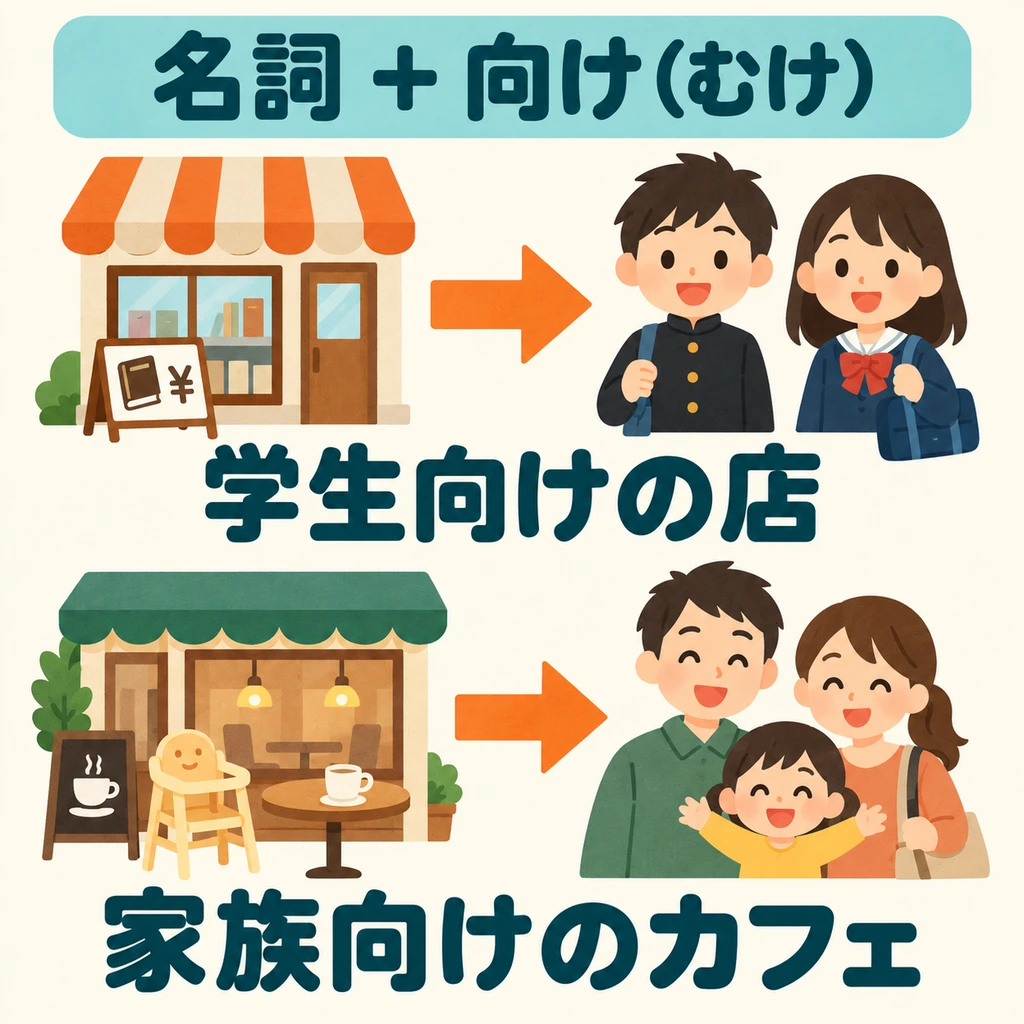
Who does the shop serve? Who is the café designed for? 「向け」 shows the intended users.
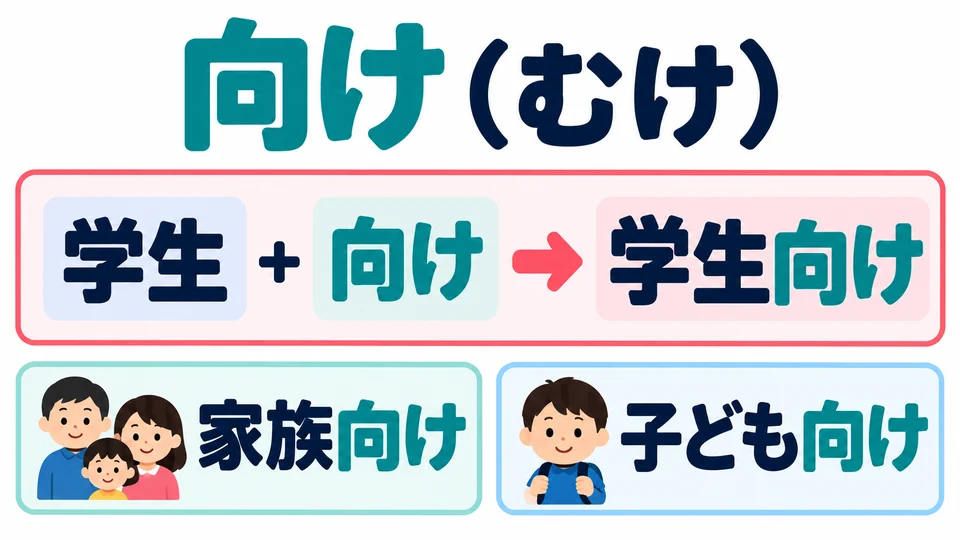
「向け」 is read 「むけ」. It follows a noun naming the target group, as in 「学生向け」.
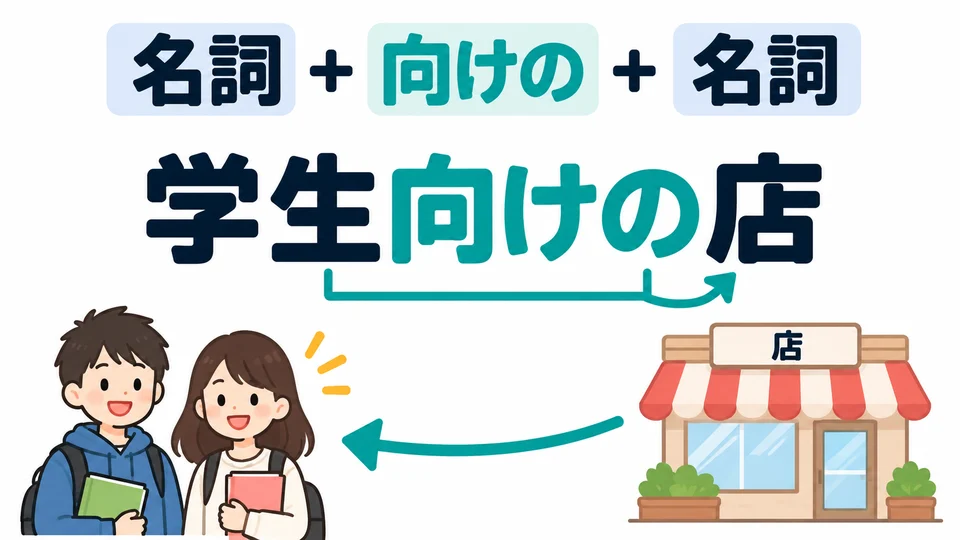
To say who a shop or product is intended for, use “noun + 向けの + noun”.
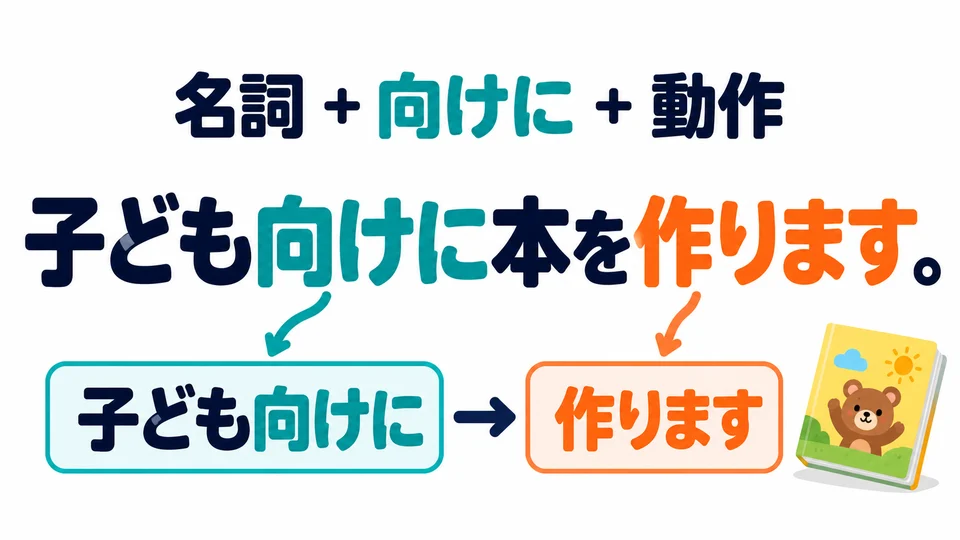
To say who something is designed or made for, use “noun + 向けに”, followed by an action.
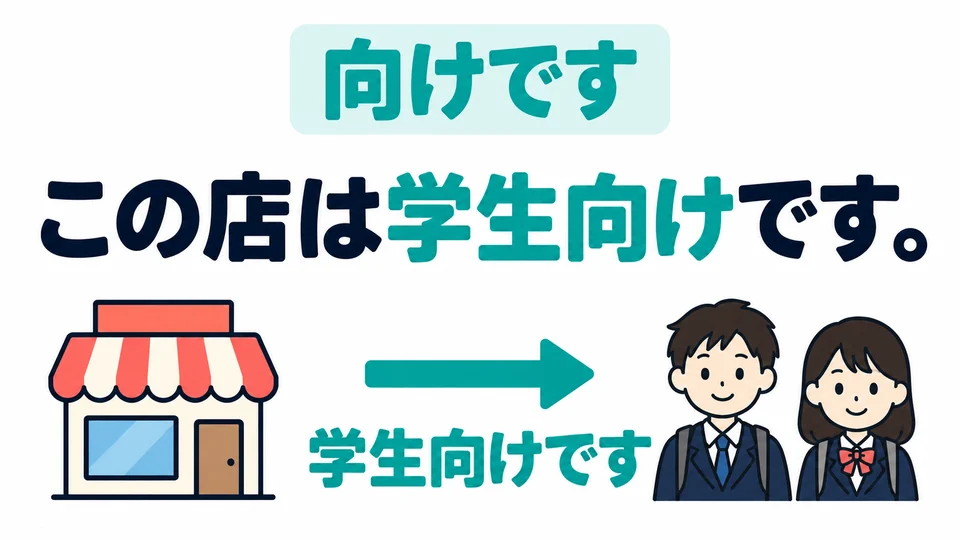
You can also end with 「学生向けです」 to state the target group of a service directly.

In the example, the low prices cater to students. 「学生向け」 itself does not mean other people cannot enter the shop.
Example sentences
- このkono店miseはwa学生向けgakuseimukeなnaのnoで、de、値段nedanがga安いです。yasuidesu。
This shop is geared towards students, so the prices are cheap.
In a conversation

- Aこの新しいカバンは、コンパクトで持ち運びに便利ですね。
A: This new bag is compact and convenient to carry around, isn't it?
- Bそれは
Check yourself
Level 1 · Recognise
Which sentence is correct?
Level 1 · Recognise
Listen and choose the meaning
Level 2 · Build
Put the words in order
This store is aimed at students, so the prices are low.
Level 3 · Use
What goes in the blank?
この店は学生____なので、値段が安いです。
This store is for students, so the prices are cheap.
More grammar in this theme
- 〜向けintended for