JPEDLAB iconJPEDLAB
Save history

Create an account and play

Explore first, then save your progress whenever you are ready. No email address is required.

Start free
Read as articleCards
See the whole course›Intermediate 2›Emergencies and Safety Actions

Japanese grammar · ≈ JLPT N2 · Intermediate 2

〜とかで~toka de

possible cause, or something

Use 〜とかで to give one possible cause, leaving room for other details the speaker does not specify.

Start the interactive lessonIllustrated cards, audio and speaking practice

How it works

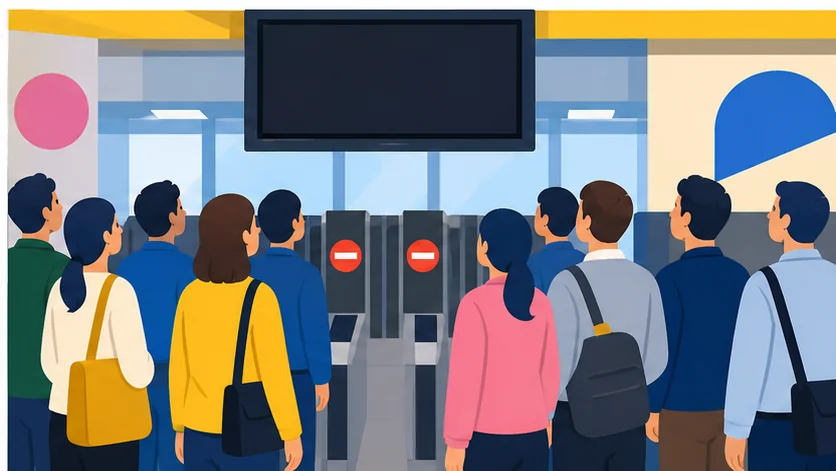
  1. Why have the trains stopped running? The picture links a cause, such as strong winds, to the suspension of service.
    Why have the trains stopped running? The picture links a cause, such as strong winds, to the suspension of service.

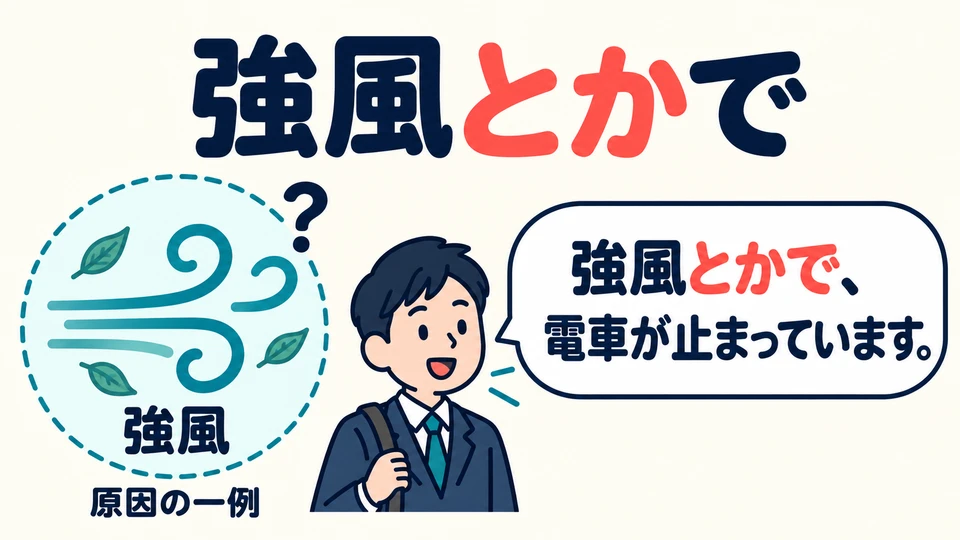
  2. 「とか」 gives one possible cause as an example, with a vague “or something like that” tone.
    「とか」 gives one possible cause as an example, with a vague “or something like that” tone.

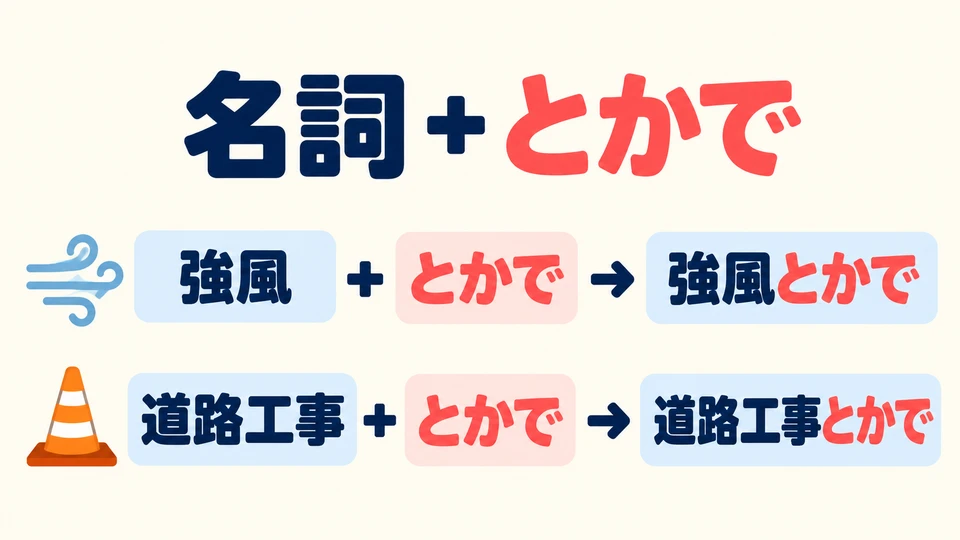
  3. Express the cause with a noun and add 「とかで」 directly: 強風とかで.
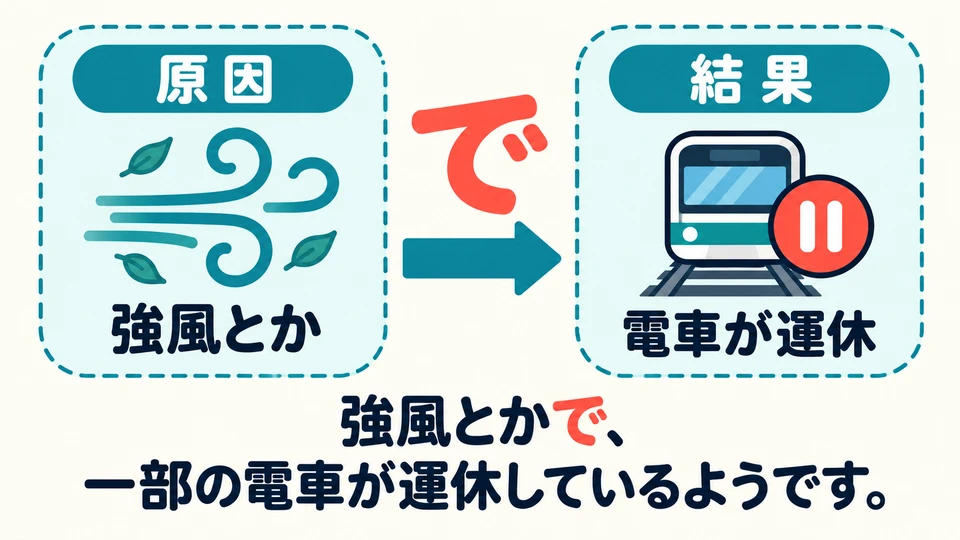
    Express the cause with a noun and add 「とかで」 directly: 強風とかで.

  4. 「で」 connects the cause to the result. Read the second half of the sentence to see what happened.
    「で」 connects the cause to the result. Read the second half of the sentence to see what happened.

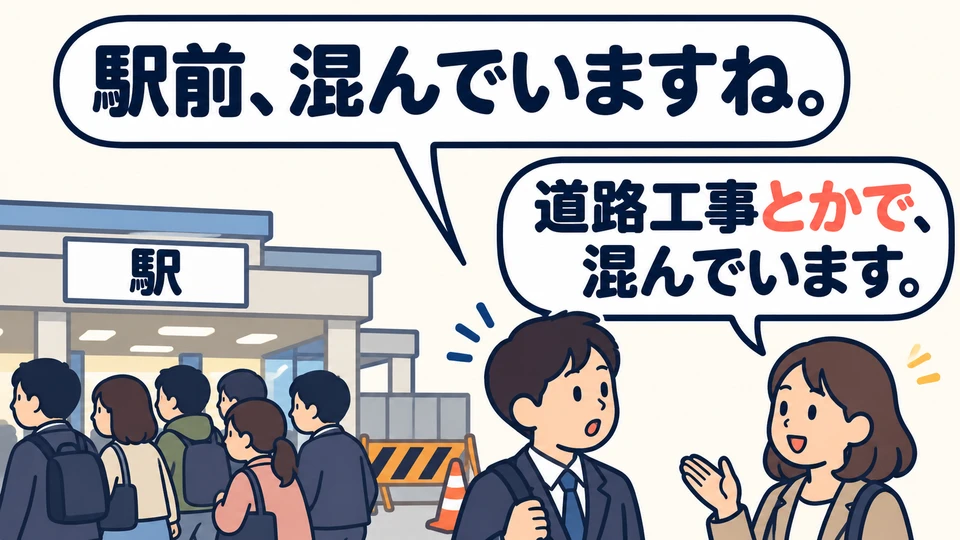
  5. When talking about congestion in front of a station, you can give roadwork as a cause. In conversation, you needn’t explain every detail.

    When talking about congestion in front of a station, you can give roadwork as a cause. In conversation, you needn’t explain every detail.

Example sentences

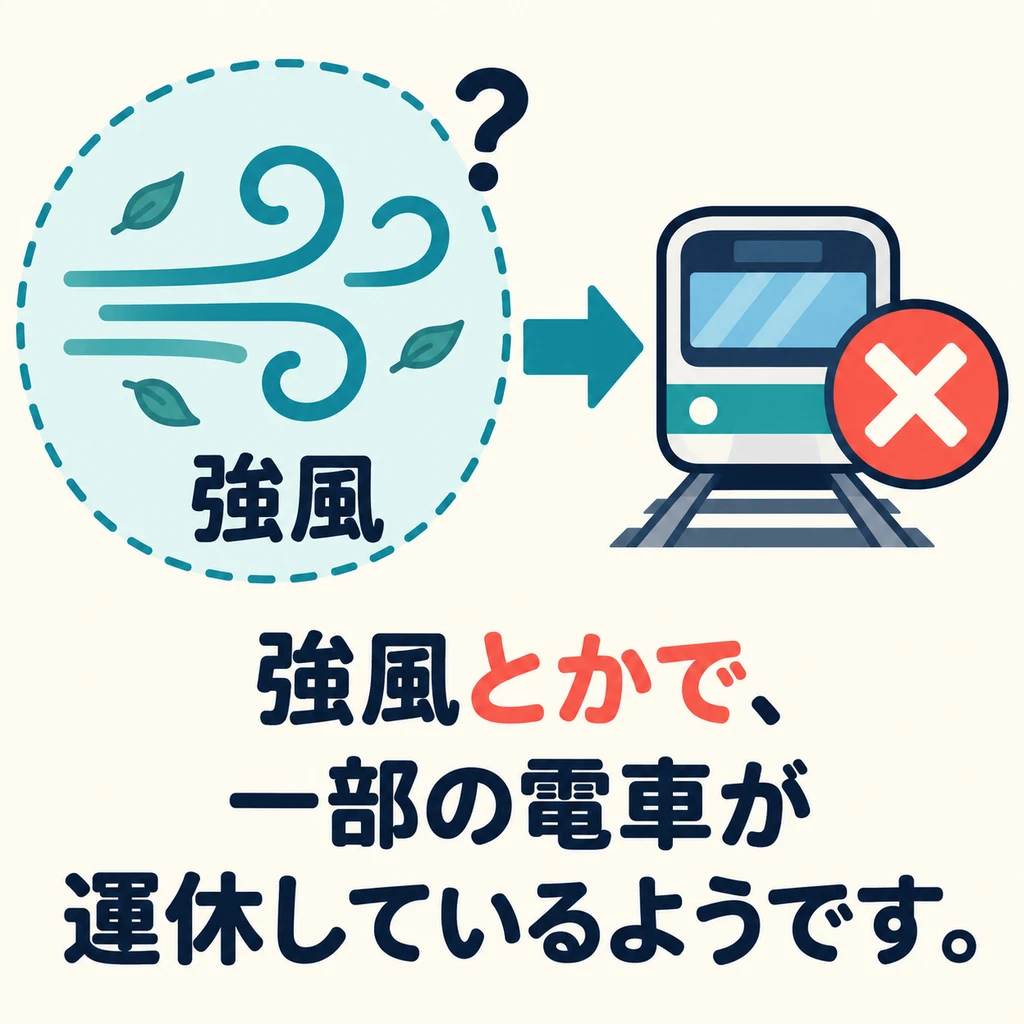
  • 強風きょうふうkyoufuuとtoかkaで、de、一部いちぶichibuのno電車でんしゃdenshaがga運休うんきゅうunkyuuしshiてteいるiru

In a conversation

Check yourself

  1. Level 1 · Recognise

    Which sentence is correct?

  2. Level 1 · Recognise

    Listen and choose the meaning

  3. Level 2 · Build

    Put the words in order

    It seems that some trains are suspended because of strong winds or something similar.

  4. Level 3 · Use

    What goes in the blank?

    強風____、一部の電車が運休しているようです。

    It seems some trains are suspended due to strong winds and such.

More grammar in this theme

  • 〜とかでpossible cause, or something

Keep practising

Test your Japanese vocabulary12 adaptive questions, freeCheck your pronunciationRead aloud and get a scorePractise verb forms10-question conjugation quizSee the whole courseGrammar, vocabulary and quizzes by theme
ようです。youdesu。

It seems some trains are suspended due to strong winds or something.

  • A
    人身じんしん事故じことかで、電車でんしゃが運転うんてんを見み合わせあわせているそうです。

    A: I heard that trains are suspended due to an injury accident or something.

  • B
    そうですか。復旧ふっきゅうまでにどのくらい所要しょよう時間じかんがかかりそうですか。

    B: Is that so? How long do you think it will take to recover?

  • 道路どうろdouro工事こうじkoujiとtoかkaで、de、駅前えきまえekimaeがga混んこんkonでdeいます。imasu。

    The area in front of the station is crowded, apparently due to road construction or something.

  • A
    運転うんてん再開さいかいの見込みみこみはわまだ立ったっていないそうです。

    A: I heard that there is no prospect of resuming operations yet.

  • 〜によって/〜により/〜による〜cause and resulting effect
    〜恐れがあるrisk of an unwanted event
    〜そうにないんですがunlikely; gently explain difficulty
    〜てしまったようなんですinferred accident with regret
    〜ところへ・に・をan event at that moment
    〜につれてgradual changes happening together
    〜ものだ・〜ものではないwhat one should or should not do
    〜とおりに・〜どおりにaccording to; just as
    〜際に・〜際はon the occasion of
    〜ことformal rule or instruction
    〜たままleaving a state unchanged
    〜だらけcovered with many unwanted things
    Previous〜そうにないんですが
    Next〜てしまったようなんです