
JPEDLAB iconJPEDLAB
Save history

Create an account and play

Explore first, then save your progress whenever you are ready. No email address is required.

Start free
Read as articleCards
1/9

Here, 「ところ」 means the situation at that moment: doing something or being in a certain state.

››

Lesson notes · ≈ JLPT N2 · Intermediate 2

〜ところへ・に・を~tokoro e / ni / o

an event at that moment

Use 〜ところ with へ, に, or を to connect an event or action to the situation at that moment.

How it works
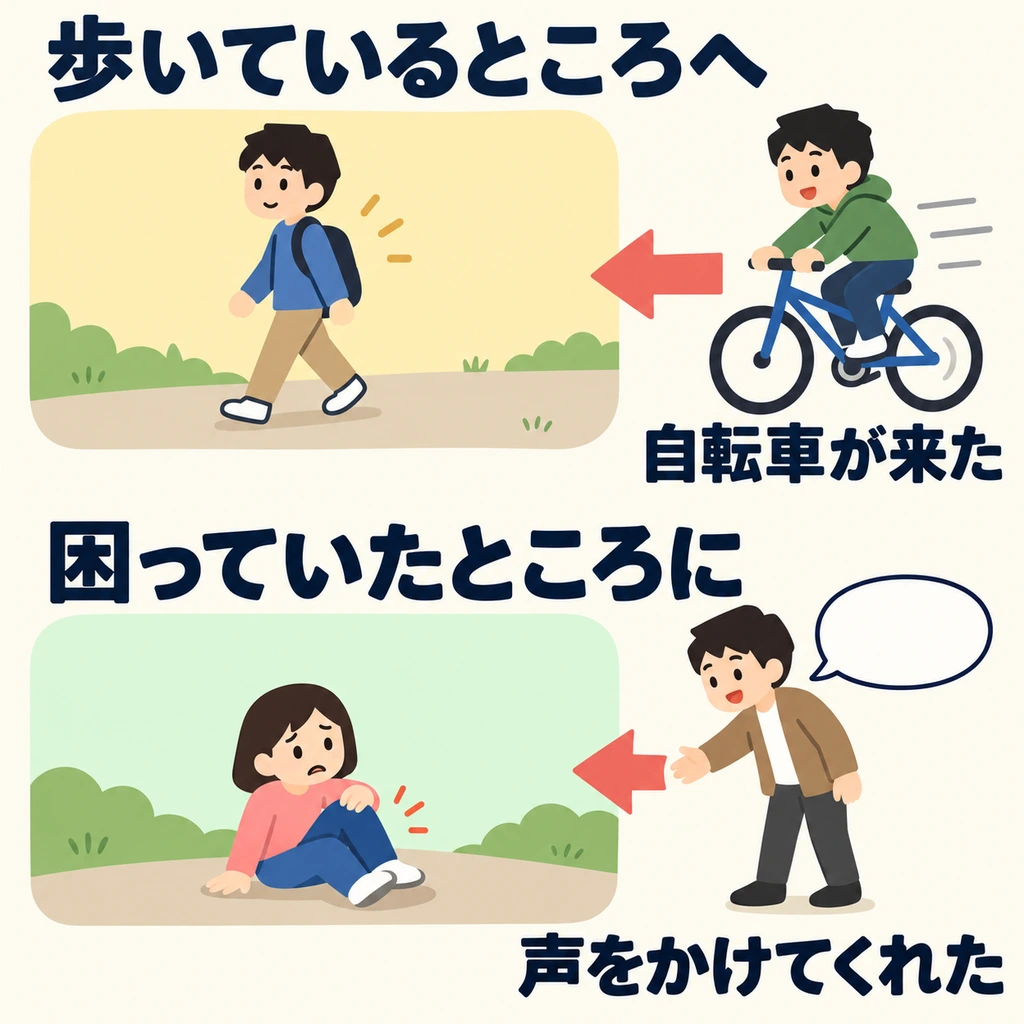
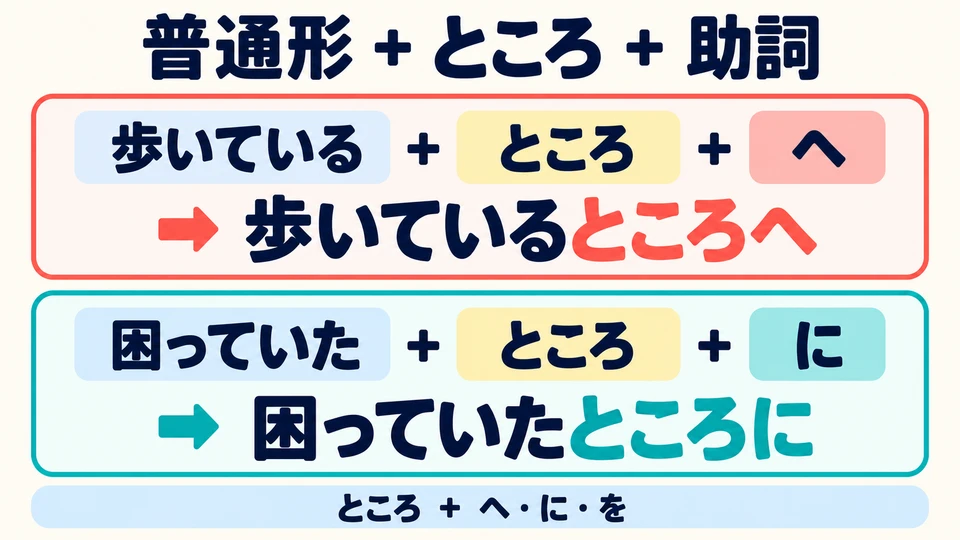
  1. Here, 「ところ」 means the situation at that moment: doing something or being in a certain state.
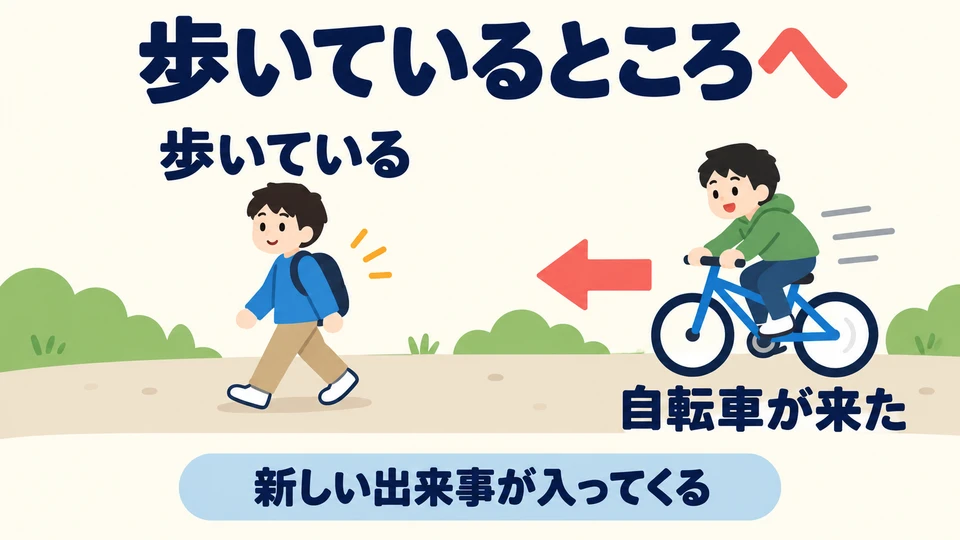
    Here, 「ところ」 means the situation at that moment: doing something or being in a certain state.

  2. A cyclist arrived while the person was walking. 「ところへ」 highlights a new event entering an ongoing situation.
    A cyclist arrived while the person was walking. 「ところへ」 highlights a new event entering an ongoing situation.

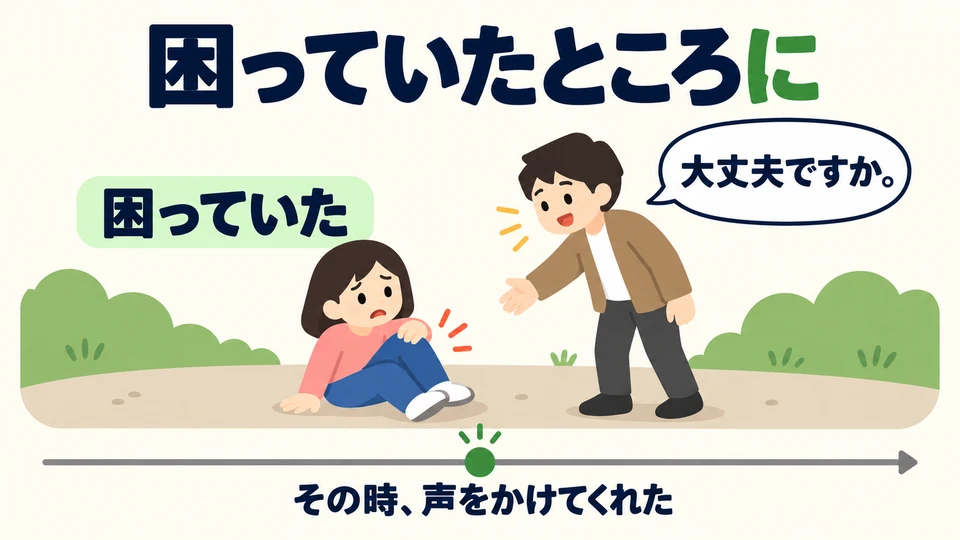
  3. Just when the person was in trouble after falling, someone spoke to them. 「ところに」 emphasizes the moment when an event happens.

    Just when the person was in trouble after falling, someone spoke to them. 「ところに」 emphasizes the moment when an event happens.

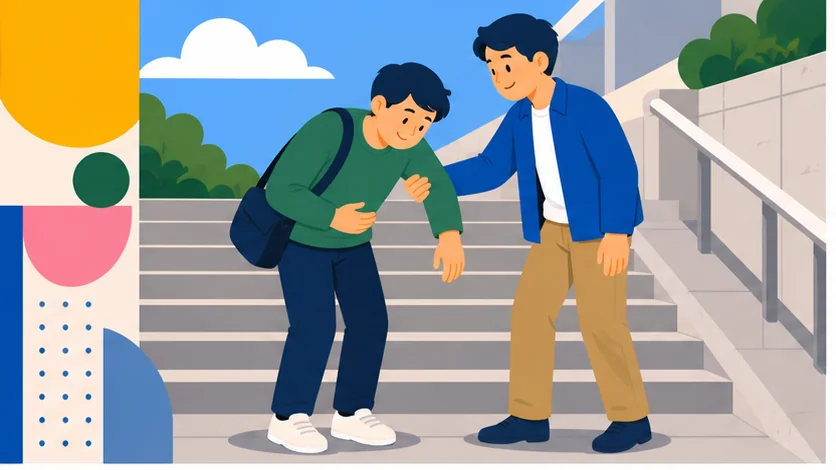
  4. With 「ところを」, the following action is directed at the situation at that moment. In the picture, someone supports a person about to fall.
    With 「ところを」, the following action is directed at the situation at that moment. In the picture, someone supports a person about to fall.

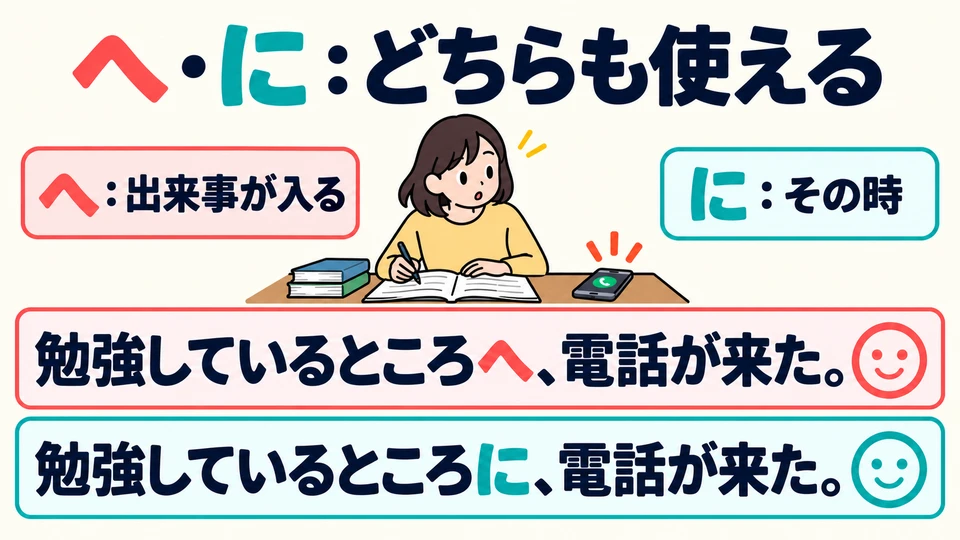
  5. 「へ」 and 「に」 emphasize different aspects, but they are often interchangeable. You do not need to treat them as two absolute rules.
    「へ」 and 「に」 emphasize different aspects, but they are often interchangeable. You do not need to treat them as two absolute rules.

  • Use a verb in its plain form, such as 「歩いている」 or 「困っていた」, followed by 「ところ+助詞」 (ところ + particle).

    Use a verb in its plain form, such as 「歩いている」 or 「困っていた」, followed by 「ところ+助詞」 (ところ + particle).

  • Example sentences

    • 道みちmichiをo歩いあるいaruiてteいるiruところtokoroへ、え、e、後ろうしろushiroからkara自転車じてんしゃjitenshaがga来ました。きました。kimashita。

      Just as I was walking along the road, a bicycle came up from behind.

    • 転んころんkoronでde困っこまっkomatてteいたところitatokoroに、ni、近くちかくchikakuのno人ひとhitoがga声こえkoeをo

    In a conversation

    • 「昨日、きのう、階段かいだんで滑っすべって転倒てんとうしそうになったんです。」です。

      "Yesterday, I slipped on the stairs and almost fell."

    • 「それそれはわ危なかったですあぶなかったですね。大丈夫でしただいじょうぶでしたか。」か。

      "That was close. Were you okay?"

    • 「はい、はい、転倒てんとうしそうになったところを、近くちかくの人ひとが支えささえてくれたので大丈夫でした。」でだいじょうぶでした。

      "Yes, just as I was about to fall, someone nearby supported me, so I was fine."

    Check yourself

    1. Level 1 · Recognise

      Which sentence is correct?

    2. Level 1 · Recognise

      Listen and choose the meaning

    3. Level 2 · Build

      Put the words in order

      When I lost my balance and was about to fall, my coworker supported me.

    4. Level 3 · Use

      What goes in the blank?

      道を歩いている____、後ろから自転車が来ました。

      While I was walking down the street, a bicycle came from behind.

    More grammar in this theme

    • 〜によって/〜により/〜による〜cause and resulting effect
    • 〜恐れがあるrisk of an unwanted event
    • 〜そうにないんですがunlikely; gently explain difficulty
    • 〜とかでpossible cause, or something
    • 〜てしまったようなんですinferred accident with regret
    • 〜ところへ・に・をan event at that moment
    • 〜につれてgradual changes happening together
    • 〜ものだ・〜ものではないwhat one should or should not do
    • 〜とおりに・〜どおりにaccording to; just as
    • 〜際に・〜際はon the occasion of
    • 〜ことformal rule or instruction
    • 〜たままleaving a state unchanged
    • 〜だらけcovered with many unwanted things
    Previous〜てしまったようなんですNext〜につれて

    Keep practising

    Test your Japanese vocabulary12 adaptive questions, freeCheck your pronunciationRead aloud and get a scorePractise verb forms10-question conjugation quizSee the whole courseGrammar, vocabulary and quizzes by theme
    See the whole course
    Intermediate 2
    Emergencies and Safety Actions
    かけ
    kake
    てte
    くれました。kuremashita。

    Just as I had fallen and was in trouble, someone nearby spoke to me.