JPEDLAB iconJPEDLAB
Save history

Create an account and play

Explore first, then save your progress whenever you are ready. No email address is required.

Start free
Read as articleCards
1/10

Look at the picture: when should you watch your step? 「際」 marks the time or occasion when an action takes place.

››

Lesson notes · ≈ JLPT N3 · Intermediate 2

〜際に・〜際は~sai ni / ~sai wa

on the occasion of

Use 〜際に or 〜際は in formal notices to mark when an action occurs or to introduce precautions for that situation.

How it works
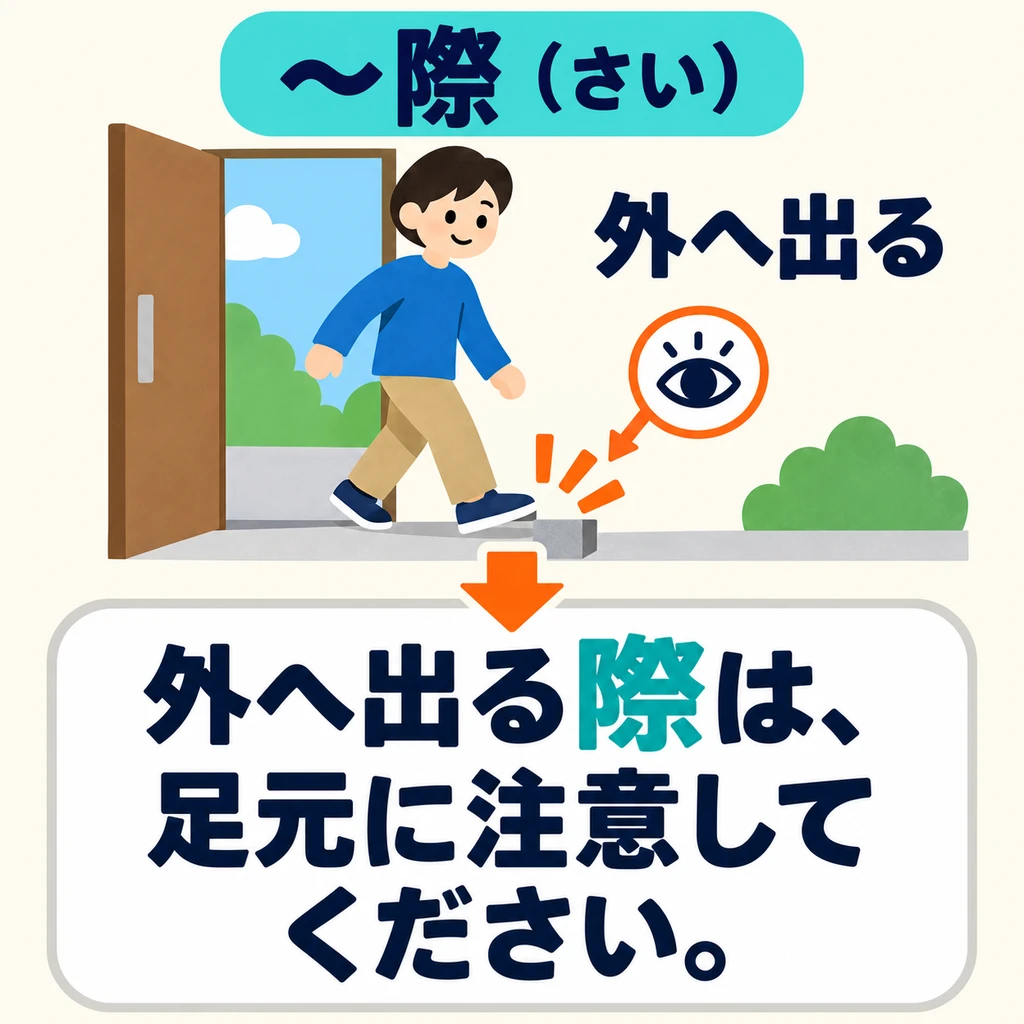
  1. Look at the picture: when should you watch your step? 「際」 marks the time or occasion when an action takes place.
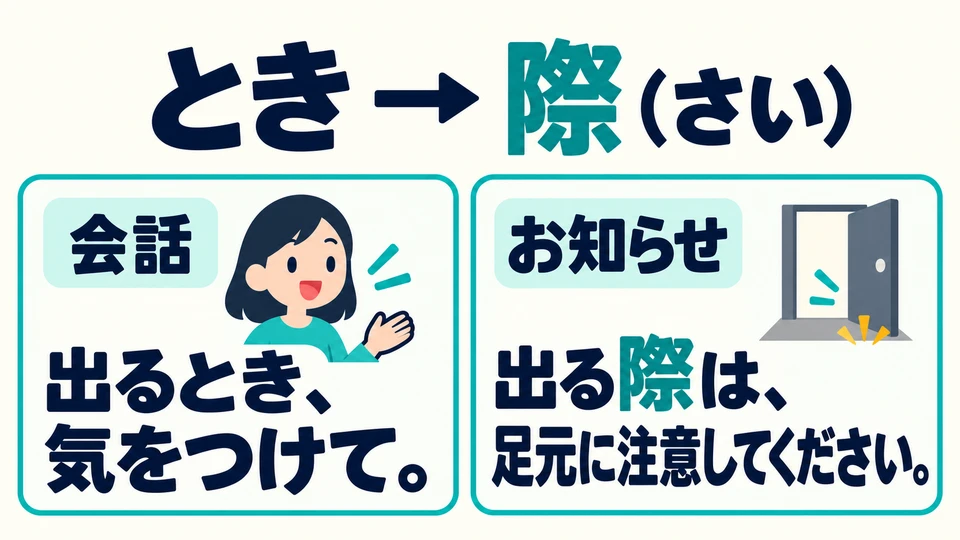
    Look at the picture: when should you watch your step? 「際」 marks the time or occasion when an action takes place.

  2. 「際」 has a formal tone. It is common in notices, instructions, and reminders, and is more formal than 「とき」.
    「際」 has a formal tone. It is common in notices, instructions, and reminders, and is more formal than 「とき」.

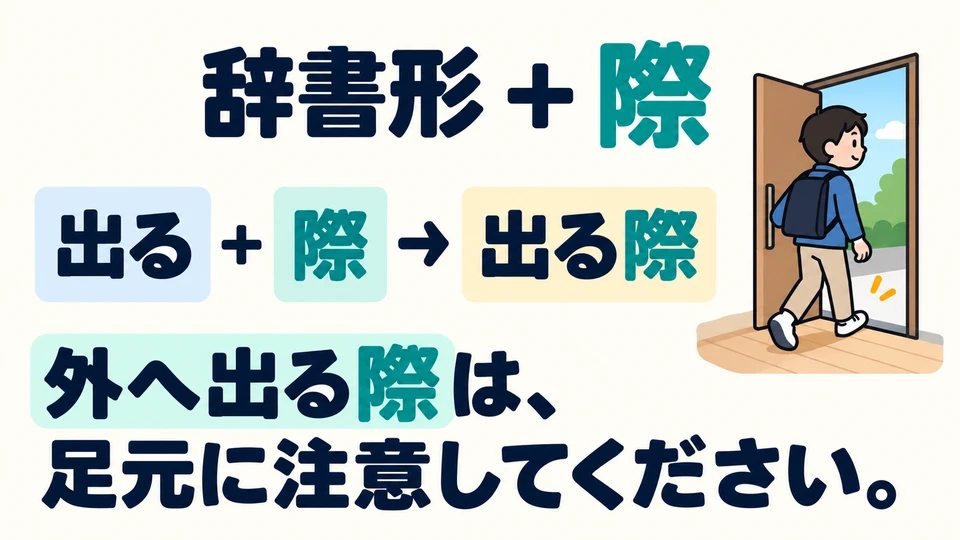
  3. Attach 「際」 directly to the dictionary form of a verb. 「外へ出る際」 means “when going outside.”
    Attach 「際」 directly to the dictionary form of a verb. 「外へ出る際」 means “when going outside.”

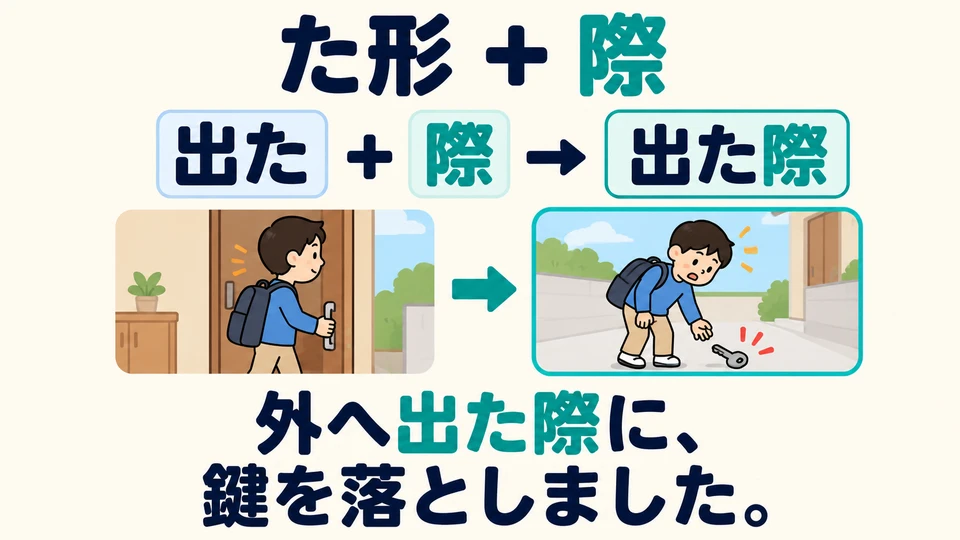
  4. 「際」 can also follow a verb’s た form. 「出た際」 presents leaving as a completed action.
    「際」 can also follow a verb’s た form. 「出た際」 presents leaving as a completed action.

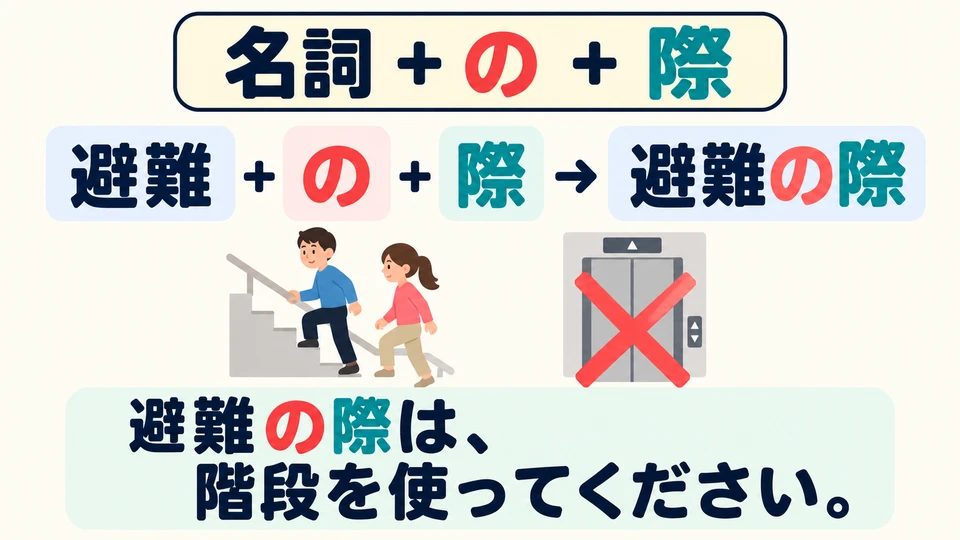
  5. After a noun, add 「の」 before 「際」. 「避難の際」 means “during an evacuation.”
    After a noun, add 「の」 before 「際」. 「避難の際」 means “during an evacuation.”
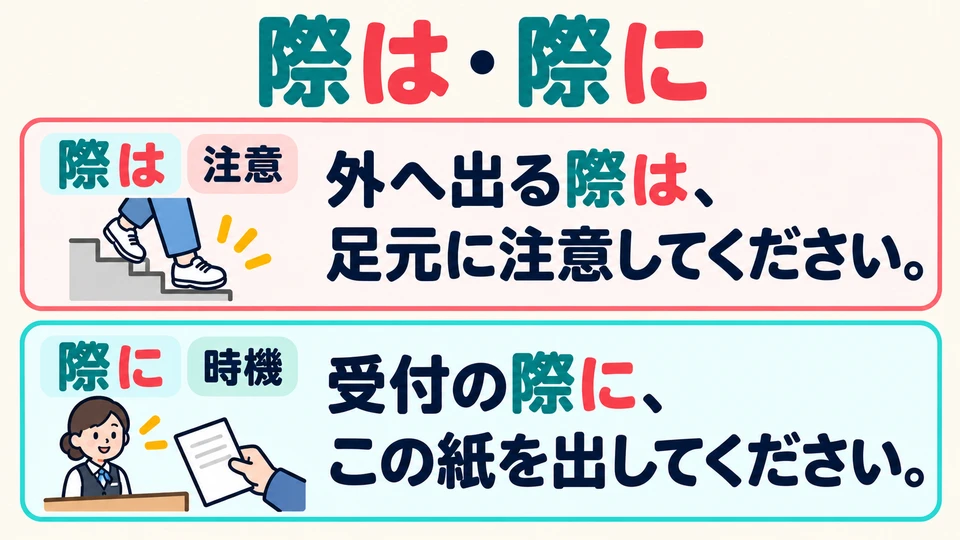
  6. 「際は」 introduces precautions for that situation. 「際に」 marks when to do something.

「際は」 introduces precautions for that situation. 「際に」 marks when to do something.

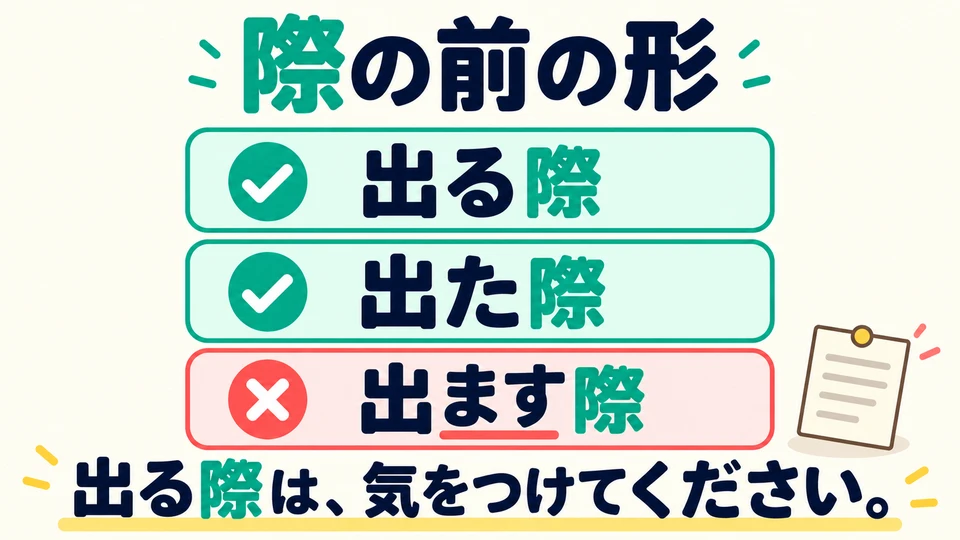
  • Do not use the ます form before 「際」. Although the expression is formal, the verb takes the dictionary form or た form.

    Do not use the ます form before 「際」. Although the expression is formal, the verb takes the dictionary form or た form.

  • Example sentences

    • 建物たてものtatemonoをo出るでるderu際さいsaiは、わ、wa、エレベーターえれべーたーerebeetaaをo使わないつかわないtsukawanaiでdeください。kudasai。

      Do not use the elevator when leaving the building.

    • 外そとsotoへえe出るでるderu際さいsaiは、わ、wa、足元あしもとashimotoにni注意ちゅういchuuiしshiてteください。kudasai。

      Please watch your step when going outside.

    In a conversation

    • A
      地震じしんの後あとに家いえを出でて避難ひなんする際さいは、わ、何なにに気きをつければいいですか。

      A: What should I be careful about when leaving home to evacuate after an earthquake?

    • B
      火の元ひのもとの確認かくにんと戸締まりとじまりをしっかり行うおこなうことが大切ですたいせつですよ。

      B: It is important to make sure to check all fire hazards and lock up the house securely.

    • A
      わかりました。避難ひなんする際さいは、わ、慌てずあわてずにしっかり戸締まりとじまりを確認かくにんしてから行きます。いきます。

      A: I see. When evacuating, I will make sure to check the locks calmly before leaving.

    Check yourself

    1. Level 1 · Recognise

      Which sentence is correct?

    2. Level 1 · Recognise

      Listen and choose the meaning

    3. Level 2 · Build

      Put the words in order

      When checking the evacuation guidance posted in the building, please make sure to carefully confirm the location of the emergency exit.

    4. Level 3 · Use

      What goes in the blank?

      建物を出る____は、エレベーターを使わないでください。

      When leaving the building, please do not use the elevator.

    More grammar in this theme

    • 〜によって/〜により/〜による〜cause and resulting effect
    • 〜恐れがあるrisk of an unwanted event
    • 〜そうにないんですがunlikely; gently explain difficulty
    • 〜とかでpossible cause, or something
    • 〜てしまったようなんですinferred accident with regret
    • 〜ところへ・に・をan event at that moment
    • 〜につれてgradual changes happening together
    • 〜ものだ・〜ものではないwhat one should or should not do
    • 〜とおりに・〜どおりにaccording to; just as
    • 〜際に・〜際はon the occasion of
    • 〜ことformal rule or instruction
    • 〜たままleaving a state unchanged
    • 〜だらけcovered with many unwanted things
    Previous〜とおりに・〜どおりにNext〜こと

    Keep practising

    Test your Japanese vocabulary12 adaptive questions, freeCheck your pronunciationRead aloud and get a scorePractise verb forms10-question conjugation quizSee the whole courseGrammar, vocabulary and quizzes by theme
    See the whole course
    Intermediate 2
    Emergencies and Safety Actions