JPEDLAB iconJPEDLAB
Save history

Create an account and play

Explore first, then save your progress whenever you are ready. No email address is required.

Start free
Read as articleCards
See the whole course›Intermediate 2›Geography, Climate, and Local Life

Japanese grammar · ≈ JLPT N2 · Intermediate 2

〜に限る~ni kagiru

nothing beats

Use 「〜に限る」 after a verb or noun to recommend what you personally think is the best choice.

Start the interactive lessonIllustrated cards, audio and speaking practice

How it works

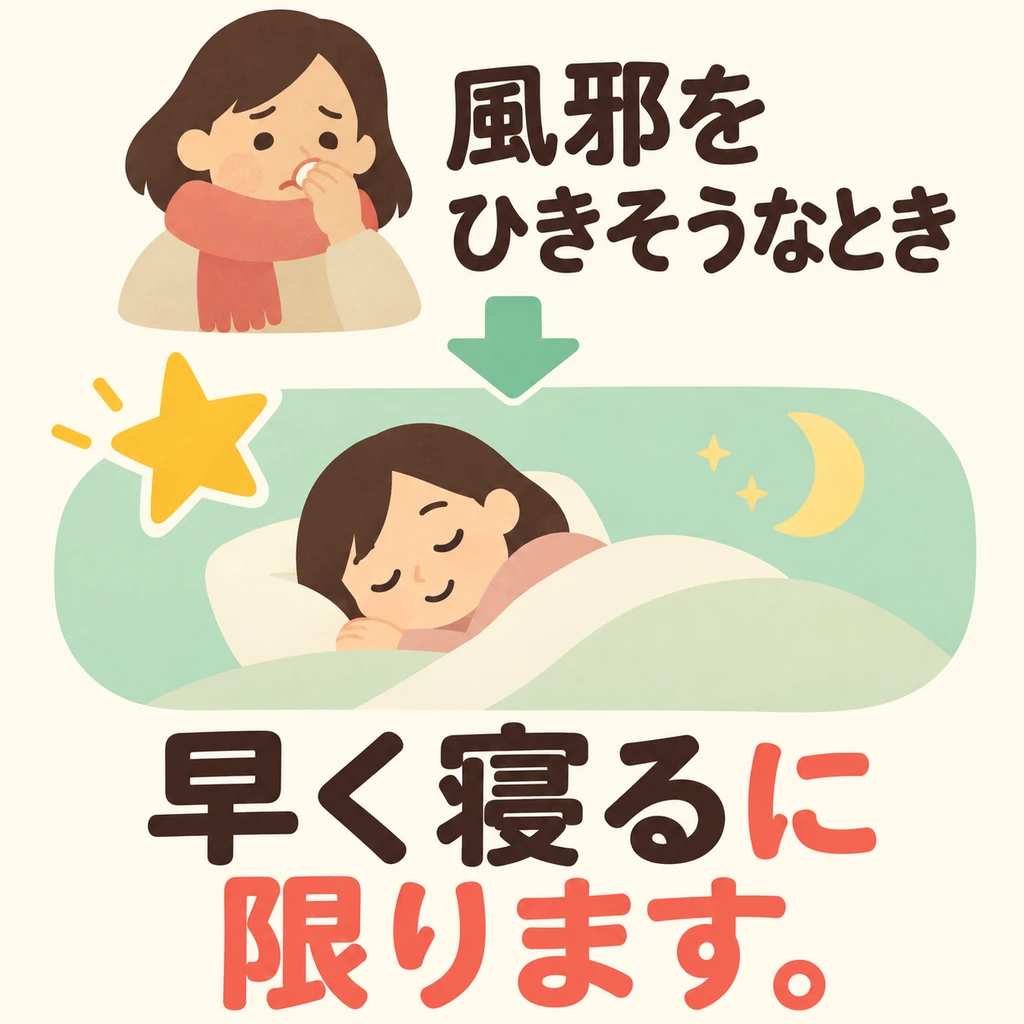
  1. What is best when you feel a cold coming on? Look at the picture: the speaker recommends going to bed early.
    What is best when you feel a cold coming on? Look at the picture: the speaker recommends going to bed early.

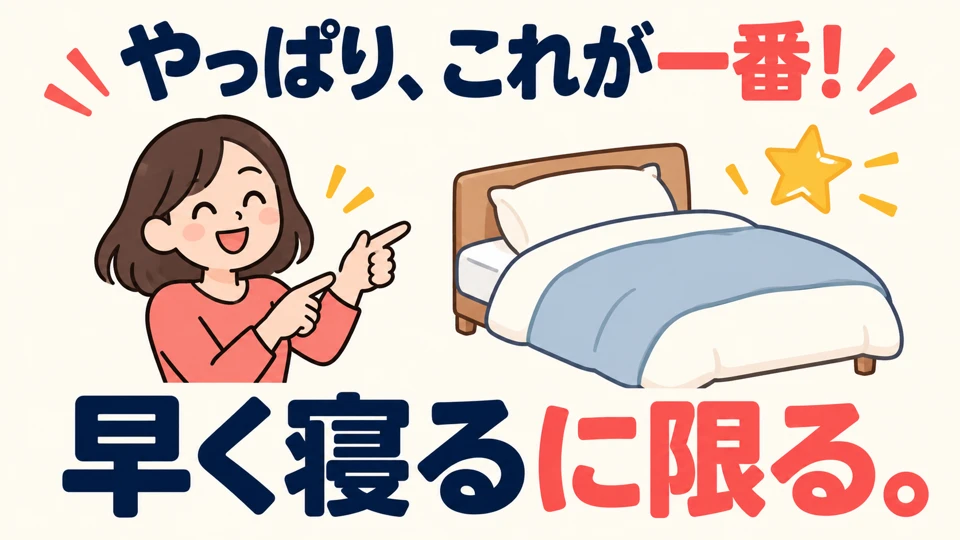
  2. 「に限る」expresses what the speaker personally considers the best choice, with a sense of “nothing beats this.”
    「に限る」expresses what the speaker personally considers the best choice, with a sense of “nothing beats this.”

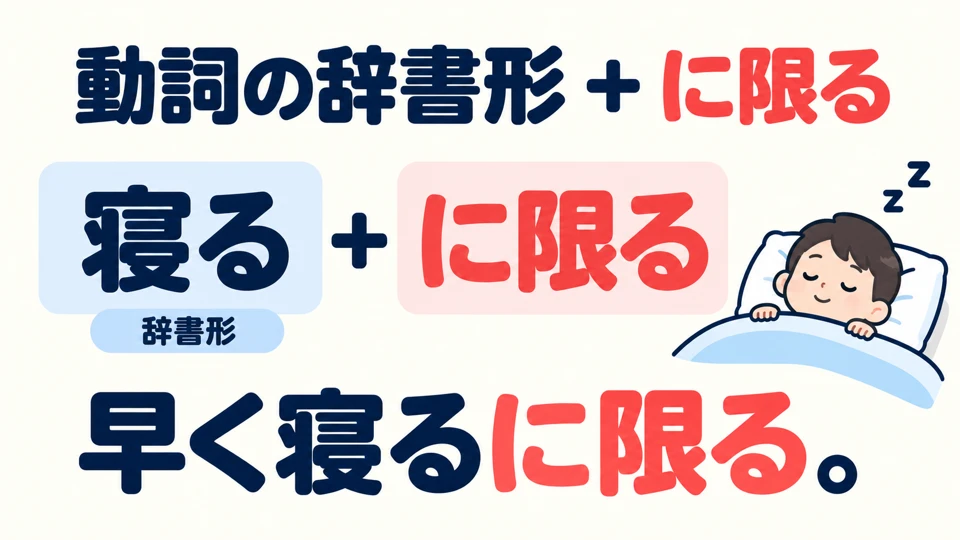
  3. Attach 「に限る」directly to a verb’s dictionary form: 早く寝るに限る. This presents an action as the best solution.
    Attach 「に限る」directly to a verb’s dictionary form: 早く寝るに限る. This presents an action as the best solution.

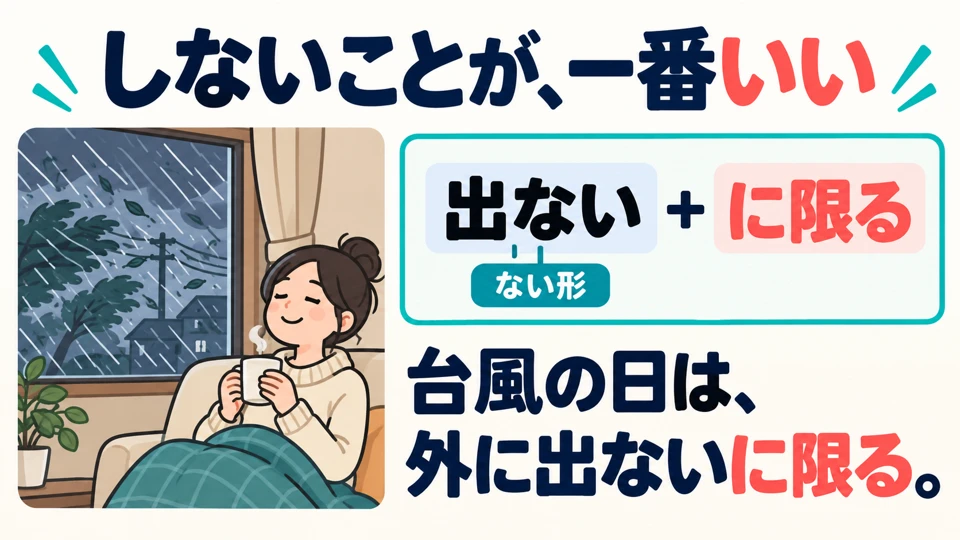
  4. Not doing something can also be the best solution. On a typhoon day: 外に出ないに限る. Use the verb’s ない-form.
    Not doing something can also be the best solution. On a typhoon day: 外に出ないに限る. Use the verb’s ない-form.

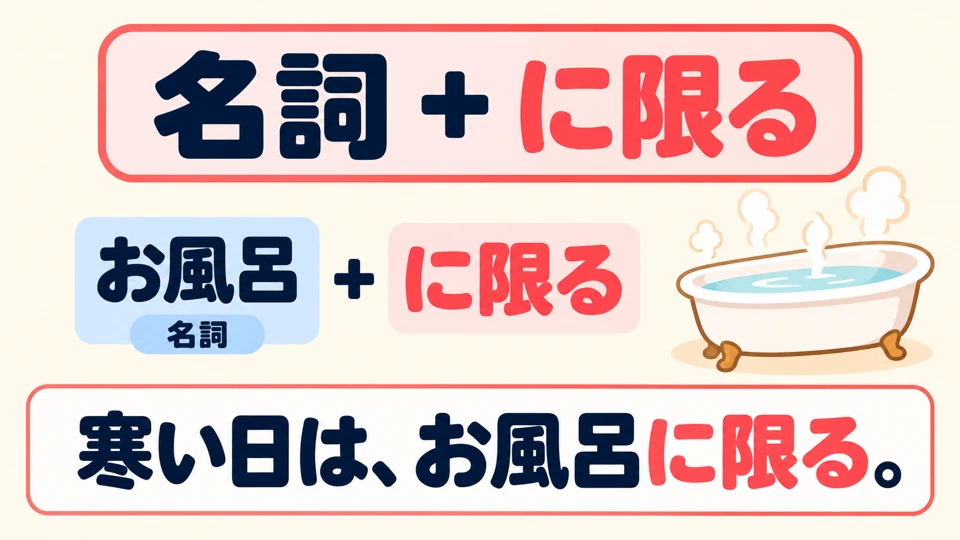
  5. 「に限る」can also follow a noun directly: 寒い日は、お風呂に限る. It recommends a particular thing.
    「に限る」can also follow a noun directly: 寒い日は、お風呂に限る. It recommends a particular thing.

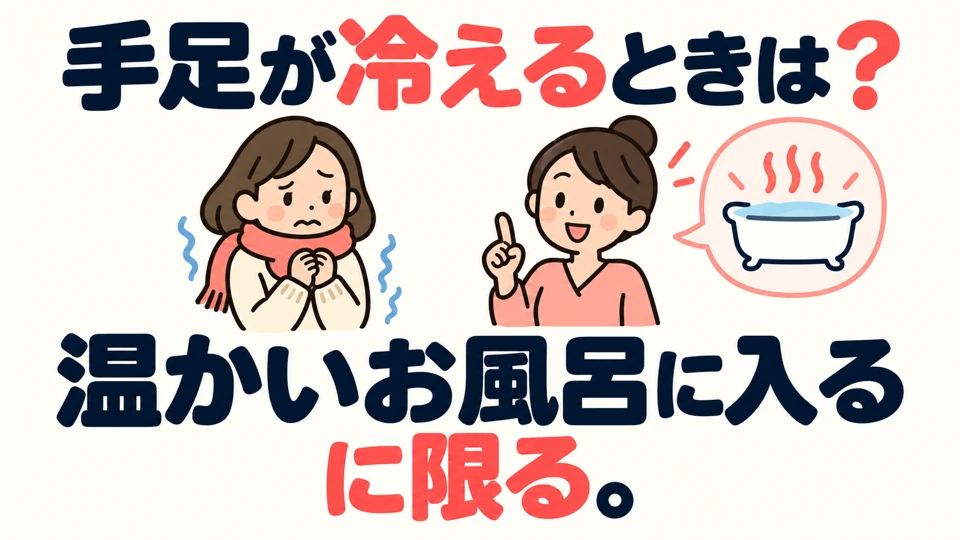
  6. What would you recommend for cold hands and feet? 温かいお風呂に入るに限る. Use this pattern to give advice.
    What would you recommend for cold hands and feet? 温かいお風呂に入るに限る. Use this pattern to give advice.

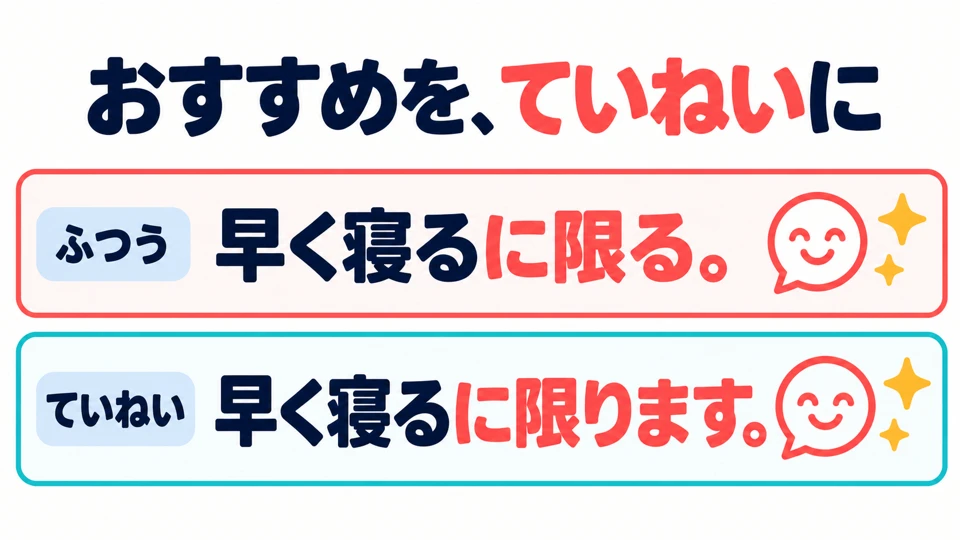
  7. Use 「に限ります」to make a polite recommendation. It still means that something is the best choice.

    Use 「に限ります」to make a polite recommendation. It still means that something is the best choice.
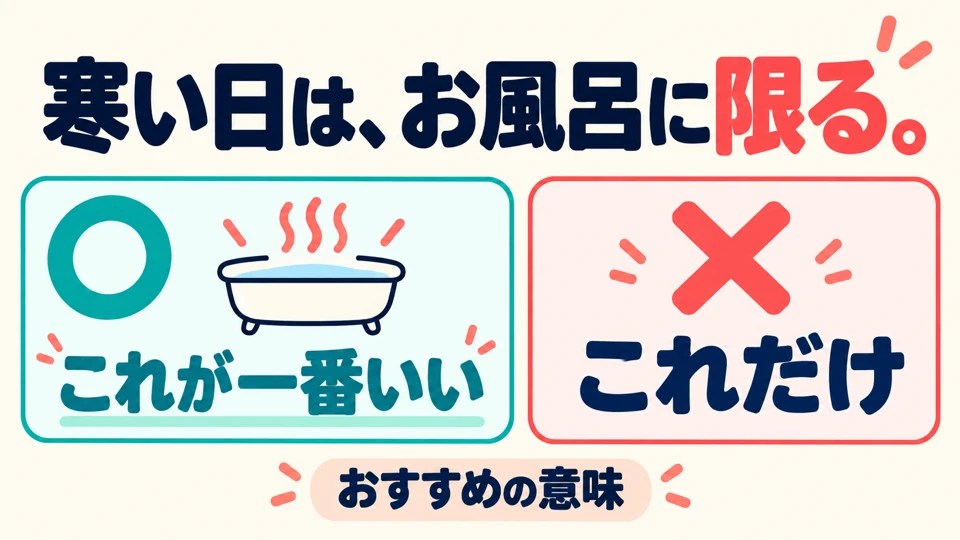
  8. Here, 「限る」means “the best,” not “limited to.” Do not mistake the recommendation for a restriction.

    Here, 「限る」means “the best,” not “limited to.” Do not mistake the recommendation for a restriction.

Example sentences

  • 風邪かぜkazeをoひきhikiそうなときsounatokiは、わ、wa、早くはやくhayaku寝るねるneruにni限りますかぎりますkagirimasu

    When you feel like you are catching a cold, the best thing to do is go to bed early.

In a conversation

  • A
    急激に冷えきゅうげきにひえ込んこんで手足てあしが冷えるひえるときは、わ、どうしていますか。

    A: What do you do when it suddenly gets cold and your hands and feet are freezing?

  • B
    そう

Check yourself

  1. Level 1 · Recognise

    Which sentence is correct?

  2. Level 1 · Recognise

    Listen and choose the meaning

  3. Level 2 · Build

    Put the words in order

    When you are not yet used to the heat, the best thing is to avoid overexerting yourself and stay in a cool room.

  4. Level 3 · Use

    What goes in the blank?

    風邪をひきそうなときは、早く寝る____。

    When you feel like you're catching a cold, the best thing is to go to bed early.

More grammar in this theme

  • 〜に限るnothing beats

Keep practising

Test your Japanese vocabulary12 adaptive questions, freeCheck your pronunciationRead aloud and get a scorePractise verb forms10-question conjugation quizSee the whole courseGrammar, vocabulary and quizzes by theme
  • 台風たいふうtaifuuのno日ひhiは、わ、wa、外そとsotoにni出ないでないdenaiにni限ります。かぎります。kagirimasu。

    On typhoon days, the best thing is not to go outside.

  • いう
    日ひ
    は、わ、
    服装ふくそう
    を
    調整ちょうせい
    し
    て
    温かいあたたかい
    お風呂おふろ
    に
    入るはいる
    に
    限りますかぎります
    よ。

    B: On those days, the best thing is to adjust your clothing and take a warm bath.

  • A
    そうですね。私わたしも今夜こんやはわ無理むりを避けさけて早くはやく寝るねるに限るかぎると思っおもっています。

    A: That's true. I also think the best thing to do tonight is to avoid overexerting myself and go to bed early.

  • 〜に囲まれている・〜に囲まれたbe surrounded by
    〜が〜を占める・〜が占めるaccount for a share
    〜がちoften tends to
    〜に比べてcompared with
    〜に備えてin preparation for
    〜に代わって・〜に代わりin place of
    〜のような・〜のようにexamples such as
    〜としてin the role of
    〜を中心にcentered around
    〜をはじめとしてincluding ... as a leading example
    〜を通して・〜を通じてthrough a means
    〜ことからbased on the fact
    〜といえばspeaking of
    〜というとspeaking of; brings to mind
    Previous〜として
    Next〜を中心に