JPEDLAB iconJPEDLAB
Save history

Create an account and play

Explore first, then save your progress whenever you are ready. No email address is required.

Start free
Read as articleCards
See the whole course›Intermediate 2›Geography, Climate, and Local Life

Japanese grammar · ≈ JLPT N3 · Intermediate 2

〜といえば~to ieba

speaking of

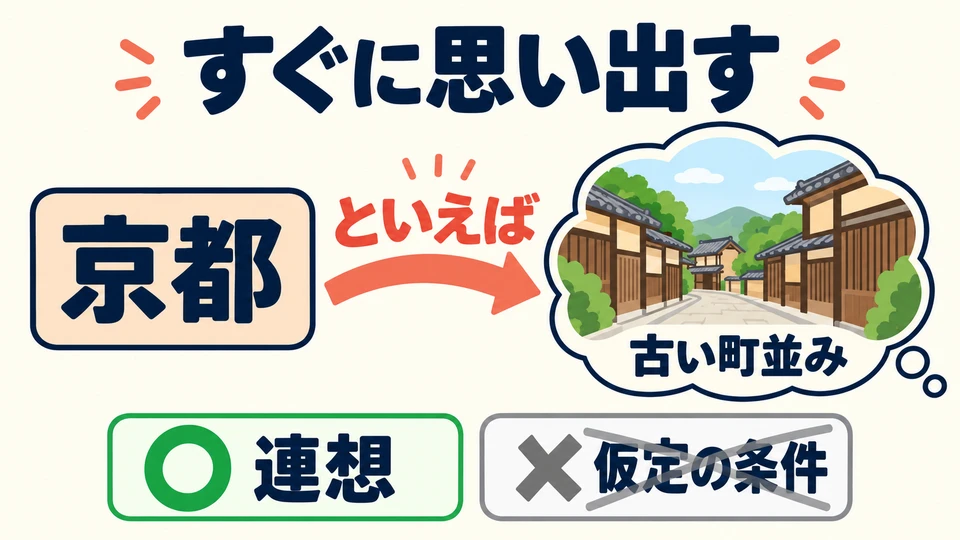
Use 「〜といえば」 after a noun to bring up a typical thing you immediately associate with it.

Start the interactive lessonIllustrated cards, audio and speaking practice

How it works

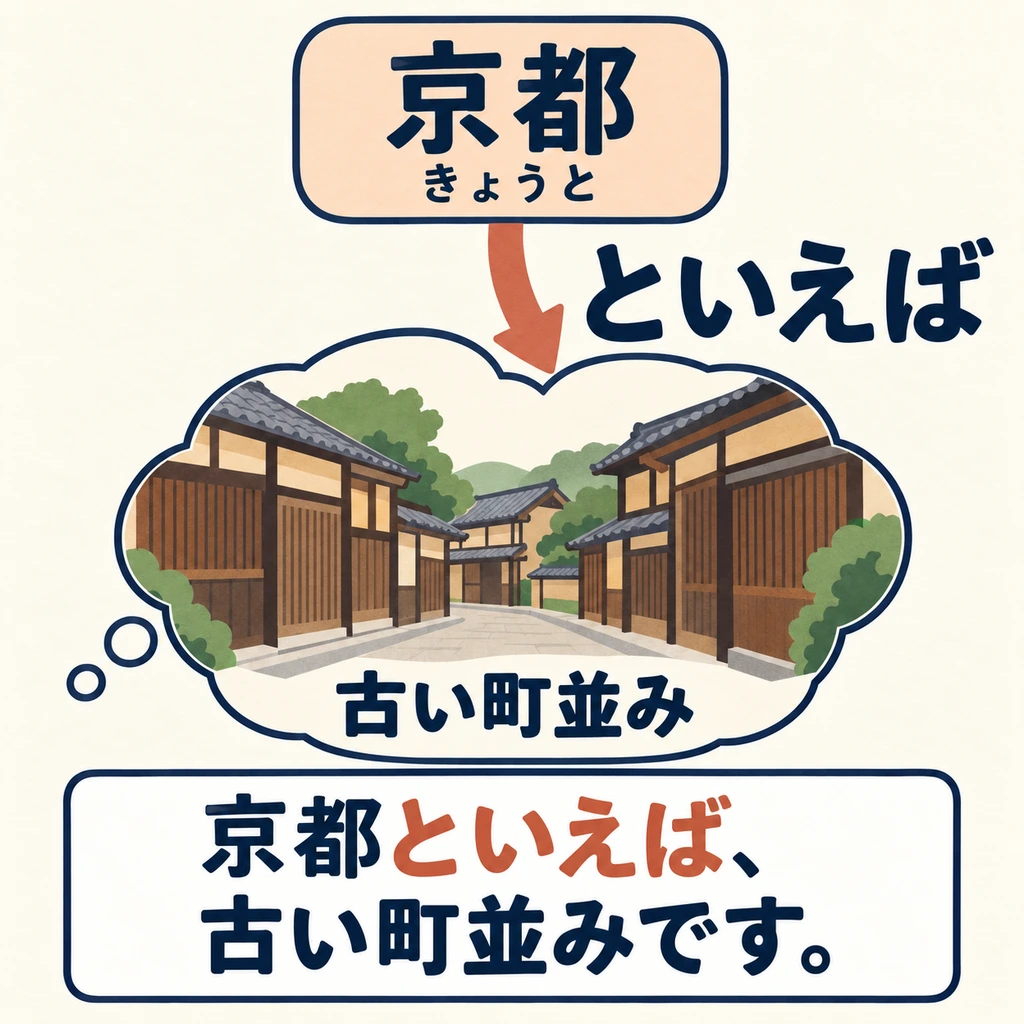
  1. When you hear “Kyoto,” what comes to mind first? 「といえば」 introduces something typical that you immediately associate with it.
    When you hear “Kyoto,” what comes to mind first? 「といえば」 introduces something typical that you immediately associate with it.

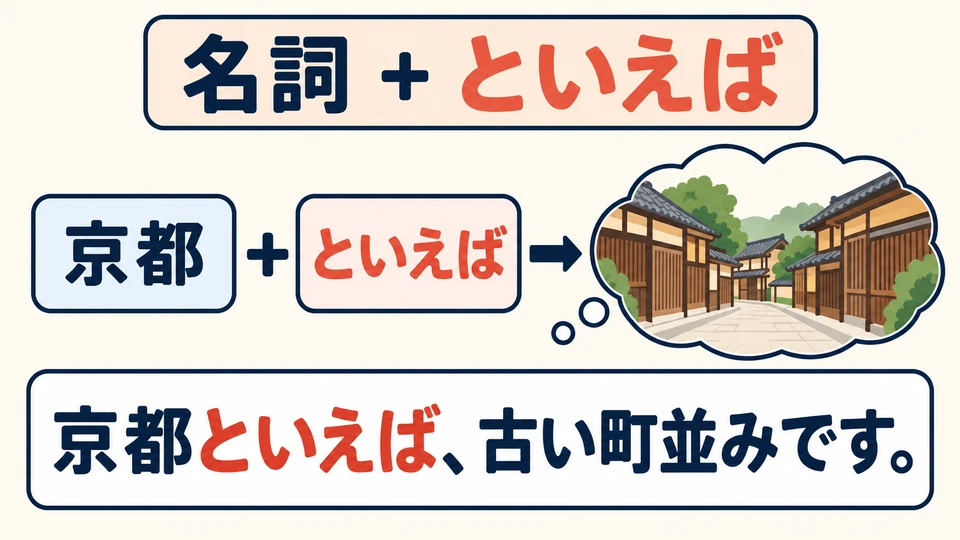
  2. Add 「といえば」 after a noun to name the starting point of the association: 京都といえば、…。
    Add 「といえば」 after a noun to name the starting point of the association: 京都といえば、…。

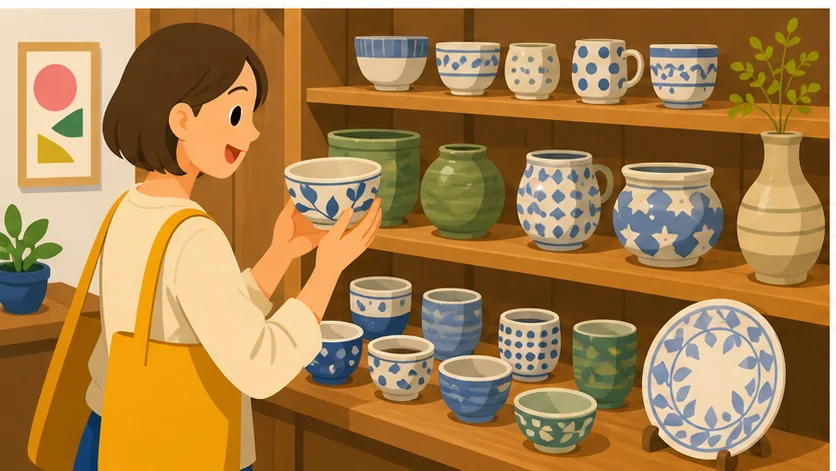
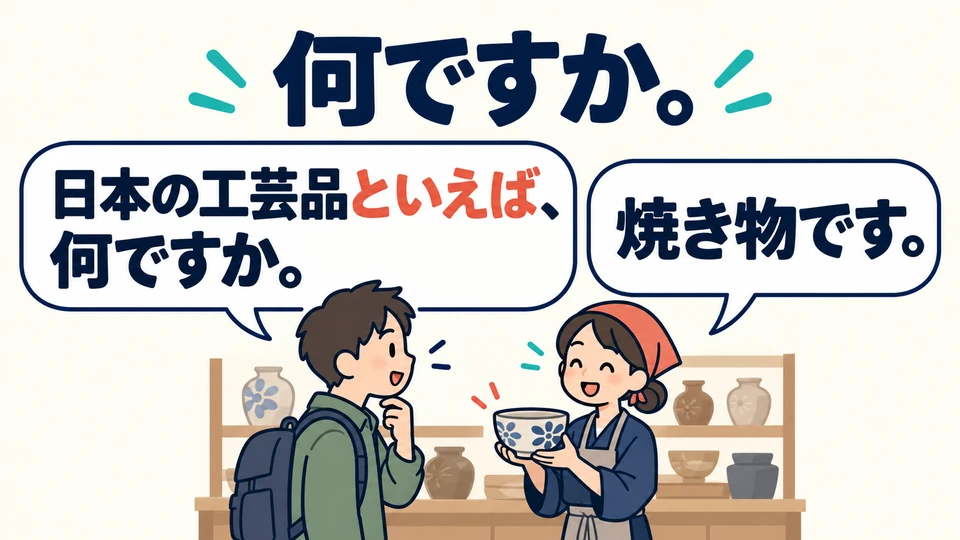
  3. When traveling, you can ask 「何ですか」 as in the conversation to find out what is typical of the area.
    When traveling, you can ask 「何ですか」 as in the conversation to find out what is typical of the area.

  4. Here, 「といえば」 means “speaking of…”. It expresses an association, not a hypothetical condition.
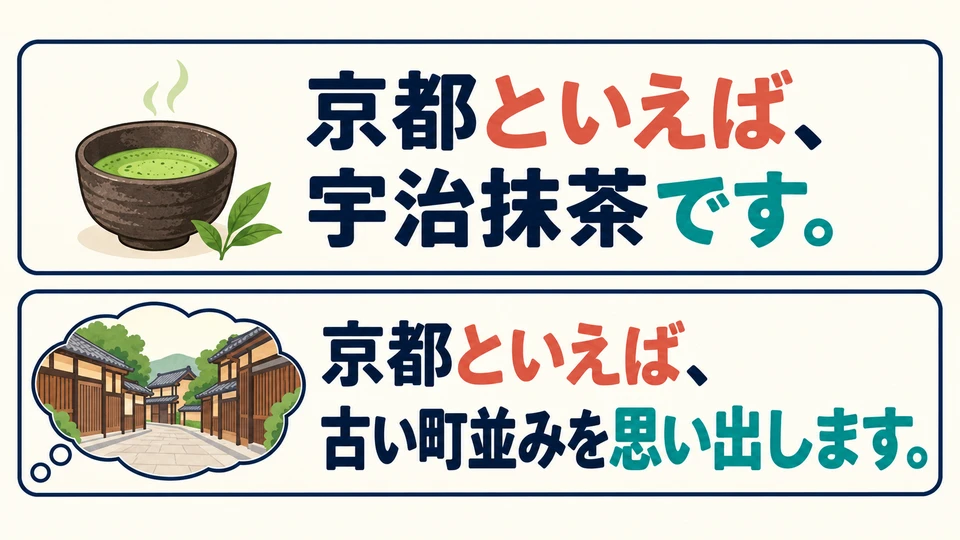
    Here, 「といえば」 means “speaking of…”. It expresses an association, not a hypothetical condition.

  5. In the examples, 「です」 names a typical thing, while “bring to mind” describes your own association.
    In the examples, 「です」 names a typical thing, while “bring to mind” describes your own association.

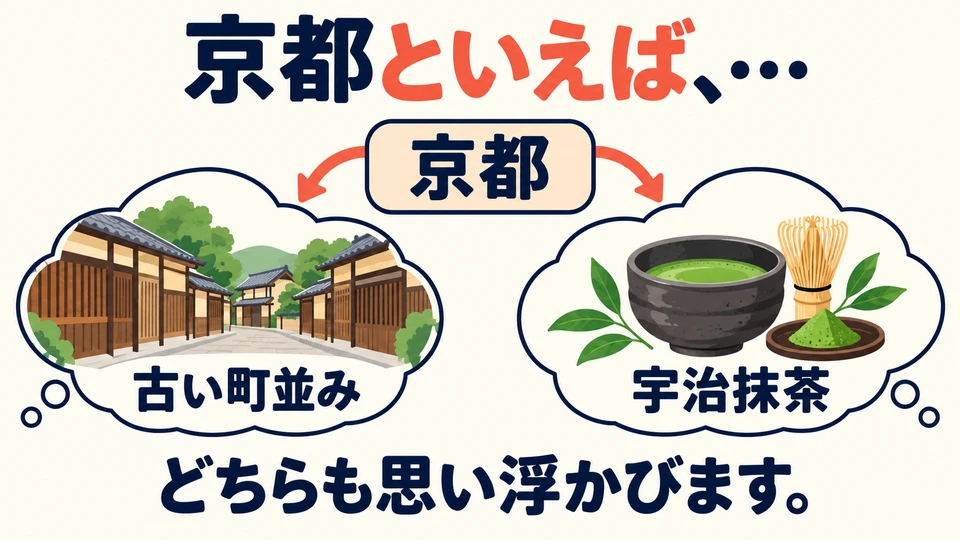
  6. Kyoto can bring old streets to mind, but also matcha. There can be more than one typical association.
    Kyoto can bring old streets to mind, but also matcha. There can be more than one typical association.

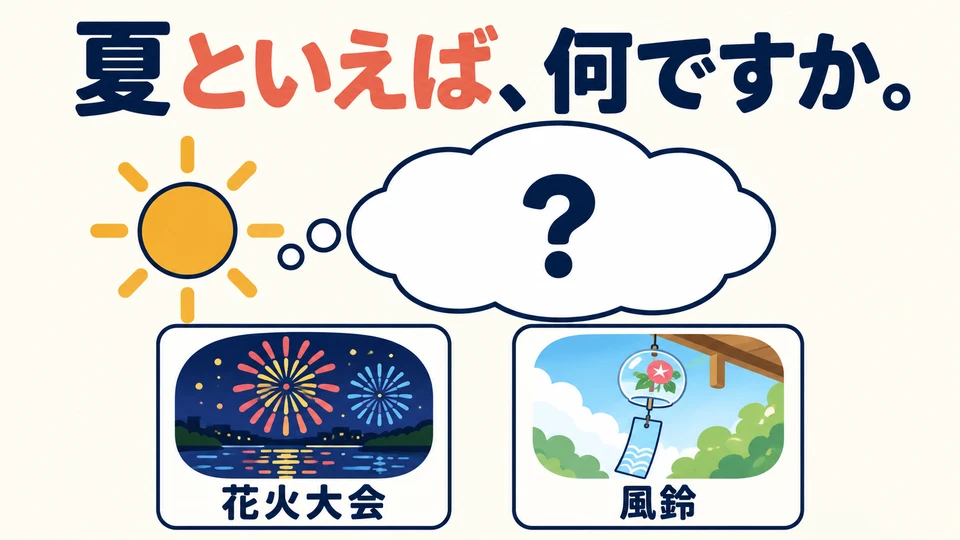
  7. Try saying what comes to mind first with 「夏といえば、…」, then compare your association with the example.

    Try saying what comes to mind first with 「夏といえば、…」, then compare your association with the example.

Example sentences

  • 京都きょうとkyoutoとtoいえieば、ba、古いふるいfurui町並みまちなみmachinamiやya伝統でんとうdentou工芸こうげいkougeiをo思いおもいomoi

In a conversation

Check yourself

  1. Level 1 · Recognise

    Which sentence is correct?

  2. Level 1 · Recognise

    Listen and choose the meaning

  3. Level 2 · Build

    Put the words in order

    Speaking of this region's local cuisine, it's the warm hot pot dishes eaten in winter.

  4. Level 3 · Use

    What goes in the blank?

    京都____、古い町並みや伝統工芸を思い出します。

    Speaking of Kyoto, I think of old streets and traditional crafts.

More grammar in this theme

  • 〜といえばspeaking of

Keep practising

Test your Japanese vocabulary12 adaptive questions, freeCheck your pronunciationRead aloud and get a scorePractise verb forms10-question conjugation quizSee the whole courseGrammar, vocabulary and quizzes by theme
出します。+だします。dashimasu。
京都きょうとkyouto
とto
言えいえie
ばba
宇治うじuji
抹茶まっちゃmaccha
です。desu。

Speaking of Kyoto, it reminds me of old streetscapes and traditional crafts. Plus, speaking of Kyoto, it is Uji matcha.

  • A
    来月、らいげつ、日本にっぽんに旅行りょこうに行くいくのですが、有名な日本ゆうめいなにっぽんの伝統的でんとうてきな工芸品なこうげいひんといえば何なんですか。

    A: I am going on a trip to Japan next month. Speaking of famous traditional Japanese crafts, what are they?

  • 夏なつnatsuのno風物ふうぶつfuubutsu詩しshiとtoいえieば、ba、花火はなびhanabi大会たいかいtaikaiやya風鈴ふうりんfuurinをo思いおもいomoi浮かべます。うかべます。ukabemasu。

    Speaking of summer traditions, fireworks festivals and wind chimes come to mind.

  • B
    日本にっぽんの工芸品こうげいひんといえば、美しいうつくしい織物おりものや焼き物やきものがすぐに思いおもい浮かびますうかびますね。

    B: Speaking of Japanese crafts, beautiful textiles and pottery immediately come to mind.

  • A
    そうですか。私わたしもお土産おみやげに綺麗な焼き物きれいなやきものを買っかって帰りたいかえりたいと思います。おもいます。

    A: I see. I would also like to buy some beautiful pottery as a souvenir to take home.

  • 〜に囲まれている・〜に囲まれたbe surrounded by
    〜が〜を占める・〜が占めるaccount for a share
    〜がちoften tends to
    〜に比べてcompared with
    〜に備えてin preparation for
    〜に代わって・〜に代わりin place of
    〜のような・〜のようにexamples such as
    〜としてin the role of
    〜に限るnothing beats
    〜を中心にcentered around
    〜をはじめとしてincluding ... as a leading example
    〜を通して・〜を通じてthrough a means
    〜ことからbased on the fact
    〜というとspeaking of; brings to mind
    Previous〜ことから
    Next〜というと