
JPEDLAB iconJPEDLAB
Save history

Create an account and play

Explore first, then save your progress whenever you are ready. No email address is required.

Start free
Read as articleCards
1/9

With the visitor’s permission, the guide humbly says they will explain, with a note of gratitude.

››

Lesson notes · ≈ JLPT N3 · Intermediate 3

〜させていただきます~ sasete itadakimasu

humbly do with permission

Use 〜させていただきます to humbly announce your own action when the other person’s permission or consideration is involved.

How it works
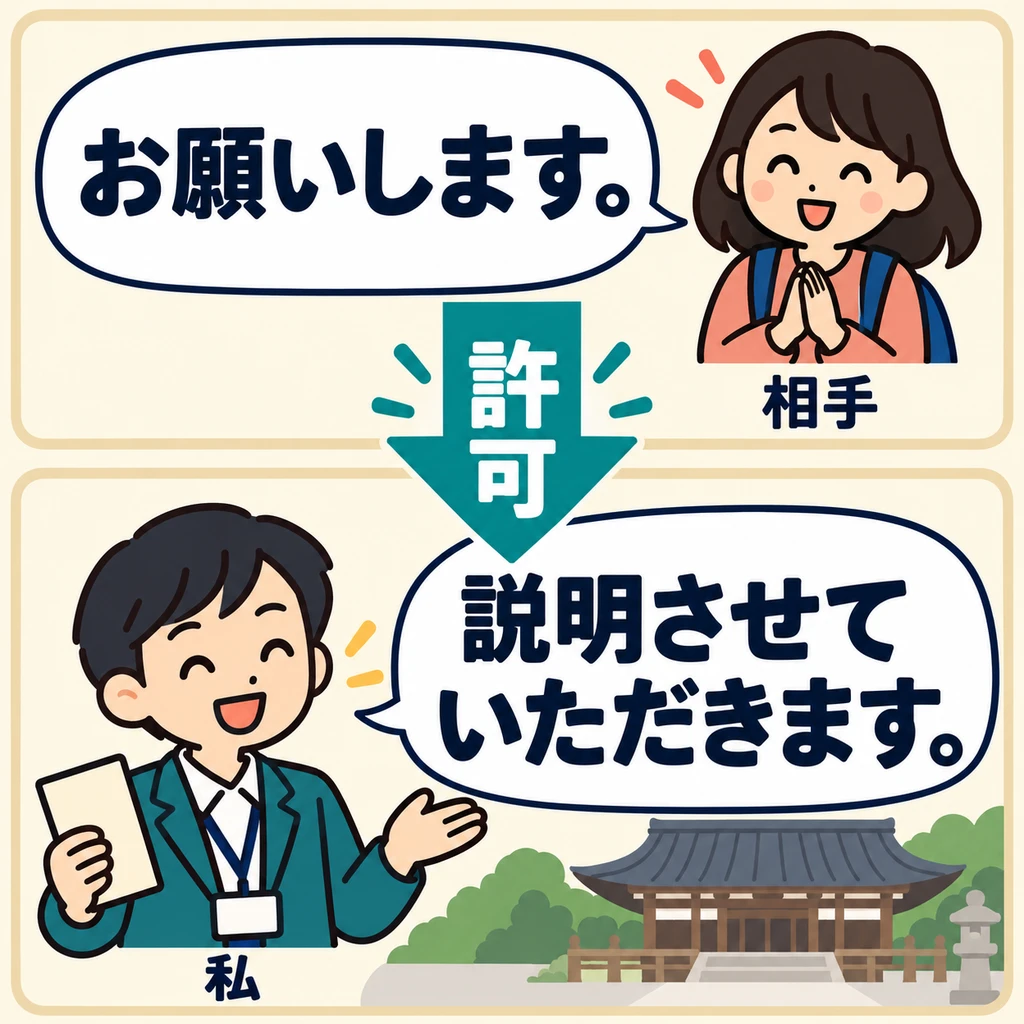
  1. With the visitor’s permission, the guide humbly says they will explain, with a note of gratitude.
    With the visitor’s permission, the guide humbly says they will explain, with a note of gratitude.

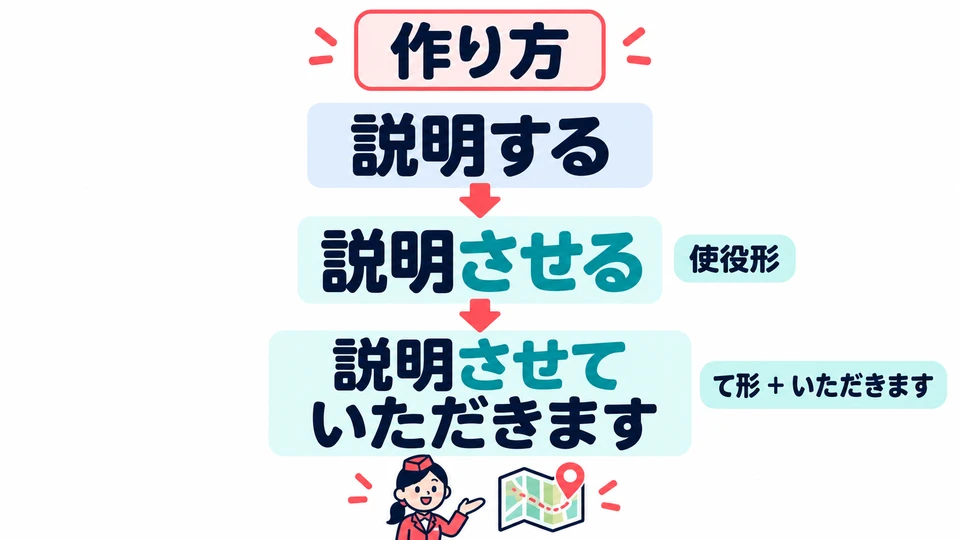
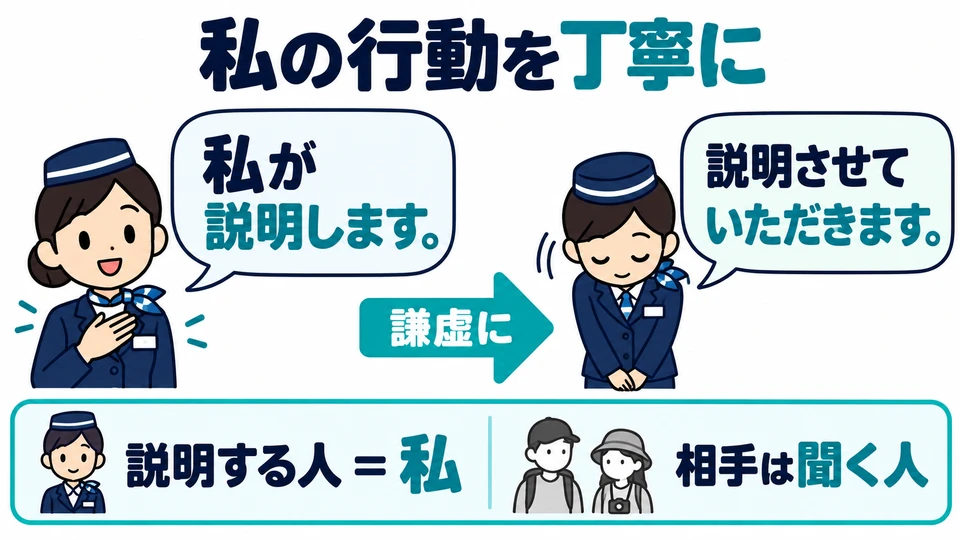
  2. First put the verb in the causative form, then add 「ていただきます」, as in 「説明させていただきます」.
    First put the verb in the causative form, then add 「ていただきます」, as in 「説明させていただきます」.

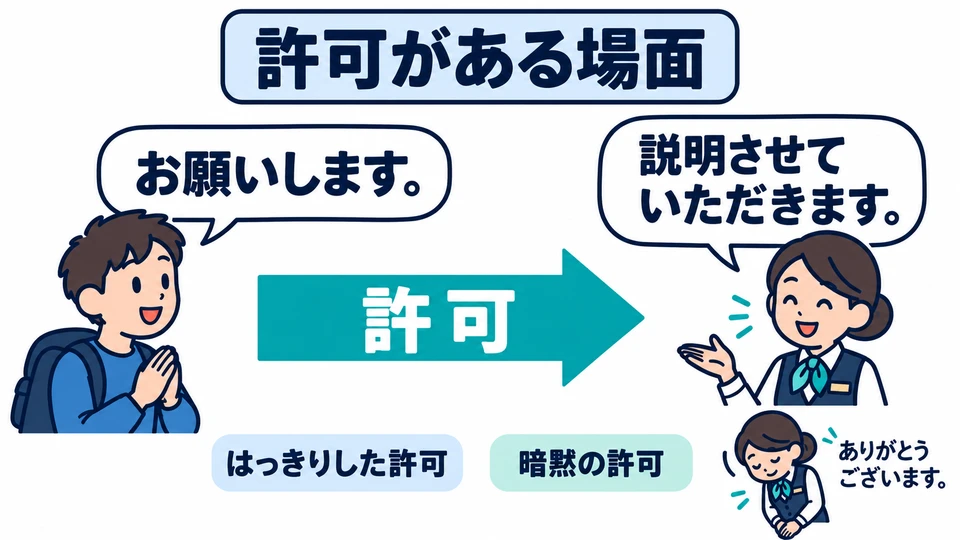
  3. Use it when you have the other person’s permission and benefit from their consideration. Permission can also be implied.
    Use it when you have the other person’s permission and benefit from their consideration. Permission can also be implied.

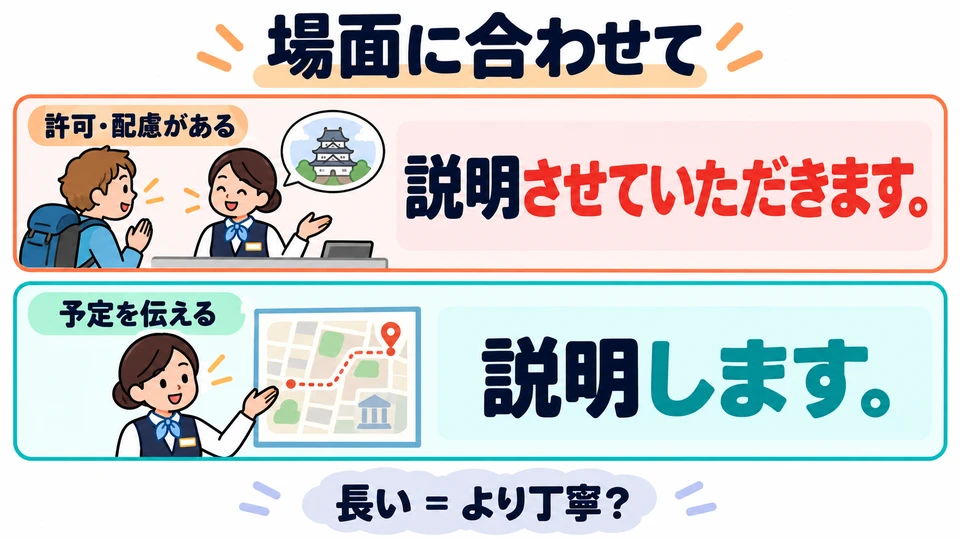
  4. Longer does not always mean more polite. Without permission or a favor involved, there is no need to replace every 「します」.
    Longer does not always mean more polite. Without permission or a favor involved, there is no need to replace every 「します」.

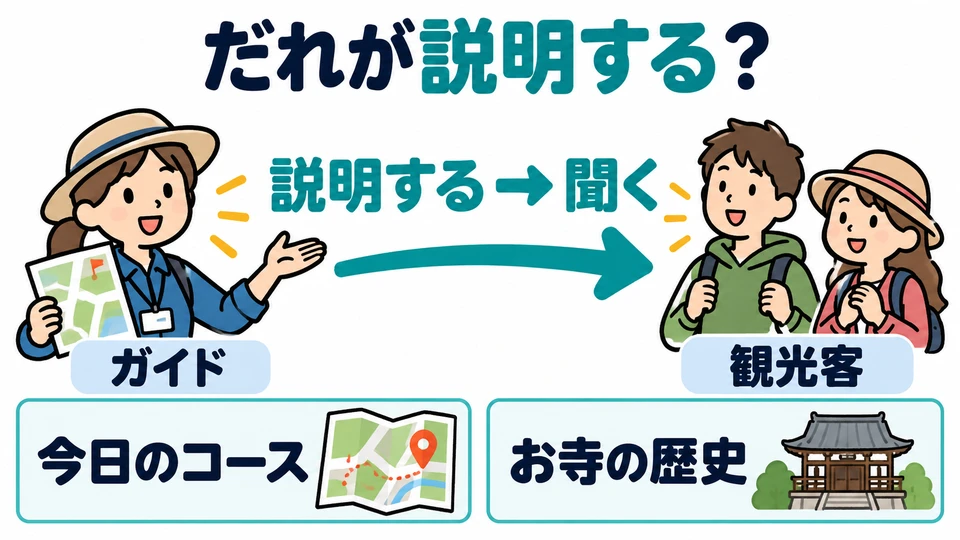
  5. In the examples, the guide explains the route and introduces the temple’s history. The visitors listen to the explanation.
    In the examples, the guide explains the route and introduces the temple’s history. The visitors listen to the explanation.

  • Both sentences humbly announce the speaker’s own action. They do not use honorific language to say the visitors will explain.

    Both sentences humbly announce the speaker’s own action. They do not use honorific language to say the visitors will explain.

  • Example sentences

    • それsoreでdeは、わ、wa、これkoreからkara本日ほんじつhonjitsuのnoコースこーすkoosuをo説明せつめいsetsumeiさせsaseてteいただきます。itadakimasu。

      Now, I would like to explain today's course.

    • まず、mazu、このkonoお寺おてらoteraのno歴史れきしrekishiをo簡単に紹介かんたんにしょうかいkantannishoukaiさせsaseてteいただきます。itadakimasu。

      First, I would like to briefly introduce the history of this temple.

    In a conversation

    • A
      本殿ほんでんの見学けんがくを始めるはじめる前まえに、注意ちゅうい事項じこうをお伝えさせおつたえさせていただきます。

      A: Before we start touring the main hall, I would like to share some precautions.

    • B
      はい、よろしくお願いおねがいします。

      B: Okay, thank you.

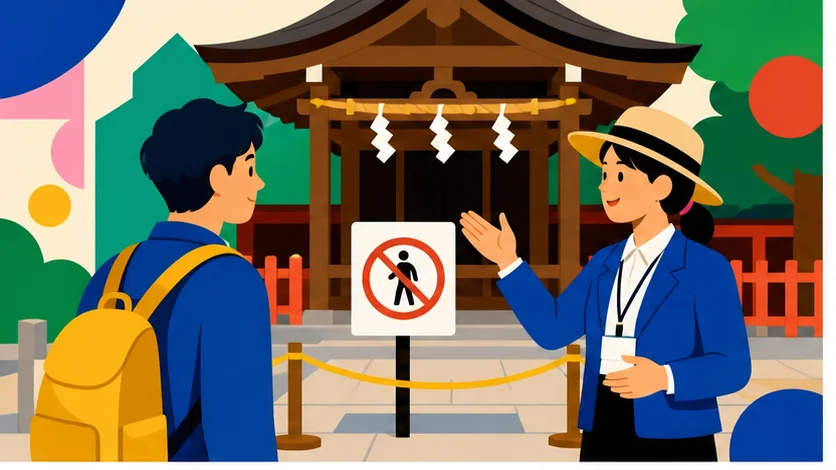
    • A
      立入たちいり禁止きんしのエリアえりあにはわ入らないようにはいらないようにお気おきをつけください。

      A: Please be careful not to enter the off-limits areas.

    Check yourself

    1. Level 1 · Recognise

      Which sentence is correct?

    2. Level 1 · Recognise

      Listen and choose the meaning

    3. Level 2 · Build

      Put the words in order

      Well then, I will explain today's course.

    4. Level 3 · Use

      What goes in the blank?

      それでは、これから本日のコースを説明____。

      Well then, I will now explain today's course.

    More grammar in this theme

    • 〜といったらtypical association with a topic
    • とても〜ないcannot possibly do
    • 〜はもちろん・〜はもとよりnot only; but also
    • 〜させていただきますhumbly do with permission
    • ご〜いたします・お〜いたしますhumbly provide a service
    • 〜つもりだintend to; believe one did
    • 〜ように思うseem; I think
    • 〜ておりますformal humble action or state
    • 〜かねますcannot accommodate a request
    • 〜ことに(は)to one’s surprise; interestingly
    • 〜だけあって・〜だけのことはあるas expected; worth it
    • 〜ついでにwhile at it; taking the opportunity
    Previous〜はもちろん・〜はもとよりNextご〜いたします・お〜いたします

    Keep practising

    Test your Japanese vocabulary12 adaptive questions, freeCheck your pronunciationRead aloud and get a scorePractise verb forms10-question conjugation quizSee the whole courseGrammar, vocabulary and quizzes by theme
    See the whole course
    Intermediate 3
    Travel Information and Trip Sharing