JPEDLAB iconJPEDLAB
Save history

Create an account and play

Explore first, then save your progress whenever you are ready. No email address is required.

Start free
Read as articleCards
See the whole course›Intermediate 3›Travel Information and Trip Sharing

Japanese grammar · ≈ JLPT N3 · Intermediate 3

〜つもりだ~ tsumori da

intend to; believe one did

With 〜つもりだ, a dictionary-form verb expresses an intention, while a た-form verb expresses what you believe you have done.

Start the interactive lessonIllustrated cards, audio and speaking practice

How it works

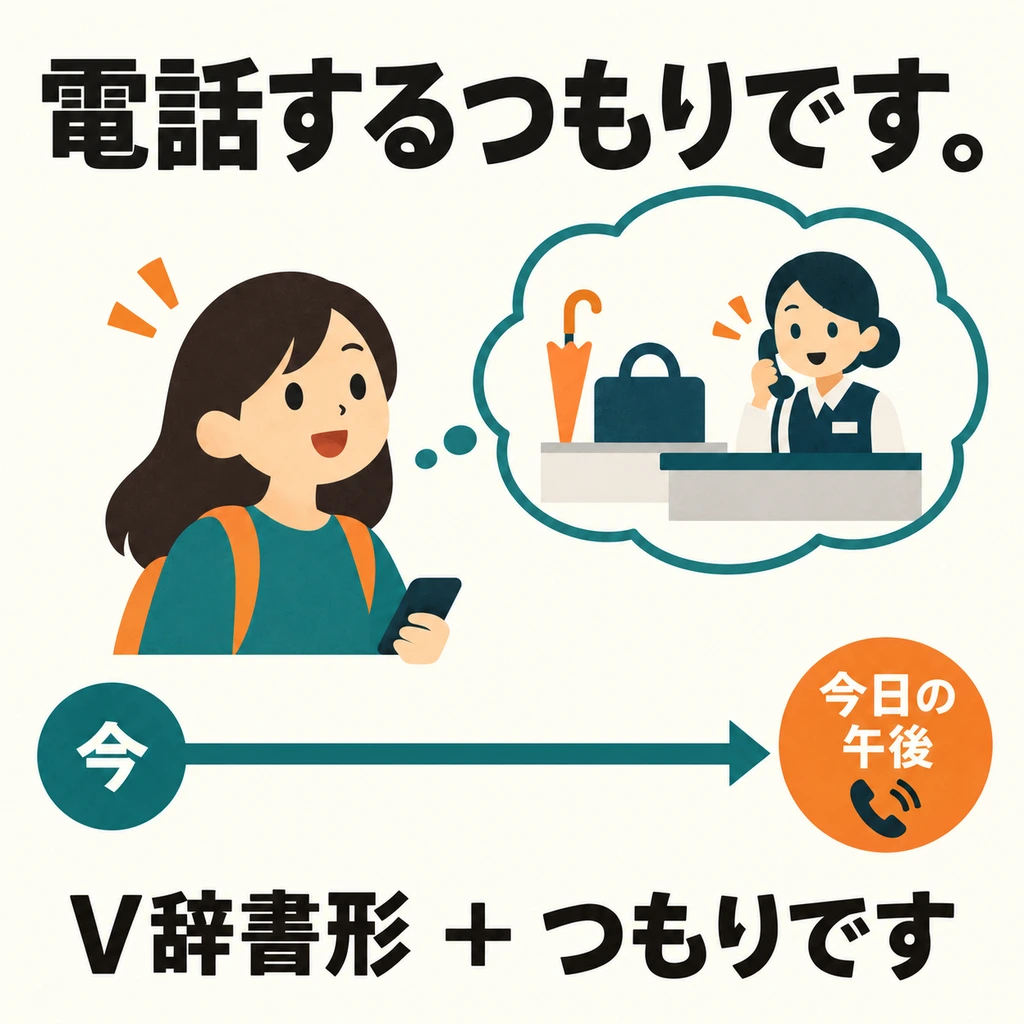
  1. Planning to call this afternoon; the call has not happened yet. The dictionary form + 「つもり」 expresses your intention.

    Planning to call this afternoon; the call has not happened yet. The dictionary form + 「つもり」 expresses your intention.

  2. The person believes they have prepared their ID. The た-form + 「つもり」 expresses what you believe you have done.
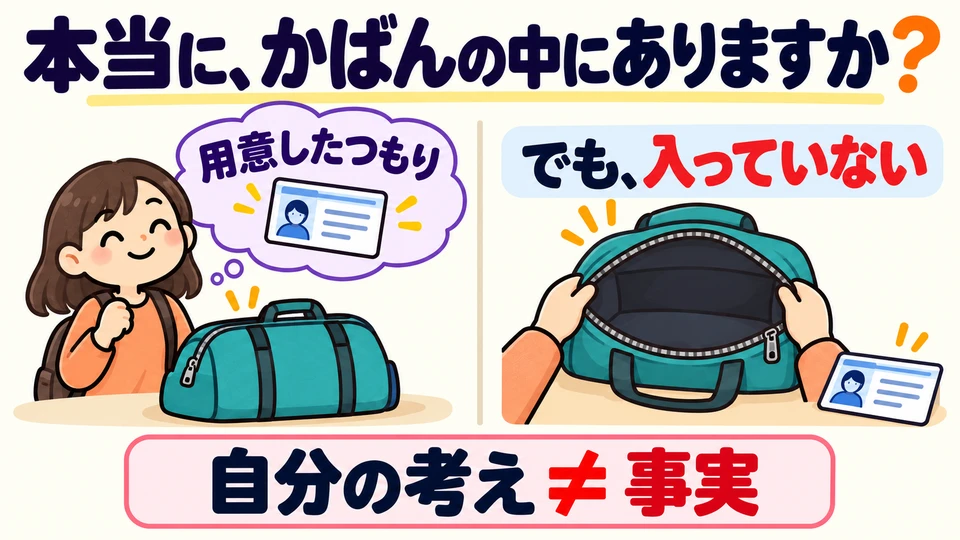
    The person believes they have prepared their ID. The た-form + 「つもり」 expresses what you believe you have done.

  3. Look at the picture: is the ID really in the bag? 「用意したつもり」 only expresses what the person believes; reality may differ.
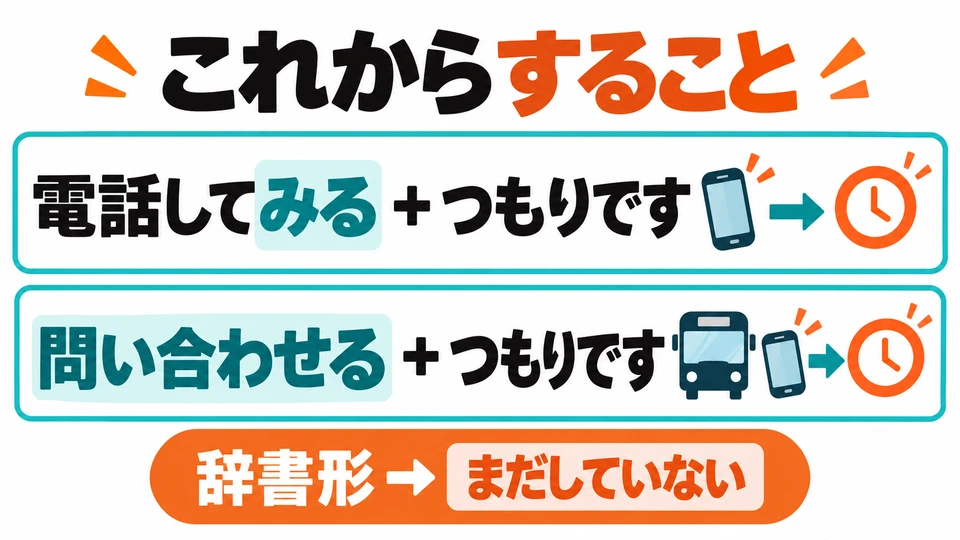
    Look at the picture: is the ID really in the bag? 「用意したつもり」 only expresses what the person believes; reality may differ.

  4. In the examples, 「みる」 and 「問い合わせる」 are both dictionary forms. They show an intention to act; the actions have not happened yet.
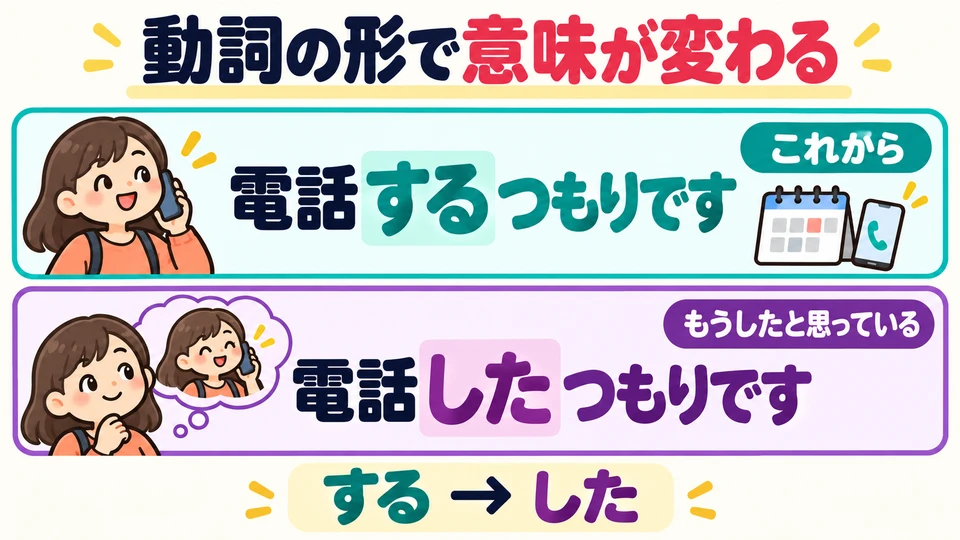
    In the examples, 「みる」 and 「問い合わせる」 are both dictionary forms. They show an intention to act; the actions have not happened yet.

  5. Changing it to 「電話したつもり」 means you believe you have already called. Pay attention to the verb form before 「つもり」.

    Changing it to 「電話したつもり」 means you believe you have already called. Pay attention to the verb form before 「つもり」.

Example sentences

  • 忘れ物わすれものwasuremonoセンターせんたーsentaaにni電話でんわdenwaしshiてteみるmiruつもりtsumoriです。desu。

    I plan to try calling the lost and found center.

In a conversation

  • A
    忘れ物わすれものセンターせんたーに問いとい合わせるあわせるつもりですか。

    A: Do you plan to contact the lost and found center?

  • B
    はい、今日きょうの午後ごごに電話

Check yourself

  1. Level 1 · Recognise

    Which sentence is correct?

  2. Level 1 · Recognise

    Listen and choose the meaning

  3. Level 2 · Build

    Put the words in order

    I plan to try calling the lost-and-found center.

  4. Level 3 · Use

    What goes in the blank?

    忘れ物センターに電話してみる____。

    I plan to try calling the lost and found center.

More grammar in this theme

  • 〜つもりだintend to; believe one did

Keep practising

Test your Japanese vocabulary12 adaptive questions, freeCheck your pronunciationRead aloud and get a scorePractise verb forms10-question conjugation quizSee the whole courseGrammar, vocabulary and quizzes by theme
ホテルほてるhoteruにni戻るもどるmodoru前まえmaeに、ni、バスばすbasu会社がいしゃgaishaにniもmo問いといtoi合わせるあわせるawaseruつもりtsumoriです。desu。

Before returning to the hotel, I intend to make inquiries with the bus company as well.

でんわ
し
て
みる
つもり
です。

B: Yes, I plan to try calling them this afternoon.

  • A
    本人ほんにん確認かくにんが必要ひつようなので、身分みぶん証明書しょうめいしょを用意よういしておくといいですよ。

    A: Since identity verification is required, you should prepare your ID.

  • 〜といったらtypical association with a topic
    とても〜ないcannot possibly do
    〜はもちろん・〜はもとよりnot only; but also
    〜させていただきますhumbly do with permission
    ご〜いたします・お〜いたしますhumbly provide a service
    〜ように思うseem; I think
    〜ておりますformal humble action or state
    〜かねますcannot accommodate a request
    〜ことに(は)to one’s surprise; interestingly
    〜だけあって・〜だけのことはあるas expected; worth it
    〜ついでにwhile at it; taking the opportunity
    Previousご〜いたします・お〜いたします
    Next〜ように思う