
JPEDLAB iconJPEDLAB
Save history

Create an account and play

Explore first, then save your progress whenever you are ready. No email address is required.

Start free
Read as articleCards
1/8

The safety check is the same. When explaining it to passengers, use a more formal expression; the action’s meaning stays the same.

››

Lesson notes · ≈ JLPT N3 · Intermediate 3

〜ております~te orimasu

formal humble action or state

Replace ています with 〜ております to describe your own or your group’s actions and states formally and humbly.

How it works
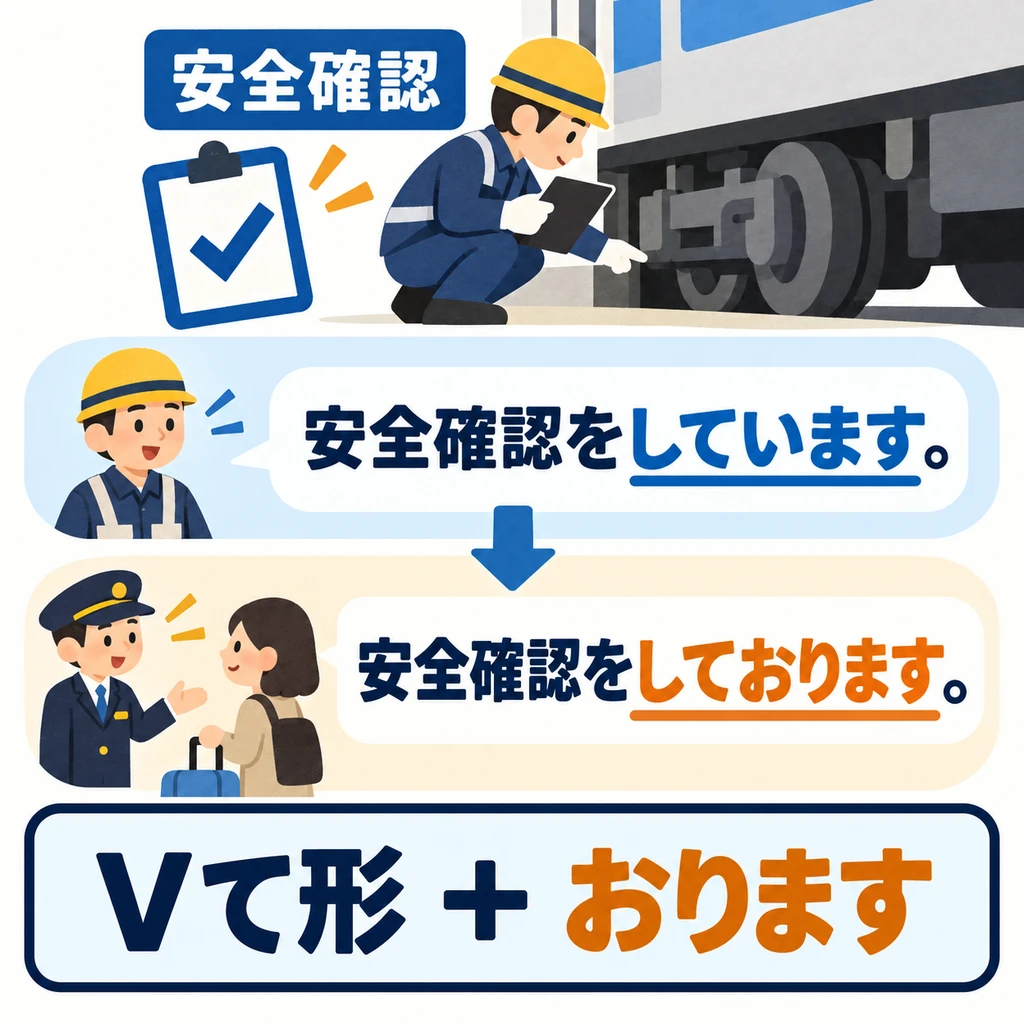
  1. The safety check is the same. When explaining it to passengers, use a more formal expression; the action’s meaning stays the same.
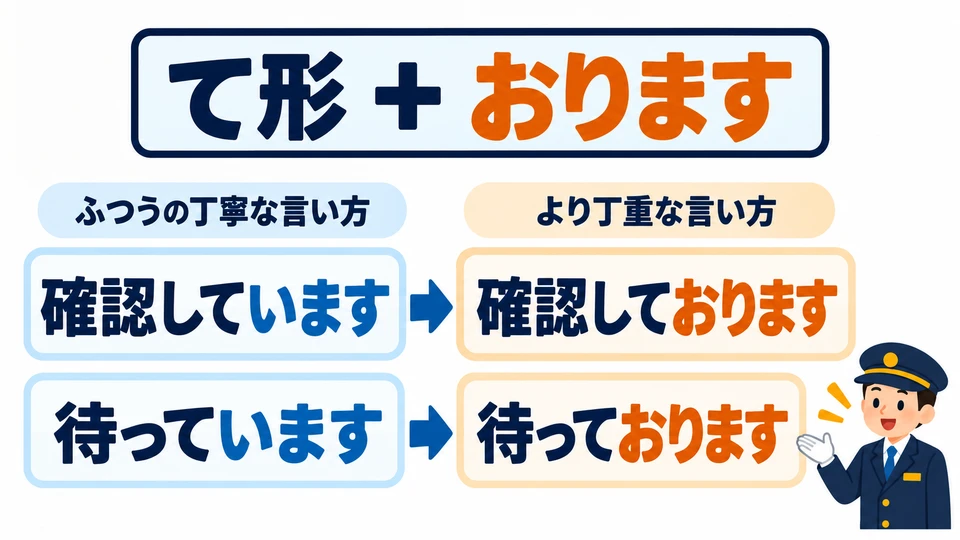
    The safety check is the same. When explaining it to passengers, use a more formal expression; the action’s meaning stays the same.

  2. Use the verb’s て-form. Replace 「ています」 with 「ております」 to make the expression more formal.
    Use the verb’s て-form. Replace 「ています」 with 「ております」 to make the expression more formal.

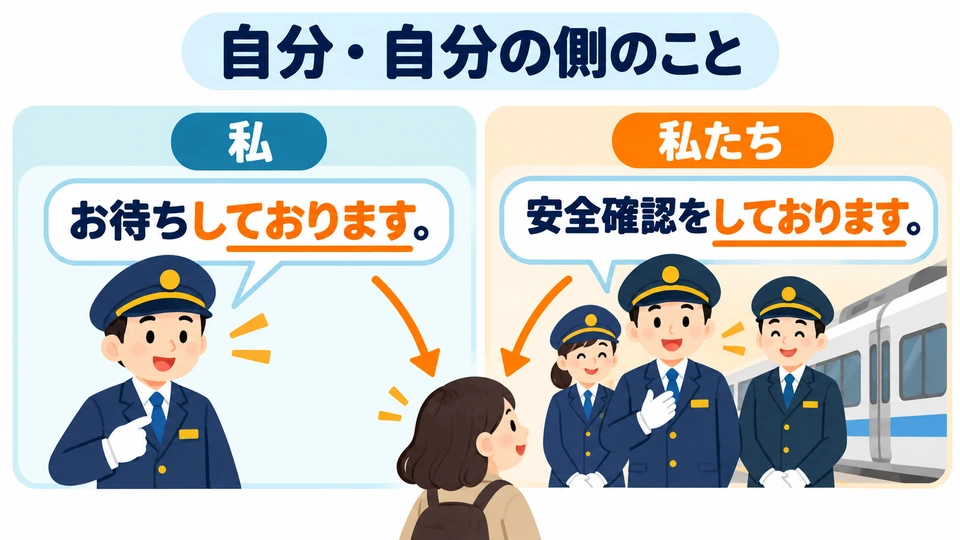
  3. Use this expression to describe your own actions or states, or those of your group, humbly and formally.
    Use this expression to describe your own actions or states, or those of your group, humbly and formally.

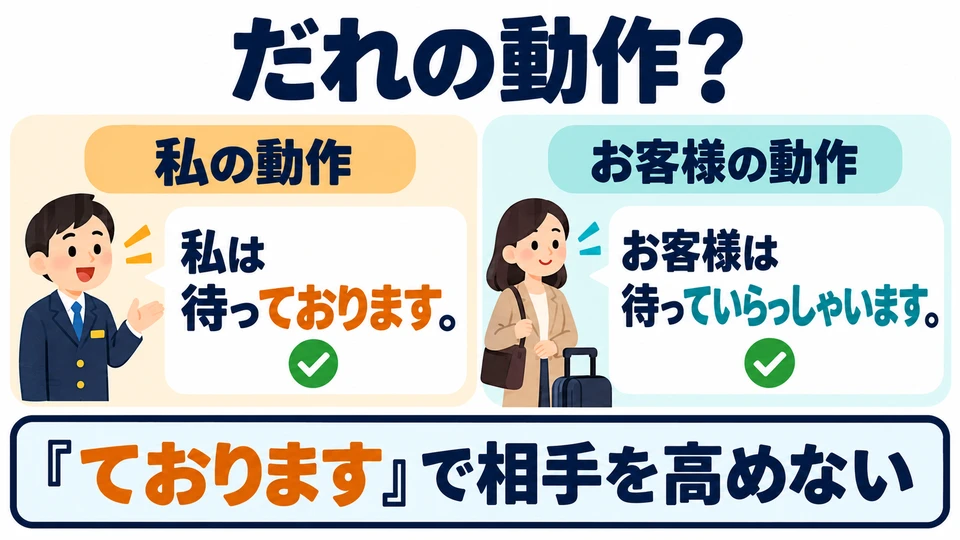
  4. Remember: this is a formal way to speak about your own side. It is not an honorific expression that elevates the other person’s actions.
    Remember: this is a formal way to speak about your own side. It is not an honorific expression that elevates the other person’s actions.

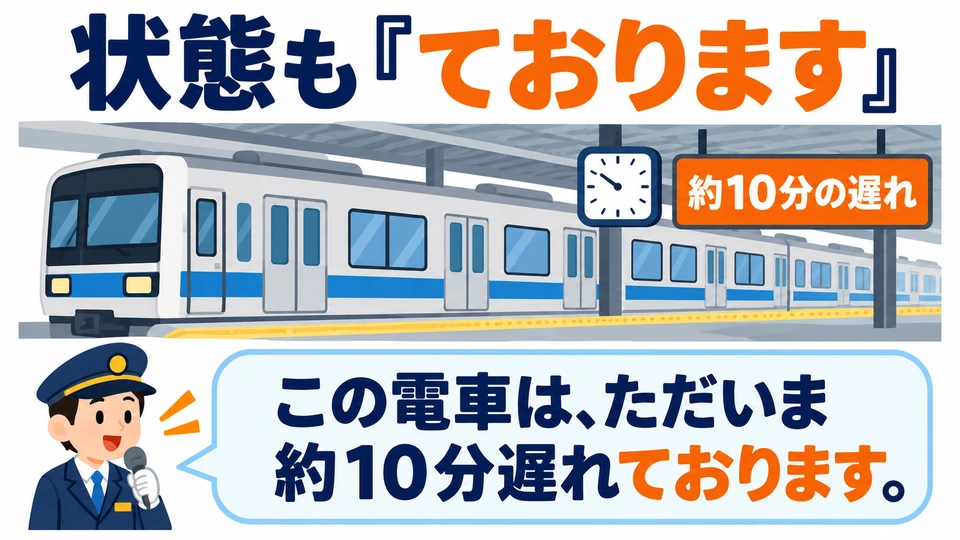
  5. In the example, the delay is the train’s current state. This expression can describe states too, as in a formal announcement.

    In the example, the delay is the train’s current state. This expression can describe states too, as in a formal announcement.

Example sentences

  • このkono電車でんしゃdenshaは、わ、wa、ただいまtadaima約10やくじゅっyakuju分ぷんpun遅れおくれokureてteおります。orimasu。

    This train is currently delayed by about 10 minutes.

  • ただいま、tadaima、安全あんぜんanzen確認かくにんkakuninをo行っおこなっokonatてteおります。orimasu。

    We are currently conducting a safety check.

In a conversation

  • A
    この電車、でんしゃ、まだ動かないうごかないんですか?か

    A: Is this train still not moving?

  • B
    現在、げんざい、運転うんてん見合わせみあわせの原因げんいんを確認かくにんしております。

    B: We are currently confirming the cause of the suspension of operations.

  • A
    分かりわかり次第、しだい、案内板あんないばんに表示ひょうじされますか?か

    A: Will it be displayed on the information board as soon as it is known?

  • B
    はい、判明はんめい次第しだいすみやかに案内すみやかにあんない表示ひょうじにてお知らせおしらせしております。

    B: Yes, we will inform you on the information display as soon as it is confirmed.

Check yourself

  1. Level 1 · Recognise

    Which sentence is correct?

  2. Level 1 · Recognise

    Listen and choose the meaning

  3. Level 2 · Build

    Put the words in order

    This train is currently running about 10 minutes late.

  4. Level 3 · Use

    What goes in the blank?

    この電車は、ただいま約10分遅れて____。

    This train is currently running about 10 minutes late.

More grammar in this theme

  • 〜といったらtypical association with a topic
  • とても〜ないcannot possibly do
  • 〜はもちろん・〜はもとよりnot only; but also
  • 〜させていただきますhumbly do with permission
  • ご〜いたします・お〜いたしますhumbly provide a service
  • 〜つもりだintend to; believe one did
  • 〜ように思うseem; I think
  • 〜ておりますformal humble action or state
  • 〜かねますcannot accommodate a request
  • 〜ことに(は)to one’s surprise; interestingly
  • 〜だけあって・〜だけのことはあるas expected; worth it
  • 〜ついでにwhile at it; taking the opportunity
Previous〜ように思うNext〜かねます

Keep practising

Test your Japanese vocabulary12 adaptive questions, freeCheck your pronunciationRead aloud and get a scorePractise verb forms10-question conjugation quizSee the whole courseGrammar, vocabulary and quizzes by theme
See the whole course
Intermediate 3
Travel Information and Trip Sharing