JPEDLAB iconJPEDLAB
Save history

Create an account and play

Explore first, then save your progress whenever you are ready. No email address is required.

Start free
Read as articleCards
See the whole course›Intermediate 3›Science, Technology, and Society

Japanese grammar · ≈ JLPT N3 · Intermediate 3

〜べきだ/〜べきではない~beki da / ~beki dewa nai

should / should not

Use 「〜べきだ」 for what you believe ought to be done, and 「〜べきではない」 for what should not be done.

Start the interactive lessonIllustrated cards, audio and speaking practice

How it works

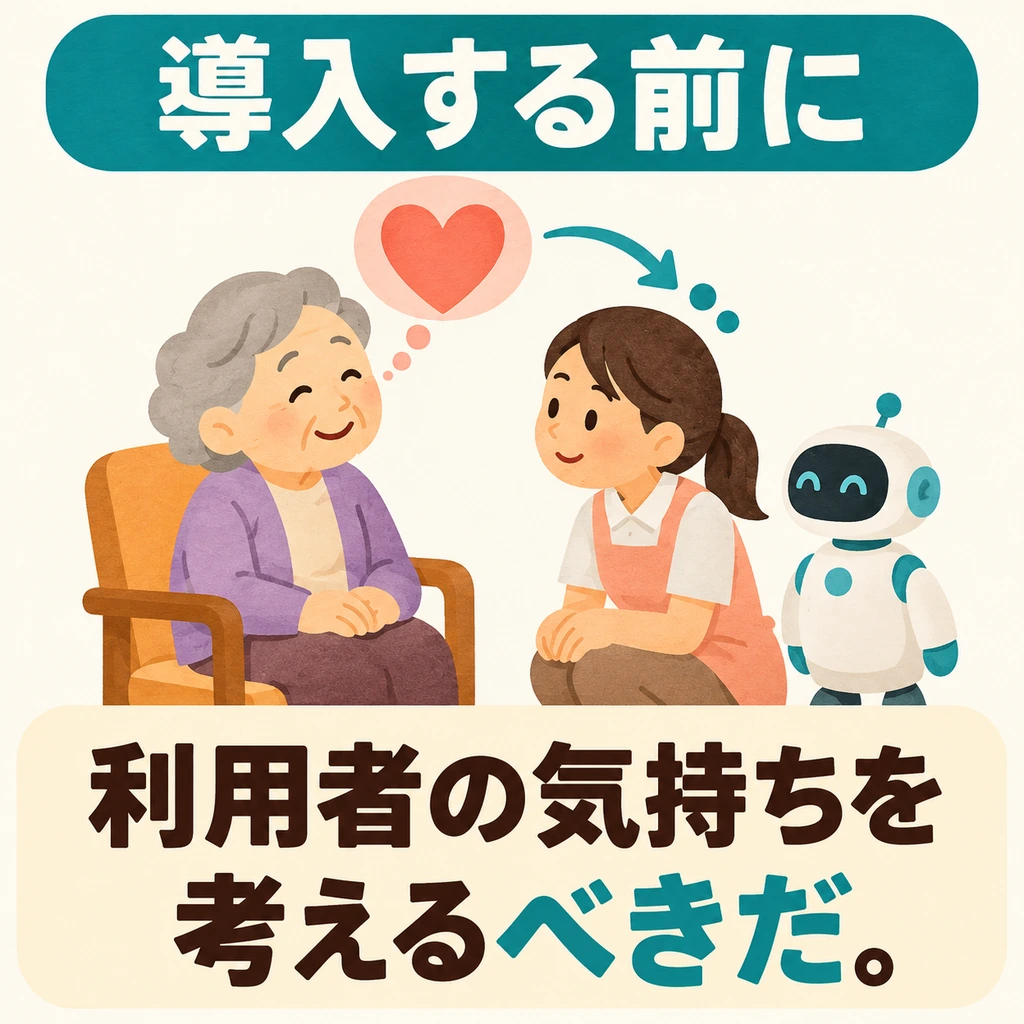
  1. Considering users’ feelings is a responsibility; べきだ expresses what one ought to do, based on common sense or moral values.
    Considering users’ feelings is a responsibility; べきだ expresses what one ought to do, based on common sense or moral values.

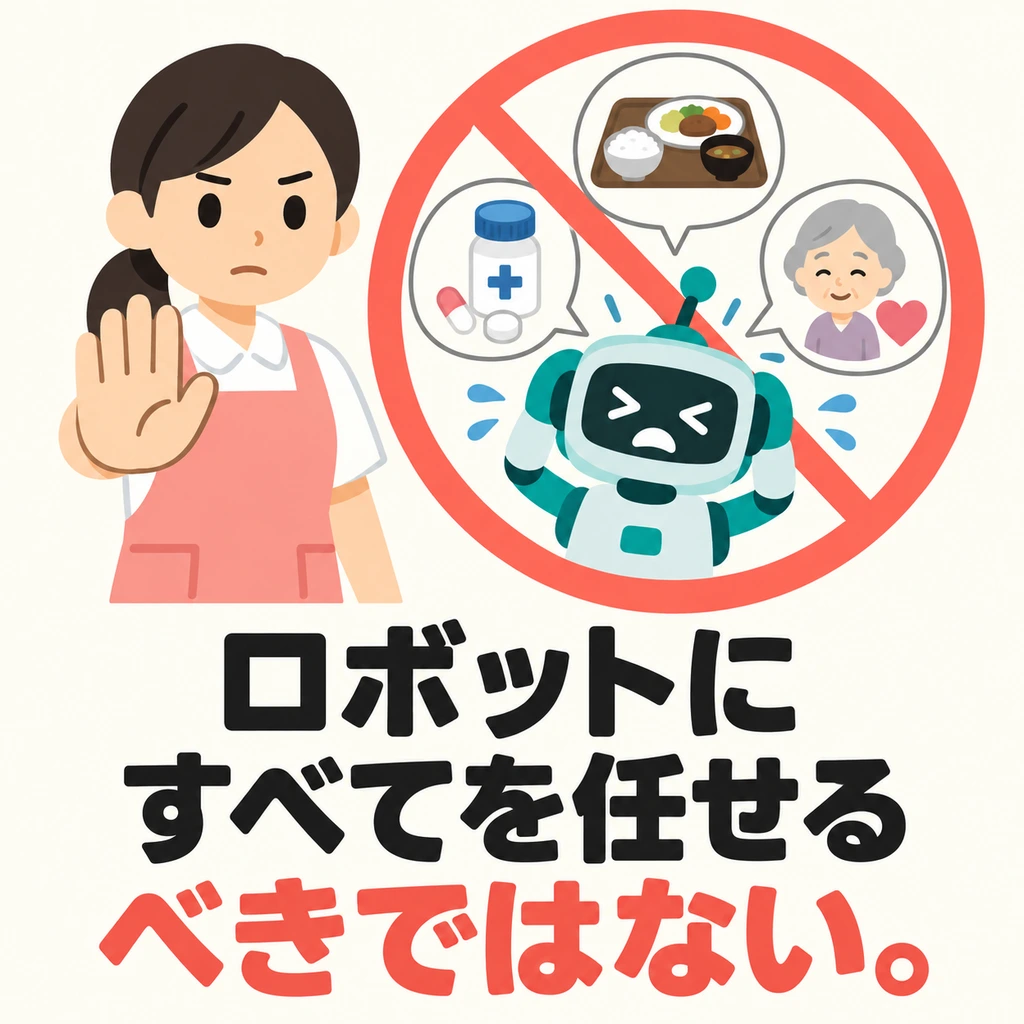
  2. Is it appropriate to leave everything to robots? べきではない means “should not do,” not “do not need to do.”
    Is it appropriate to leave everything to robots? べきではない means “should not do,” not “do not need to do.”

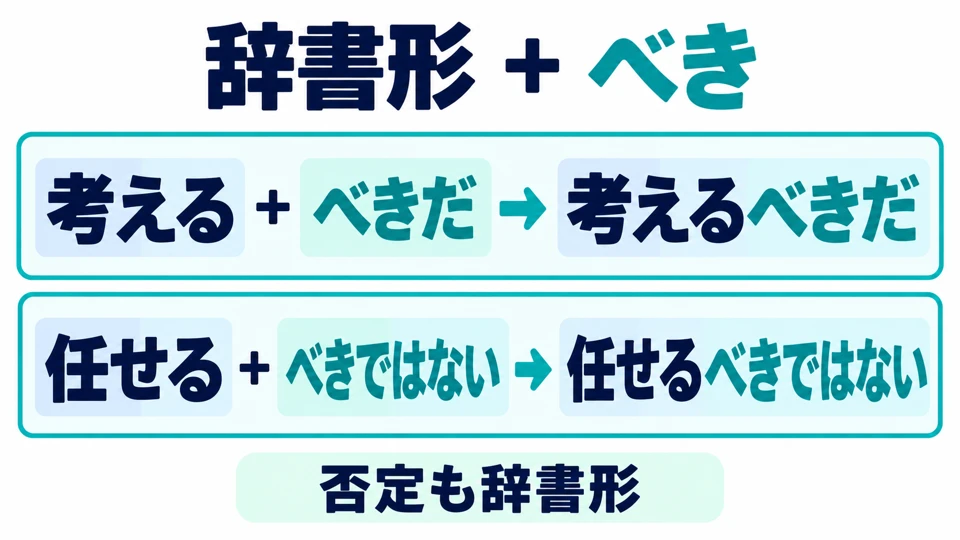
  3. Attach it to the verb’s dictionary form: 考えるべきだ. Keep the dictionary form for the negative too: 任せるべきではない.
    Attach it to the verb’s dictionary form: 考えるべきだ. Keep the dictionary form for the negative too: 任せるべきではない.

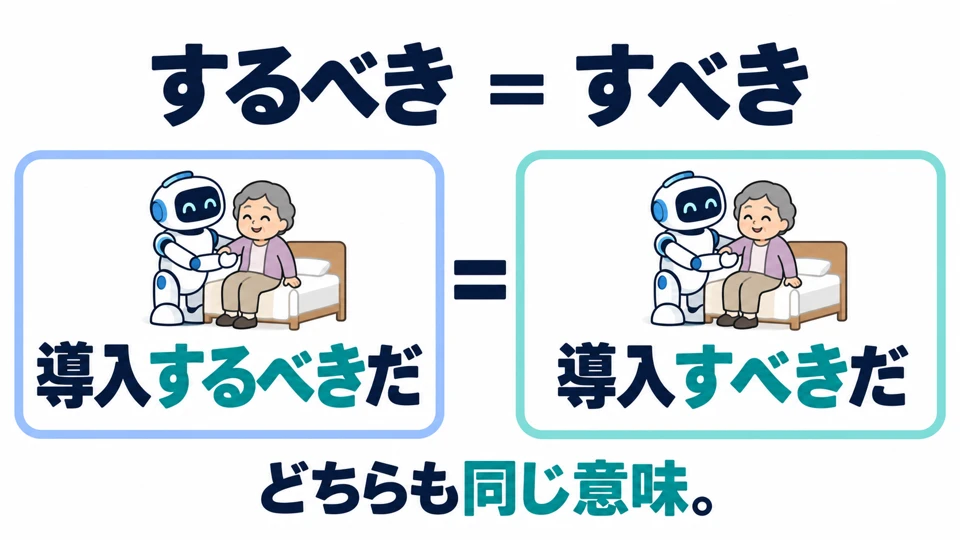
  4. する has two possible forms: 導入するべき can also be 導入すべき, with the same meaning.
    する has two possible forms: 導入するべき can also be 導入すべき, with the same meaning.

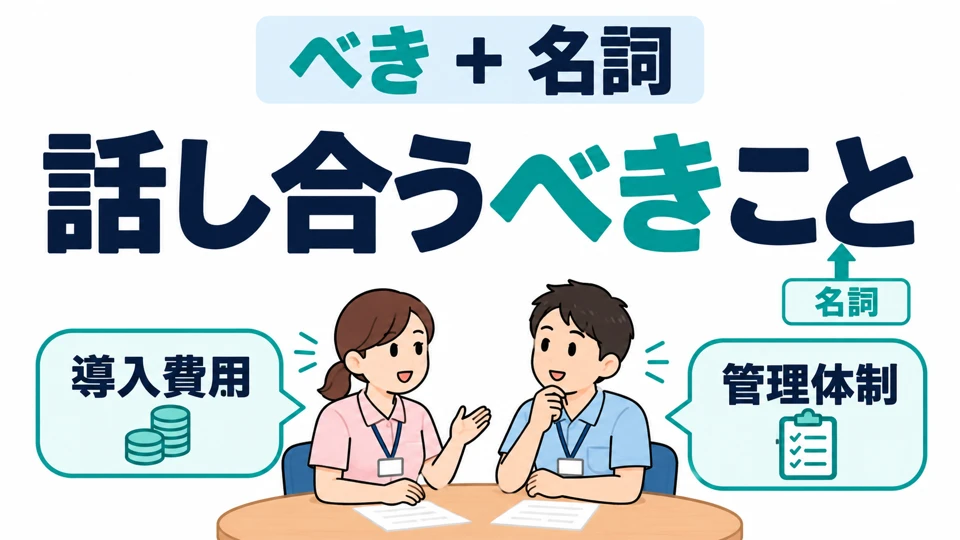
  5. べき can directly modify a noun: 話し合うべきこと means “things that should be discussed.”
    べき can directly modify a noun: 話し合うべきこと means “things that should be discussed.”

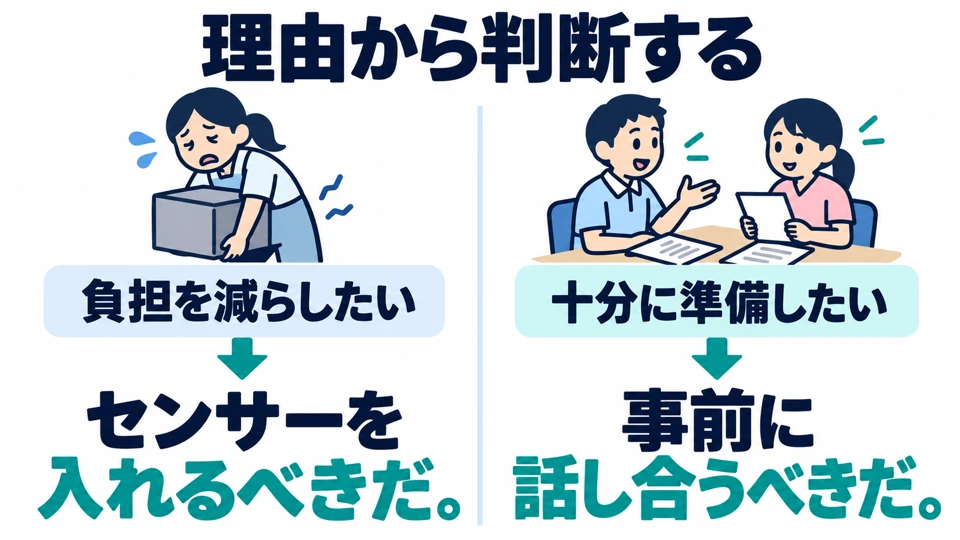
  6. Reducing the workload or preparing thoroughly can both justify a judgment; べきだ expresses what the speaker believes should be done.
    Reducing the workload or preparing thoroughly can both justify a judgment; べきだ expresses what the speaker believes should be done.

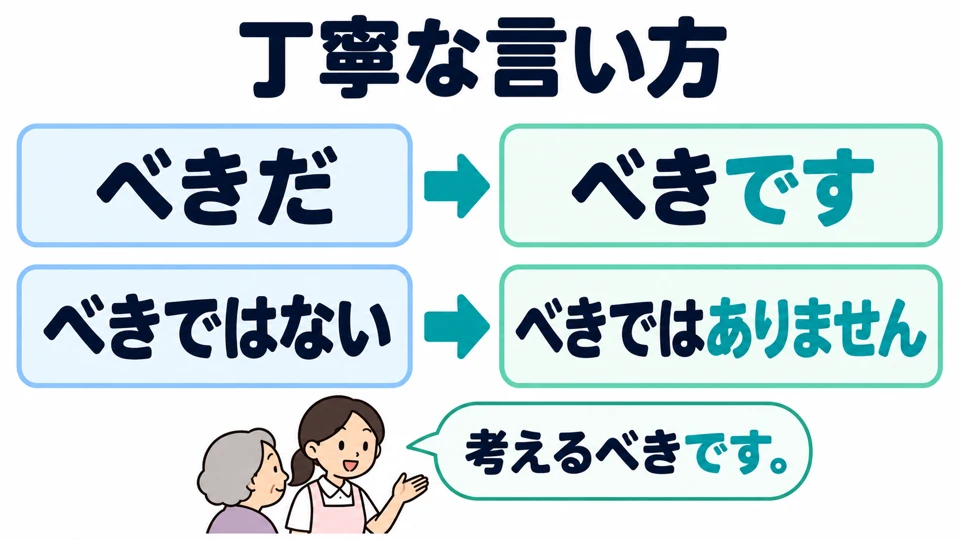
  7. In the examples, べきです and べきではありません are the polite affirmative and negative forms, respectively.

    In the examples, べきです and べきではありません are the polite affirmative and negative forms, respectively.

Example sentences

  • 介護かいごkaigoロボットろぼっとrobottoをo導入どうにゅうdounyuuするsuru前まえmaeに、ni、利用者りようしゃriyoushaのno気持ちきもちkimochiをo

In a conversation

Check yourself

  1. Level 1 · Recognise

    Which sentence is correct?

  2. Level 1 · Recognise

    Listen and choose the meaning

  3. Level 2 · Build

    Put the words in order

    Before introducing a care robot, you should fully consider the feelings of the user.

  4. Level 3 · Use

    What goes in the blank?

    介護ロボットを導入する前に、利用者の気持ちを十分に考える____。

    Before introducing care robots, one should fully consider the users' feelings.

More grammar in this theme

  • 〜べきだ/〜べきではないshould / should not

Keep practising

Test your Japanese vocabulary12 adaptive questions, freeCheck your pronunciationRead aloud and get a scorePractise verb forms10-question conjugation quizSee the whole courseGrammar, vocabulary and quizzes by theme
十分に考えるべきです。じゅうぶんにかんがえるべきです。juubunnikangaerubekidesu。

Before introducing care robots, we should fully consider the feelings of the users.

  • A
    介護かいご職員しょくいんの負担ふたんを減らすへらすためにも、新しいあたらしい見み守りまもりセンサーせんさーを入れるべきですいれるべきですよ。

    A: To reduce the burden on care staff, we should introduce new monitoring sensors.

  • ロボットろぼっとrobottoにniすべてsubeteをo任せるべきでまかせるべきでmakaserubekideはわwaありません。arimasen。

    We should not leave everything to robots.

  • B
    そうですね。でも、導入どうにゅう費用ひようや管理かんり体制たいせいについても事前じぜんによく話しはなし合うべきです。あうべきです。

    B: That's true. But we should also discuss the introduction costs and management system thoroughly in advance.

  • A
    確かに、たしかに、みんなが納得なっとくしてから導入どうにゅうを決めるべきですきめるべきですね。

    A: Indeed, we should decide to introduce them after everyone is in agreement.

  • 〜といえばspeaking of; typical association
    〜というとtopic association
    〜ほど〜はないnothing is as … as
    〜(より)ほかない/〜(より)ほかしかたがないhave no other choice
    〜(っ)きり/〜(っ)きりだunchanged since then
    〜最中にright in the middle of
    〜かけだ/〜かけの/〜かけるstarted but unfinished
    〜ざるを得ないhave no choice but to
    〜を契機にas a trigger for change
    〜をめぐってconcerning an issue
    〜上のrelated to an aspect
    〜上from a certain perspective
    Previous〜というと
    Next〜ほど〜はない