Lesson notes · ≈ JLPT N3 · Intermediate 3
〜べきだ/〜べきではない~beki da / ~beki dewa nai
should / should not
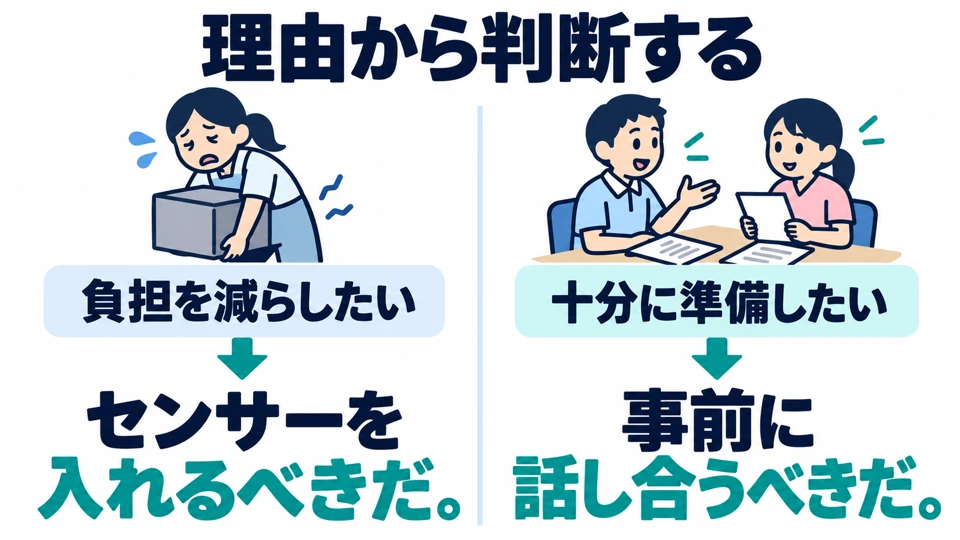
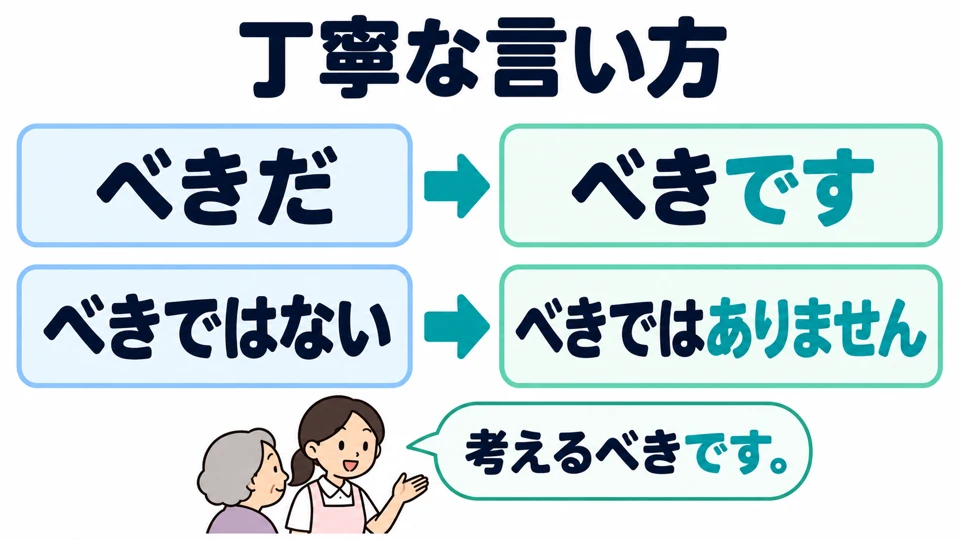
Use 「〜べきだ」 for what you believe ought to be done, and 「〜べきではない」 for what should not be done.
How it works

Considering users’ feelings is a responsibility; べきだ expresses what one ought to do, based on common sense or moral values.
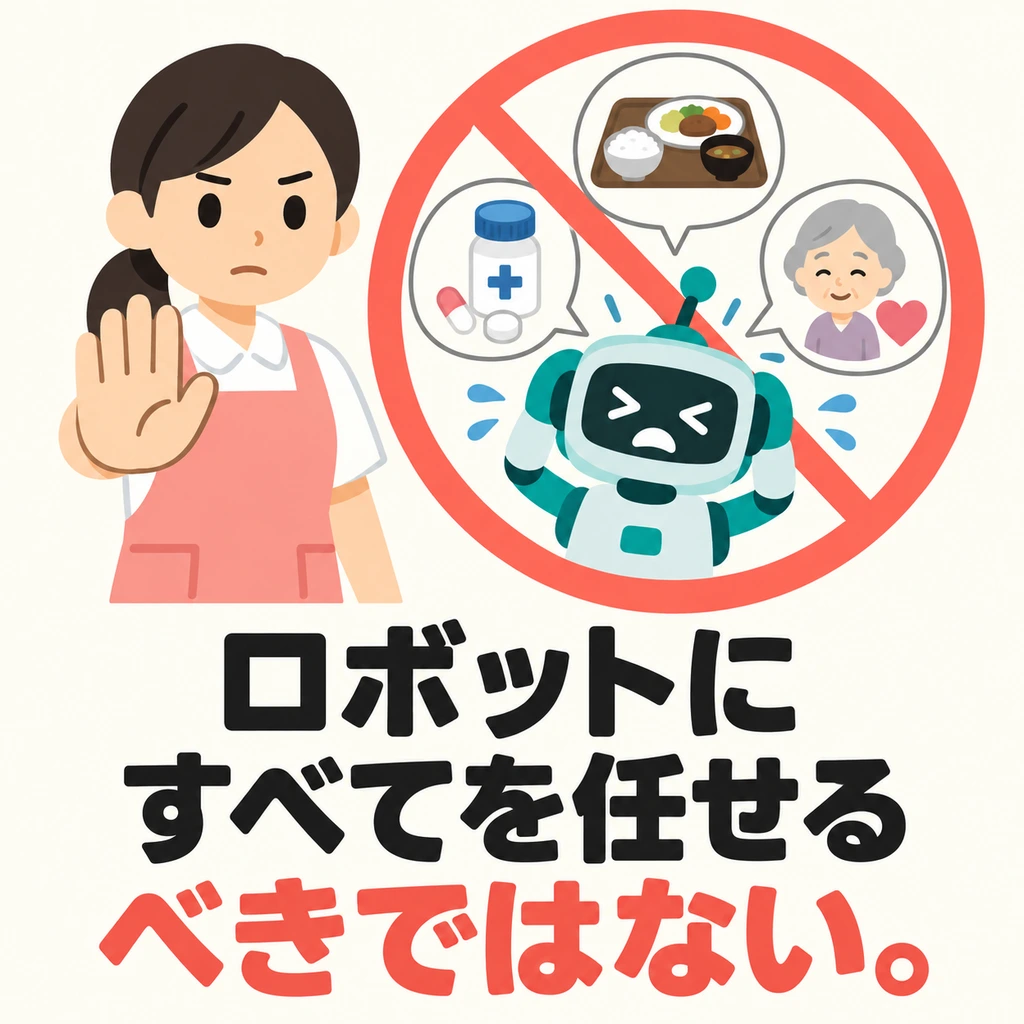
Is it appropriate to leave everything to robots? べきではない means “should not do,” not “do not need to do.”
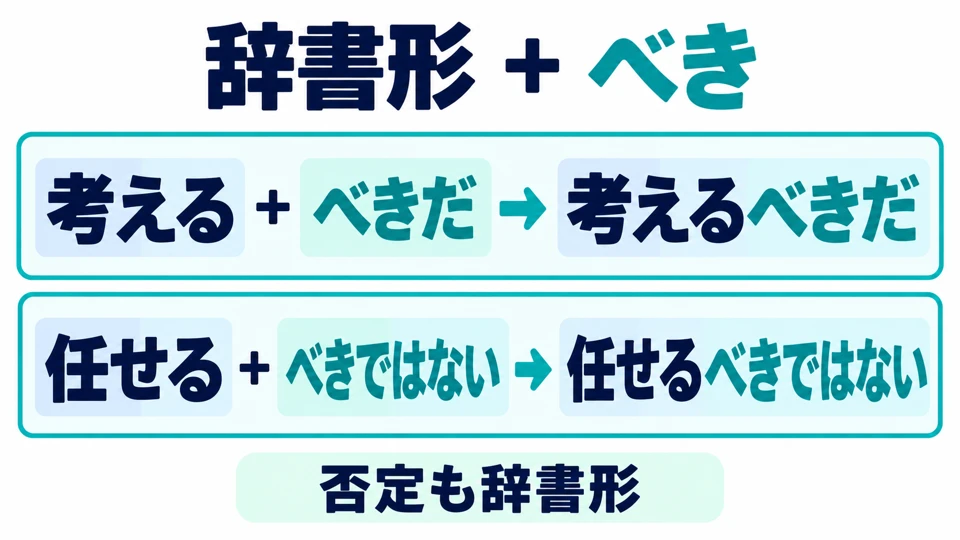
Attach it to the verb’s dictionary form: 考えるべきだ. Keep the dictionary form for the negative too: 任せるべきではない.
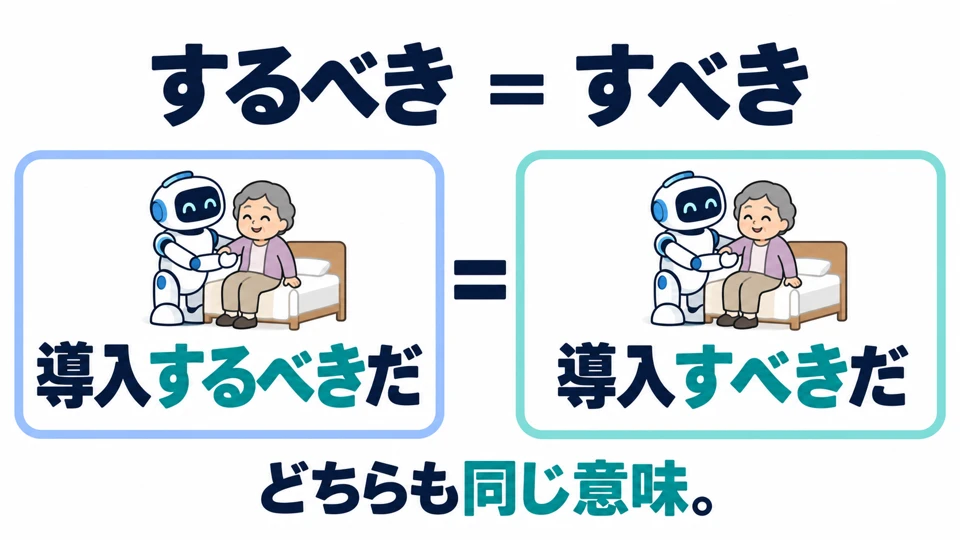
する has two possible forms: 導入するべき can also be 導入すべき, with the same meaning.

べき can directly modify a noun: 話し合うべきこと means “things that should be discussed.”