
Japanese grammar · ≈ JLPT N4 · Intermediate 1
〜でしょう・〜だろう~deshou / ~darou
likely; probably
Use 〜でしょう for a polite conjecture and 〜だろう for a plain one about an unconfirmed present or future situation.
How it works
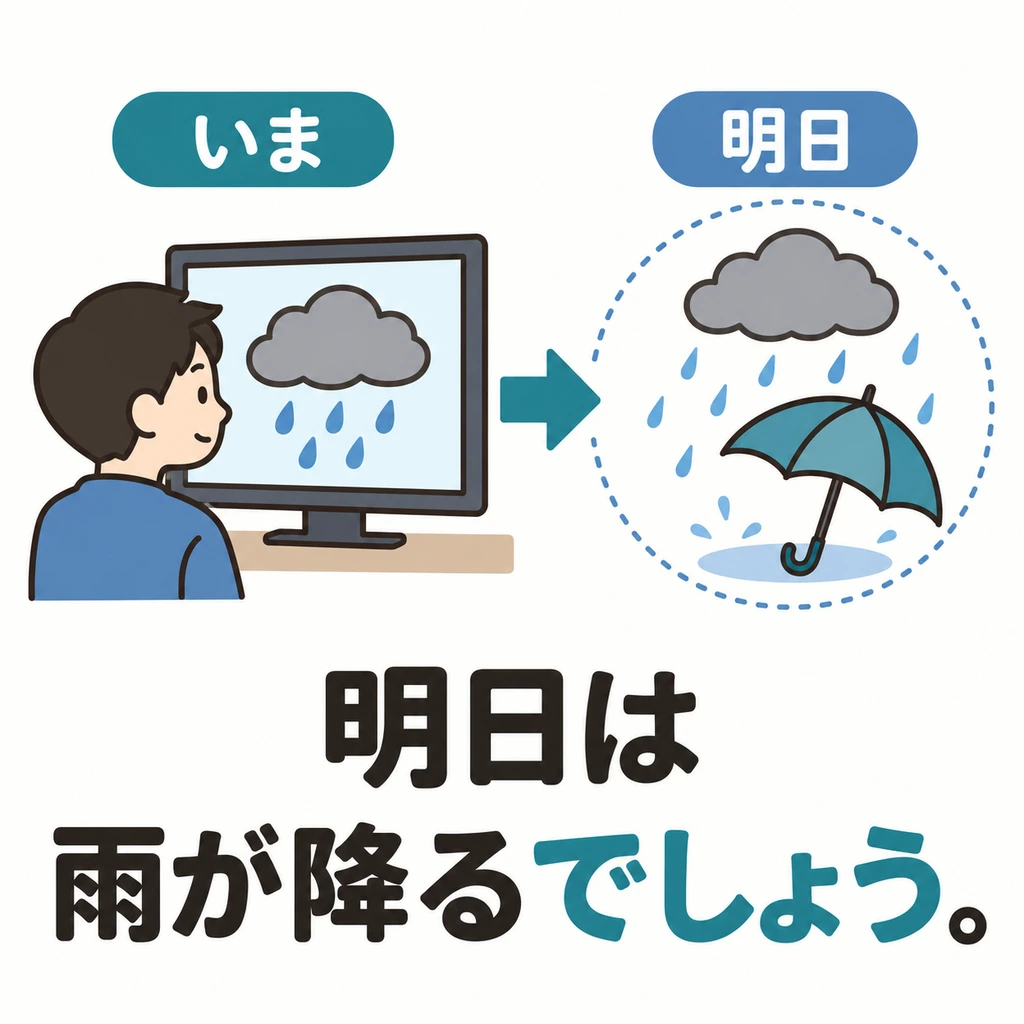
Tomorrow’s rain has not happened yet. Use 「でしょう」 to make a prediction based on the forecast.
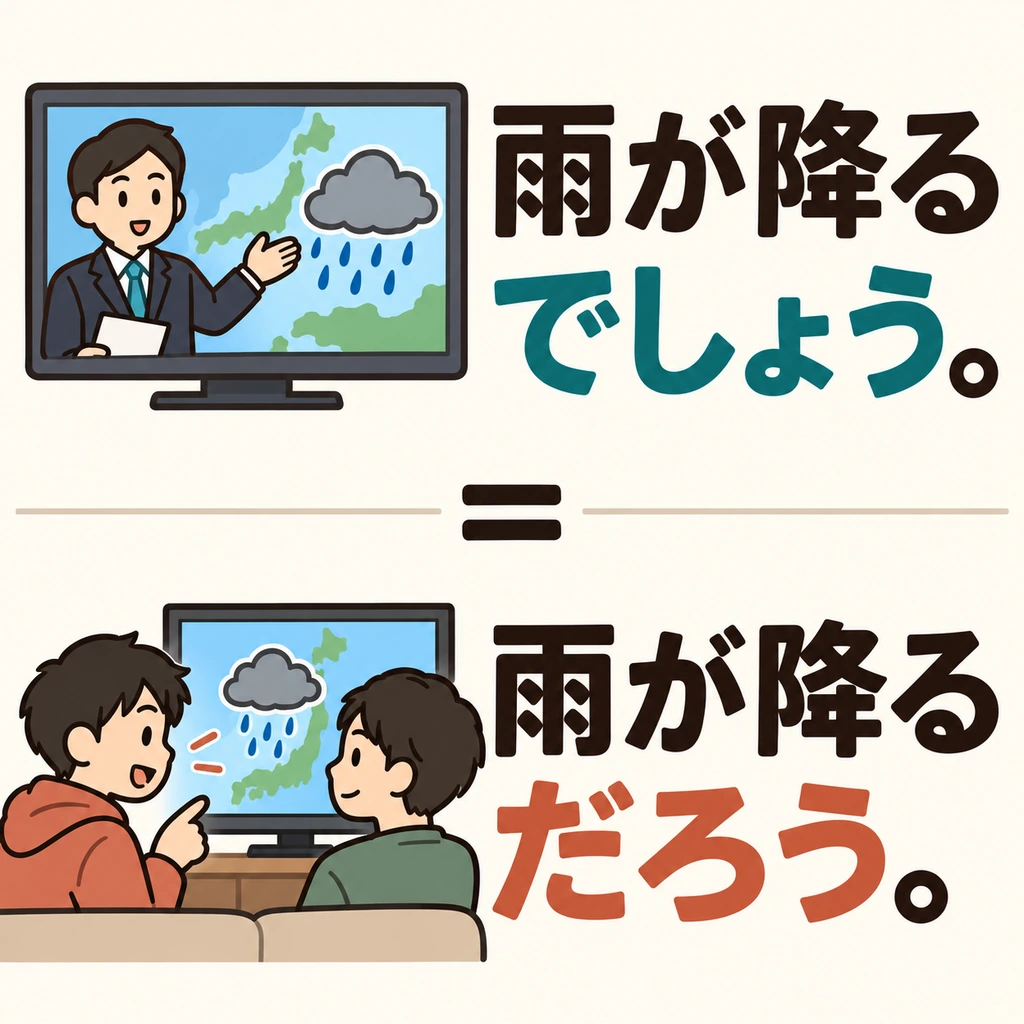
Both sentences express a conjecture. 「でしょう」 is more polite; 「だろう」 is the plain form.

You can also conjecture about a current situation that has not been confirmed. These forms are not limited to future predictions.
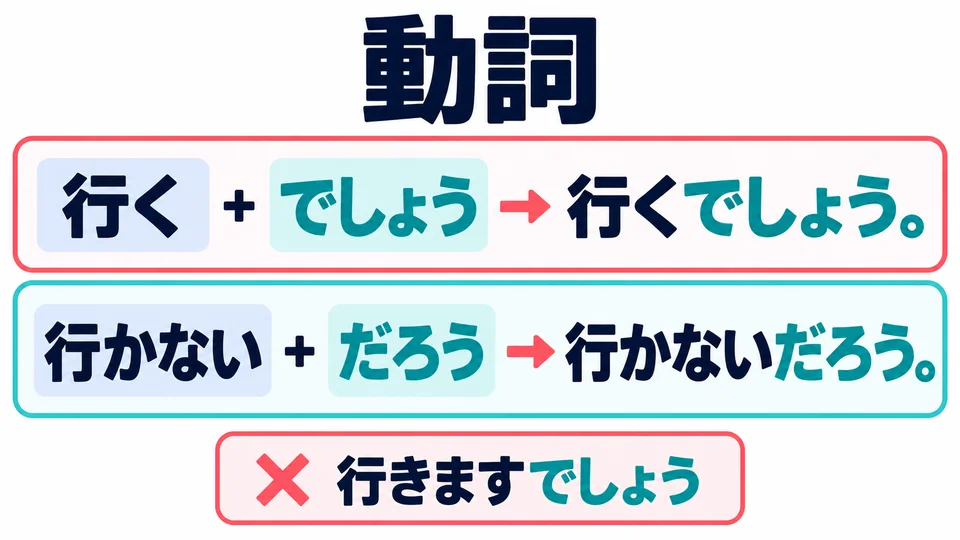
Use a verb in its plain form, then add 「でしょう/だろう」. Do not use the ます form.
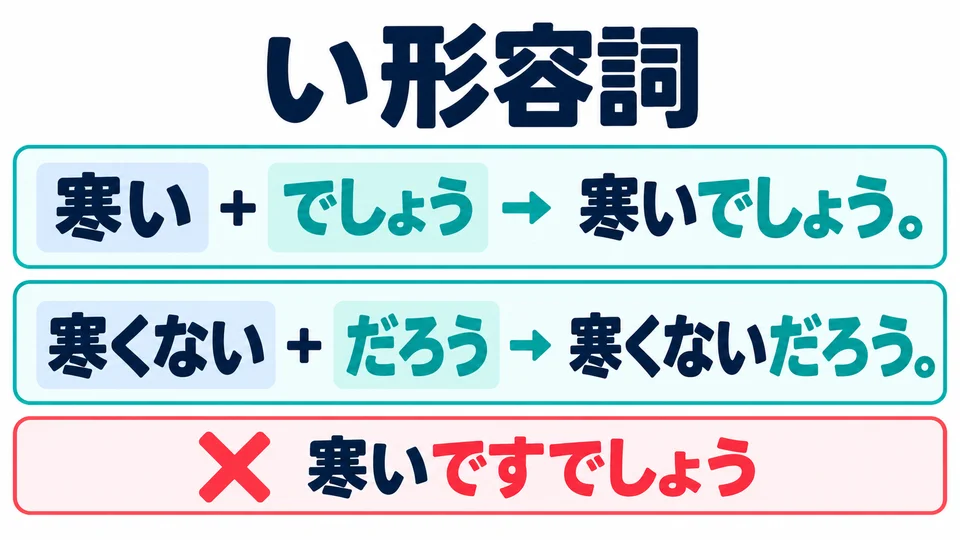
Use an い-adjective in its plain form, then add 「でしょう/だろう」. Do not add です.
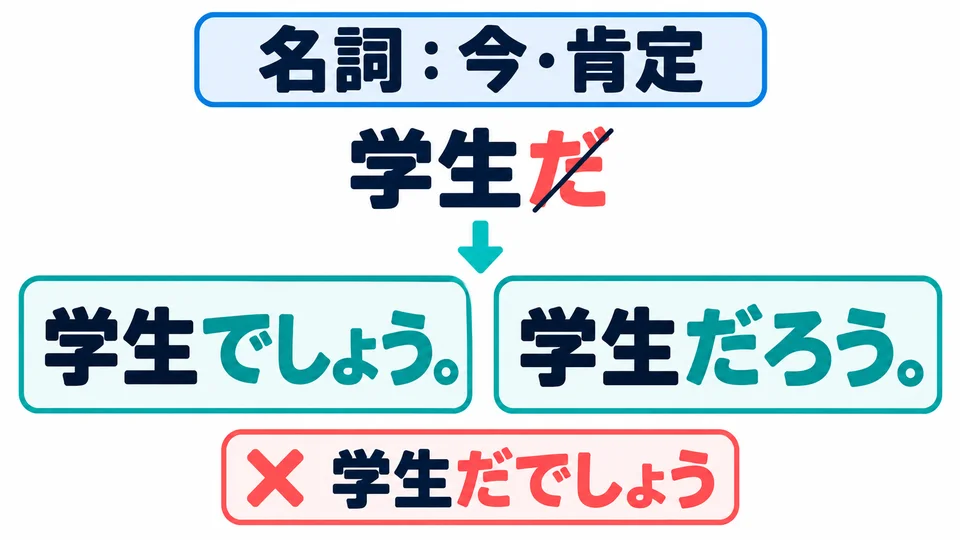
For a noun in the present affirmative form, remove 「だ」 and add 「でしょう/だろう」 directly.
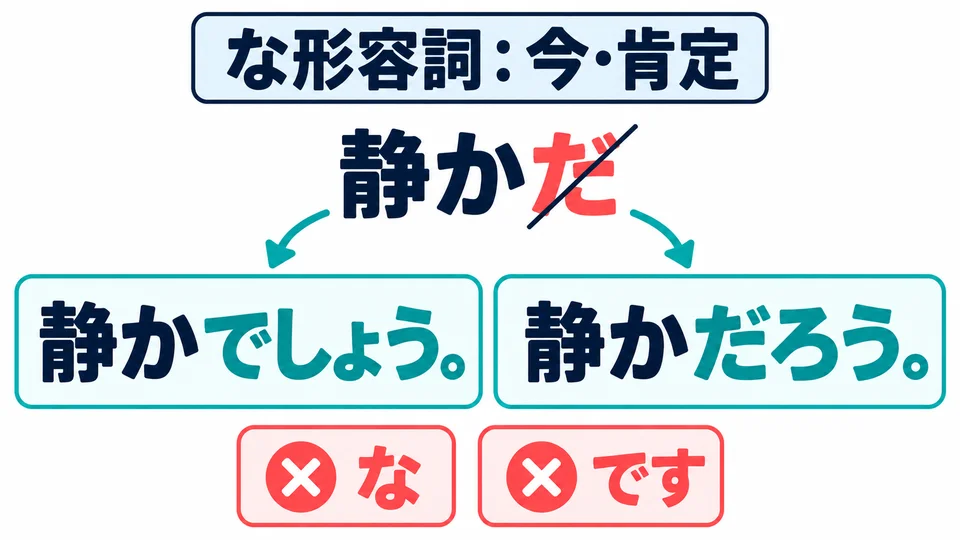
For a な-adjective in the present affirmative form, also remove 「だ」. Do not add 「な」 or 「です」.
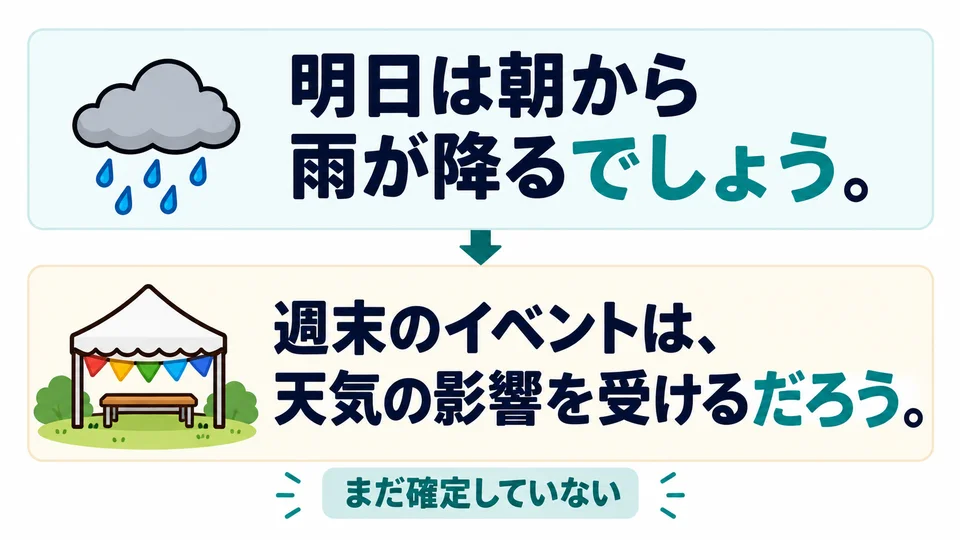
The examples first predict rain, then conjecture that the event will be affected. Neither sentence states that the outcome is certain.
Example sentences
- 明日asuはwa朝asaからkara雨ameがga降るでしょう。furudeshou。
It will probably rain from tomorrow morning.
- 週末
In a conversation

- A明日の天気予報を見ましたか。
A: Did you see tomorrow's weather forecast?
- Bいいえ、まだ見ていません。明日は
Check yourself
Level 1 · Recognise
Which sentence is correct?
Level 1 · Recognise
Listen and choose the meaning
Level 2 · Build
Put the words in order
It will probably rain from the morning tomorrow.
Level 3 · Use
What goes in the blank?
明日は朝から雨が降る____。
It will probably rain from tomorrow morning.
More grammar in this theme
- 〜でしょう・〜だろうlikely; probably