Lesson notes · ≈ JLPT N4 · Intermediate 1
〜でしょう・〜だろう~deshou / ~darou
likely; probably
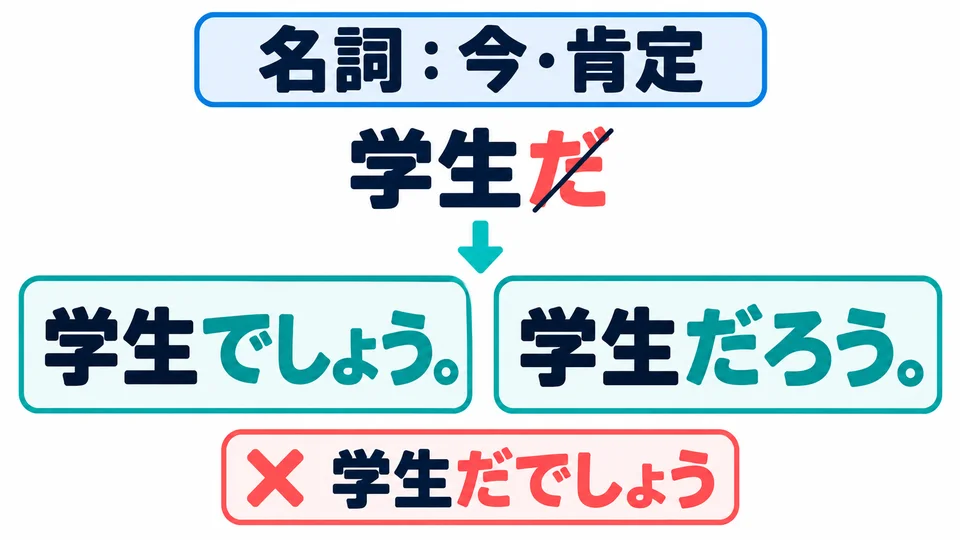
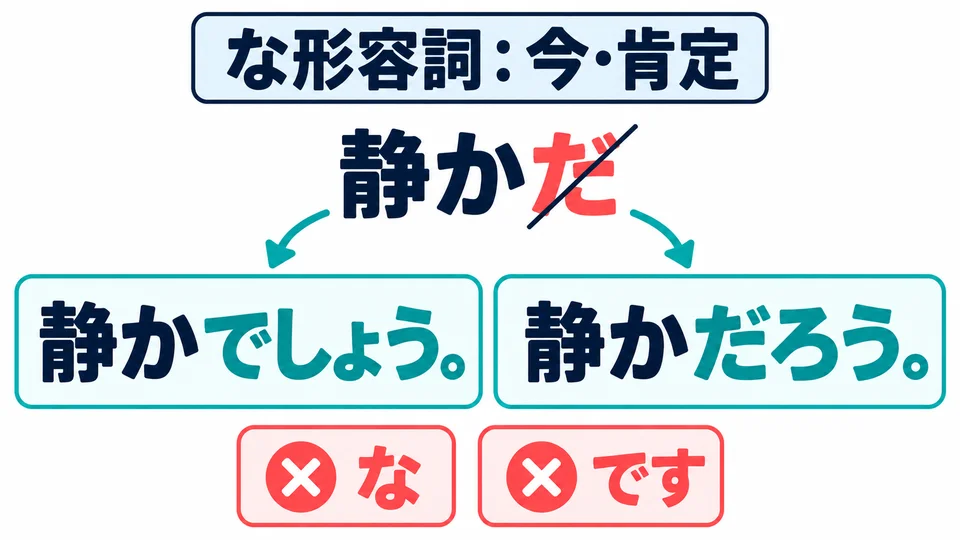
Use 〜でしょう for a polite conjecture and 〜だろう for a plain one about an unconfirmed present or future situation.
How it works
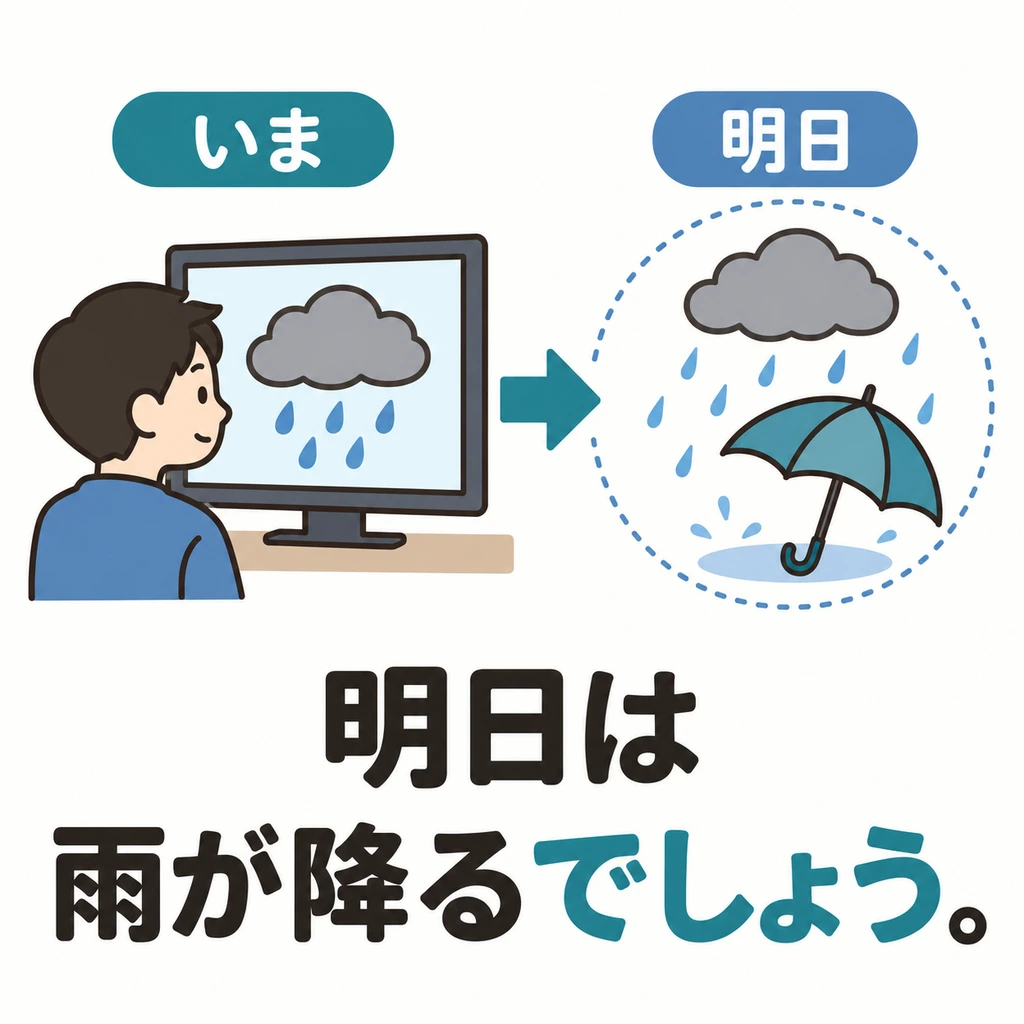
Tomorrow’s rain has not happened yet. Use 「でしょう」 to make a prediction based on the forecast.
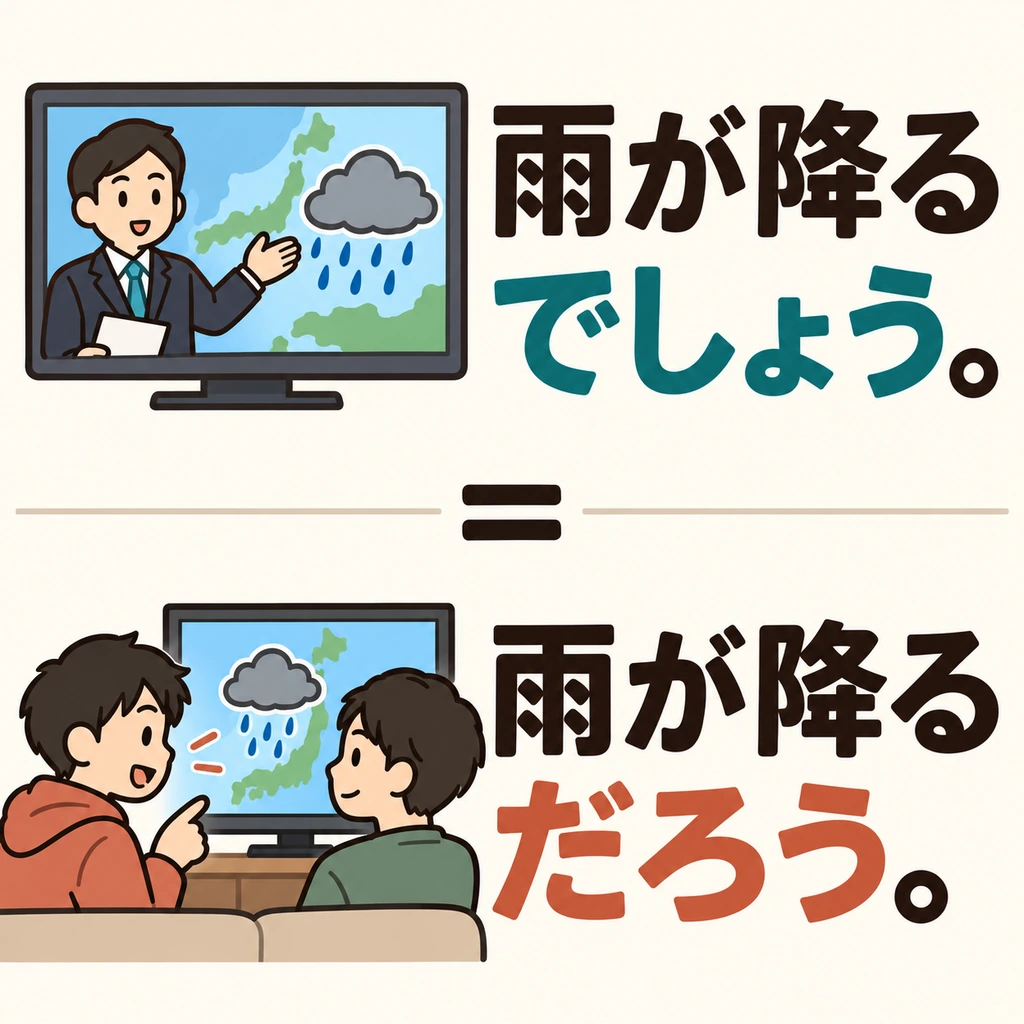
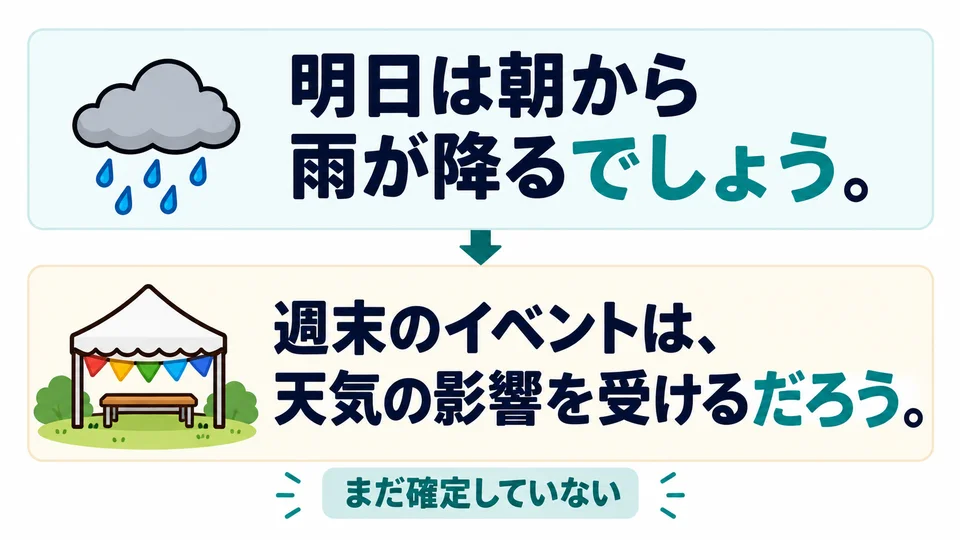
Both sentences express a conjecture. 「でしょう」 is more polite; 「だろう」 is the plain form.

You can also conjecture about a current situation that has not been confirmed. These forms are not limited to future predictions.
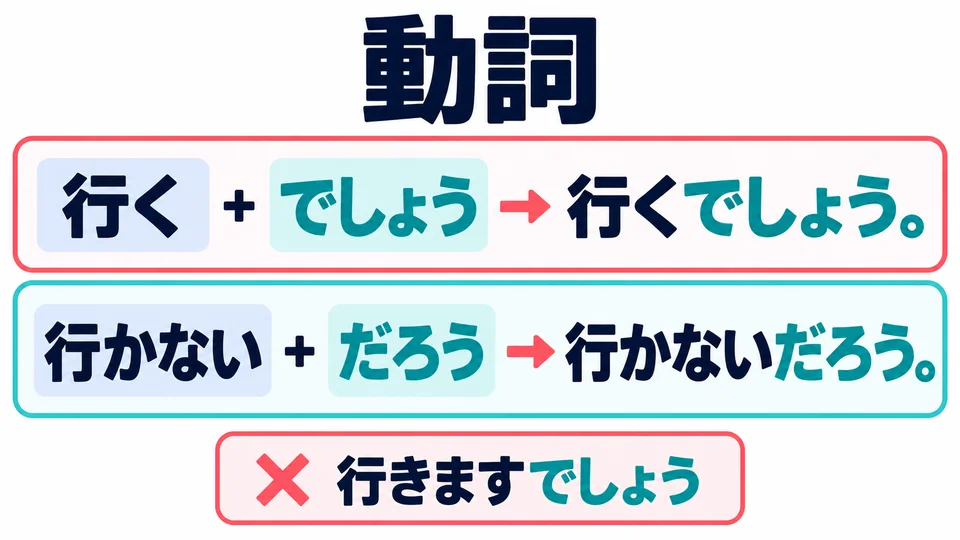
Use a verb in its plain form, then add 「でしょう/だろう」. Do not use the ます form.
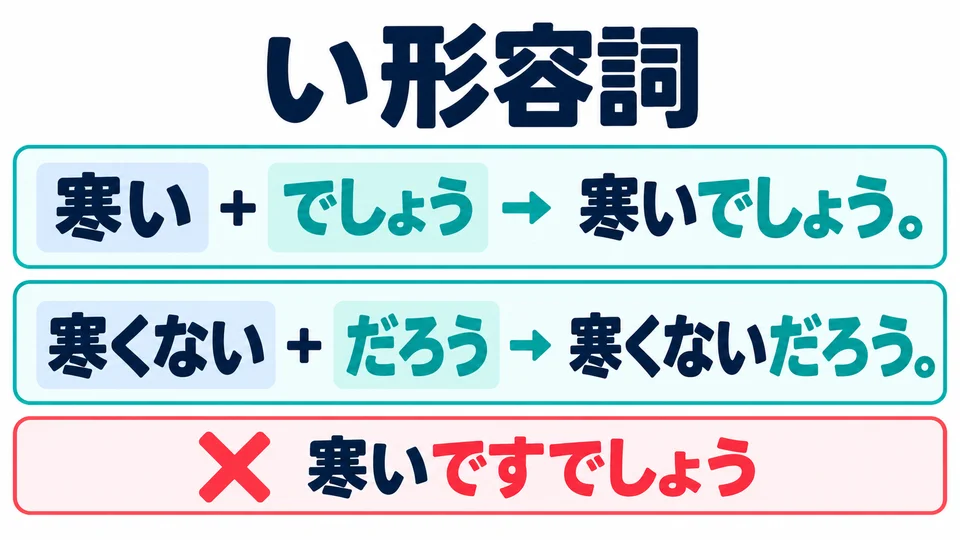
Use an い-adjective in its plain form, then add 「でしょう/だろう」. Do not add です.