
Japanese grammar · ≈ JLPT N3 · Intermediate 2
〜にしては~ni shite wa
for; contrary to expectation
Use 〜にしては to judge something against a known fact when reality differs from what you expected.
How it works

The free event offered more than expected. Look at the picture: how does reality differ from the expectation?
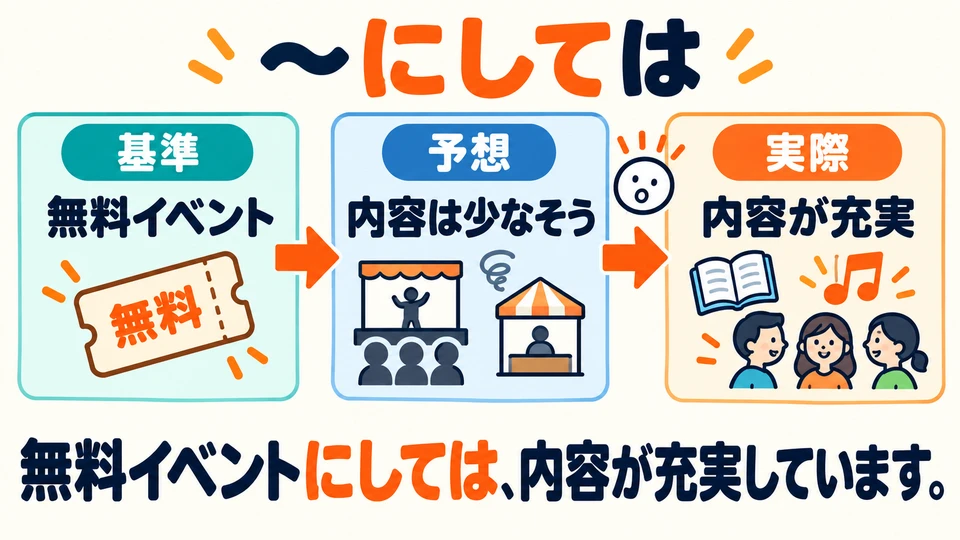
Use a known fact as the basis for judging something, and show that reality differs from what that fact led you to expect.
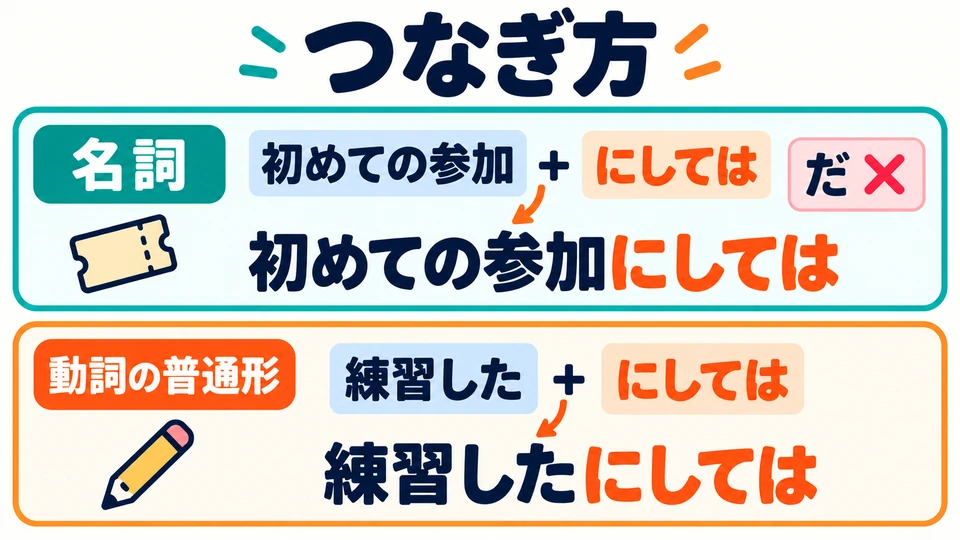
Attach 「にしては」 directly to a noun, without 「だ」. With verbs, use the plain form.
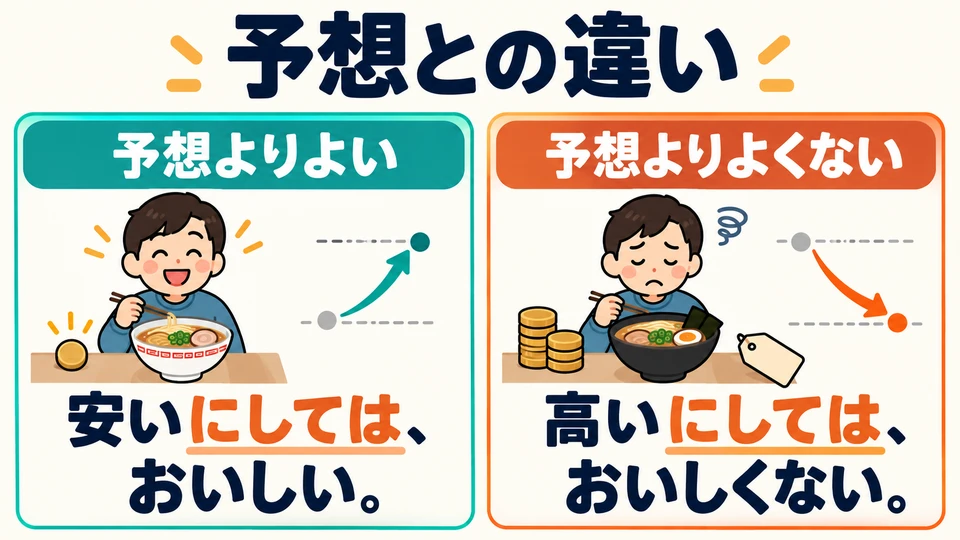
When reality is better than expected, it can express praise. When it falls short, it can express dissatisfaction or criticism.
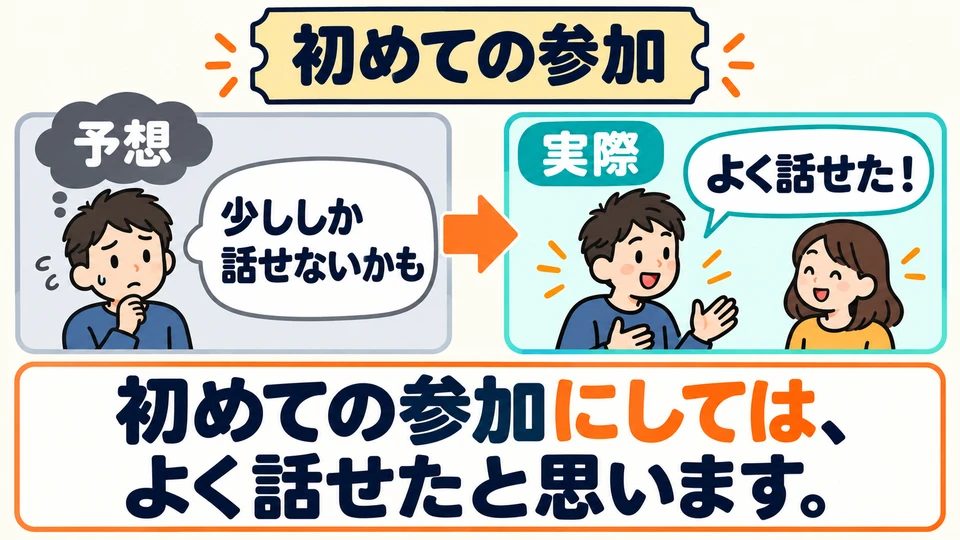
“Participating for the first time” is the benchmark: the speaker spoke better than expected for a first-time participant. The assessment is relative to that benchmark.
Example sentences
- 無料muryouイベントibentoにniしshiてteは、wa、内容naiyouがgaとてもtotemo充実juujitsuしshi
In a conversation

Check yourself
Level 1 · Recognise
Which sentence is correct?
Level 1 · Recognise
Listen and choose the meaning
Level 2 · Build
Put the words in order
Considering how difficult scheduling was, it was surprisingly quick to match everyone's availability.
Level 3 · Use
What goes in the blank?
無料イベント____、内容がとても充実していました。
For a free event, the content was very substantial.
More grammar in this theme
- 〜にしてはfor; contrary to expectation