Japanese grammar · ≈ JLPT N3 · Intermediate 2
〜たものだ~ta mono da
used to; fond recollection
Use 〜たものだ to look back nostalgically on something you did often in the past, not a single recent action.
How it works
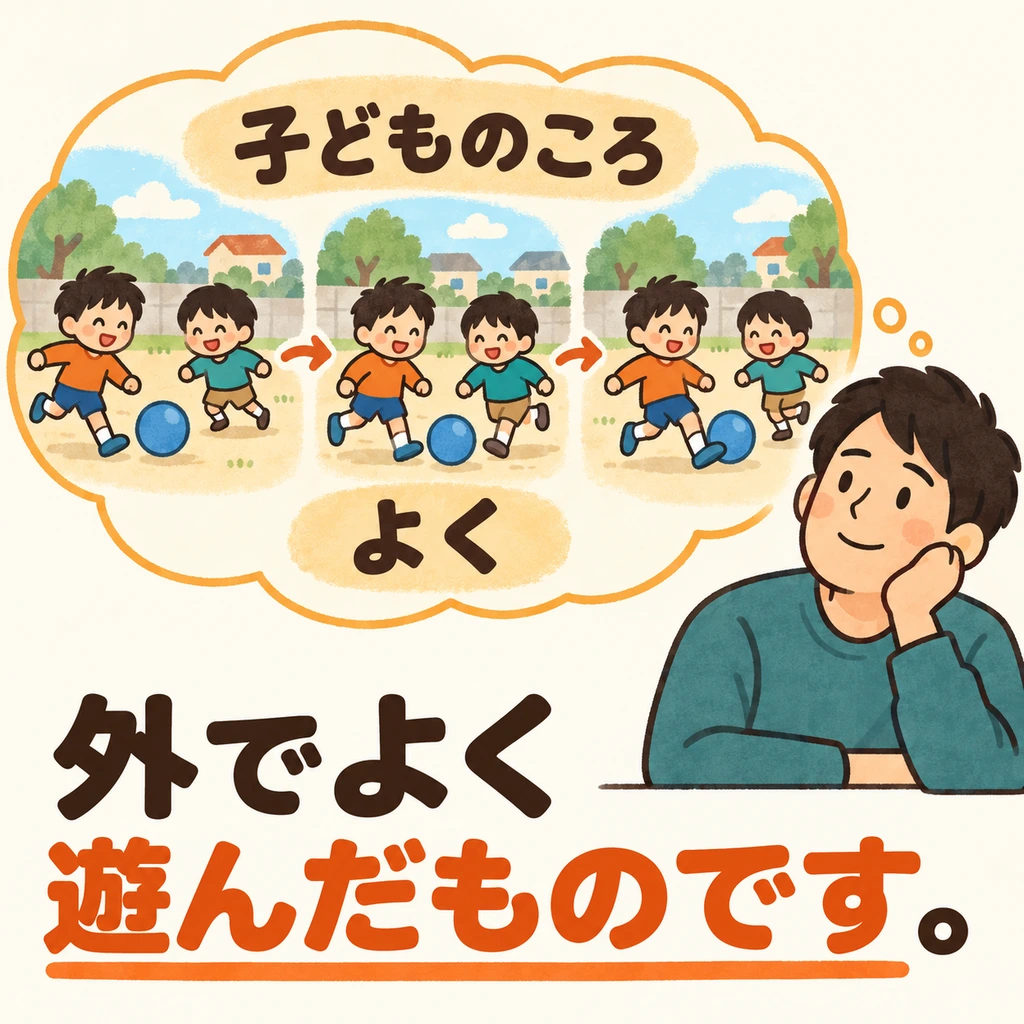
Look at the picture: this was a frequent childhood pastime. Now the speaker looks back on those days with nostalgia.
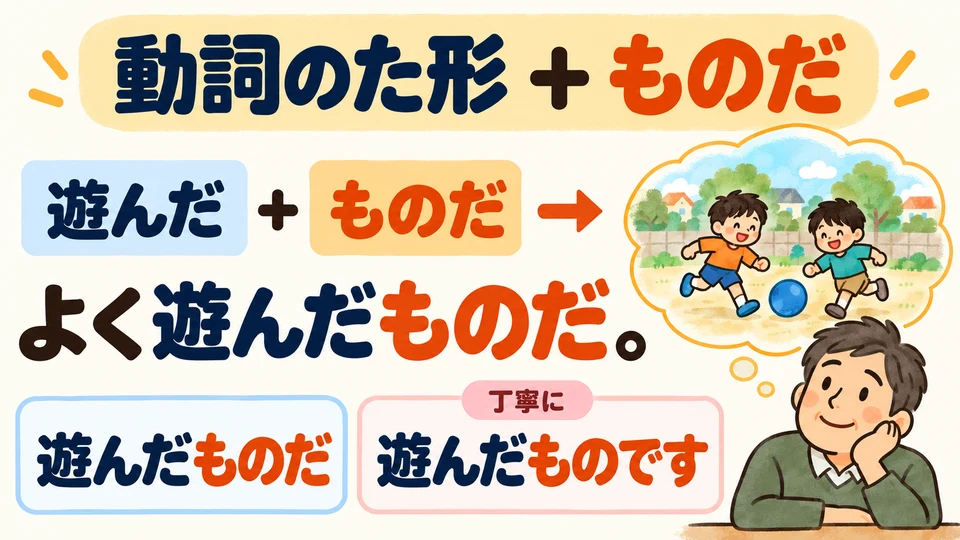
Add 「ものだ」 after a verb’s た-form. For a polite recollection, use 「ものです」.
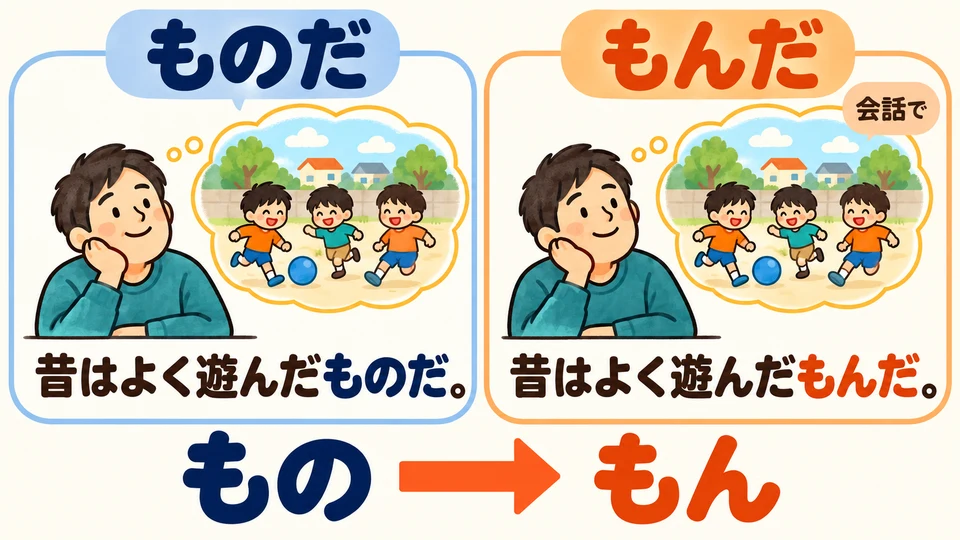
In conversation, 「ものだ」 often becomes 「もんだ」. It still expresses recollection, but sounds more casual.
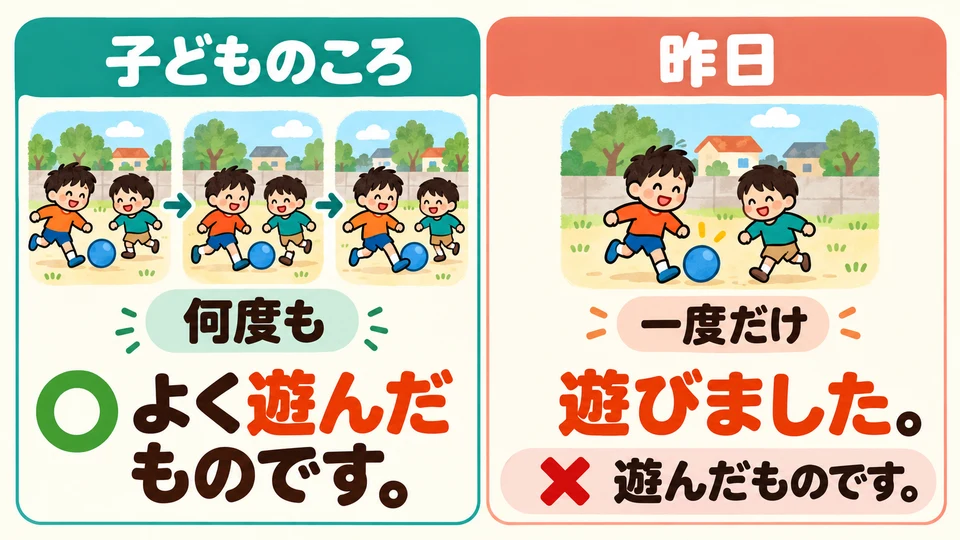
「よく遊んだものです」 recalls playing many times. Don’t use it for playing just once yesterday.
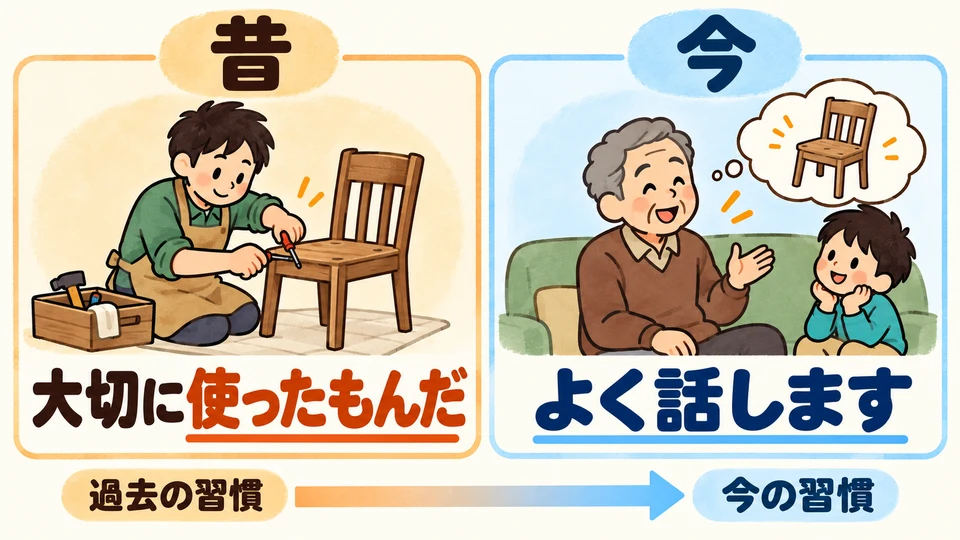
In the grandfather example, 「使ったもんだ」 recalls the past; 「よく話します」 says he often talks about it now.
Example sentences
- 子どもkodomoのnoころkoroは、wa、近所kinjoのno友だちtomodachiとto外sotoでdeよくyoku
In a conversation
Check yourself
Level 1 · Recognise
Which sentence is correct?
Level 1 · Recognise
Listen and choose the meaning
Level 2 · Build
Put the words in order
When I was a student, I often used youth slang and trendy expressions.
Level 3 · Use
What goes in the blank?
子どものころは、近所の友だちと外でよく遊んだ____。
I often played outside with neighborhood friends as a child
More grammar in this theme
- 〜たものだused to; fond recollection