
JPEDLAB iconJPEDLAB
Save history

Create an account and play

Explore first, then save your progress whenever you are ready. No email address is required.

Start free
Read as articleCards
1/8

Look at the picture: this was a frequent childhood pastime. Now the speaker looks back on those days with nostalgia.

››

Lesson notes · ≈ JLPT N3 · Intermediate 2

〜たものだ~ta mono da

used to; fond recollection

Use 〜たものだ to look back nostalgically on something you did often in the past, not a single recent action.

How it works
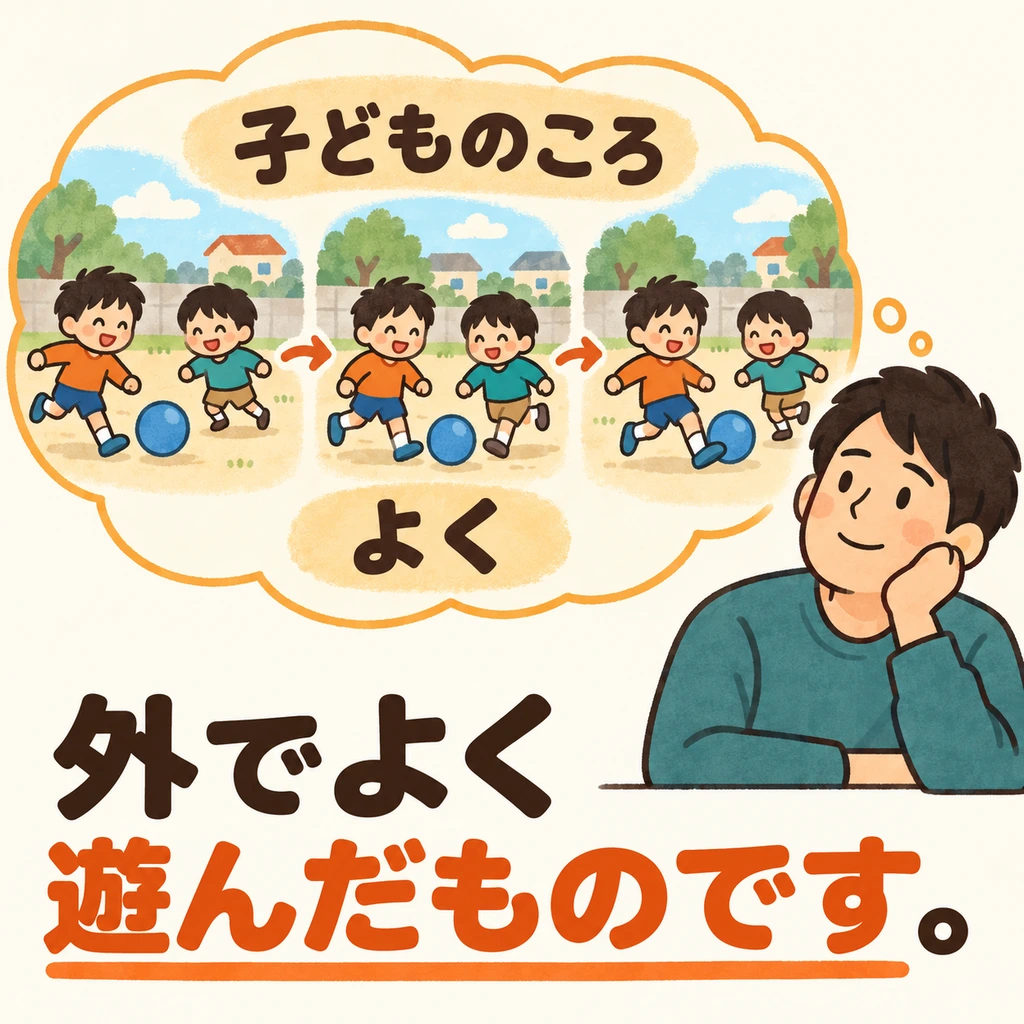
  1. Look at the picture: this was a frequent childhood pastime. Now the speaker looks back on those days with nostalgia.
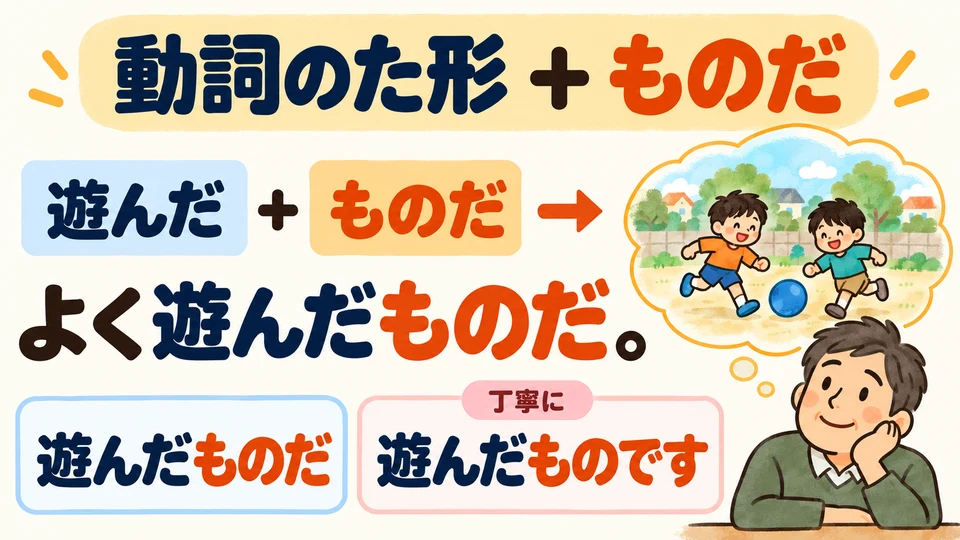
    Look at the picture: this was a frequent childhood pastime. Now the speaker looks back on those days with nostalgia.

  2. Add 「ものだ」 after a verb’s た-form. For a polite recollection, use 「ものです」.
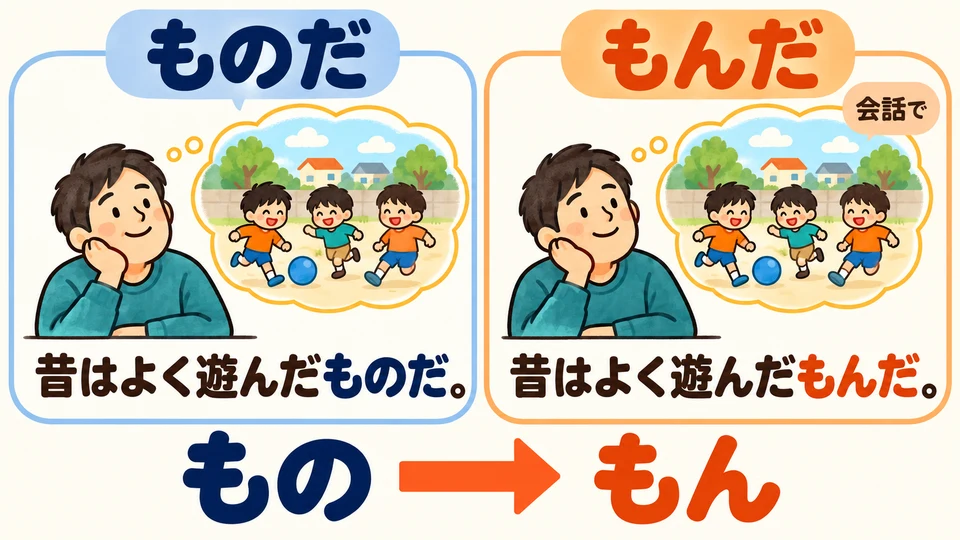
    Add 「ものだ」 after a verb’s た-form. For a polite recollection, use 「ものです」.

  3. In conversation, 「ものだ」 often becomes 「もんだ」. It still expresses recollection, but sounds more casual.
    In conversation, 「ものだ」 often becomes 「もんだ」. It still expresses recollection, but sounds more casual.

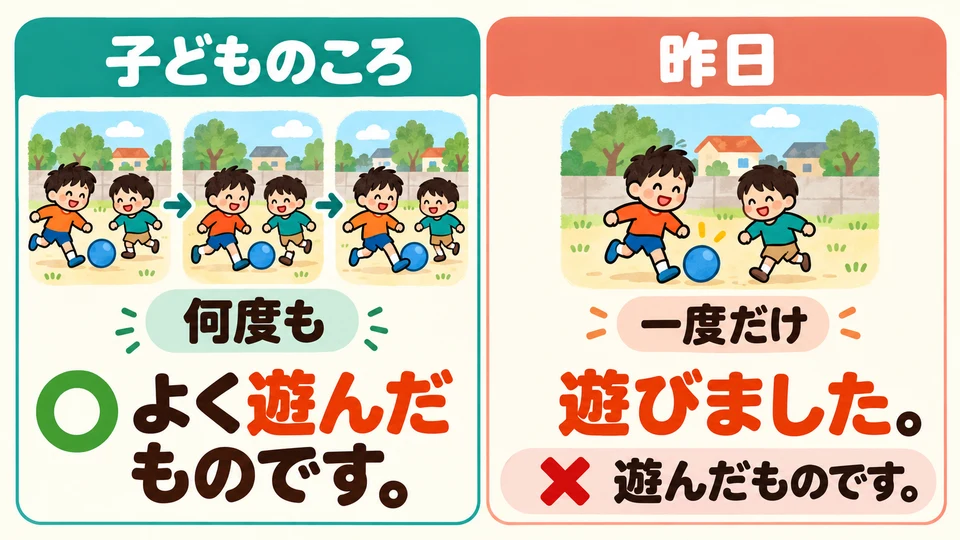
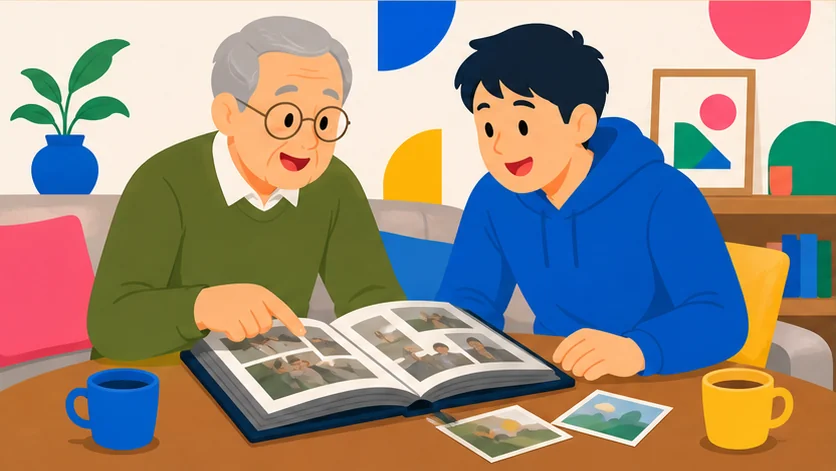
  4. 「よく遊んだものです」 recalls playing many times. Don’t use it for playing just once yesterday.
    「よく遊んだものです」 recalls playing many times. Don’t use it for playing just once yesterday.

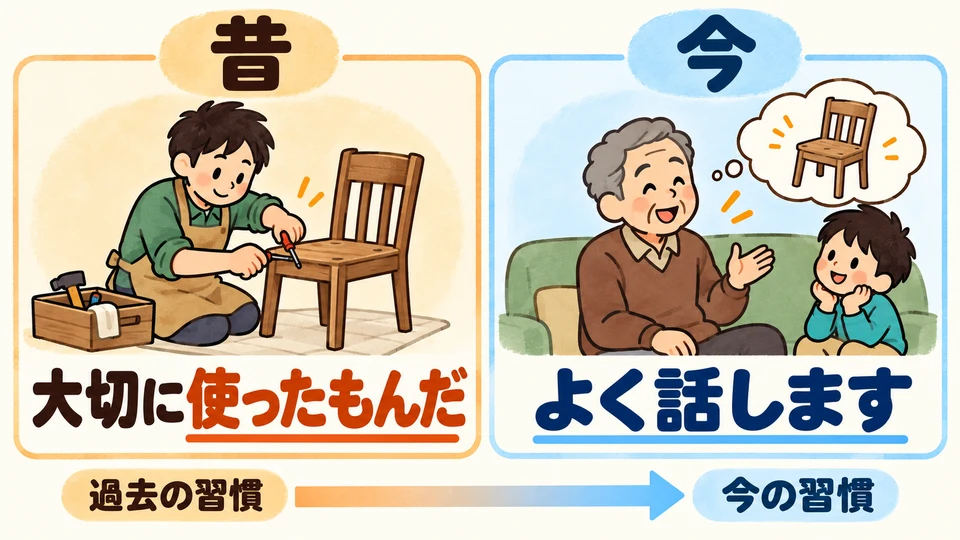
  5. In the grandfather example, 「使ったもんだ」 recalls the past; 「よく話します」 says he often talks about it now.
    In the grandfather example, 「使ったもんだ」 recalls the past; 「よく話します」 says he often talks about it now.

Example sentences

  • 子どもこどもkodomoのnoころkoroは、わ、wa、近所きんじょkinjoのno友だちともだちtomodachiとto外そとsotoでdeよくyoku遊んだものあそんだものasondamonoです。desu。

    When I was a child, I used to play outside a lot with my neighborhood friends.

  • 祖父そふsofuは、「わ、wa、昔むかしmukashiはわwa物ものmonoをo大切に使ったもんたいせつにつかったもんtaisetsunitsukattamonだ」だdaとtoよくyoku話します。はなします。hanashimasu。

    My grandfather often says, "In the old days, people used to treat things with care."

  • In a conversation

    • A
      大学生だいがくせいのころは、わ、時間じかんがあればよく地域ちいき活動かつどうを手伝ったもんてつだったもんだね。

      A: When we were college students, we used to help with community activities whenever we had time.

    • B
      ええ、私わたしも当時とうじはわ受付うけつけ係かかりとして、お客様おきゃくさまに大きなおおきな声こえで挨拶あいさつをしたものです。

      B: Yes, back then I used to greet customers in a loud voice as a receptionist.

    • A
      あのころはわ毎日まいにち忙しかったいそがしかったけれど、とても充実じゅうじつしていたね。

      A: We were busy every day back then, but it was very fulfilling.

    Check yourself

    1. Level 1 · Recognise

      Which sentence is correct?

    2. Level 1 · Recognise

      Listen and choose the meaning

    3. Level 2 · Build

      Put the words in order

      When I was a student, I often used youth slang and trendy expressions.

    4. Level 3 · Use

      What goes in the blank?

      子どものころは、近所の友だちと外でよく遊んだ____。

      I often played outside with neighborhood friends as a child

    More grammar in this theme

    • 〜どころではないin no position to; far from
    • 〜たところdid…and found that
    • 〜ことになったit has been decided
    • 〜に限り/〜限りはlimited to; as long as
    • 〜かなと思ってthinking maybe; so I
    • 〜にしてはfor; contrary to expectation
    • 〜につきper; for each
    • 〜たものだused to; fond recollection
    • 〜ながらもalthough; despite feeling
    • 〜につけ(て)whenever; at every opportunity
    • 〜さえ/さえ〜ばeven; as long as
    • 〜に反してcontrary to expectations
    • 〜ているうちにchange during an activity
    • 〜からしてinference from a clue
    Previous〜につきNext〜ながらも

    Keep practising

    Test your Japanese vocabulary12 adaptive questions, freeCheck your pronunciationRead aloud and get a scorePractise verb forms10-question conjugation quizSee the whole courseGrammar, vocabulary and quizzes by theme
    See the whole course
    Intermediate 2
    Intergenerational Exchange and Broader Perspectives