
Japanese grammar · ≈ JLPT N3 · Intermediate 2
〜ているうちに~te iru uchi ni
change during an activity
Use 「〜ているうちに」 for a natural change that happens while an activity or state continues.
How it works
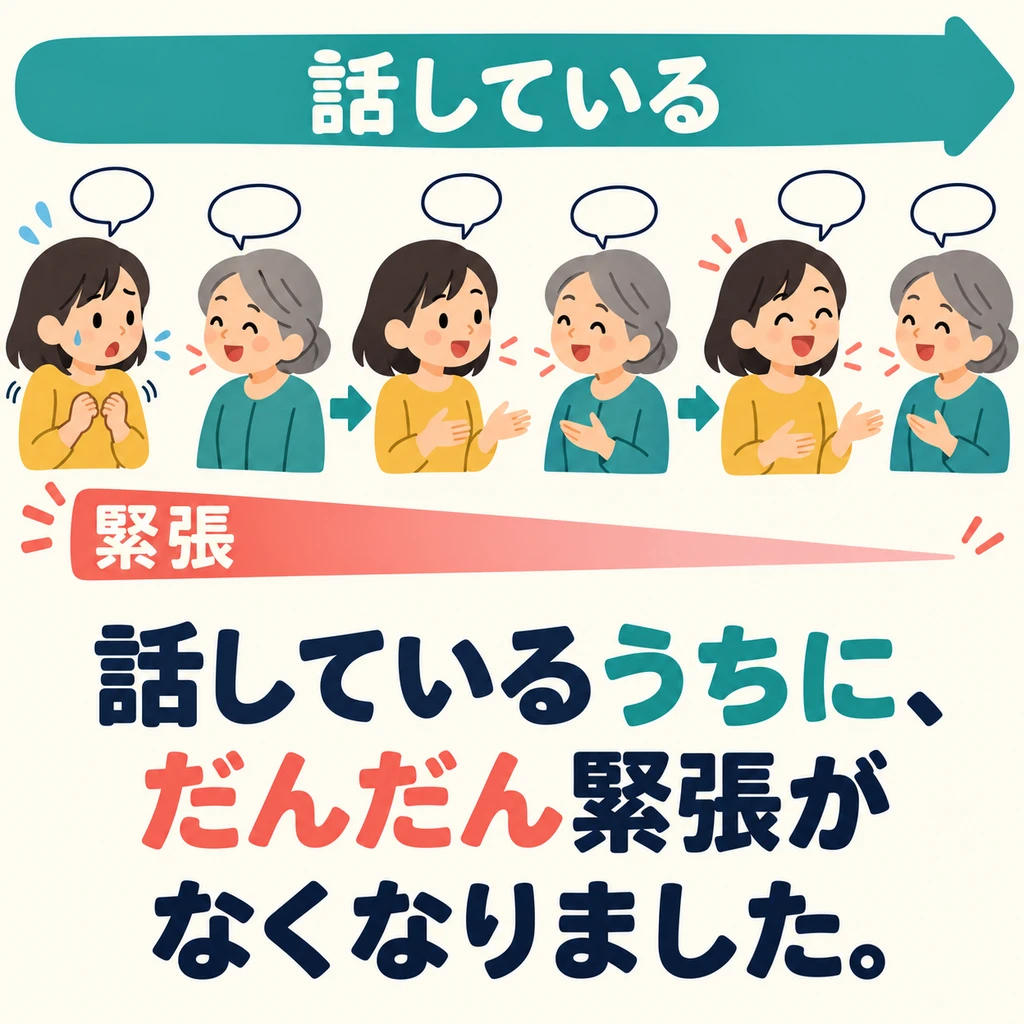
The conversation keeps going. How do their expressions change? Notice how the nervousness gradually fades as they chat.
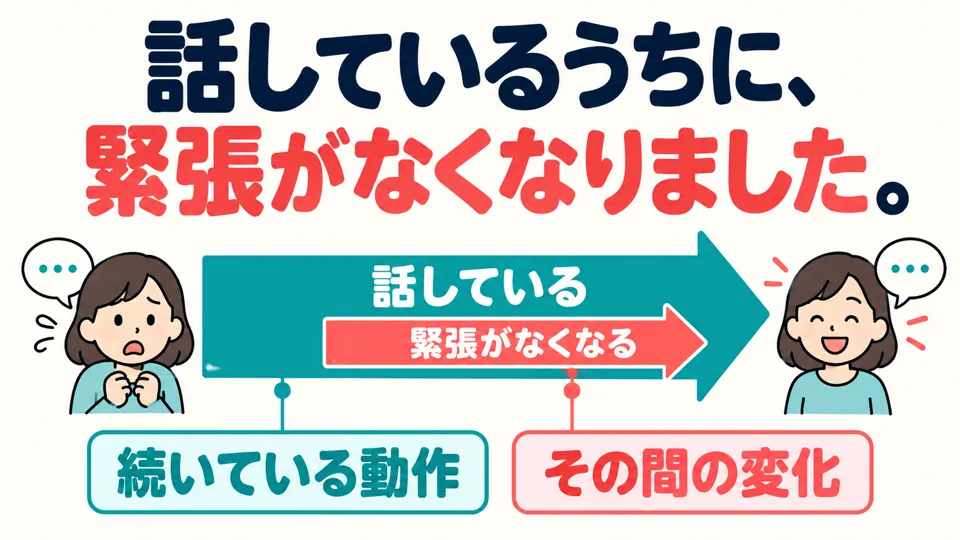
「Vているうちに」 first names an ongoing action, then describes a change that happens during it.
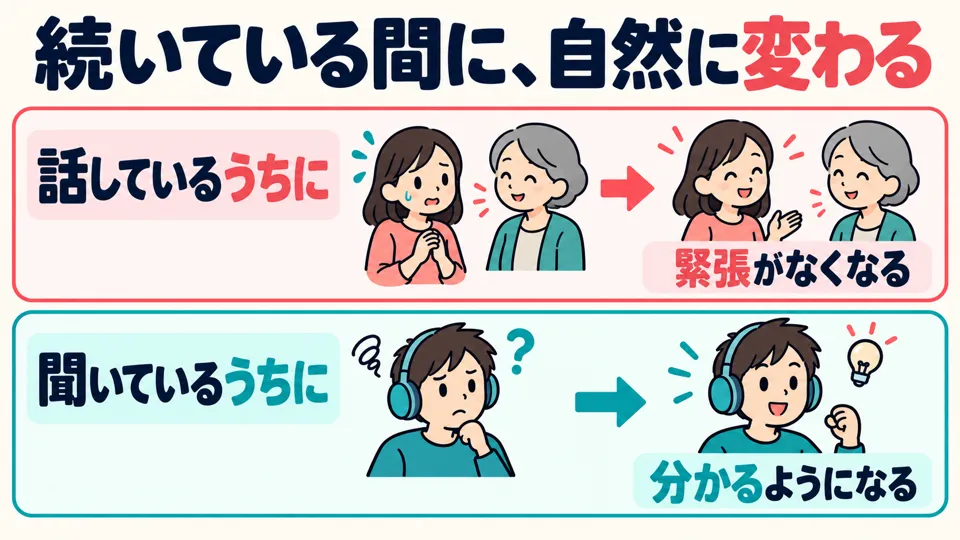
Use this pattern when feelings, understanding, or something else changes naturally while an action or state continues.
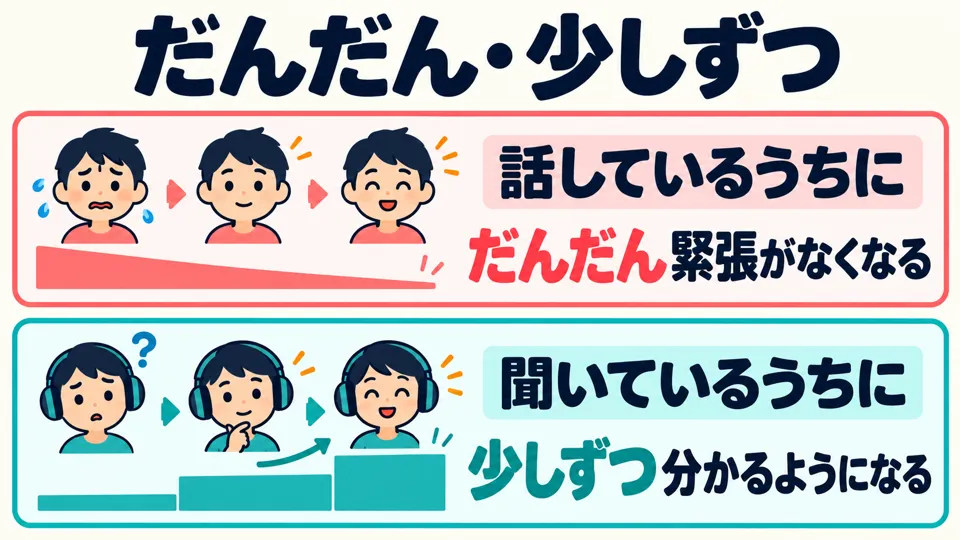
「だんだん」 and 「少しずつ」 emphasize gradual change and are often used with 「うちに」.
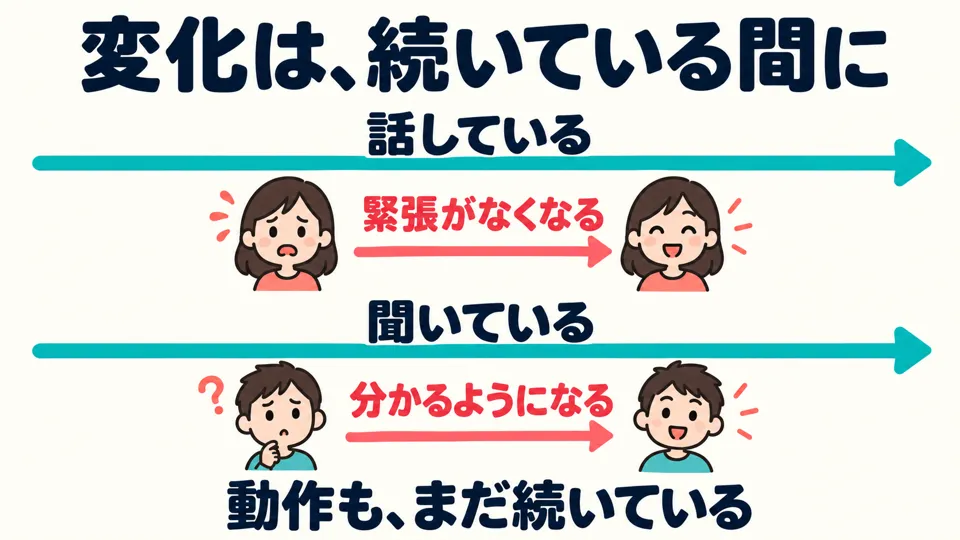
In the two examples, talking and listening are still ongoing. The nervousness fades and understanding grows during that time.
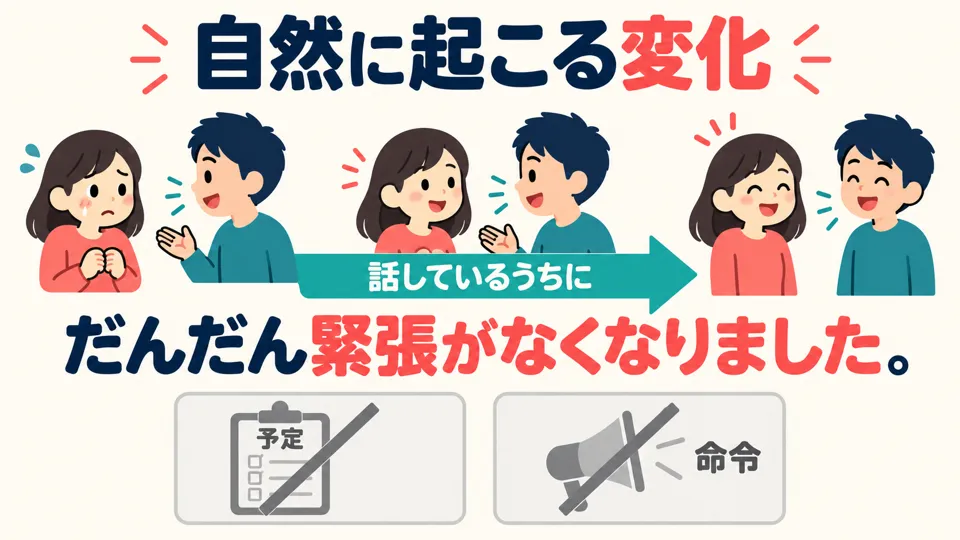
The examples focus on changes that happen naturally. They do not set out a planned result or give someone a command.
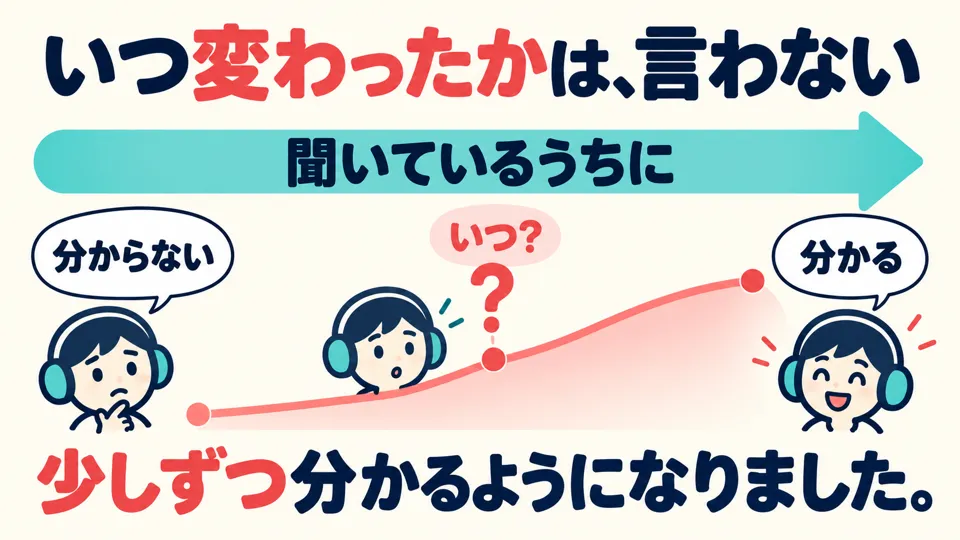
At exactly what moment did the nervousness fade, or the words become understandable? These sentences do not specify when the change occurred.
Example sentences
- 話しhanashiてteいるiruうちuchiに、ni、だんだんdandan緊張kinchouがgaなくなりました。nakunarimashita。
As we were talking, my nervousness gradually disappeared.
In a conversation
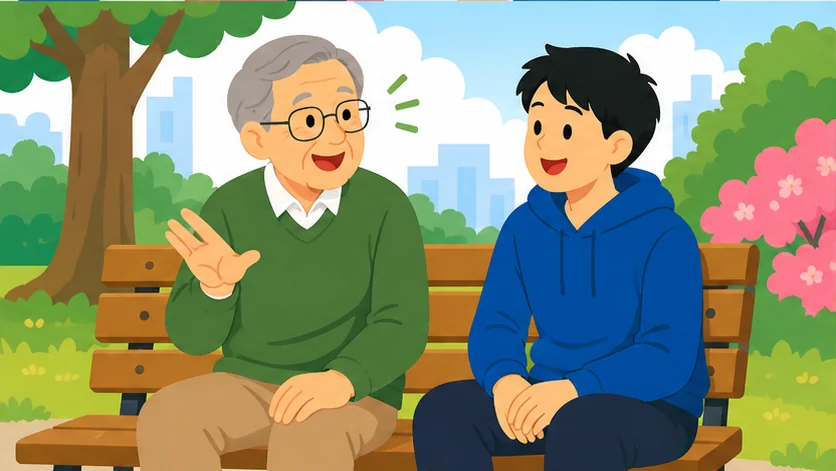
- 高齢者の方との会話が続くか心配でしたが、大丈夫でしたか。
I was worried about whether you would be able to keep a conversation going with the elderly person, but did it go well?
Check yourself
Level 1 · Recognise
Which sentence is correct?
Level 1 · Recognise
Listen and choose the meaning
Level 2 · Build
Put the words in order
As I listened to the other person talk about their work experience, the prejudice I once had gradually disappeared.
Level 3 · Use
What goes in the blank?
話している____、だんだん緊張がなくなりました。
As we kept talking, my nervousness gradually went away.
More grammar in this theme
- 〜ているうちにchange during an activity