JPEDLAB iconJPEDLAB
Save history

Create an account and play

Explore first, then save your progress whenever you are ready. No email address is required.

Start free
Read as articleCards
1/10

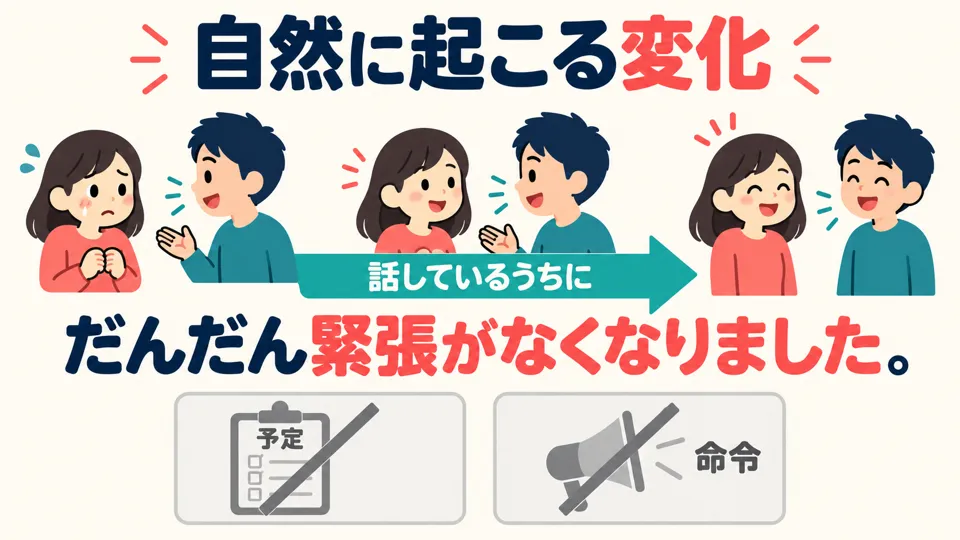
The conversation keeps going. How do their expressions change? Notice how the nervousness gradually fades as they chat.

››

Lesson notes · ≈ JLPT N3 · Intermediate 2

〜ているうちに~te iru uchi ni

change during an activity

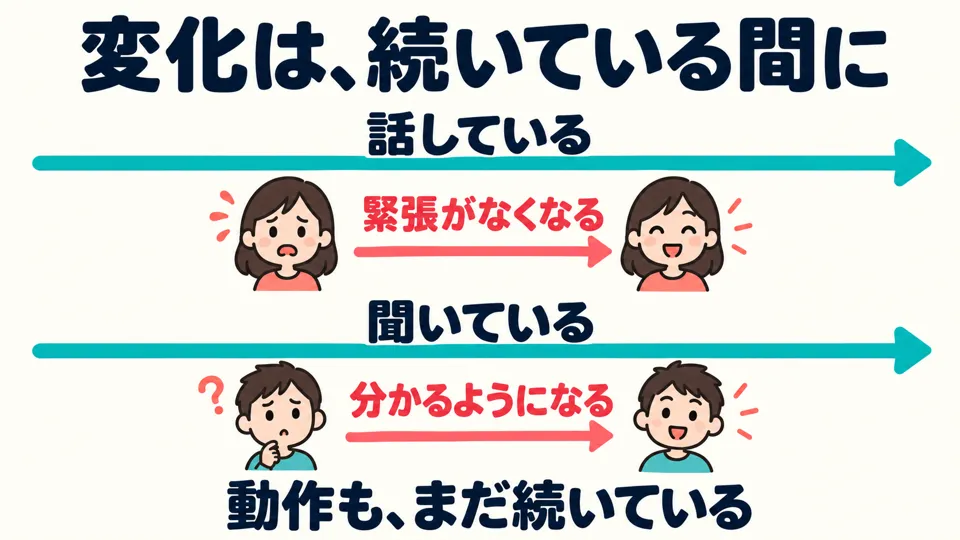
Use 「〜ているうちに」 for a natural change that happens while an activity or state continues.

How it works
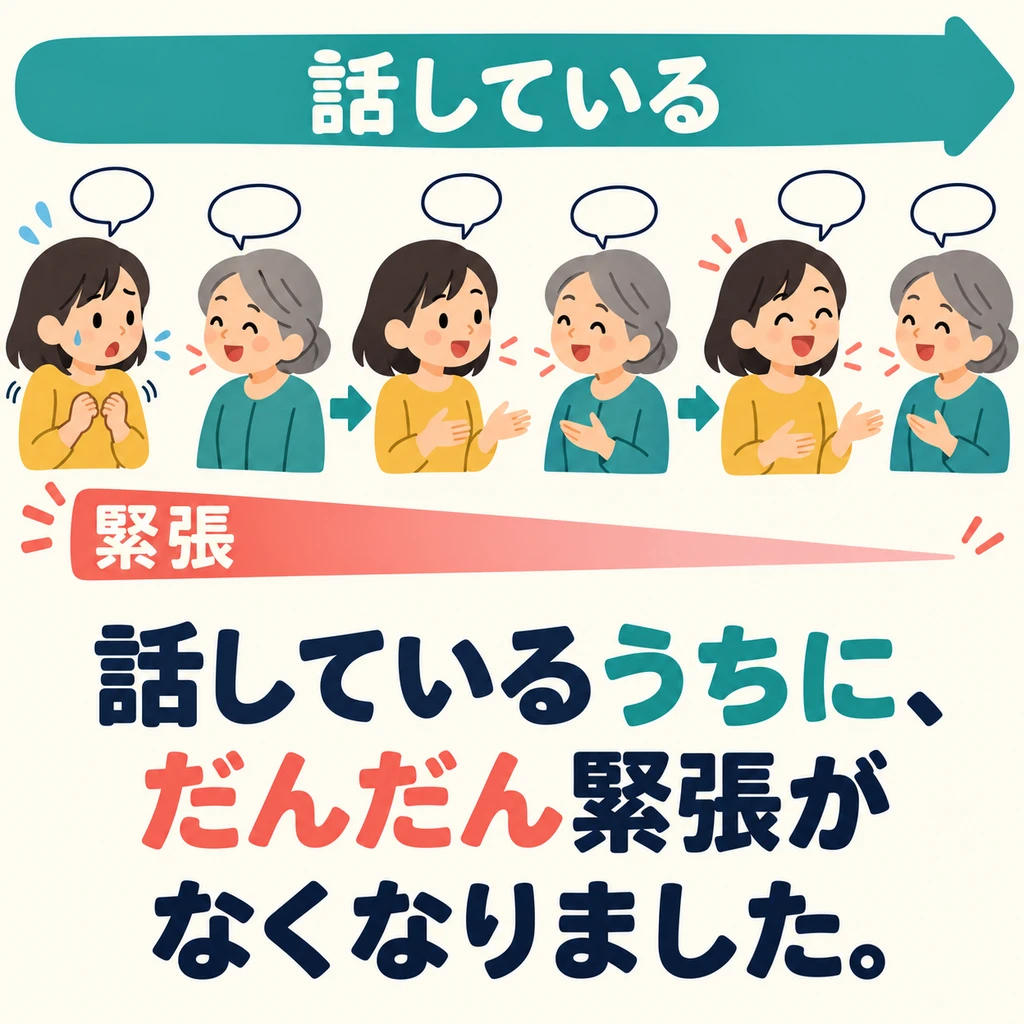
  1. The conversation keeps going. How do their expressions change? Notice how the nervousness gradually fades as they chat.
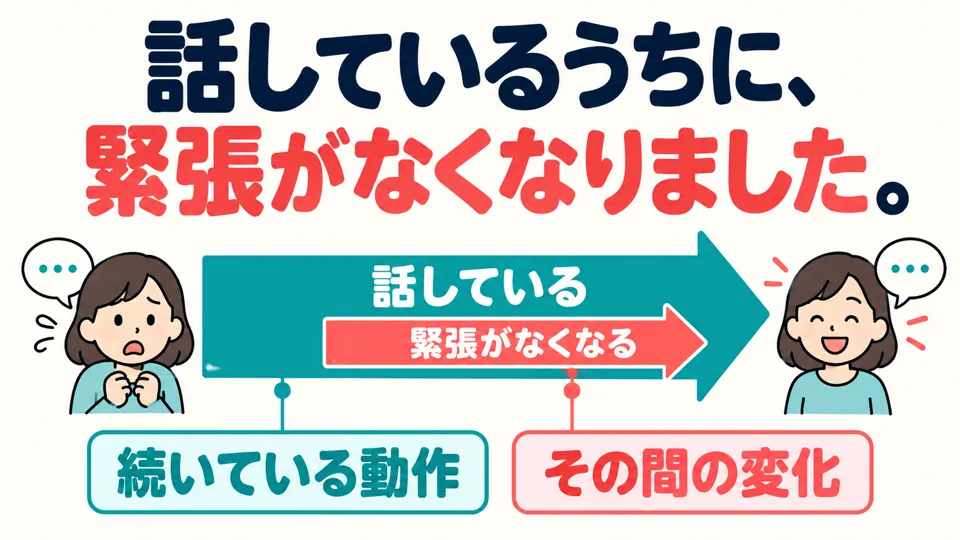
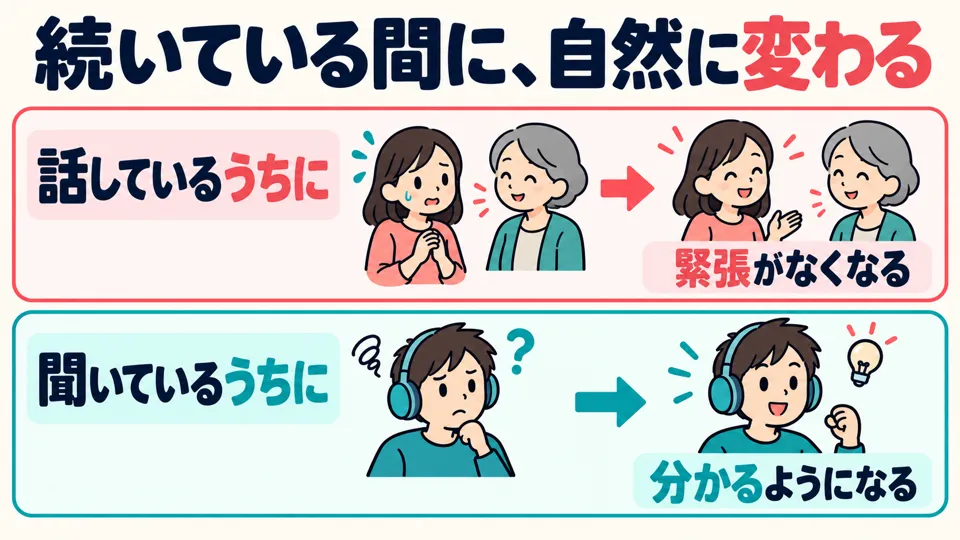
    The conversation keeps going. How do their expressions change? Notice how the nervousness gradually fades as they chat.
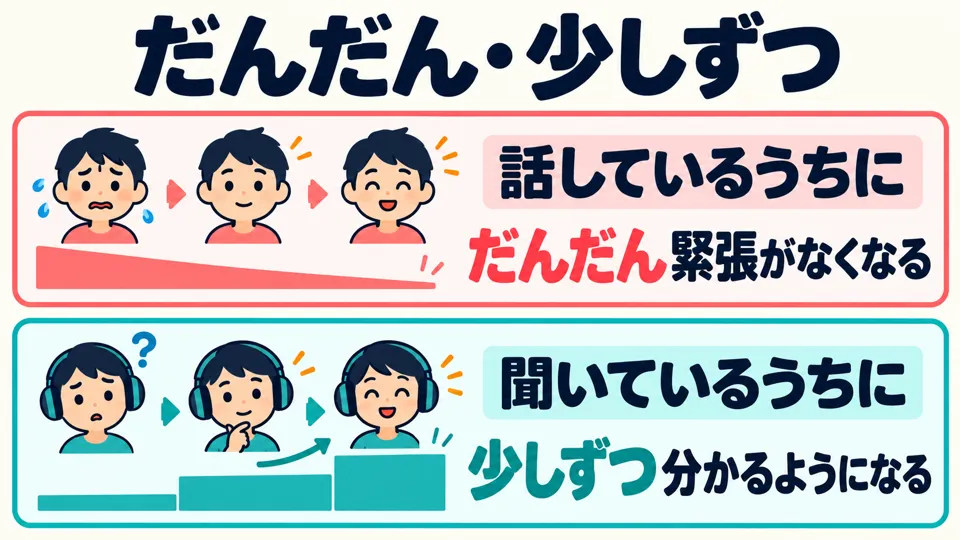
  2. 「Vているうちに」 first names an ongoing action, then describes a change that happens during it.

「Vているうちに」 first names an ongoing action, then describes a change that happens during it.

  • Use this pattern when feelings, understanding, or something else changes naturally while an action or state continues.

    Use this pattern when feelings, understanding, or something else changes naturally while an action or state continues.

  • 「だんだん」 and 「少しずつ」 emphasize gradual change and are often used with 「うちに」.

    「だんだん」 and 「少しずつ」 emphasize gradual change and are often used with 「うちに」.

  • In the two examples, talking and listening are still ongoing. The nervousness fades and understanding grows during that time.

    In the two examples, talking and listening are still ongoing. The nervousness fades and understanding grows during that time.

  • The examples focus on changes that happen naturally. They do not set out a planned result or give someone a command.

    The examples focus on changes that happen naturally. They do not set out a planned result or give someone a command.

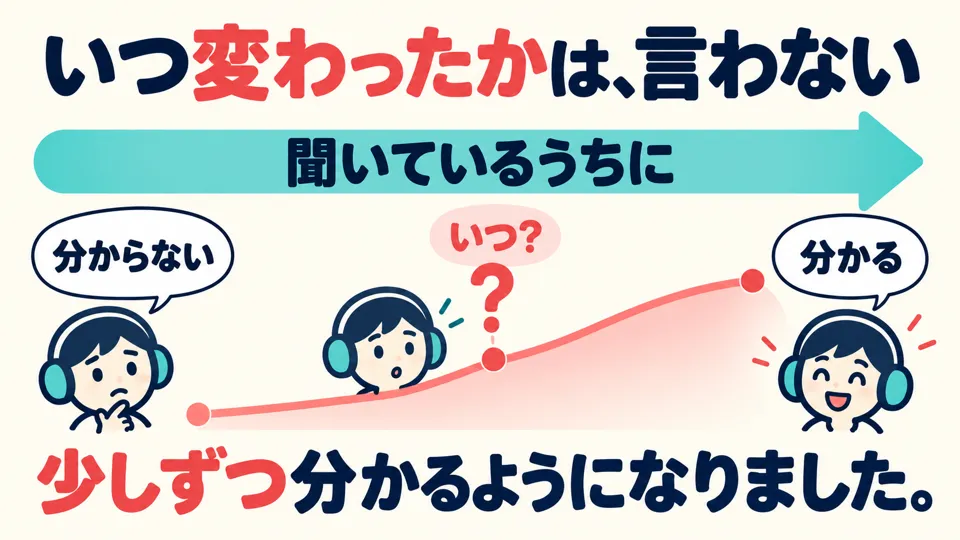
  • At exactly what moment did the nervousness fade, or the words become understandable? These sentences do not specify when the change occurred.

    At exactly what moment did the nervousness fade, or the words become understandable? These sentences do not specify when the change occurred.

  • Example sentences

    • 話しはなしhanashiてteいるiruうちuchiに、ni、だんだんdandan緊張きんちょうkinchouがgaなくなりました。nakunarimashita。

      As we were talking, my nervousness gradually disappeared.

    • 最初さいしょsaishoはわwa分からなかった言葉わからなかったことばwakaranakattakotobaも、mo、聞いきいkiiてteいるiruうちuchiにni少しすこしsukoshiずつzutsu分かるわかるwakaru

      Even words I didn't understand at first, I gradually came to understand little by little as I listened to them.

    In a conversation

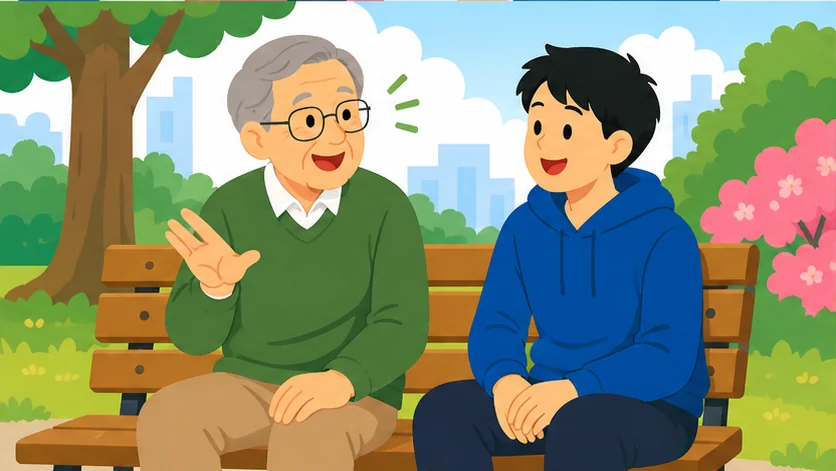
    • 高齢者こうれいしゃの方ほうとの会話かいわが続くつづくか心配しんぱいでしたが、大丈夫でしただいじょうぶでしたか。

      I was worried about whether you would be able to keep a conversation going with the elderly person, but did it go well?

    • はい、最初さいしょはわ沈黙ちんもくが怖かったですこわかったですが、相手あいての話はなしをうなずきながら聞いきいているうちに、だんだん会話かいわが

      Yes, at first I was afraid of silence, but as I listened to them while nodding, I gradually began to enjoy the conversation.

    • 素晴らしいですすばらしいですね。お互いおたがいに心こころを開くひらくことができたようで本当できたようでほんとうに良かったです。よかったです。

      That is wonderful. I'm really glad to hear that you both seemed to be able to open up to each other.

    Check yourself

    1. Level 1 · Recognise

      Which sentence is correct?

    2. Level 1 · Recognise

      Listen and choose the meaning

    3. Level 2 · Build

      Put the words in order

      As I listened to the other person talk about their work experience, the prejudice I once had gradually disappeared.

    4. Level 3 · Use

      What goes in the blank?

      話している____、だんだん緊張がなくなりました。

      As we kept talking, my nervousness gradually went away.

    More grammar in this theme

    • 〜どころではないin no position to; far from
    • 〜たところdid…and found that
    • 〜ことになったit has been decided
    • 〜に限り/〜限りはlimited to; as long as
    • 〜かなと思ってthinking maybe; so I
    • 〜にしてはfor; contrary to expectation
    • 〜につきper; for each
    • 〜たものだused to; fond recollection
    • 〜ながらもalthough; despite feeling
    • 〜につけ(て)whenever; at every opportunity
    • 〜さえ/さえ〜ばeven; as long as
    • 〜に反してcontrary to expectations
    • 〜ているうちにchange during an activity
    • 〜からしてinference from a clue
    Previous〜に反してNext〜からして

    Keep practising

    Test your Japanese vocabulary12 adaptive questions, freeCheck your pronunciationRead aloud and get a scorePractise verb forms10-question conjugation quizSee the whole courseGrammar, vocabulary and quizzes by theme
    See the whole course
    Intermediate 2
    Intergenerational Exchange and Broader Perspectives
    ようになりました。youninarimashita。
    楽しくたのしく
    なっ
    て
    きました。