JPEDLAB iconJPEDLAB
Save history

Create an account and play

Explore first, then save your progress whenever you are ready. No email address is required.

Start free
Read as articleCards
1/12

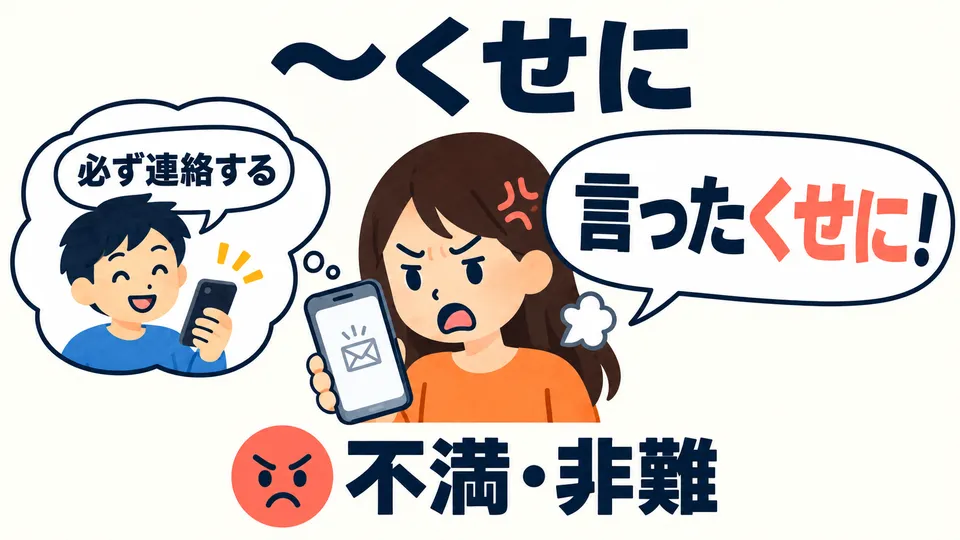
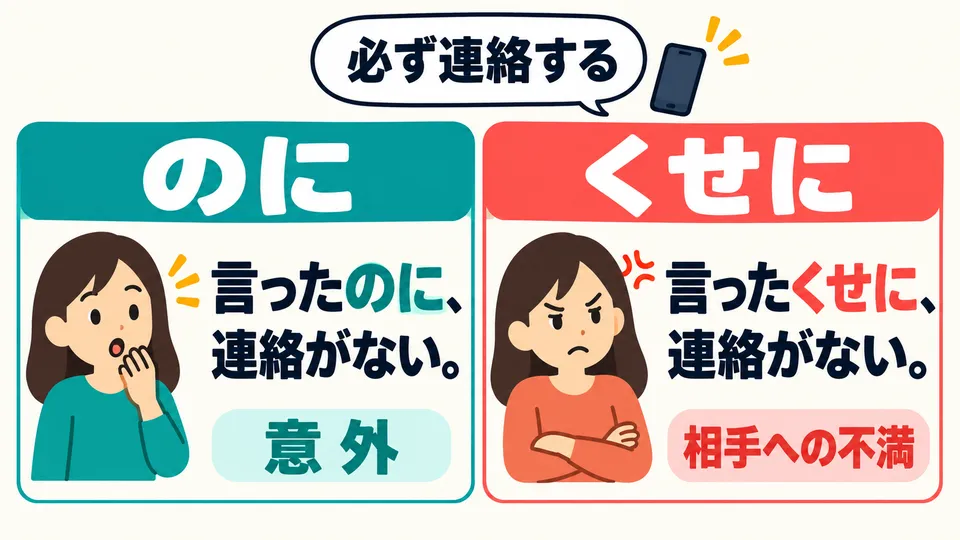
They promised to get in touch, but no message came. Look at her face: what is she blaming them for?

››

Lesson notes · ≈ JLPT N3 · Intermediate 2

〜くせに~kuse ni

reproachful contradiction

Use 「〜くせに」 for a contradiction that reproaches or criticizes someone, often with annoyance.

How it works
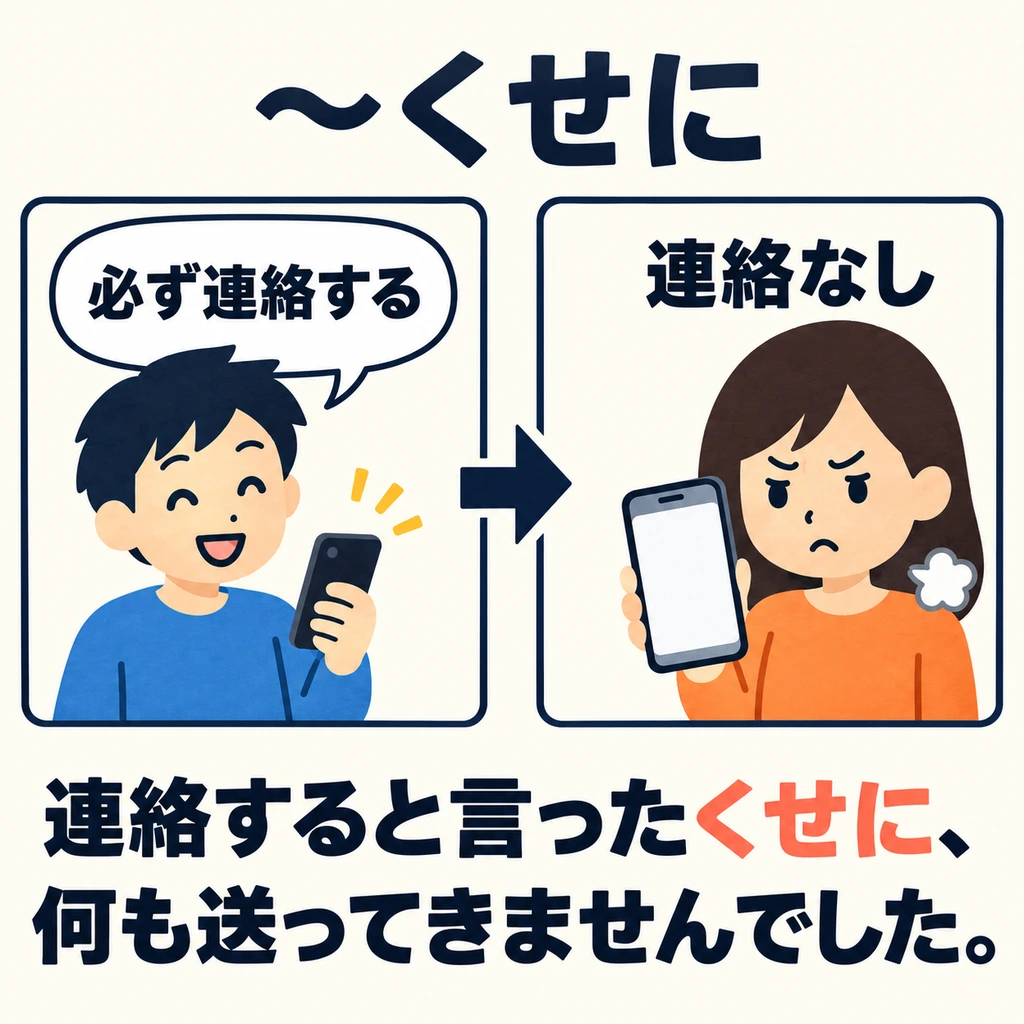
  1. They promised to get in touch, but no message came. Look at her face: what is she blaming them for?
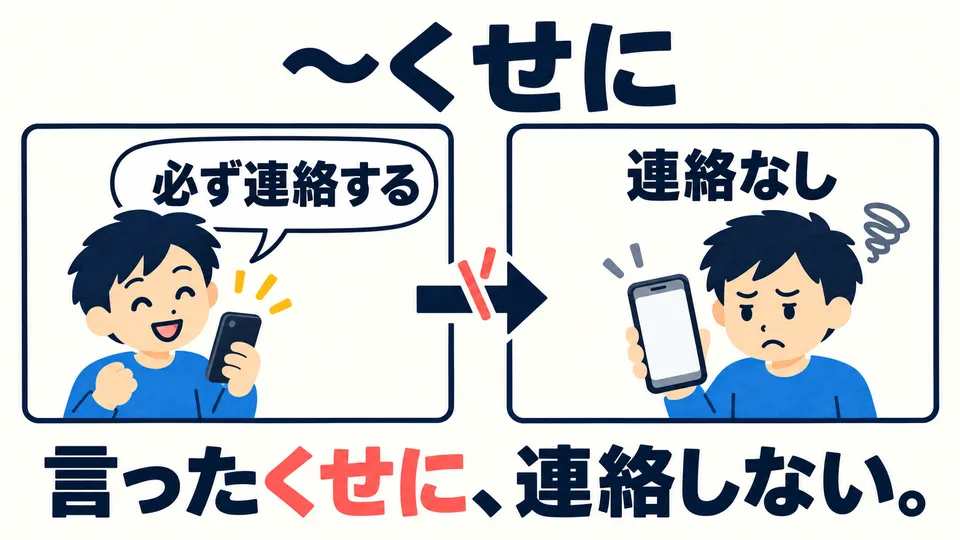
    They promised to get in touch, but no message came. Look at her face: what is she blaming them for?
  2. The first part gives a role, situation, or something someone said. The second goes against the expectations this creates.

The first part gives a role, situation, or something someone said. The second goes against the expectations this creates.

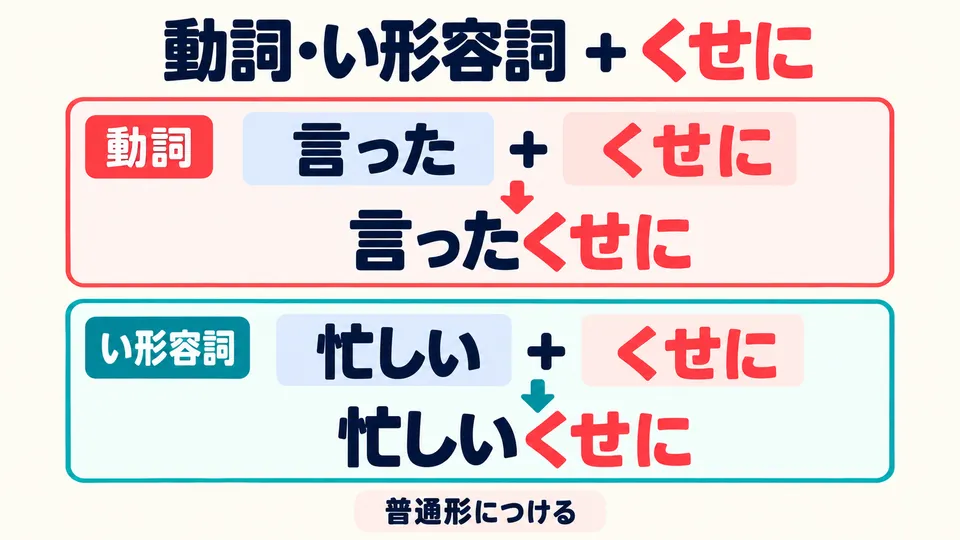
  • Attach 「くせに」 to the plain form of verbs and い-adjectives. In the example, it is 「言ったくせに」.

    Attach 「くせに」 to the plain form of verbs and い-adjectives. In the example, it is 「言ったくせに」.

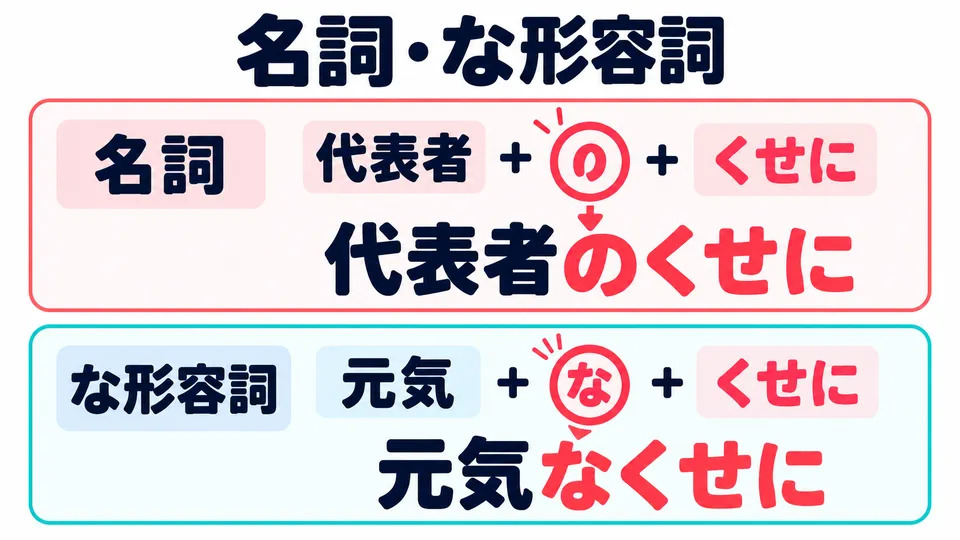
  • Nouns take 「のくせに」, and な-adjectives take 「なくせに」. Notice the form in between.

    Nouns take 「のくせに」, and な-adjectives take 「なくせに」. Notice the form in between.

  • The speaker does more than point out a contradiction: they blame or criticize the other person, often with annoyance or contempt.

    The speaker does more than point out a contradiction: they blame or criticize the other person, often with annoyance or contempt.

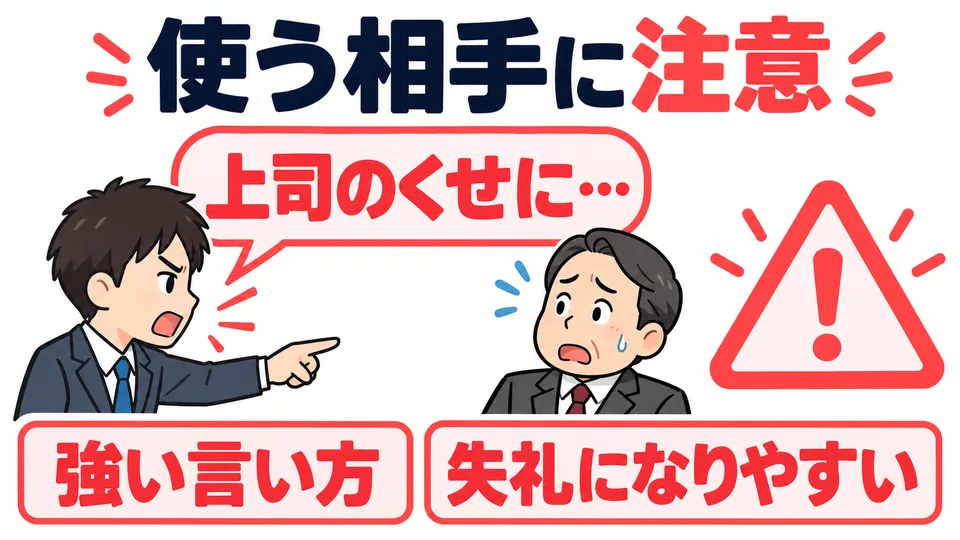
  • The tone is sharp. Saying it directly to someone can hurt them, and using it with a superior can sound especially rude.

    The tone is sharp. Saying it directly to someone can hurt them, and using it with a superior can sound especially rude.

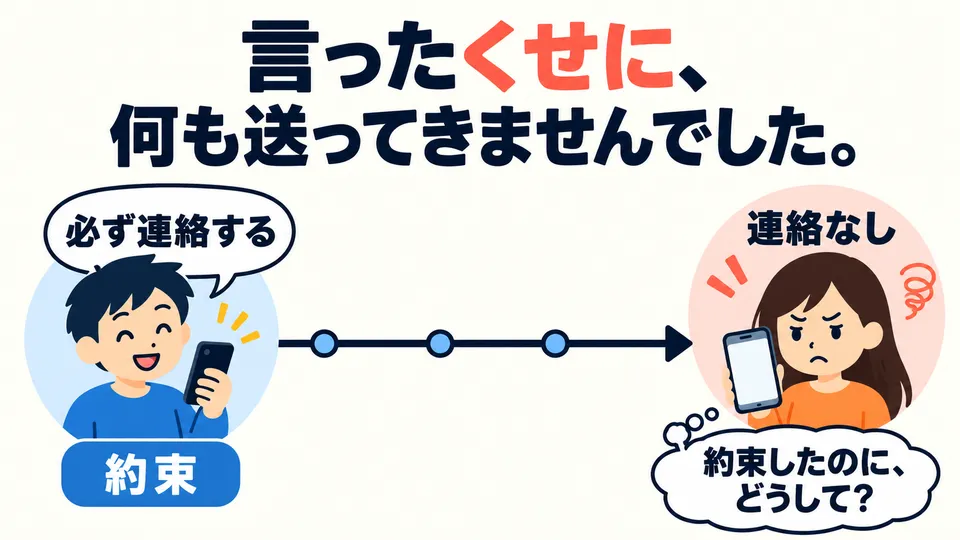
  • The first sentence starts with a promise the person made themselves. The reproach is: if you promised, why didn’t you get in touch?

    The first sentence starts with a promise the person made themselves. The reproach is: if you promised, why didn’t you get in touch?

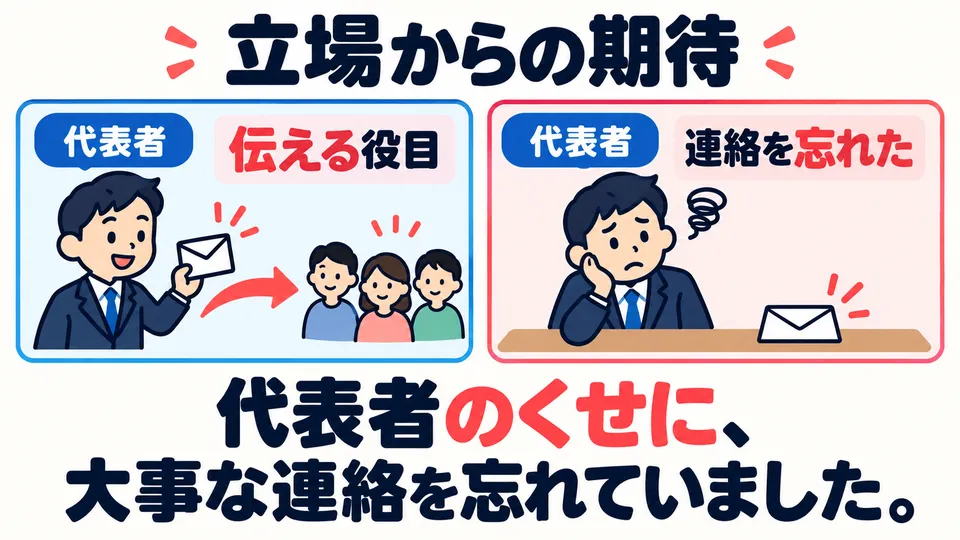
  • The second sentence bases the reproach on their role as representative: they should pass on information, but forgot the important notification.

    The second sentence bases the reproach on their role as representative: they should pass on information, but forgot the important notification.

  • Both sentences can also express surprise with 「のに」. 「くせに」 brings out the annoyance directed at the person more strongly.

    Both sentences can also express surprise with 「のに」. 「くせに」 brings out the annoyance directed at the person more strongly.

  • Example sentences

    • 自分じぶんjibunで「でde必ずかならずkanarazu連絡れんらくrenrakuする」するsuruとto言ったくせいったくせittakuseに、ni、何なんnanもmo送っおくっokutてteきませんでした。kimasendeshita。

      Despite saying they would 'definitely contact' me, they didn't send anything.

    • 代表者だいひょうしゃdaihyoushaのnoくせkuseに、ni、大事な連絡だいじなれんらくdaijinarenrakuをo忘れわすれwasureてteいました。imashita。

      Despite being the representative, they forgot the important notification.

    In a conversation

    • A
      佐藤さんさとうさんはわ自分じぶんが確認かくにん不足ふそくだったくせに、こちらのミスみすだと思いおもい込んこんでいたみたいです。

      A: Even though Mr. Sato didn't check properly, he seemed to assume it was our mistake. (E2601)

    • B
      そうなんですか。勘違いかんちがいだと分かっわかって、誤解ごかいはわ解けましたとけましたか。

      B: Is that so? Now that he knows it was a misunderstanding, has the misunderstanding been resolved?

    • A
      はい、メールめーるを読みよみ直しなおして自分じぶんの間違いまちがいに気づいたようで、きづいたようで、謝っあやまってくれました。

      A: Yes, he seemed to realize his mistake after re-reading the email and apologized to me.

    Check yourself

    1. Level 1 · Recognise

      Which sentence is correct?

    2. Level 1 · Recognise

      Listen and choose the meaning

    3. Level 2 · Build

      Put the words in order

      Even though they said themselves, "I'll definitely contact you," they didn't send anything.

    4. Level 3 · Use

      What goes in the blank?

      自分で「必ず連絡する」と言った____、何も送ってきませんでした。

      Even though they said they would definitely contact me, they sent nothing.

    More grammar in this theme

    • 〜のことなんですがgently introduce a topic
    • 〜させていただけませんかpolitely ask permission
    • 〜ものですからgently explain a reason
    • 〜の代わりに・〜に代わってinstead of; in place of
    • 〜おかげでthanks to; good result
    • 〜おかげだcredit a good result
    • 〜くせにreproachful contradiction
    • 〜せいでblame for a bad result
    • 〜に決まっているstrong certainty; bound to
    • 人を〜にさせるtrigger someone’s feelings
    • 〜ことはないno need to
    • 〜のことになると・〜のこととなるとwhen it comes to
    • 人にしたら・人にすればfrom someone’s perspective
    • 人にしてみたら・人にしてみればfrom someone’s perspective
    • 〜たびにevery time
    • 〜ば・〜ならばif; on the condition that
    • 〜たら・〜ためにif; in order to
    Previous〜おかげだNext〜せいで

    Keep practising

    Test your Japanese vocabulary12 adaptive questions, freeCheck your pronunciationRead aloud and get a scorePractise verb forms10-question conjugation quizSee the whole courseGrammar, vocabulary and quizzes by theme
    See the whole course
    Intermediate 2
    Thoughtful Communication and Feelings