JPEDLAB iconJPEDLAB
Save history

Create an account and play

Explore first, then save your progress whenever you are ready. No email address is required.

Start free
Read as articleCards
See the whole course›Intermediate 3›Travel Information and Trip Sharing

Japanese grammar · ≈ JLPT N3 · Intermediate 3

〜ついでに~ tsuide ni

while at it; taking the opportunity

Put the main action before 〜ついでに, then add a secondary action done by taking that opportunity.

Start the interactive lessonIllustrated cards, audio and speaking practice

How it works

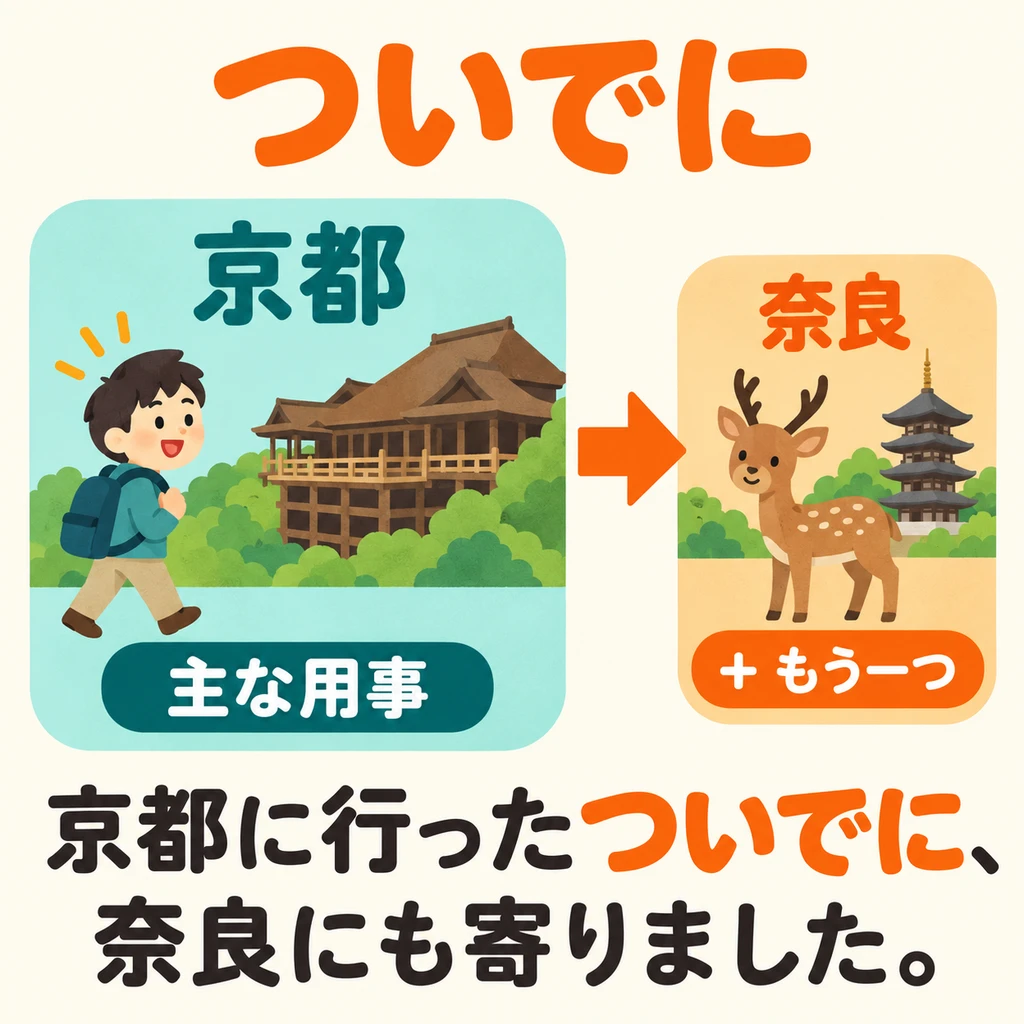
  1. Which destination is the main one? Going to Kyoto is the main purpose; take the opportunity to visit Nara too.
    Which destination is the main one? Going to Kyoto is the main purpose; take the opportunity to visit Nara too.

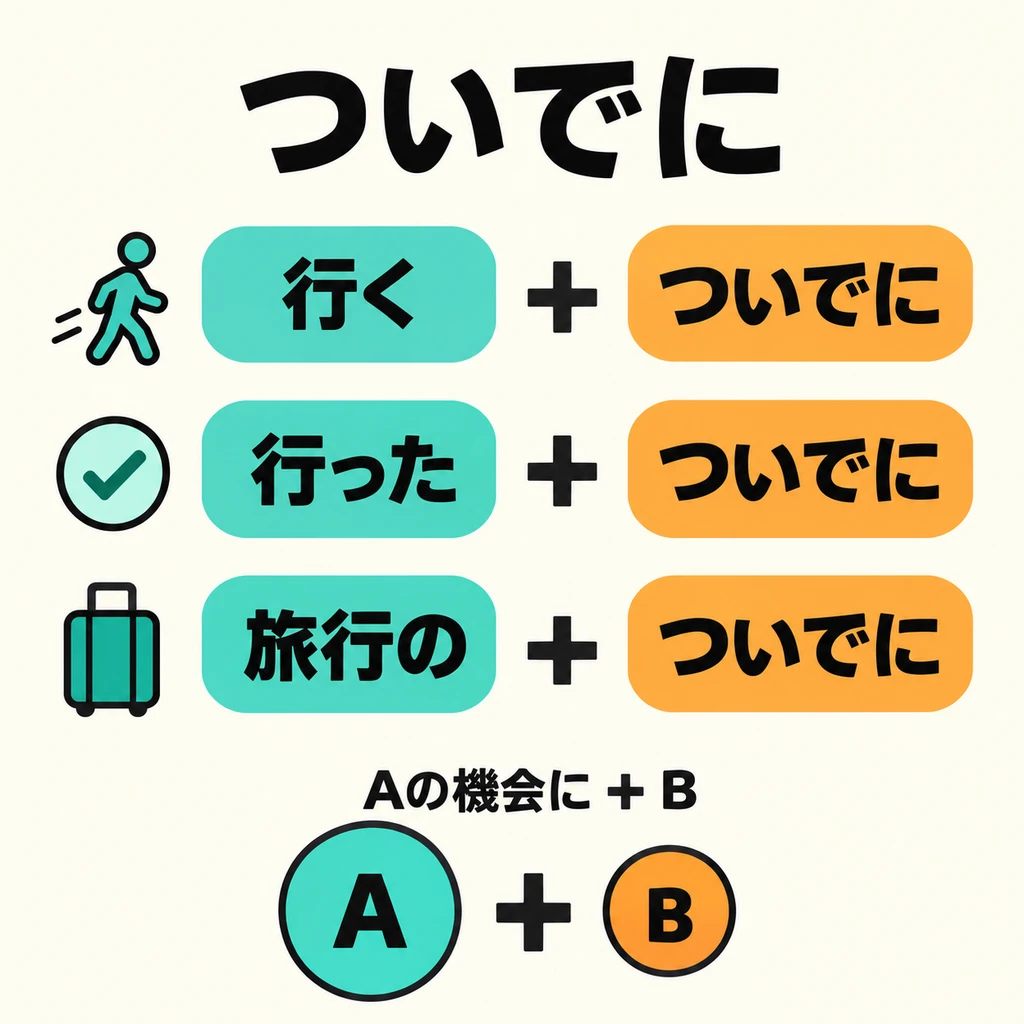
  2. Put the main action first: a verb in dictionary form or た-form, or a noun + の. The extra action comes after.
    Put the main action first: a verb in dictionary form or た-form, or a noun + の. The extra action comes after.

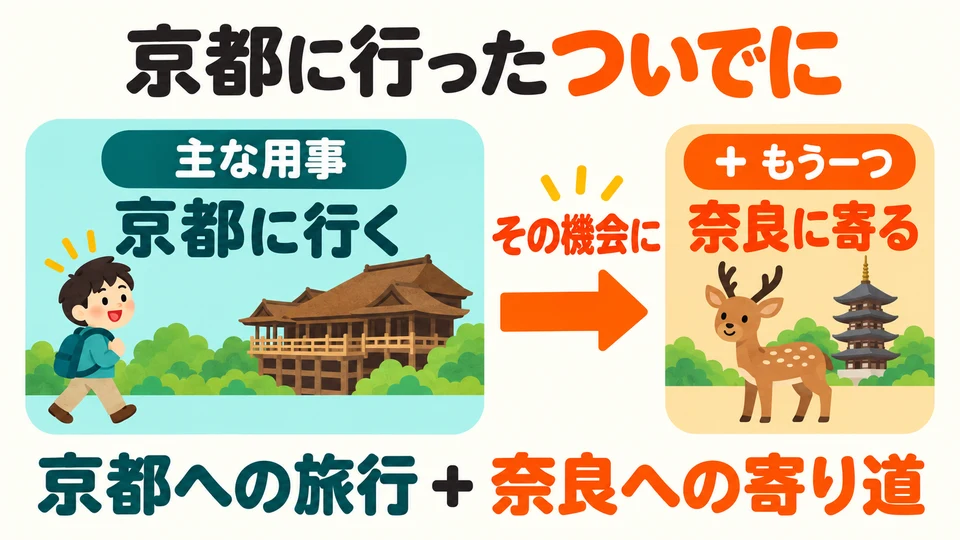
  3. The example uses 「行った」: the trip to Kyoto provides an opportunity to visit Nara too. It expresses more than just the order of events.
    The example uses 「行った」: the trip to Kyoto provides an opportunity to visit Nara too. It expresses more than just the order of events.

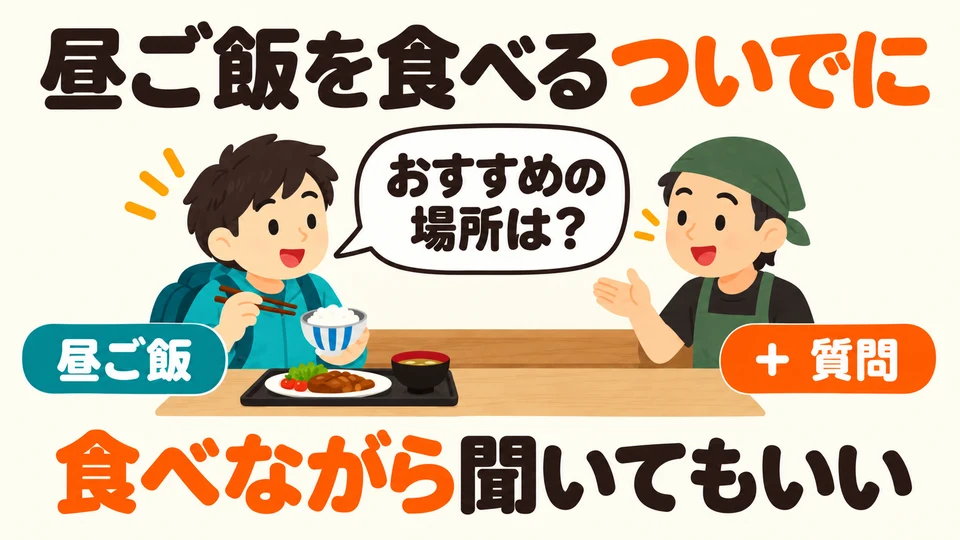
  4. In the 「食べる」 example, lunch provides an opportunity to ask for recommended places. You can ask while eating; you need not finish lunch first.

    In the 「食べる」 example, lunch provides an opportunity to ask for recommended places. You can ask while eating; you need not finish lunch first.

Example sentences

  • 京都きょうとkyoutoにni行ったついでいったついでittatsuideに、ni、奈良ならnaraにniもmo寄りました。よりました。yorimashita。

    When I went to Kyoto, I dropped by Nara as well.

In a conversation
  • A
    旅先たびさきでどこかついでに寄った場所よったばしょはわありましたか?か

    A: Did you drop by anywhere else during your trip?

  • B
    ええ、隠れた名所かくれためいしょを訪れるおとずれる

Check yourself

  1. Level 1 · Recognise

    Which sentence is correct?

  2. Level 1 · Recognise

    Listen and choose the meaning

  3. Level 2 · Build

    Put the words in order

    While I was in Kyoto, I also stopped by Nara.

  4. Level 3 · Use

    What goes in the blank?

    京都に行った____、奈良にも寄りました。

    I also stopped by Nara while I was in Kyoto.

More grammar in this theme

  • 〜ついでにwhile at it; taking the opportunity

Keep practising

Test your Japanese vocabulary12 adaptive questions, freeCheck your pronunciationRead aloud and get a scorePractise verb forms10-question conjugation quizSee the whole courseGrammar, vocabulary and quizzes by theme
昼ご飯ひるごはんhirugohan
をo
食べるたべるtaberu
ついでtsuide
に、ni、
地元じもとjimoto
のno
人ひとhito
にni
おすすめosusume
のno
場所ばしょbasho
をo
聞きました。ききました。kikimashita。

While eating lunch, I also took the opportunity to ask locals for recommended places.

ついで
に、
偶然ぐうぜん
見つけた穴場みつけたあなば
の
食堂しょくどう
に
入りました。はいりました。

B: Yes, while visiting a hidden gem, I took the opportunity to eat at a local diner I stumbled upon.

  • A
    いいですね。旅中りょちゅうのそういう予期よきせぬ出会いせぬであいが一番いちばん思い出おもいでに残りますのこりますよね。

    A: That's nice. Those kind of unexpected encounters during a trip make the best memories, don't they?

  • 〜といったらtypical association with a topic
    とても〜ないcannot possibly do
    〜はもちろん・〜はもとよりnot only; but also
    〜させていただきますhumbly do with permission
    ご〜いたします・お〜いたしますhumbly provide a service
    〜つもりだintend to; believe one did
    〜ように思うseem; I think
    〜ておりますformal humble action or state
    〜かねますcannot accommodate a request
    〜ことに(は)to one’s surprise; interestingly
    〜だけあって・〜だけのことはあるas expected; worth it
    Previous〜だけあって・〜だけのことはある