
Lesson notes · ≈ JLPT N3 · Intermediate 3
〜ついでに~ tsuide ni
while at it; taking the opportunity
Put the main action before 〜ついでに, then add a secondary action done by taking that opportunity.
How it works
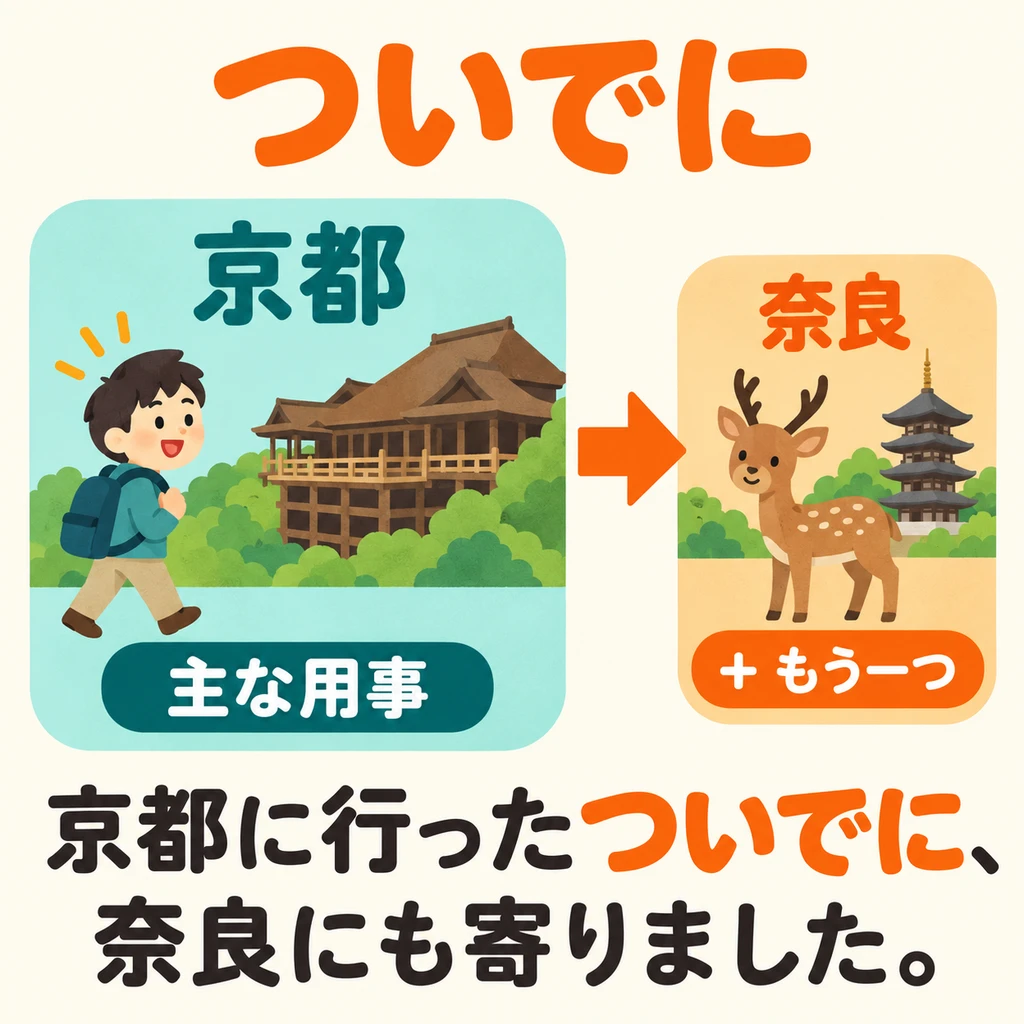
Which destination is the main one? Going to Kyoto is the main purpose; take the opportunity to visit Nara too.
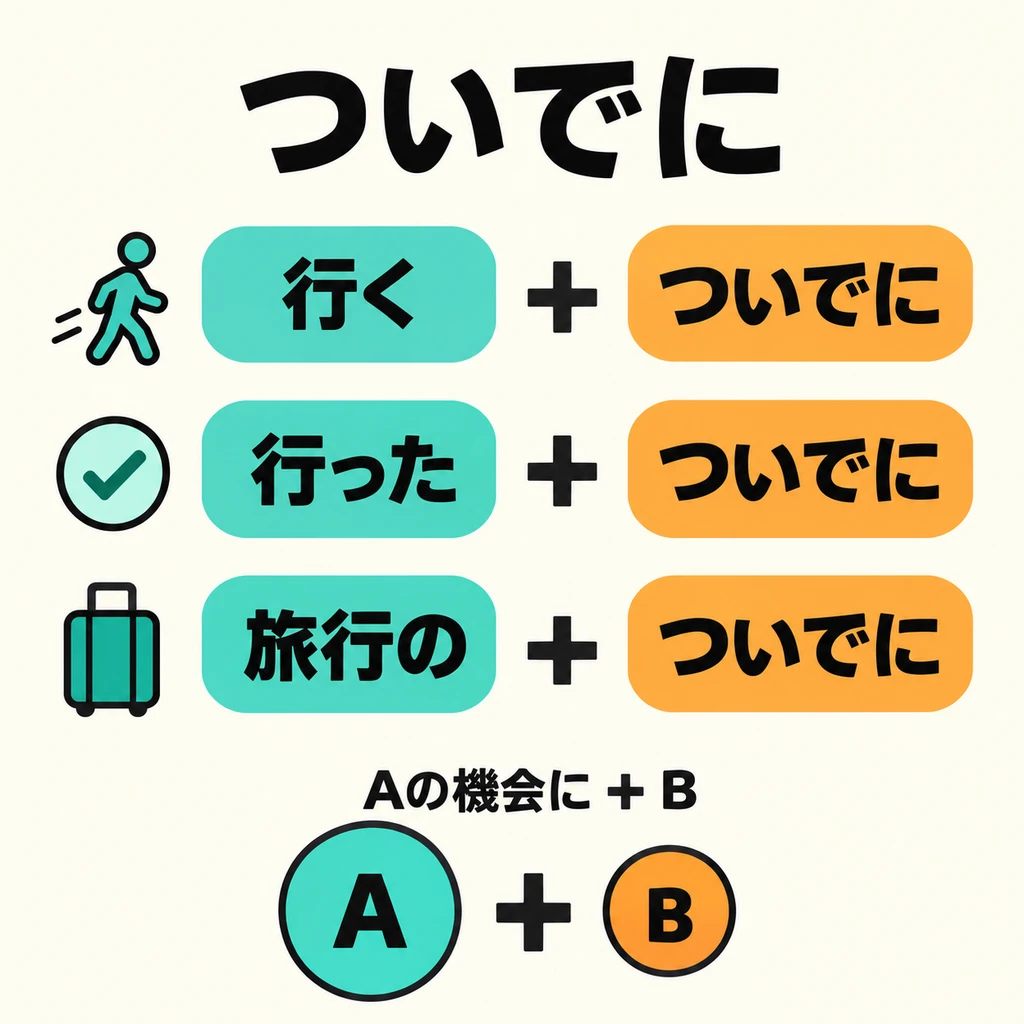
Put the main action first: a verb in dictionary form or た-form, or a noun + の. The extra action comes after.
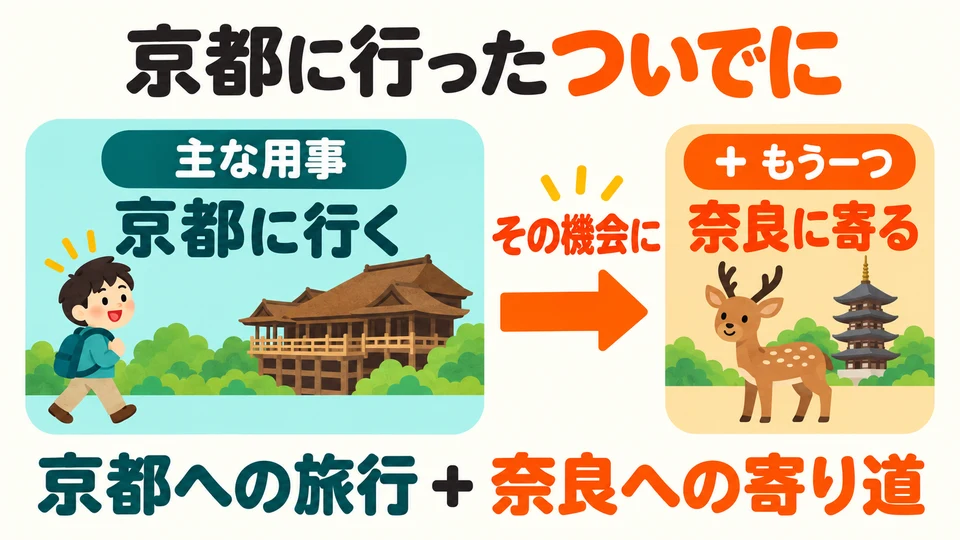
The example uses 「行った」: the trip to Kyoto provides an opportunity to visit Nara too. It expresses more than just the order of events.
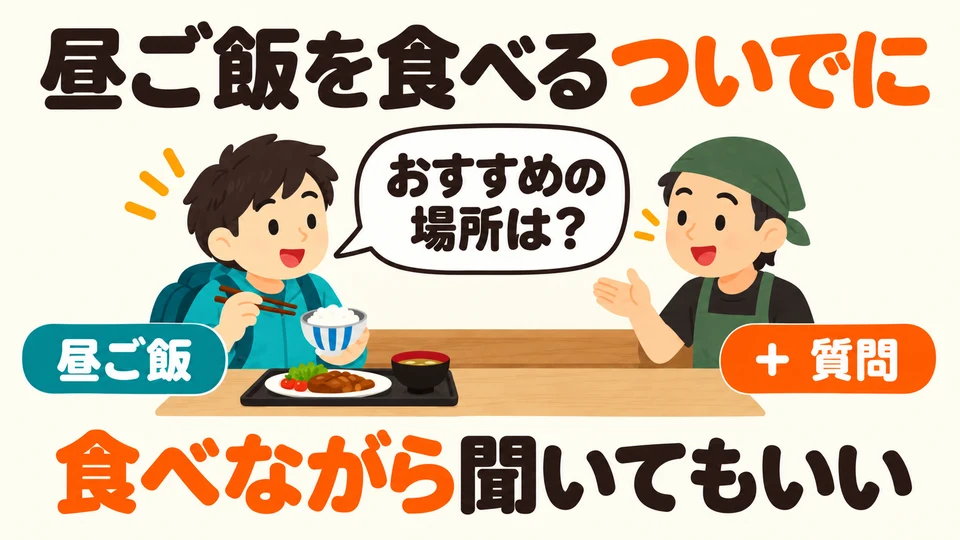
In the 「食べる」 example, lunch provides an opportunity to ask for recommended places. You can ask while eating; you need not finish lunch first.