JPEDLAB iconJPEDLAB
Save history

Create an account and play

Explore first, then save your progress whenever you are ready. No email address is required.

Start free
Read as articleCards
See the whole course›Intermediate 3›School Systems and Educational Experiences

Japanese grammar · ≈ JLPT N2 · Intermediate 3

〜にもかかわらず~ni mo kakawarazu

despite; contrary to expectation

「〜にもかかわらず」 acknowledges a fact, then presents a result contrary to expectation in a formal tone.

Start the interactive lessonIllustrated cards, audio and speaking practice

How it works

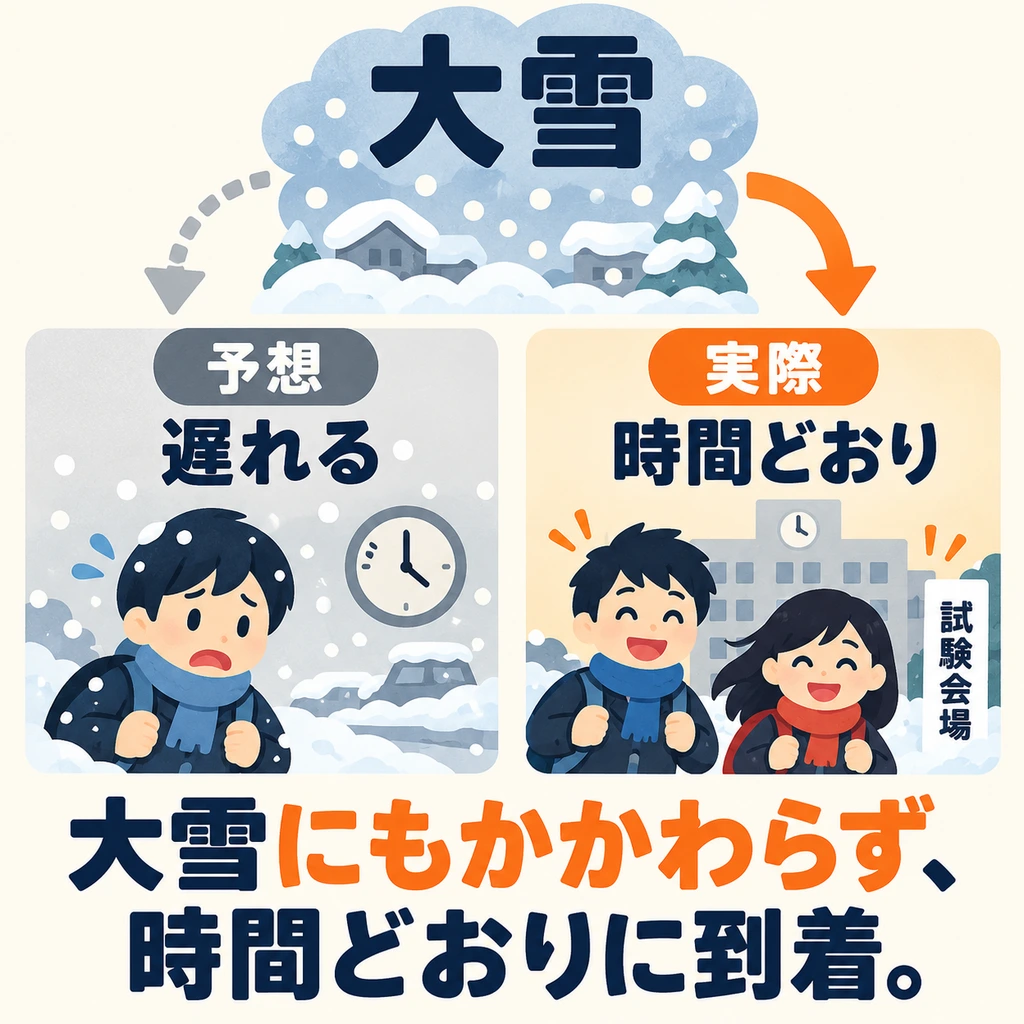
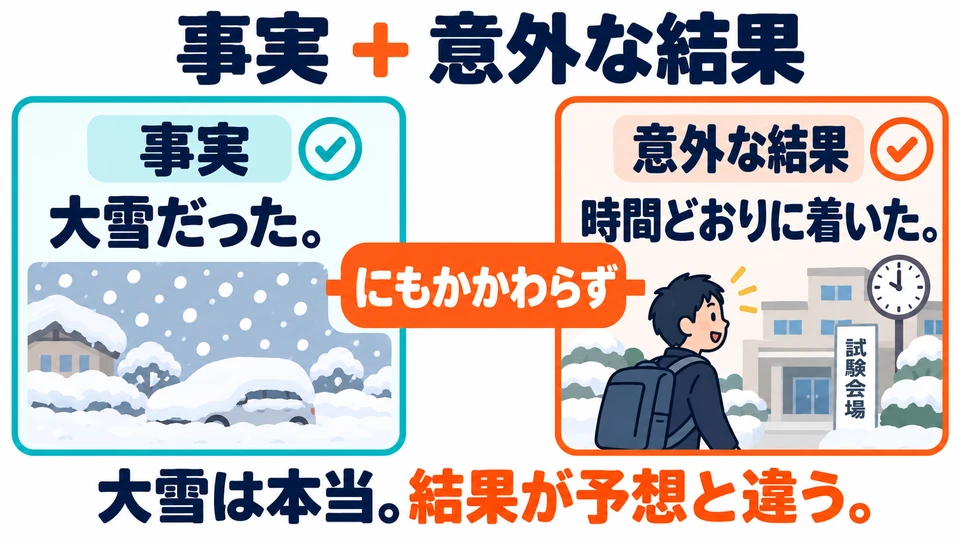
  1. Heavy snow usually makes us expect delays, yet they arrive on time. This pattern highlights a result contrary to expectations.
    Heavy snow usually makes us expect delays, yet they arrive on time. This pattern highlights a result contrary to expectations.

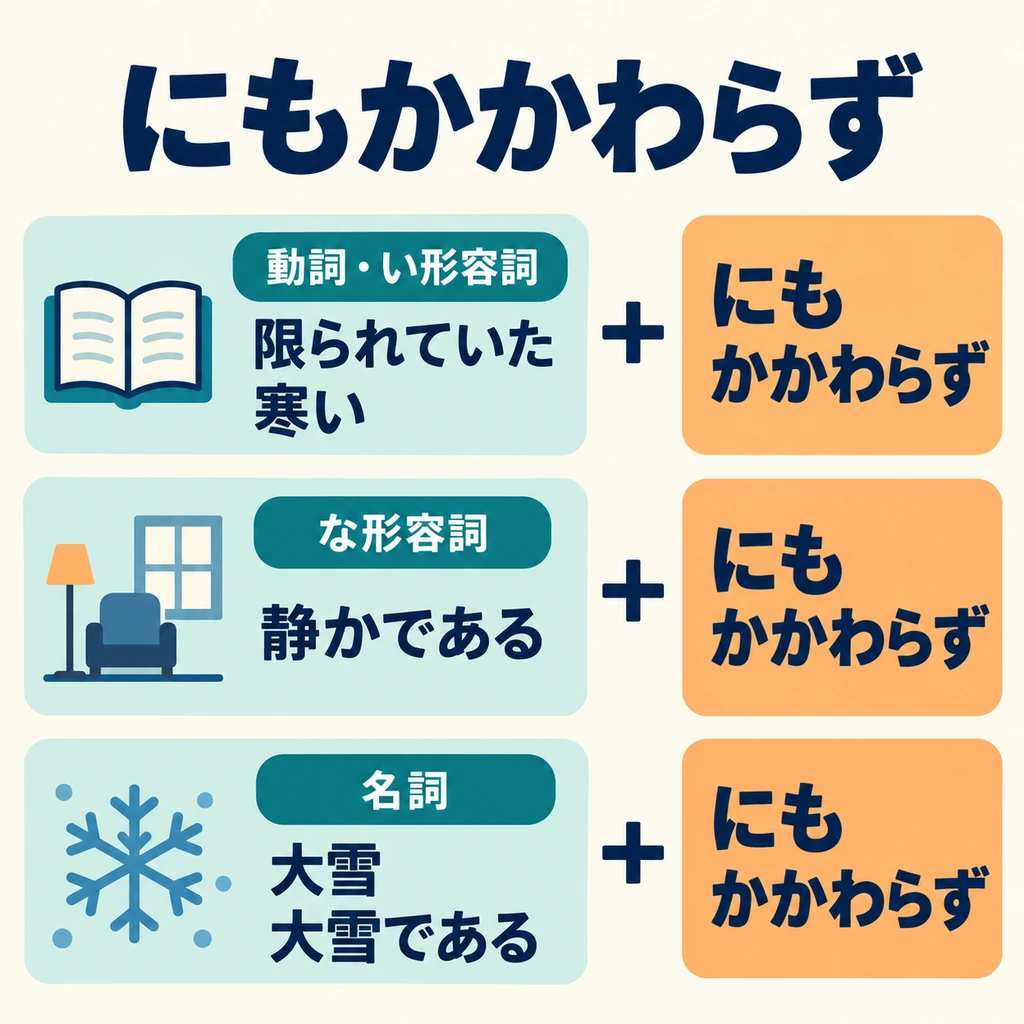
  2. Use the plain form of verbs and い-adjectives, as in 「限られていた」 and 「寒い」.
    Use the plain form of verbs and い-adjectives, as in 「限られていた」 and 「寒い」.

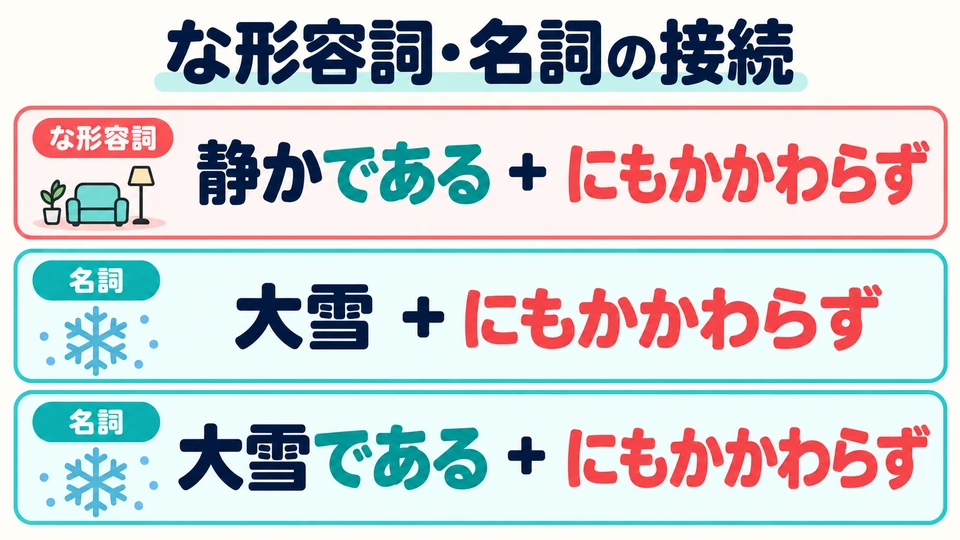
  3. Use 「である」 with な-adjectives. Nouns can connect directly or take 「である」.
    Use 「である」 with な-adjectives. Nouns can connect directly or take 「である」.

  4. The first half acknowledges a fact; the second gives an unexpected result. It does not deny the situation in the first half.
    The first half acknowledges a fact; the second gives an unexpected result. It does not deny the situation in the first half.

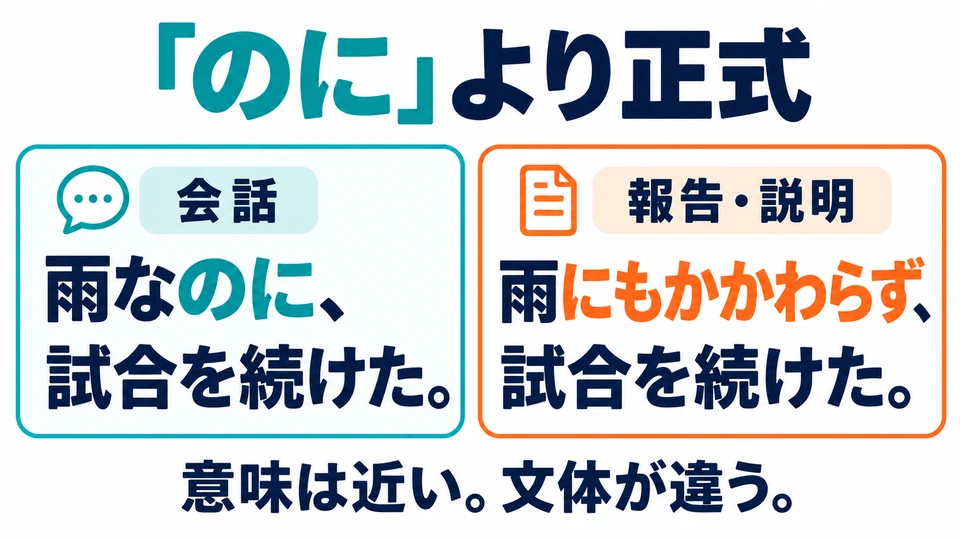
  5. Its meaning is close to 「のに」, but its tone is more formal. It often appears in written explanations or objective reports.
    Its meaning is close to 「のに」, but its tone is more formal. It often appears in written explanations or objective reports.

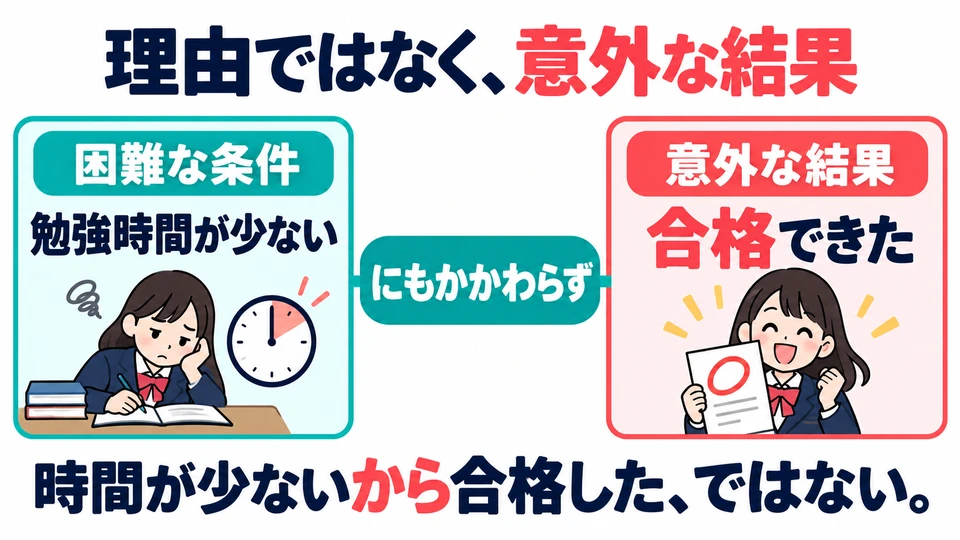
  6. In the example, limited study time is an obstacle, and passing is the unexpected result. She did not pass because she had little study time.

    In the example, limited study time is an obstacle, and passing is the unexpected result. She did not pass because she had little study time.

Example sentences

  • 大雪おおゆきooyukiにniもmoかかわらず、kakawarazu、多くおおくookuのno受験生じゅけんせいjukenseiがga時間じかんjikanどおりdooriにni会場

In a conversation

Check yourself

  1. Level 1 · Recognise

    Which sentence is correct?

  2. Level 1 · Recognise

    Listen and choose the meaning

  3. Level 2 · Build

    Put the words in order

    Despite the heavy snow, many examinees arrived at the venue on time.

  4. Level 3 · Use

    What goes in the blank?

    大雪____、多くの受験生が時間どおりに会場に到着しました。

    Despite the heavy snow, many examinees arrived at the venue on time.

More grammar in this theme

  • 〜にもかかわらずdespite; contrary to expectation

Keep practising

Test your Japanese vocabulary12 adaptive questions, freeCheck your pronunciationRead aloud and get a scorePractise verb forms10-question conjugation quizSee the whole courseGrammar, vocabulary and quizzes by theme
かいじょう
kaijou
にni
到着とうちゃくtouchaku
しました。shimashita。

Despite the heavy snow, many examinees arrived at the venue on time.

  • A
    明日あすはわ共通きょうつうテストてすとの本番ほんばんなのに、交通こうつう機関きかんの遅延ちえんが心配しんぱいですね。

    A: Tomorrow is the actual day of the Common Test, but I'm worried about transportation delays.

  • 家庭かていkateiのno事情じじょうjijouでde勉強べんきょうbenkyou時間じかんjikanがga限られかぎられkagirareてteいたitaにniもmoかかわらず、kakawarazu、彼女かのじょkanojoはわwa合格ごうかくgoukakuするsuruことkotoがgaできました。dekimashita。

    Despite her limited study time due to family circumstances, she was able to pass the exam.

  • B
    ええ、でも大雪おおゆきなどの遅延ちえんにもかかわらず、追試験ついしけんなどの救済きゅうさい措置そちがあるそうですよ。

    B: Yes, but I heard that there are relief measures such as makeup exams despite delays caused by heavy snow.

  • A
    それを聞いきいて安心あんしんしました。明日あすはわ緊張きんちょう感かんに負けずまけずに頑張りましょう。がんばりましょう。

    A: I'm relieved to hear that. Tomorrow, let's do our best and not let the tension get to us.

  • 〜ものだ・〜もんだas things usually are
    〜にかけてはwhen it comes to; strong at
    〜はともかくset aside and focus
    〜ないことはない・〜ないこともないqualified yes; not impossible
    〜も〜ば、〜もlisting different situations
    〜にわたって/〜にわたり/〜にわたるspan a period, area, or occasions
    〜きる・〜きれるfinish completely; be able to finish
    〜からいうと・〜からいって・〜からいえばjudging from; from a perspective
    〜となると・〜となれば・〜となったらwhen facing a situation
    〜次第だ・〜次第でdepends on; depending on
    〜ぬくpersevere to the end
    〜つつwhile doing; simultaneous actions
    Previous〜きる・〜きれる
    Next〜からいうと・〜からいって・〜からいえば