
Japanese grammar · ≈ JLPT N2 · Intermediate 3
〜からいうと・〜からいって・〜からいえば~kara iu to / ~kara itte / ~kara ieba
judging from; from a perspective
「〜からいって」 names the basis or perspective for the judgment that follows.
How it works
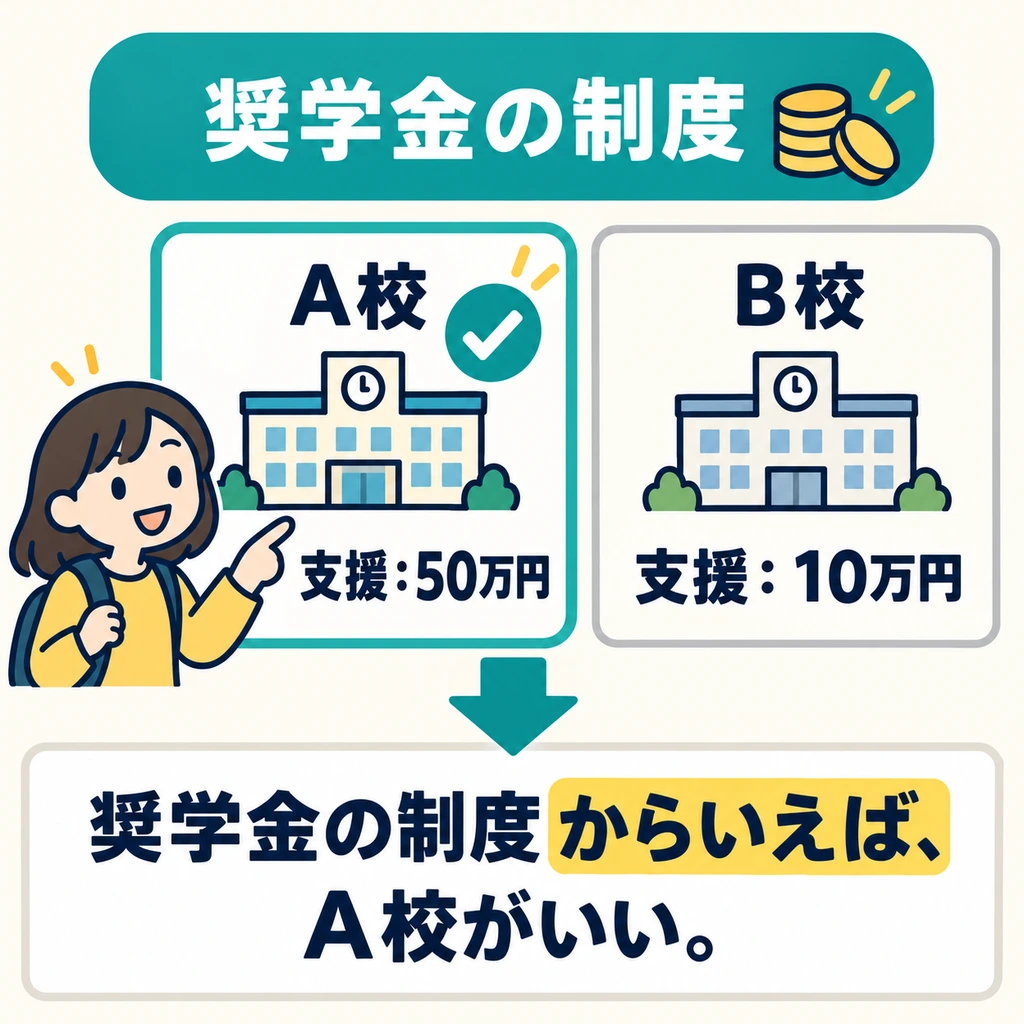
Looking only at scholarship support, which school is a better fit? The amounts in the picture are the basis for the judgment.
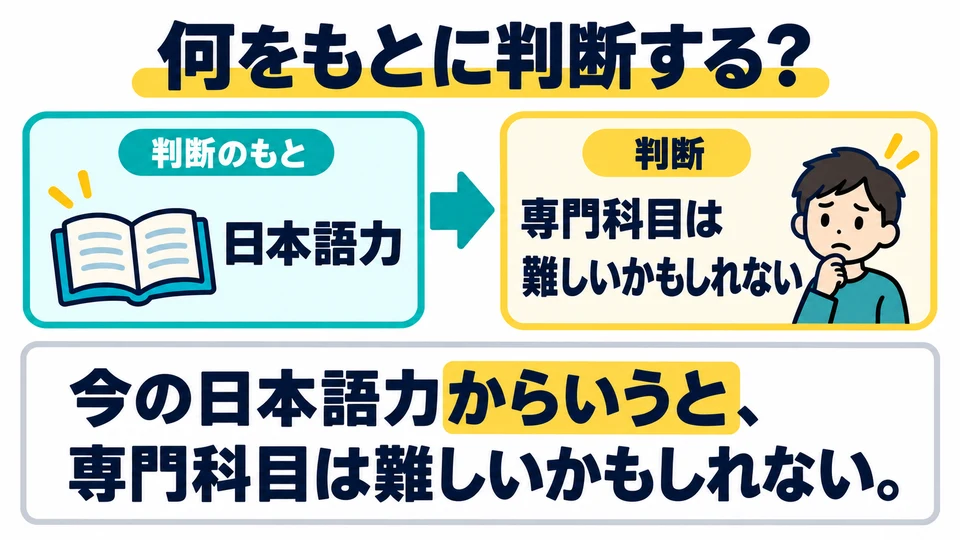
It means “judging from a certain basis or perspective.” What follows is a judgment or opinion drawn from it.
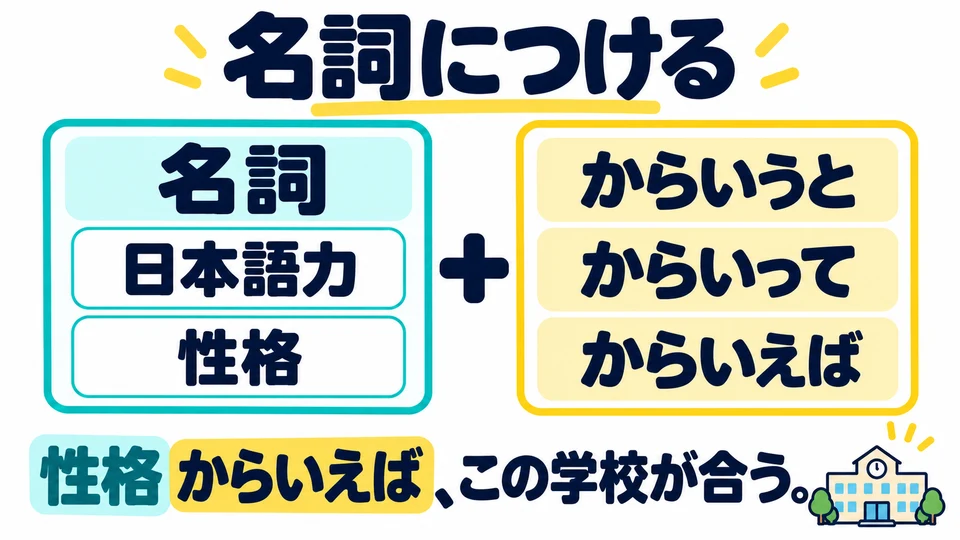
Attach these three forms to nouns such as 「日本語力」 or 「性格」. The noun before them gives the basis for the judgment.

「からいうと/からいって/からいえば」 have essentially the same meaning and can all introduce a judgment.

Here, 「いう」 does not mean actually speaking. It means evaluating or making an inference based on the preceding condition.

Does a school that suits your personality necessarily suit you overall? The example judges only by personality; tuition and other factors can also be considered.
Example sentences
- 今imaのno日本nihon語力goryokuからkaraいっiて、te、すぐsuguにni専門senmon科目kamoku
In a conversation

Check yourself
Level 1 · Recognise
Which sentence is correct?
Level 1 · Recognise
Listen and choose the meaning
Level 2 · Build
Put the words in order
Given your current Japanese ability, it may be hard to understand all the specialized subjects right away.
Level 3 · Use
What goes in the blank?
今の日本語力____、すぐに専門科目を全部理解するのは大変かもしれません。
Judging from your current Japanese level, it may be difficult to understand all specialized subjects right away.
More grammar in this theme
- 〜からいうと・〜からいって・〜からいえばjudging from; from a perspective