
Japanese grammar · ≈ JLPT N3 · Intermediate 2
〜ことはない~ koto wa nai
no need to
Use 「〜ことはない」 to reassure or advise someone that an action is unnecessary.
How it works
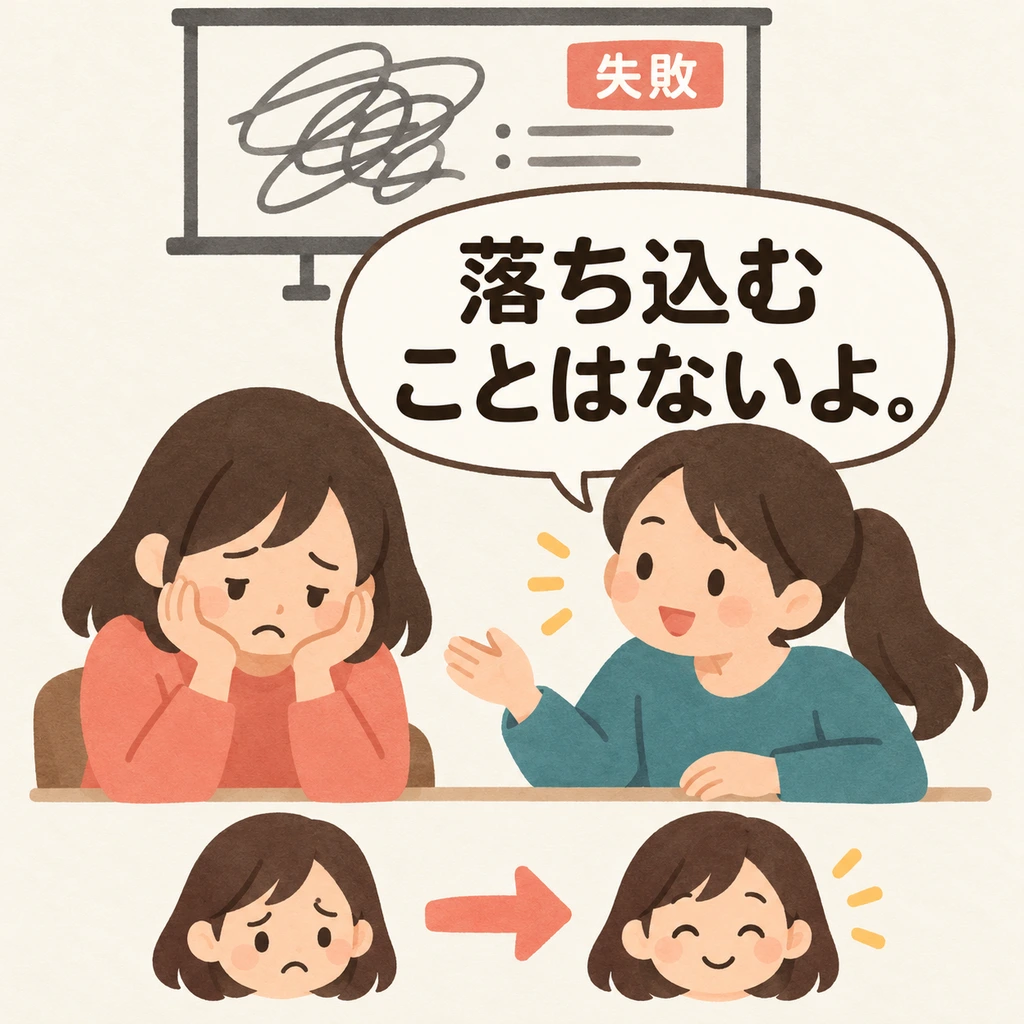
After a failure, a friend says, “No need to feel down.” This reassurance helps ease excessive worry.
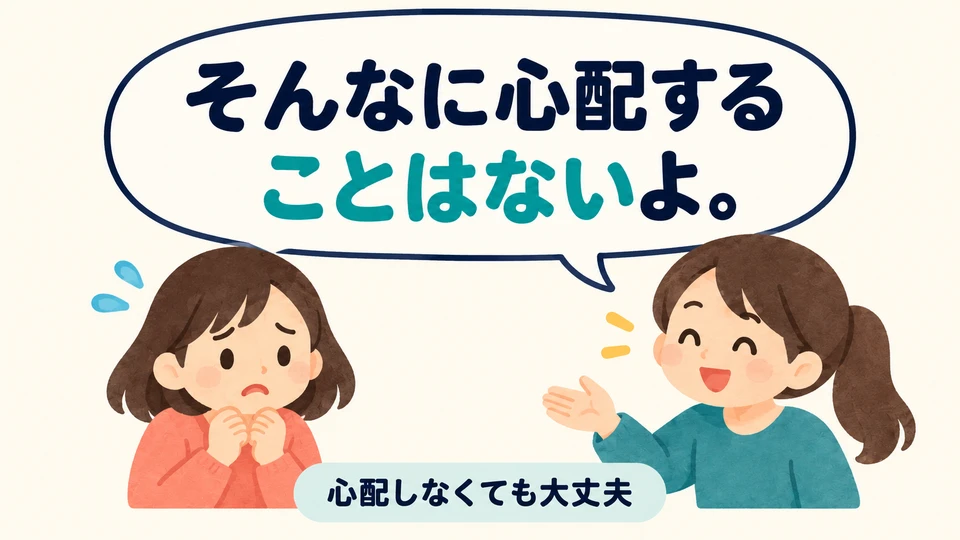
Use 「~ことはない」 to reassure or advise someone when you feel an action is unnecessary.
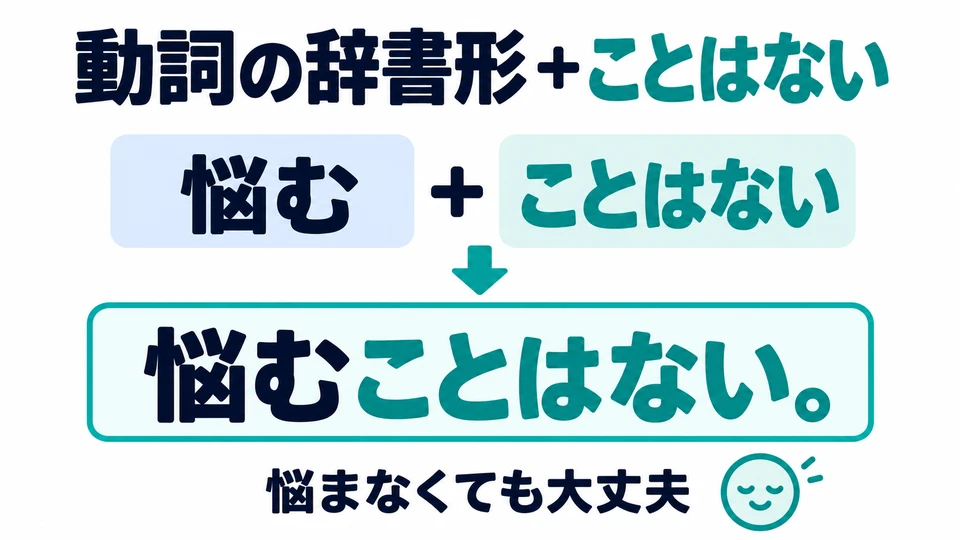
Attach it to the verb’s dictionary form: 悩む+ことはない means there is no need to worry.
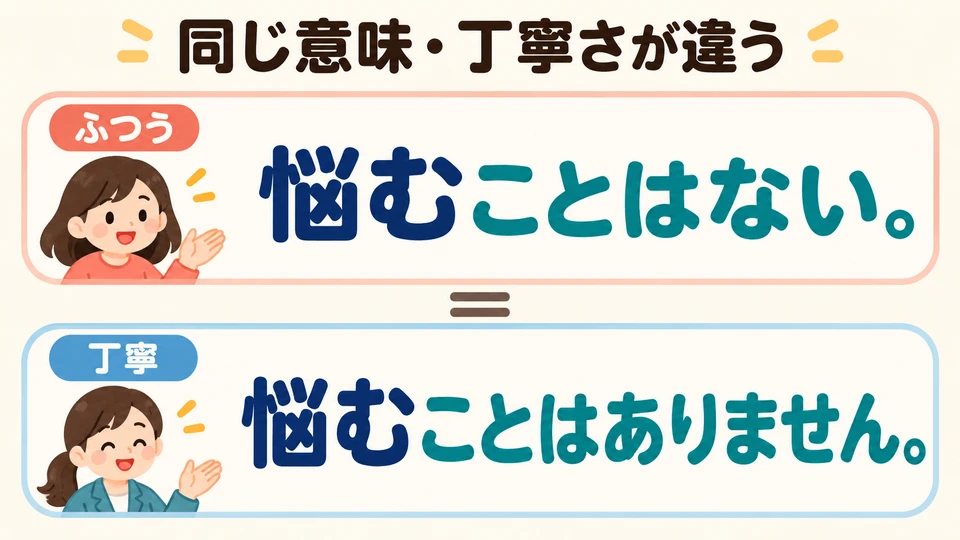
The polite form 「ことはありません」 has the same meaning as 「ことはない」.
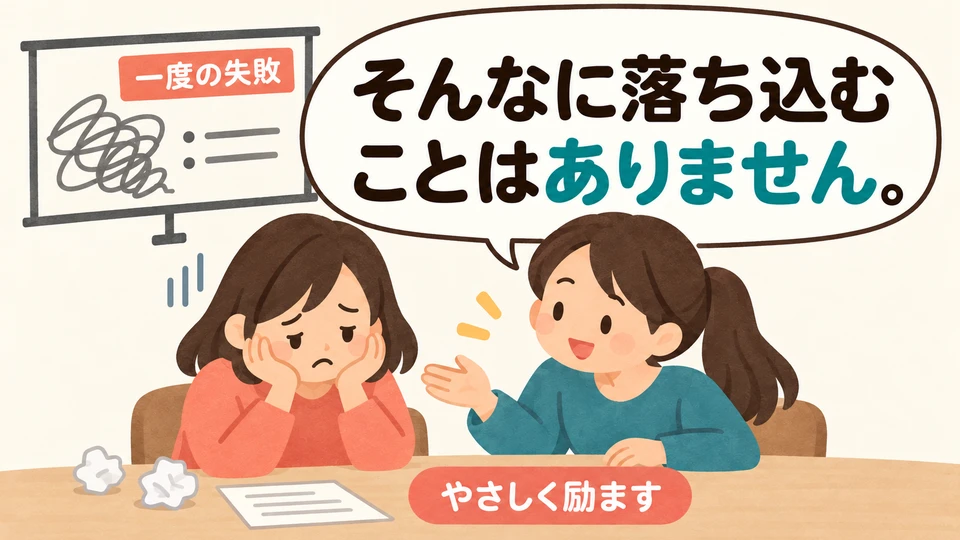
In the example, 「落ち込む」 is part of reassuring someone who has failed: “No need to feel so down.” It is not a reproach.
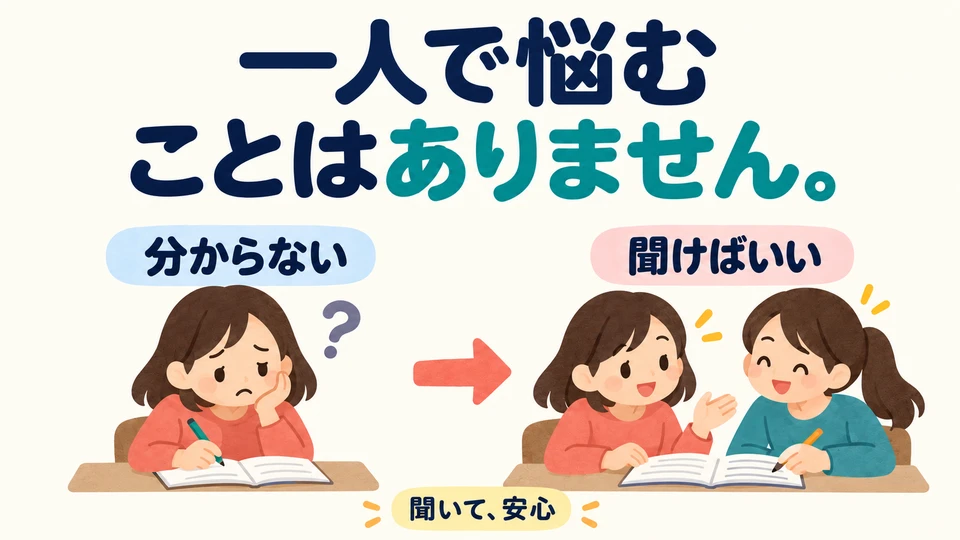
The example says you can ask if you do not understand, so there is no need to worry alone. This reassures the listener.
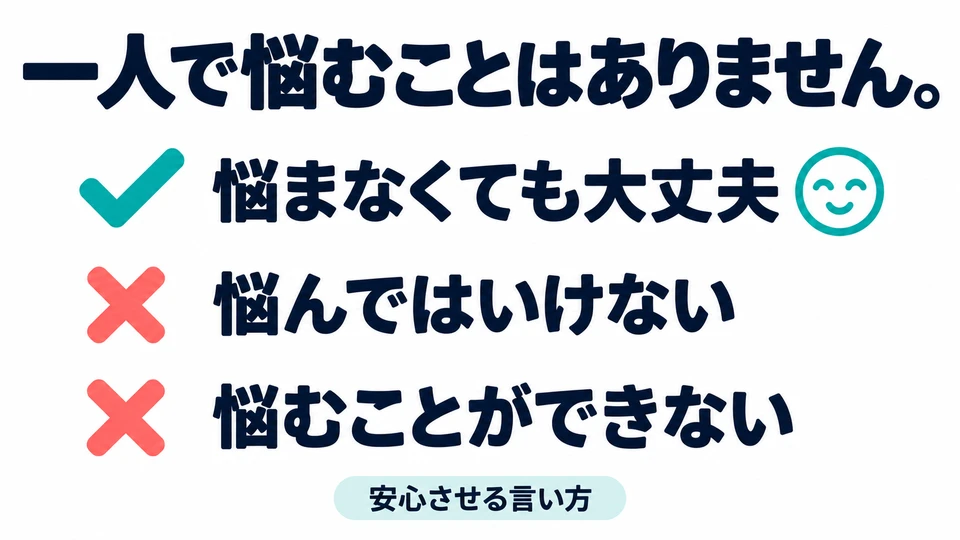
「一人で悩むことはありません」 does not forbid worrying or mean that you are unable to worry.
Example sentences
- 一度ichido失敗shippaiしたshitaからkaraとtoいっitて、te、そんなに落ちsonnaniochi込むkomuことkotoはwa
In a conversation

Check yourself
Level 1 · Recognise
Which sentence is correct?
Level 1 · Recognise
Listen and choose the meaning
Level 2 · Build
Put the words in order
Just because you failed once, there is no need to get that discouraged.
Level 3 · Use
What goes in the blank?
一度失敗したからといって、そんなに落ち込む____。
Just because you failed once, there is no need to be so discouraged.
More grammar in this theme
- 〜ことはないno need to