
Japanese grammar · ≈ JLPT N2 · Intermediate 3
〜というわけではない~to iu wake de wa nai
that does not mean
Use 「〜というわけではない」 to correct an inference, rejecting “always” or “only” while other uses may remain true.
How it works
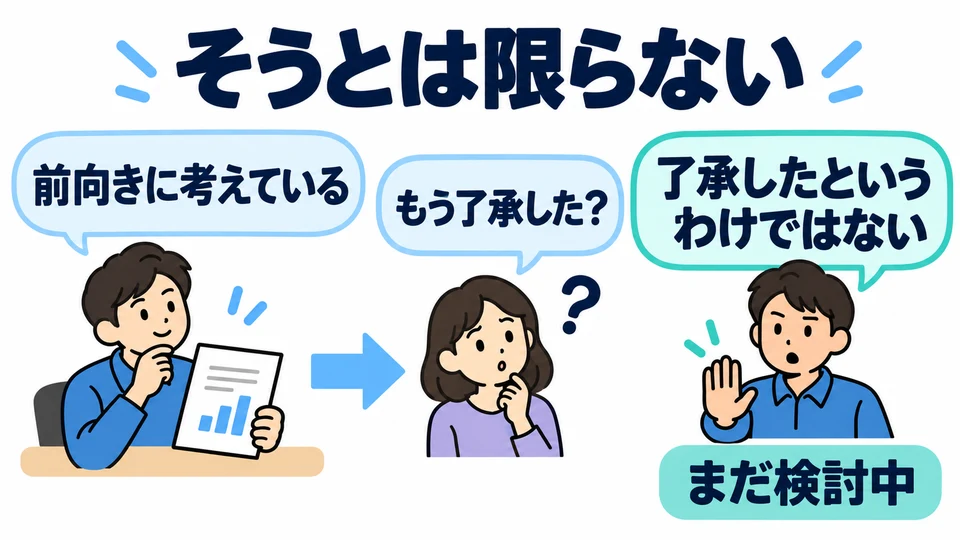
Use this to correct a statement or inference you hear: it means “that is not the case” or “it does not mean that.”
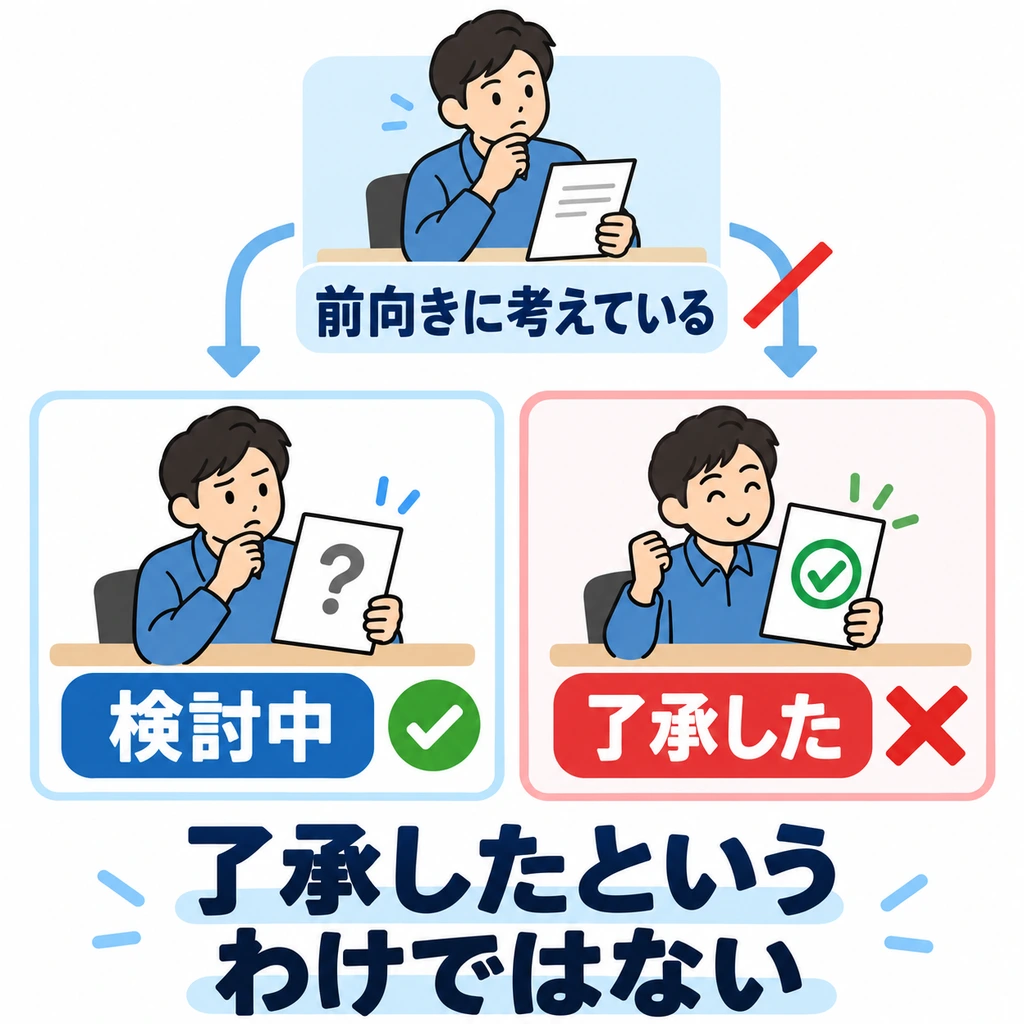
Does considering something positively mean you have already agreed? Use 「というわけではない」 to correct the other person’s inference.
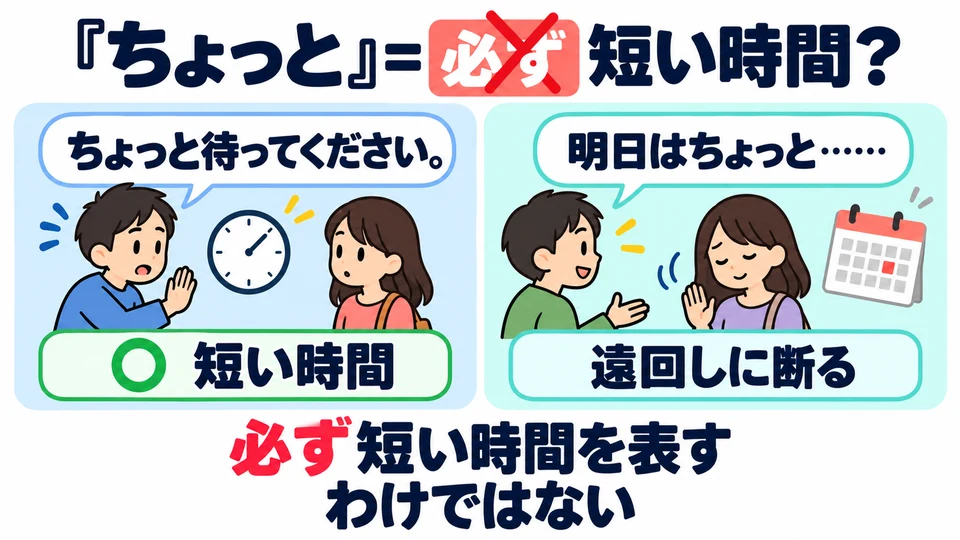
The first example rejects “it always means a short time.” It does not rule out 「ちょっと」 meaning a short time.
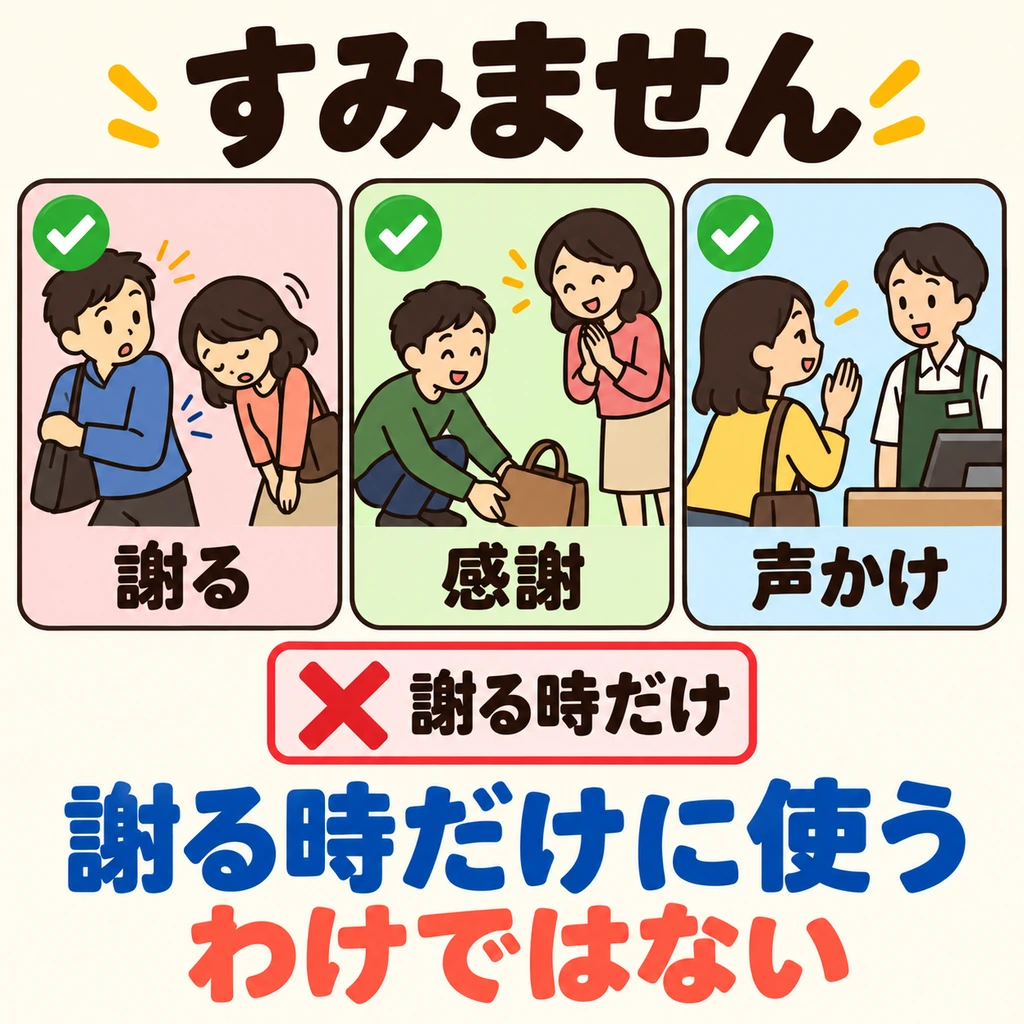
The second example rejects “used only to apologize.” The apology use remains valid; it can also express thanks or get someone’s attention.
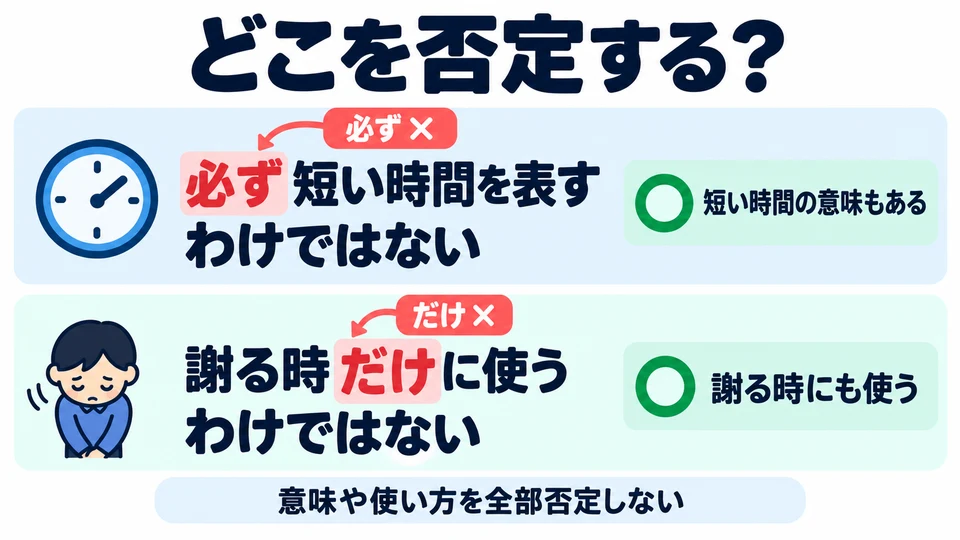
In both examples, check the scope of the negation: 「必ず」 and 「だけ」 are negated, while the original uses can still be valid.
Example sentences
- 日本人nihonjinが「gaちょっと」chottoとto言ったら、ittara、必ずkanarazu短いmijikai時間jikanをo表すarawasu
In a conversation

Check yourself
Level 1 · Recognise
Which sentence is correct?
Level 1 · Recognise
Listen and choose the meaning
Level 2 · Build
Put the words in order
Just because a clerk approaches you doesn't mean you have to buy something.
Level 3 · Use
What goes in the blank?
日本人が「ちょっと」と言ったら、必ず短い時間を表す____。
When Japanese people say "chotto," it does not always mean a short amount of time.
More grammar in this theme
- 〜というわけではないthat does not mean