
Japanese grammar · ≈ JLPT N3 · Intermediate 2
〜おかげで~okage de
thanks to; good result
Use 「〜おかげで」 to connect a helpful cause with a good result and acknowledge the help.
How it works

What good result did the teacher’s explanation bring? Use this pattern to link a helpful cause to a good result.
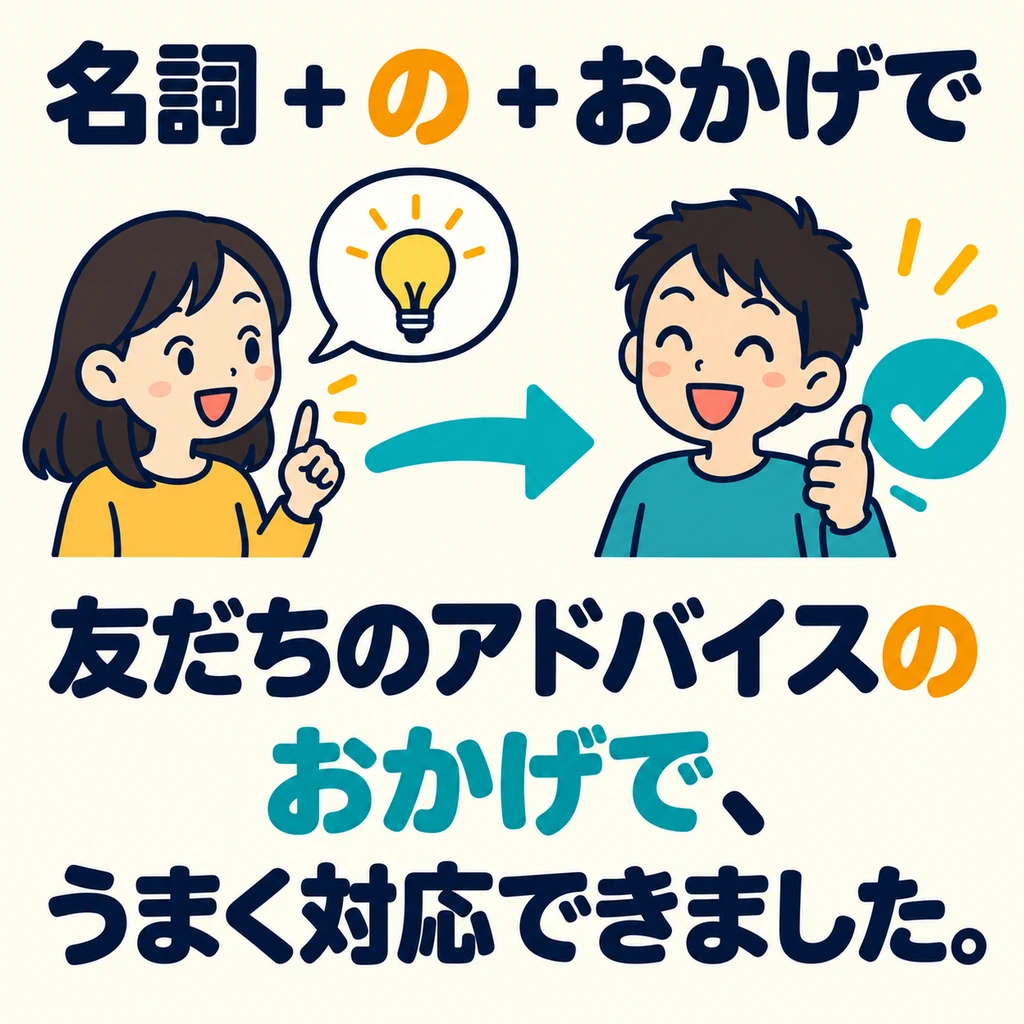
Look at the orange 「の」: add 「の」 after a noun, then 「おかげで」, to name the helpful cause.
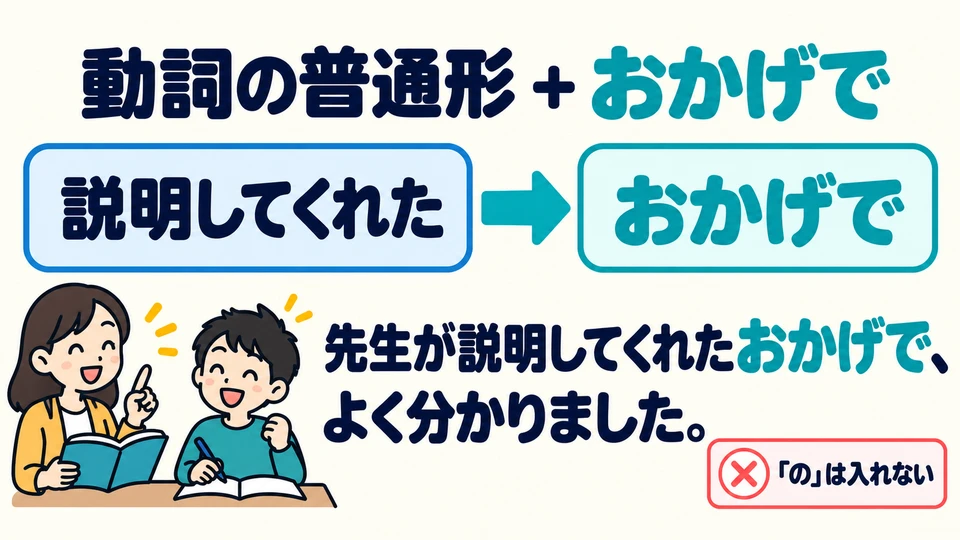
Verbs connect directly in the plain form. In 「説明してくれたおかげで」, you do not need to add 「の」.
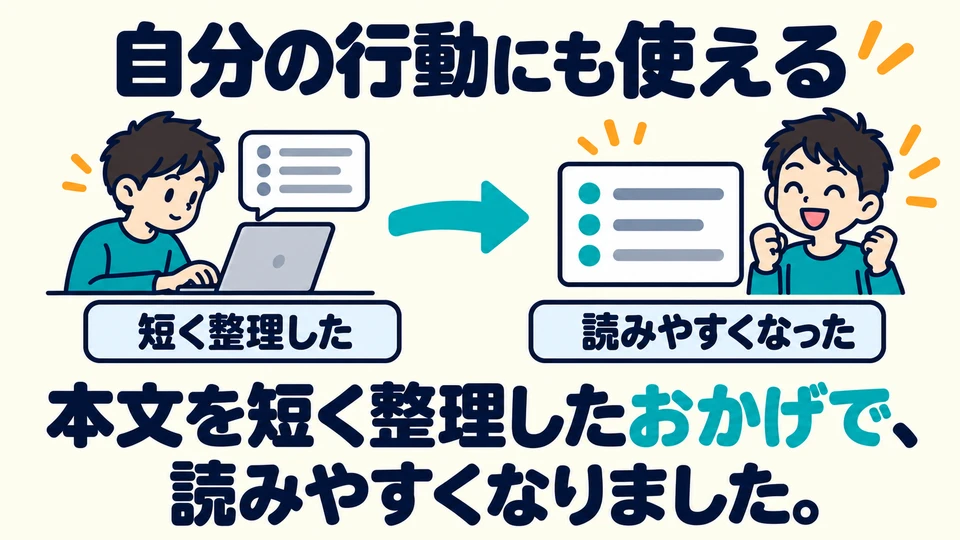
The cause can also be your own action. Organizing the message makes it easier to read; you can use this pattern for that good result too.
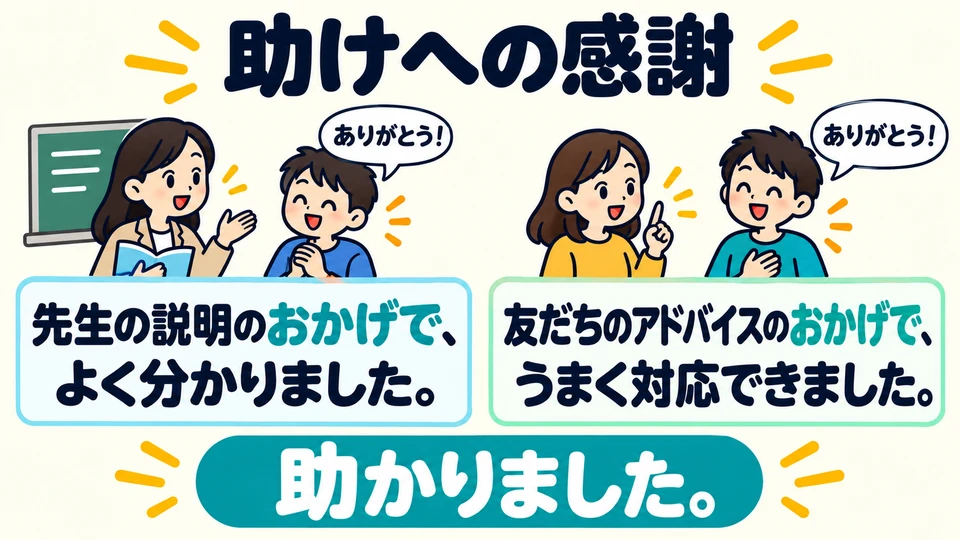
In the examples, the teacher and friend helped the speaker. 「おかげで」 acknowledges their help and conveys gratitude.
Example sentences
- 先生senseiがga分かりやすくwakariyasuku説明setsumeiしshiてteくれたおかげkuretaokageで、de、メッセージmesseejiのno意味imi
In a conversation

Check yourself
Level 1 · Recognise
Which sentence is correct?
Level 1 · Recognise
Listen and choose the meaning
Level 2 · Build
Put the words in order
Thanks to everyone sharing the information, we were able to prevent communication mistakes this time.
Level 3 · Use
What goes in the blank?
先生が分かりやすく説明してくれた____、メッセージの意味を正しく理解できました。
Thanks to the teacher's clear explanation, I was able to understand the message correctly.
More grammar in this theme
- 〜おかげでthanks to; good result