
JPEDLAB iconJPEDLAB
Save history

Create an account and play

Explore first, then save your progress whenever you are ready. No email address is required.

Start free
Read as articleCards
1/8

What good result did the teacher’s explanation bring? Use this pattern to link a helpful cause to a good result.

››

Lesson notes · ≈ JLPT N3 · Intermediate 2

〜おかげで~okage de

thanks to; good result

Use 「〜おかげで」 to connect a helpful cause with a good result and acknowledge the help.

How it works
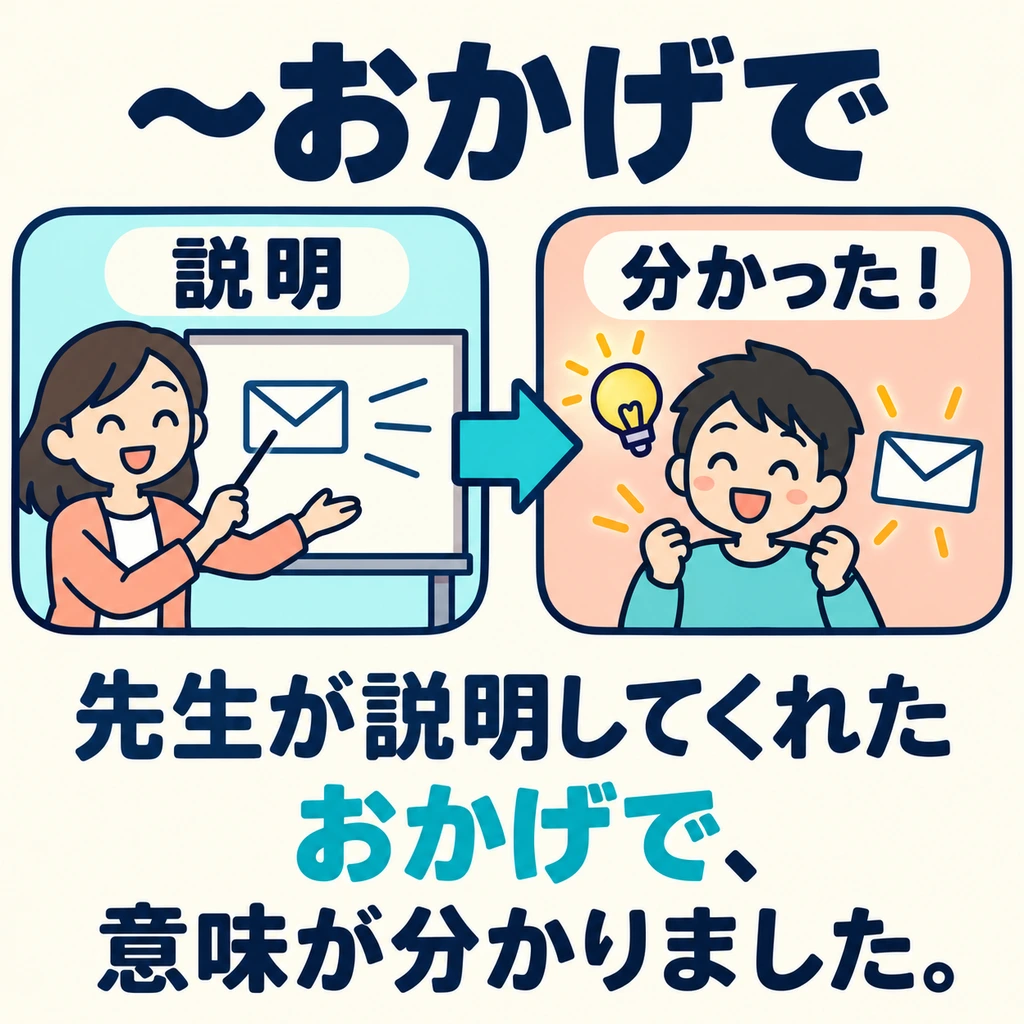
  1. What good result did the teacher’s explanation bring? Use this pattern to link a helpful cause to a good result.
    What good result did the teacher’s explanation bring? Use this pattern to link a helpful cause to a good result.

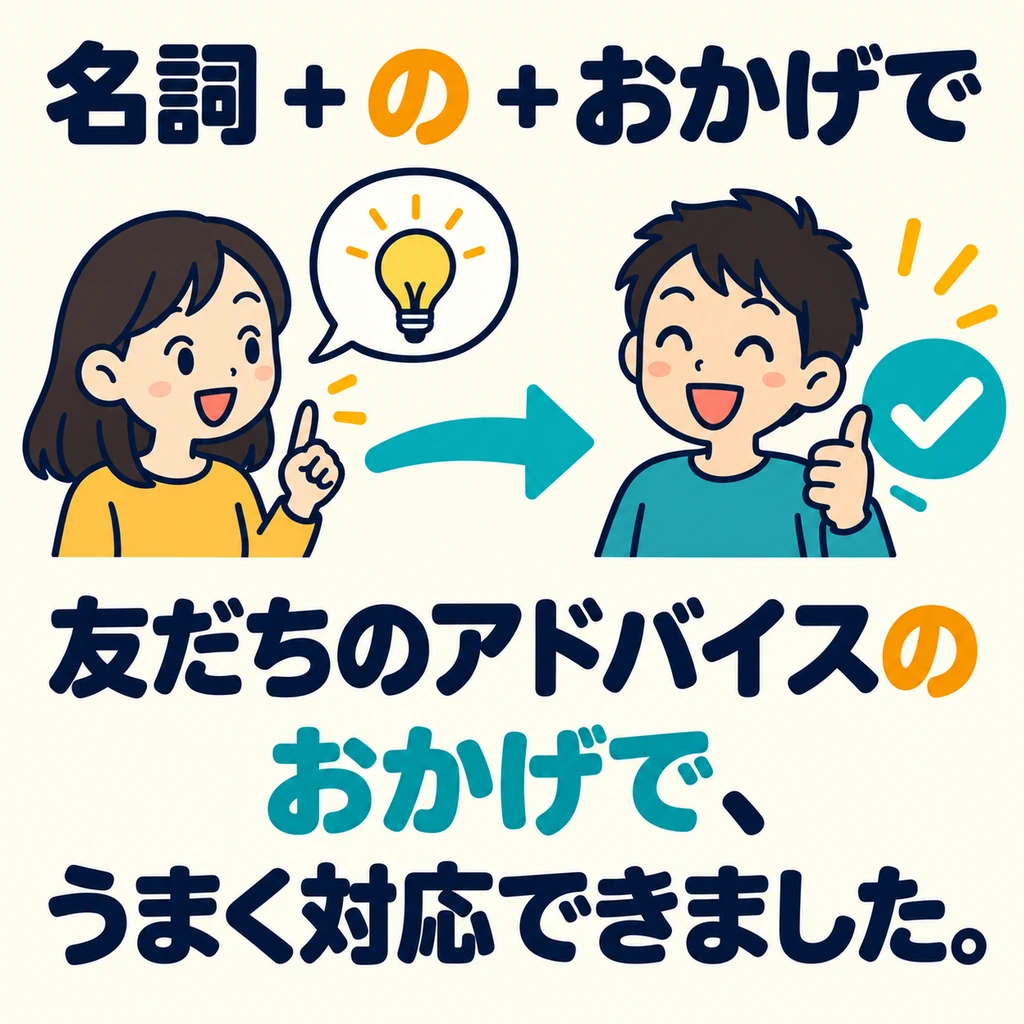
  2. Look at the orange 「の」: add 「の」 after a noun, then 「おかげで」, to name the helpful cause.
    Look at the orange 「の」: add 「の」 after a noun, then 「おかげで」, to name the helpful cause.

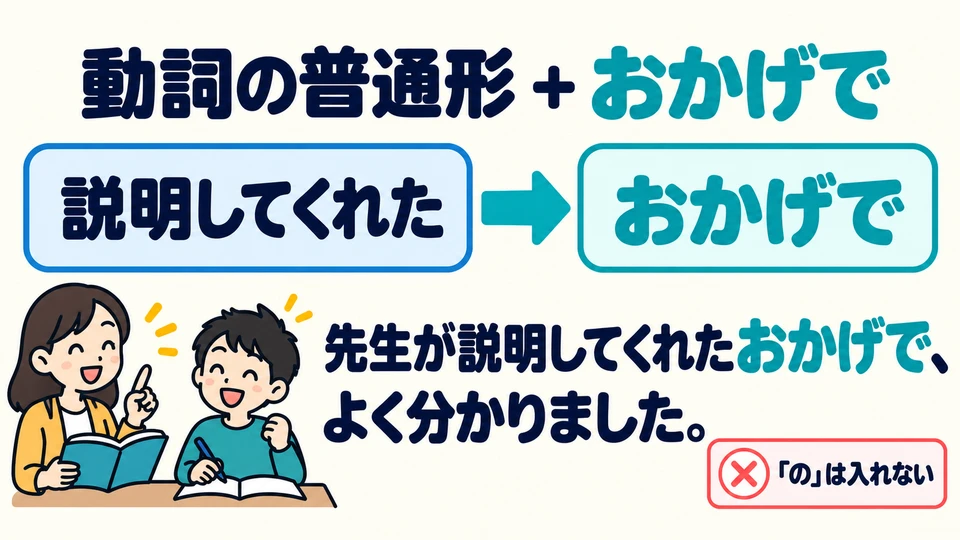
  3. Verbs connect directly in the plain form. In 「説明してくれたおかげで」, you do not need to add 「の」.
    Verbs connect directly in the plain form. In 「説明してくれたおかげで」, you do not need to add 「の」.

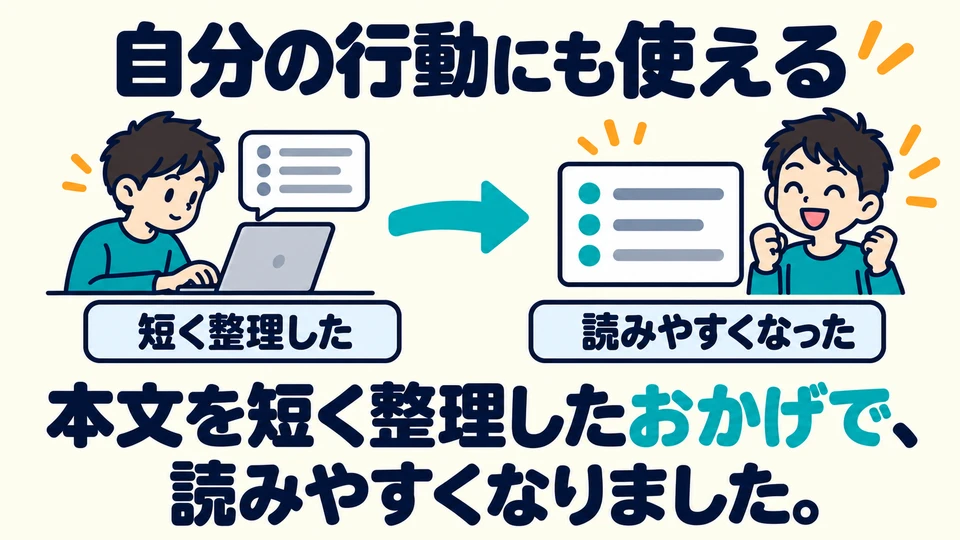
  4. The cause can also be your own action. Organizing the message makes it easier to read; you can use this pattern for that good result too.
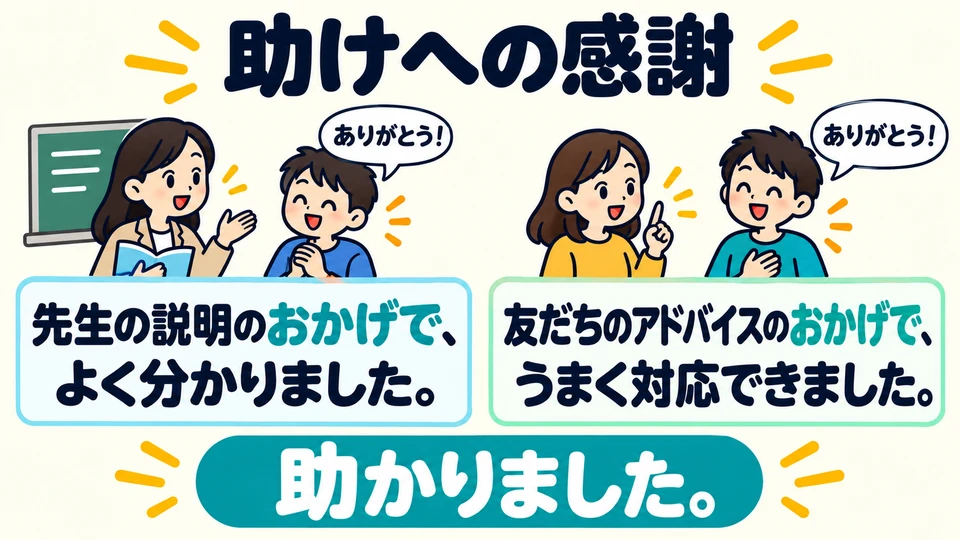
    The cause can also be your own action. Organizing the message makes it easier to read; you can use this pattern for that good result too.

  5. In the examples, the teacher and friend helped the speaker. 「おかげで」 acknowledges their help and conveys gratitude.

    In the examples, the teacher and friend helped the speaker. 「おかげで」 acknowledges their help and conveys gratitude.

Example sentences

  • 先生せんせいsenseiがga分かりやすくわかりやすくwakariyasuku説明せつめいsetsumeiしshiてteくれたおかげkuretaokageで、de、メッセージめっせーじmesseejiのno意味いみimiをo正しくただしくtadashiku理解りかいrikaiできました。dekimashita。

    Thanks to the teacher's clear explanation, I was able to correctly understand the meaning of the message.

  • 友だちともだちtomodachiのnoアドバイスあどばいすadobaisuのnoおかげokageで、de、うまくumaku対応たいおうtaiouするsuruことkotoがgaできました。dekimashita。

In a conversation

  • A
    メッセージめっせーじの本文ほんぶんを短くみじかく整理せいりしたおかげで、とても読みやすくよみやすくなりましたね。

    A: Thanks to organizing the body of the message to be short, it has become very easy to read.

  • B
    本当ほんとうですね、要点ようてんが箇条書きかじょうがきにしてあるので一瞬でいっしゅんで伝わります。つたわります。

    B: Indeed, since the main points are in bullet points, they are conveyed in an instant.

  • A
    これからはわ伝達でんたつミスみすが減りへりそうで本当そうでほんとうに助かります。たすかります。

    A: From now on, communication mistakes are likely to decrease, which is really helpful.

Check yourself

  1. Level 1 · Recognise

    Which sentence is correct?

  2. Level 1 · Recognise

    Listen and choose the meaning

  3. Level 2 · Build

    Put the words in order

    Thanks to everyone sharing the information, we were able to prevent communication mistakes this time.

  4. Level 3 · Use

    What goes in the blank?

    先生が分かりやすく説明してくれた____、メッセージの意味を正しく理解できました。

    Thanks to the teacher's clear explanation, I was able to understand the message correctly.

More grammar in this theme

  • 〜のことなんですがgently introduce a topic
  • 〜させていただけませんかpolitely ask permission
  • 〜ものですからgently explain a reason
  • 〜の代わりに・〜に代わってinstead of; in place of
  • 〜おかげでthanks to; good result
  • 〜おかげだcredit a good result
  • 〜くせにreproachful contradiction
  • 〜せいでblame for a bad result
  • 〜に決まっているstrong certainty; bound to
  • 人を〜にさせるtrigger someone’s feelings
  • 〜ことはないno need to
  • 〜のことになると・〜のこととなるとwhen it comes to
  • 人にしたら・人にすればfrom someone’s perspective
  • 人にしてみたら・人にしてみればfrom someone’s perspective
  • 〜たびにevery time
  • 〜ば・〜ならばif; on the condition that
  • 〜たら・〜ためにif; in order to
Previous〜の代わりに・〜に代わってNext〜おかげだ

Keep practising

Test your Japanese vocabulary12 adaptive questions, freeCheck your pronunciationRead aloud and get a scorePractise verb forms10-question conjugation quizSee the whole courseGrammar, vocabulary and quizzes by theme
See the whole course
Intermediate 2
Thoughtful Communication and Feelings

Thanks to my friend's advice, I was able to handle it well.