
Japanese grammar · ≈ JLPT N2 · Intermediate 2
人にしてみたら・人にしてみればhito ni shite mitara / hito ni shite mireba
from someone’s perspective
Use 「人にしてみたら」 or 「人にしてみれば」 to consider how someone might feel in their situation.
How it works
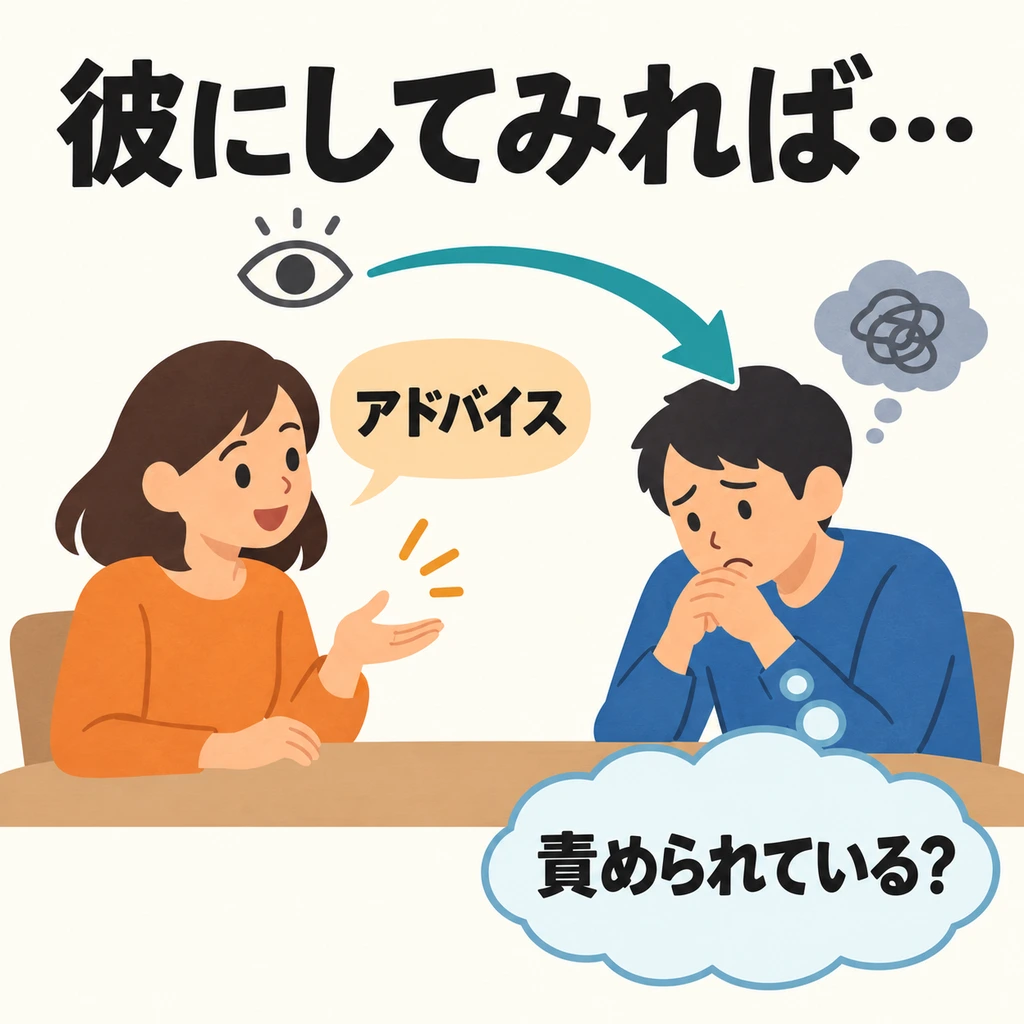
Why might advice make someone angry? Put yourself in the anxious man’s place and imagine how he might feel.
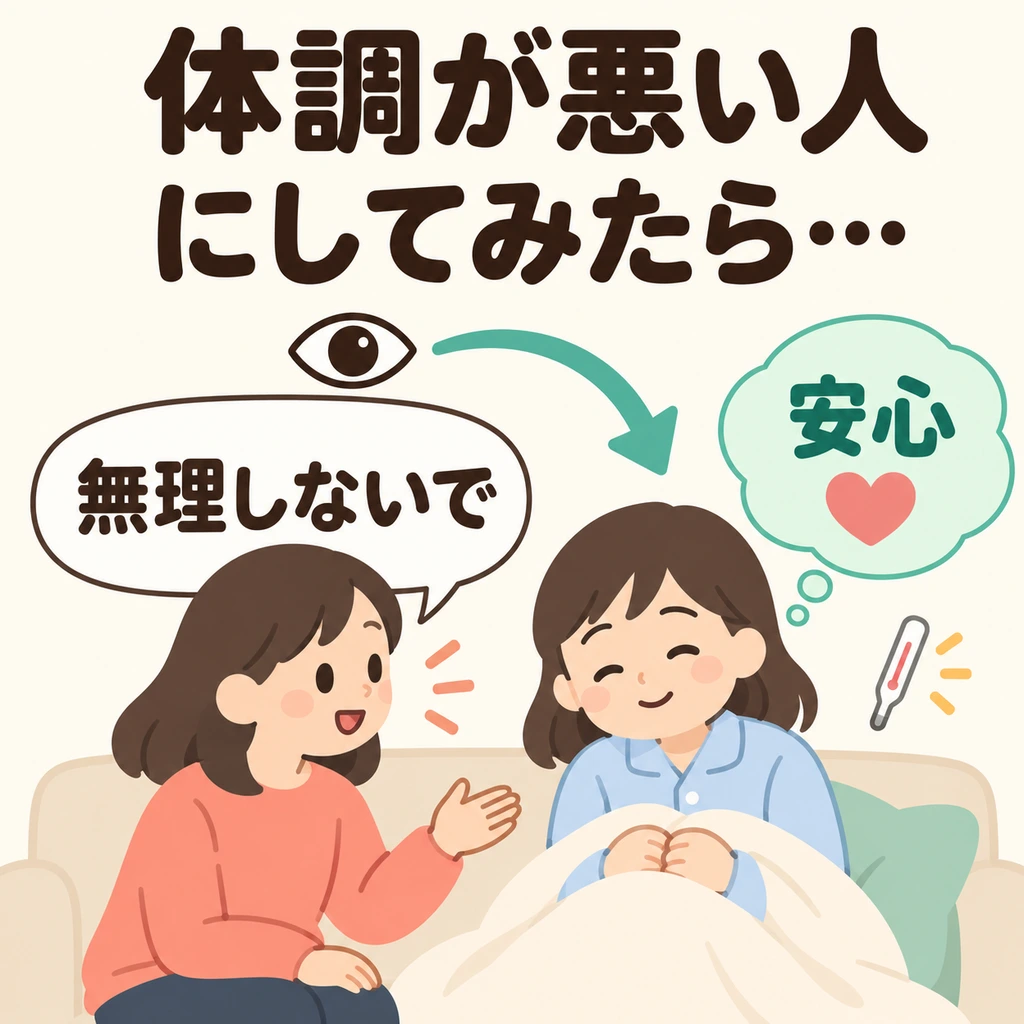
Why do the words “Don’t overdo it” help? From the unwell person’s perspective, they can bring reassurance.
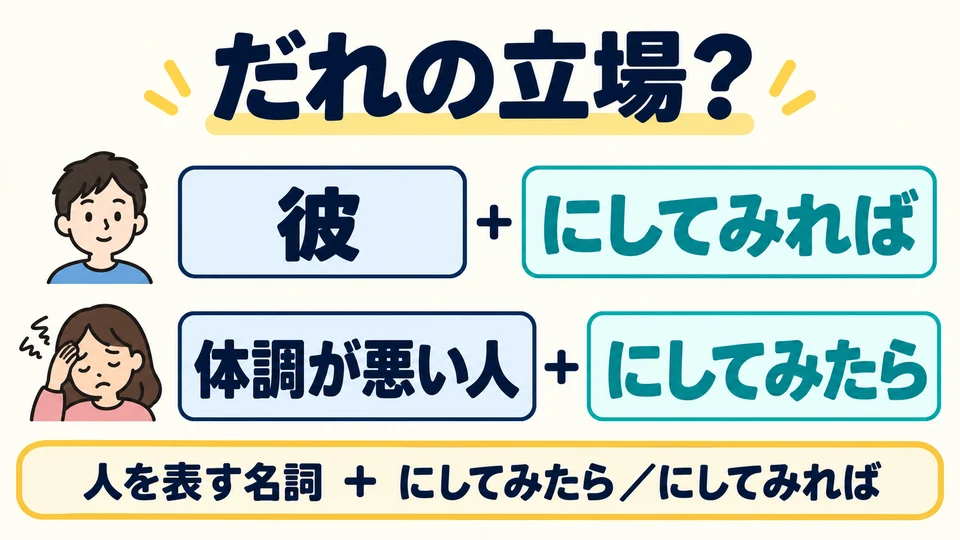
Use a noun referring to a person before the pattern, such as “he” or “someone who feels unwell”, to make clear whose perspective it is.
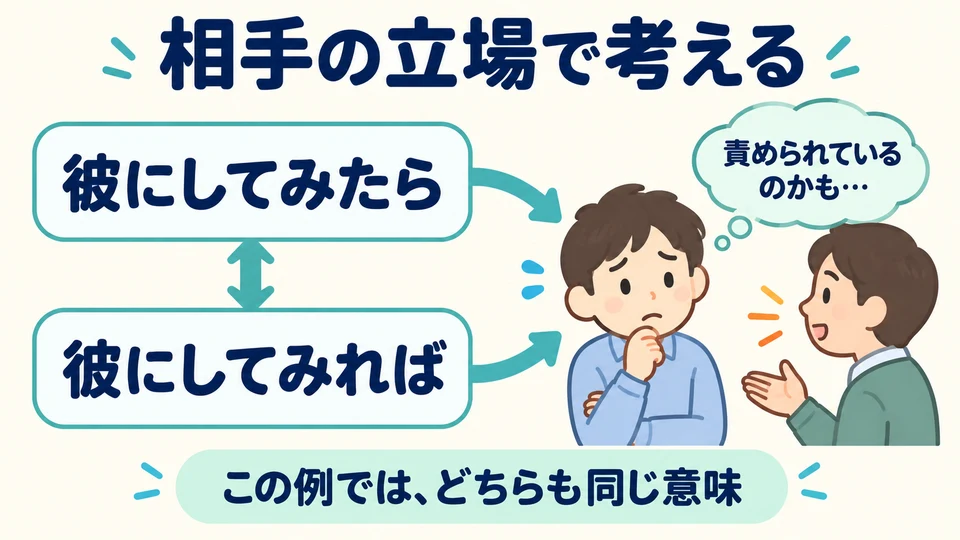
Both forms mean taking the other person’s perspective and imagining their feelings. They are interchangeable here.
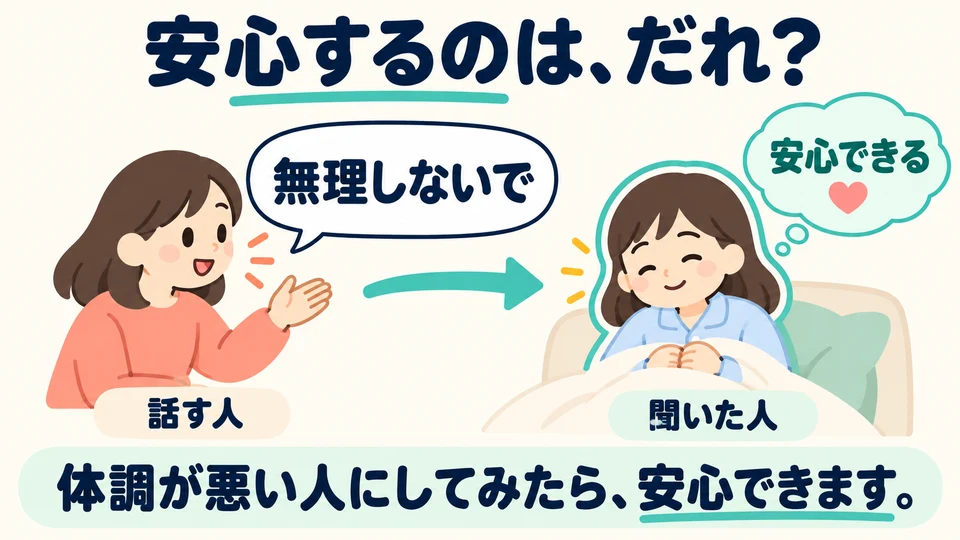
In the examples, the person hearing the words feels reassured or calmer. The second half describes the change that person experiences.
Example sentences
- 体調taichouがga悪いwarui人hitoにniしshiてteみたら、「mitara、無理muriしないshinaiで」de
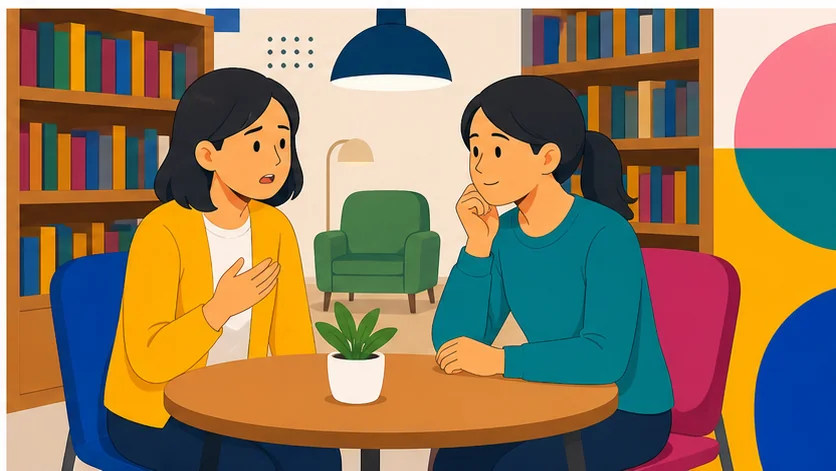
In a conversation
Check yourself
Level 1 · Recognise
Which sentence is correct?
Level 1 · Recognise
Listen and choose the meaning
Level 2 · Build
Put the words in order
For someone who is feeling down, positive words can sometimes feel like pressure.
Level 3 · Use
What goes in the blank?
体調が悪い人____、「無理しないで」という一言だけでも安心できます。
For someone who feels unwell, even just hearing "don't push yourself" can be reassuring.
More grammar in this theme
- 人にしてみたら・人にしてみればfrom someone’s perspective