
Japanese grammar · ≈ JLPT N3 · Intermediate 2
〜たびに~ tabi ni
every time
Use 「〜たびに」 for something that happens each time an event or action occurs.
How it works
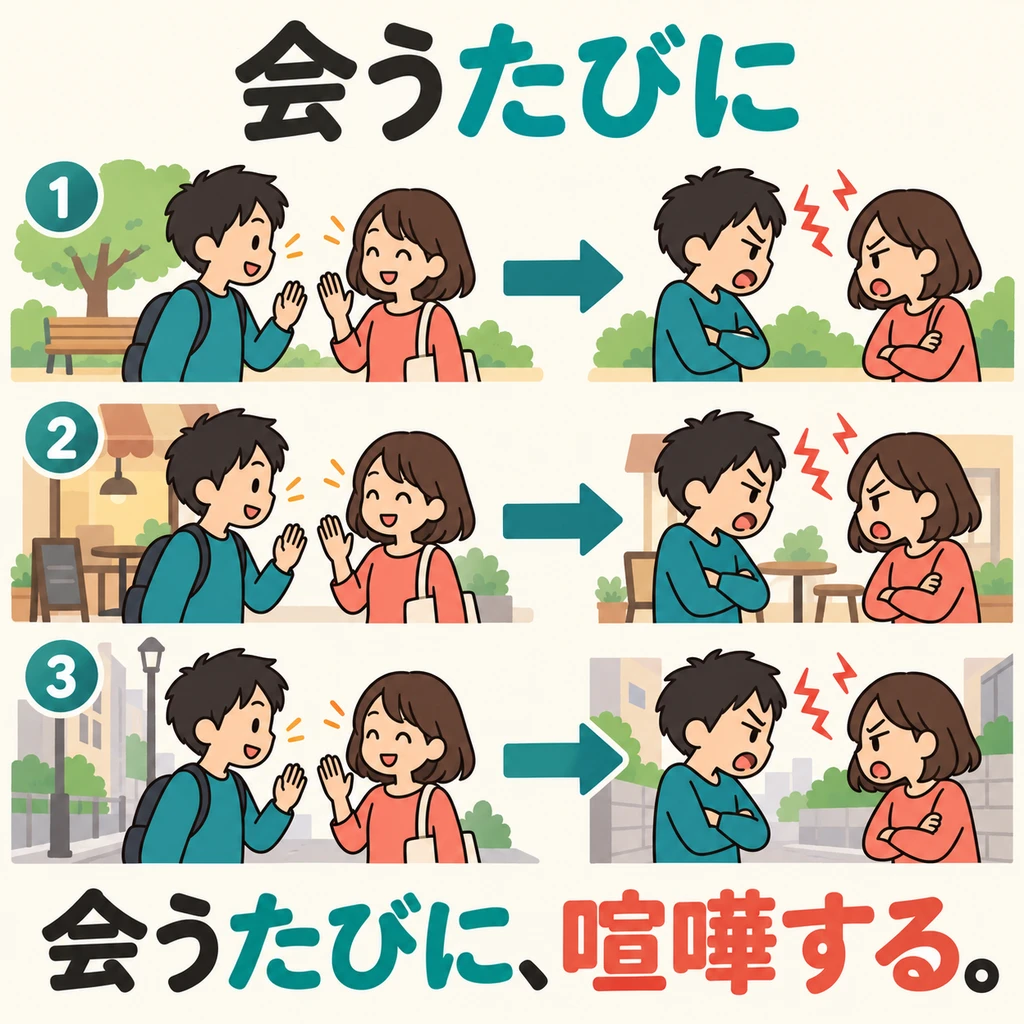
Whenever something happens, something else follows every time. What happened at all three meetings?
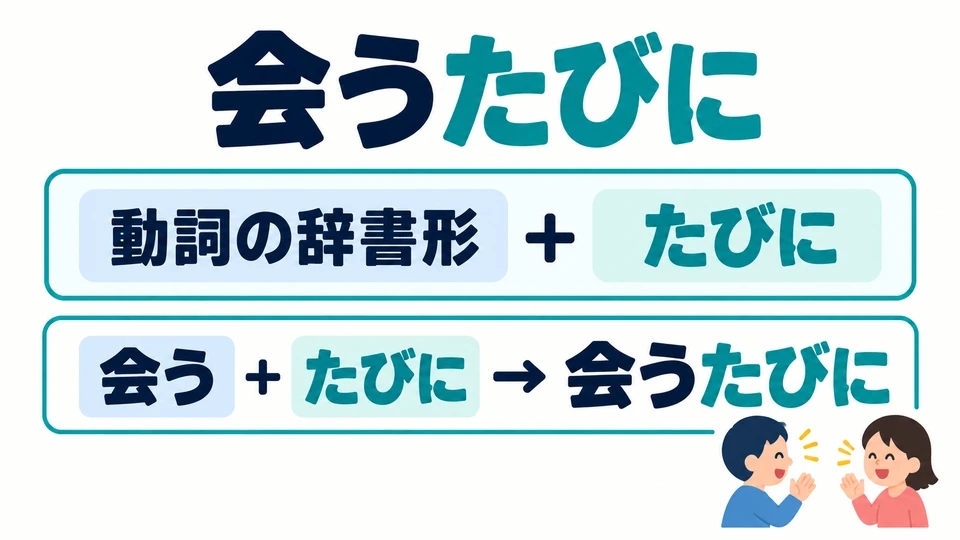
Attach 「たびに」 to a verb’s dictionary form. 「会うたびに」 means “every time we meet.”
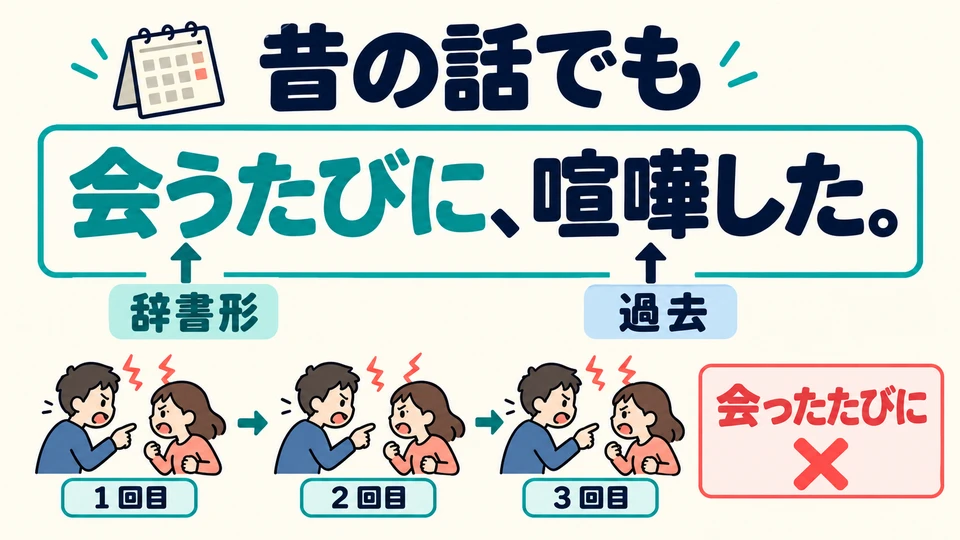
Even when talking about the past, the preceding verb stays in dictionary form: 「会うたびに」.
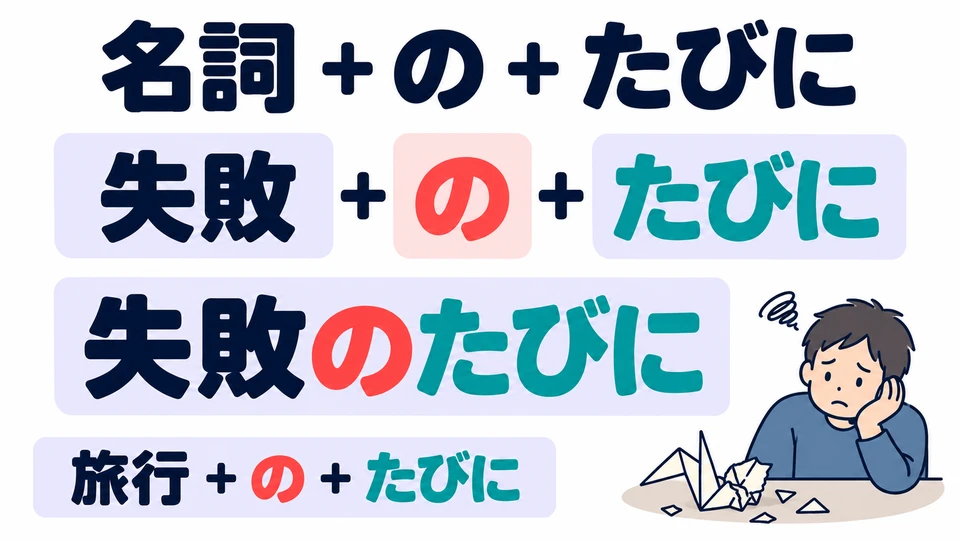
With a noun for an activity, add 「の」: 「失敗のたびに」 means “every time I fail.”
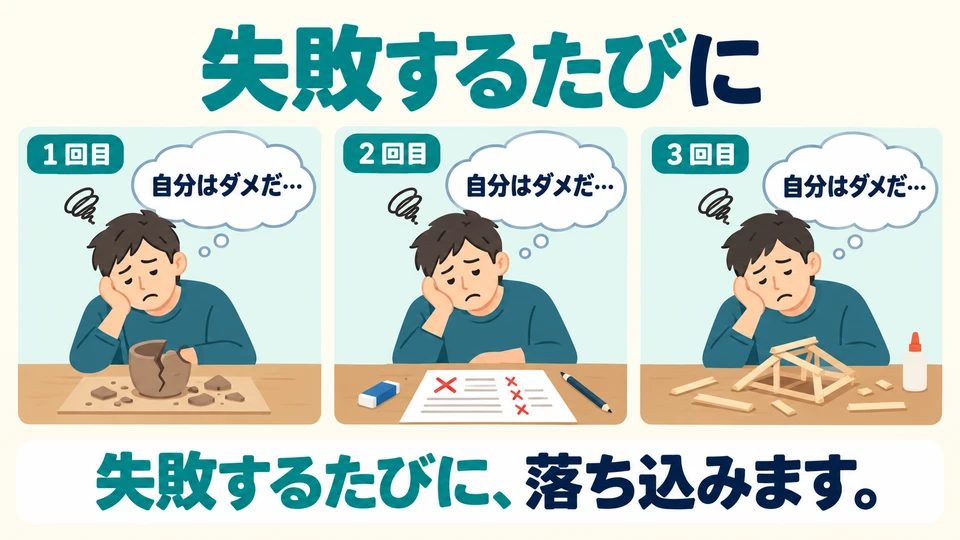
In the example about failure, the same thought comes up every time. The part after 「たびに」 can also express a feeling.
Example sentences
- 失敗shippaiするsuruたびtabiに、ni、自分jibunはwaダメdameだdaとto思っomotてte
In a conversation

Check yourself
Level 1 · Recognise
Which sentence is correct?
Level 1 · Recognise
Listen and choose the meaning
Level 2 · Build
Put the words in order
Every time I fail, I end up thinking that I am no good.
Level 3 · Use
What goes in the blank?
失敗する____、自分はダメだと思ってしまいます。
Every time I fail, I feel like I'm no good
More grammar in this theme
- 〜たびにevery time