
JPEDLAB iconJPEDLAB
Save history

Create an account and play

Explore first, then save your progress whenever you are ready. No email address is required.

Start free
Read as articleCards
1/8

Whenever something happens, something else follows every time. What happened at all three meetings?

››

Lesson notes · ≈ JLPT N3 · Intermediate 2

〜たびに~ tabi ni

every time

Use 「〜たびに」 for something that happens each time an event or action occurs.

How it works
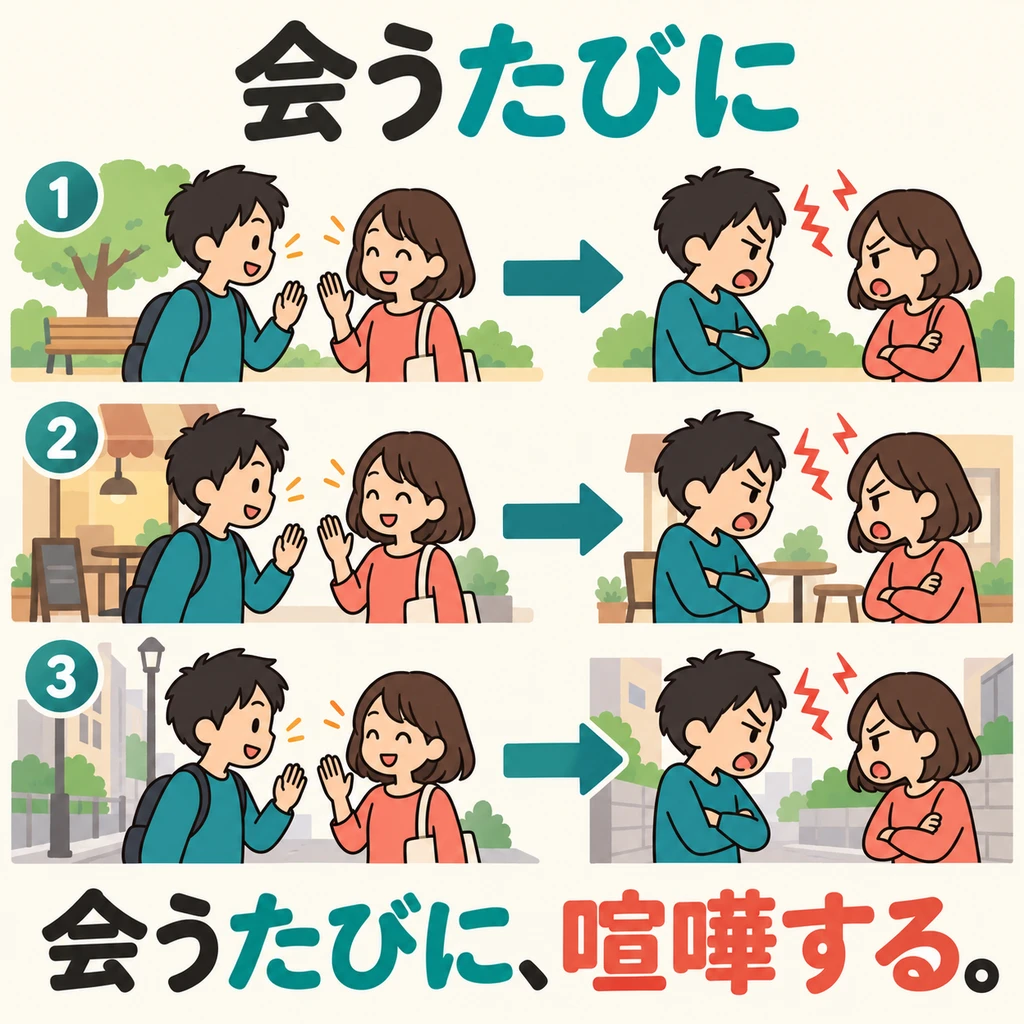
  1. Whenever something happens, something else follows every time. What happened at all three meetings?
    Whenever something happens, something else follows every time. What happened at all three meetings?

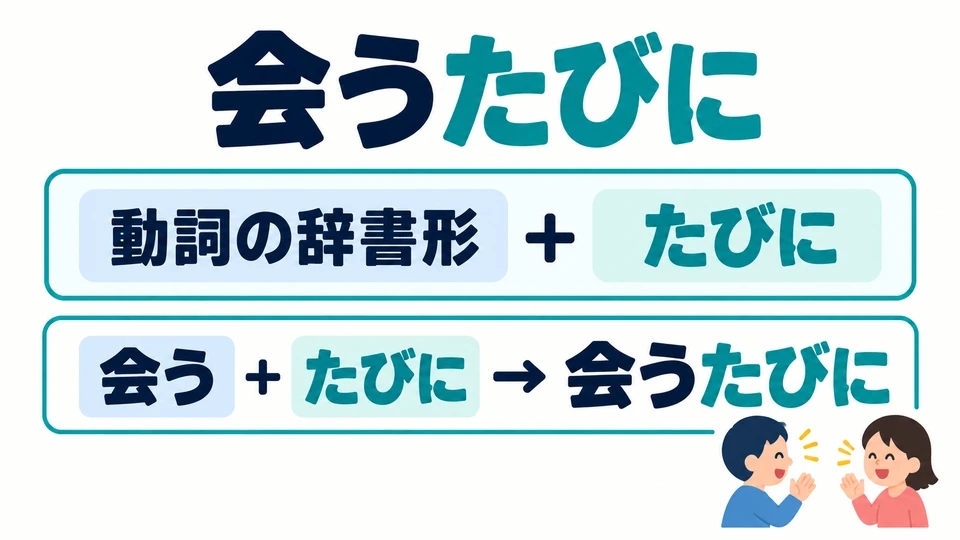
  2. Attach 「たびに」 to a verb’s dictionary form. 「会うたびに」 means “every time we meet.”
    Attach 「たびに」 to a verb’s dictionary form. 「会うたびに」 means “every time we meet.”

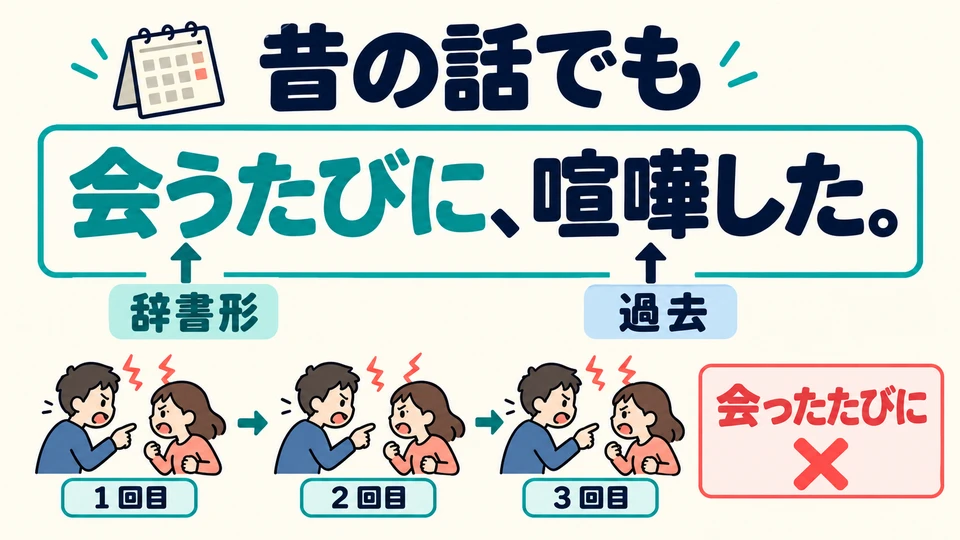
  3. Even when talking about the past, the preceding verb stays in dictionary form: 「会うたびに」.
    Even when talking about the past, the preceding verb stays in dictionary form: 「会うたびに」.

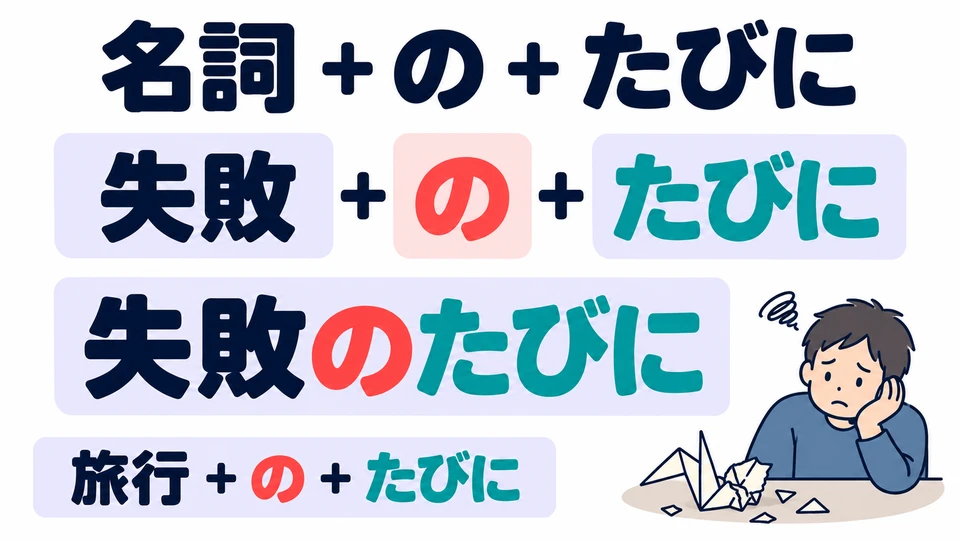
  4. With a noun for an activity, add 「の」: 「失敗のたびに」 means “every time I fail.”
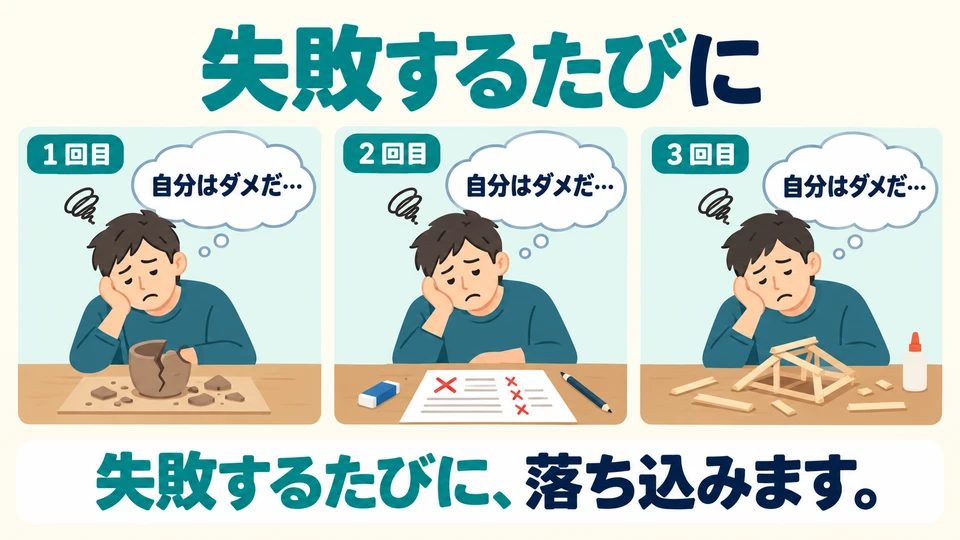
    With a noun for an activity, add 「の」: 「失敗のたびに」 means “every time I fail.”

  5. In the example about failure, the same thought comes up every time. The part after 「たびに」 can also express a feeling.
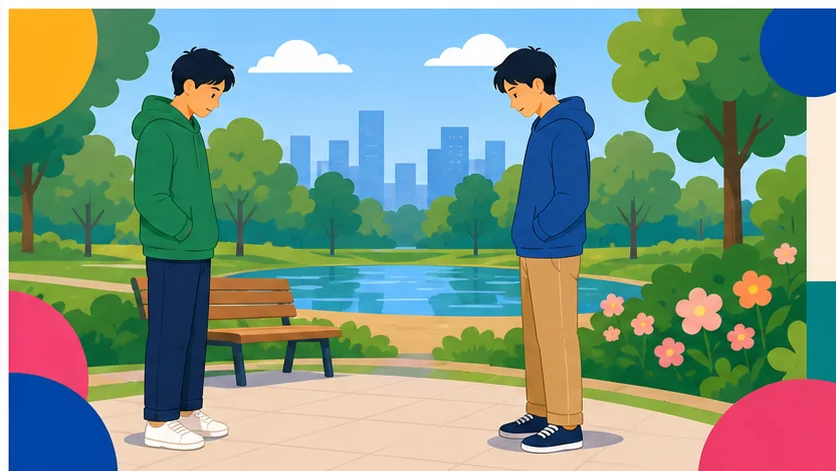
    In the example about failure, the same thought comes up every time. The part after 「たびに」 can also express a feeling.

Example sentences

失敗しっぱいshippaiするsuruたびtabiに、ni、自分じぶんjibunはわwaダメだめdameだdaとto思っおもっomotてteしまいます。shimaimasu。

Every time I fail, I tend to think that I'm no good.

  • 私わたしwatashiとto彼かれkareはわwa仲なかnakaがga悪くわるくwarukuて、te、会うあうauたびtabiにni喧嘩けんかkenkaしshiてteいる。iru。

    He and I don't get along, and we fight every time we meet.

  • In a conversation

    • 二人ふたりはわ会うあうたびに言い合いいいあいになっていて、見みていて心配しんぱいになります。

      Every time those two meet, they get into an argument, and it makes me worried to watch them.

    • お互いおたがいに不満ふまんが溜まったまっていて感情的かんじょうてきになっているので、少しすこし距離きょりを置いたほうおいたほうがいい
    • そうですね。お互いおたがいが冷静れいせいになってから、本音ほんねで話しはなし合っあって仲直りなかなおりしてほしいです。

      Yes. I would like them to have an honest talk and reconcile after both of them calm down.

    Check yourself

    1. Level 1 · Recognise

      Which sentence is correct?

    2. Level 1 · Recognise

      Listen and choose the meaning

    3. Level 2 · Build

      Put the words in order

      Every time I fail, I end up thinking that I am no good.

    4. Level 3 · Use

      What goes in the blank?

      失敗する____、自分はダメだと思ってしまいます。

      Every time I fail, I feel like I'm no good

    More grammar in this theme

    • 〜のことなんですがgently introduce a topic
    • 〜させていただけませんかpolitely ask permission
    • 〜ものですからgently explain a reason
    • 〜の代わりに・〜に代わってinstead of; in place of
    • 〜おかげでthanks to; good result
    • 〜おかげだcredit a good result
    • 〜くせにreproachful contradiction
    • 〜せいでblame for a bad result
    • 〜に決まっているstrong certainty; bound to
    • 人を〜にさせるtrigger someone’s feelings
    • 〜ことはないno need to
    • 〜のことになると・〜のこととなるとwhen it comes to
    • 人にしたら・人にすればfrom someone’s perspective
    • 人にしてみたら・人にしてみればfrom someone’s perspective
    • 〜たびにevery time
    • 〜ば・〜ならばif; on the condition that
    • 〜たら・〜ためにif; in order to
    Previous人にしてみたら・人にしてみればNext〜ば・〜ならば

    Keep practising

    Test your Japanese vocabulary12 adaptive questions, freeCheck your pronunciationRead aloud and get a scorePractise verb forms10-question conjugation quizSee the whole courseGrammar, vocabulary and quizzes by theme
    See the whole course
    Intermediate 2
    Thoughtful Communication and Feelings
    か
    も
    しれません
    ね。

    They both have built-up frustrations and are being emotional, so it might be better for them to keep some distance for a while.