
Japanese grammar · ≈ JLPT N3 · Intermediate 3
〜もん・〜んだもん~mon / ~n da mon
emotional reason or plea
Use 「〜もん/〜んだもん」 casually to give a reason while hoping someone close understands your feelings.
How it works
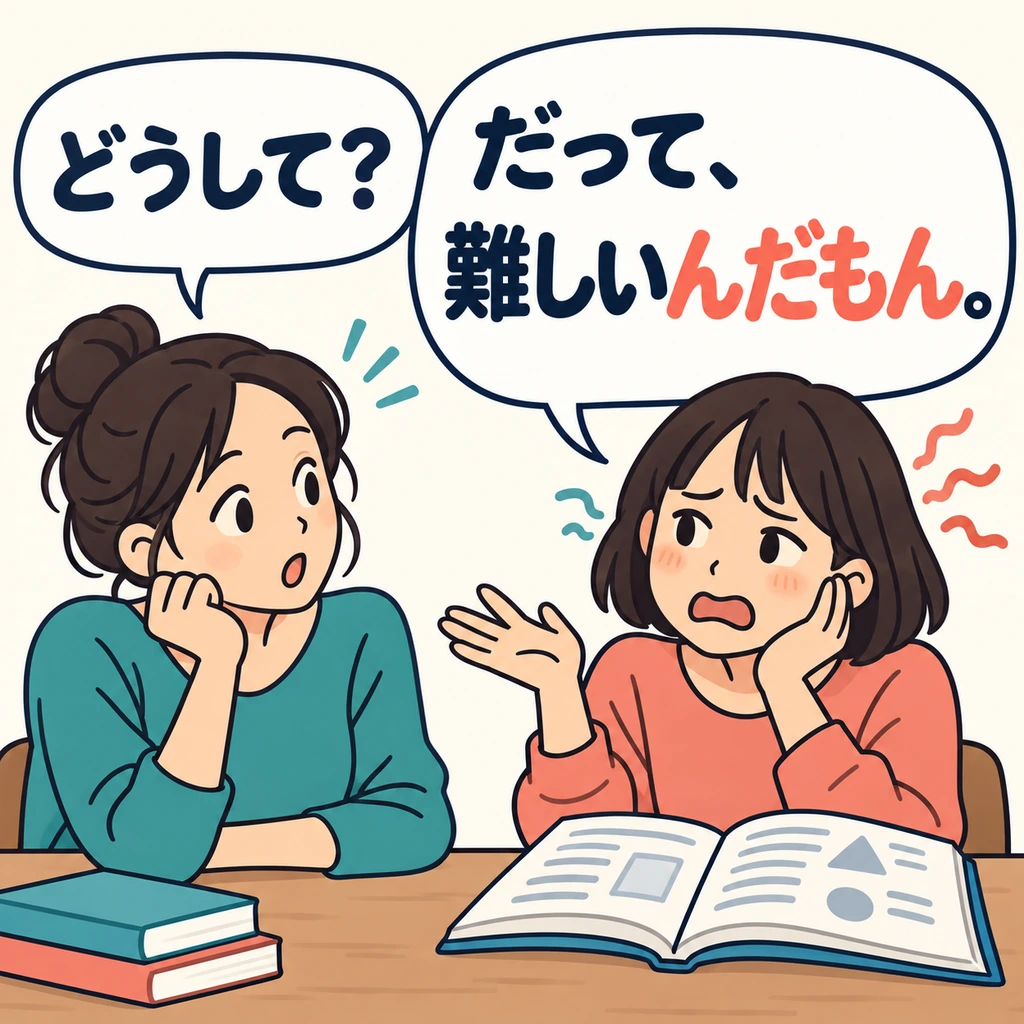
Look at her expression and sentence ending: is she calmly explaining, or hoping her friend understands her frustration?
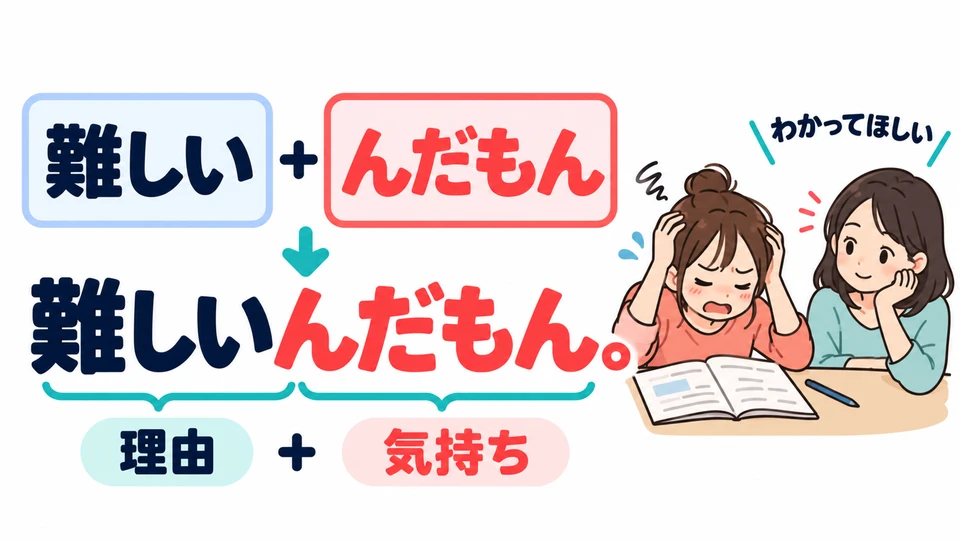
In casual speech, 「もん/んだもん」 gives a reason with an emotional wish for the listener to understand.
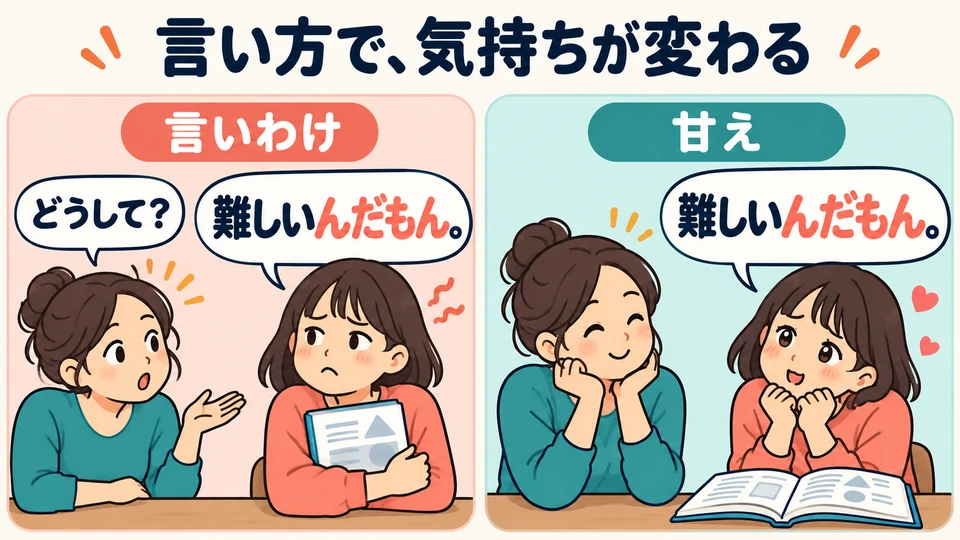
When asked why, you can use it to defend yourself; with a softer tone, it can also sound like an affectionate plea.
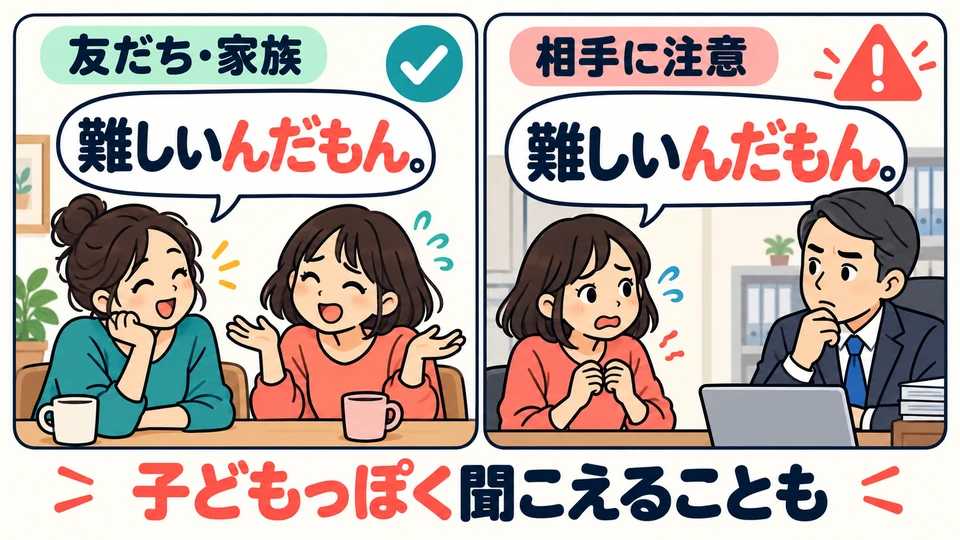
It is common among close friends and family. It may sound childish, so consider who you are speaking to.
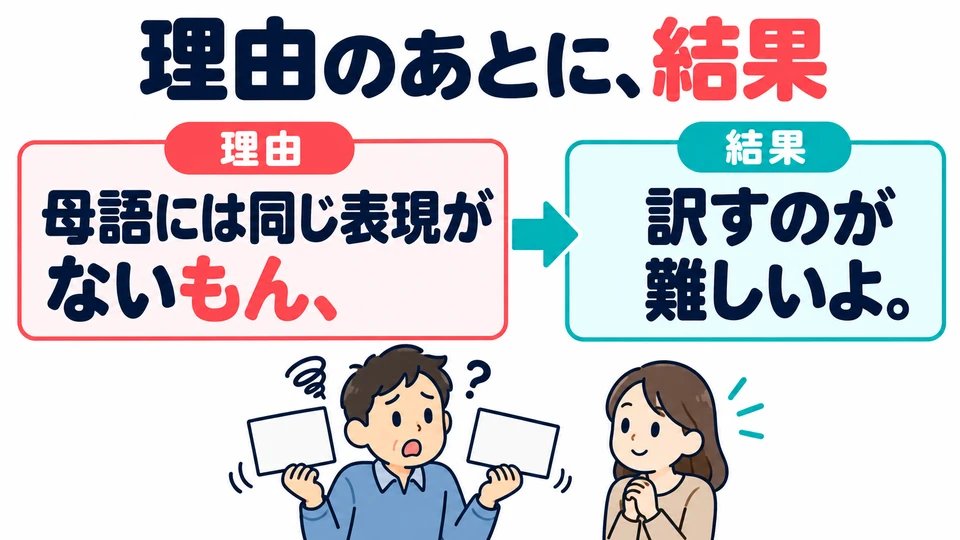
The first example gives the reason with 「ないもん」, then says translation is difficult. A result can follow the reason.
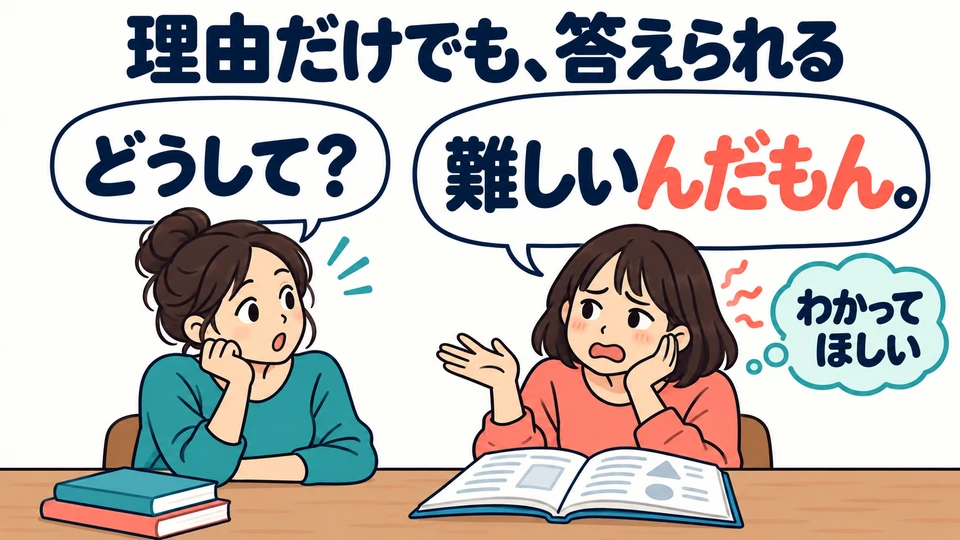
The second example answers why with just 「難しいんだもん」. The wish for the listener’s understanding comes through more clearly.
Example sentences
- 母語bogoにniはwa同じonaji表現hyougenがgaないnaiもん、mon、訳すyakusuのnoがga
In a conversation

Check yourself
Level 1 · Recognise
Which sentence is correct?
Level 1 · Recognise
Listen and choose the meaning
Level 2 · Build
Put the words in order
There isn't an equivalent expression in my native language, so it's hard to translate.
Level 3 · Use
What goes in the blank?
母語には同じ表現がない____、訳すのが難しいよ。
There isn't an equivalent expression in my native language, so it's hard to translate.
More grammar in this theme
- 〜もん・〜んだもんemotional reason or plea