
JPEDLAB iconJPEDLAB
Save history

Create an account and play

Explore first, then save your progress whenever you are ready. No email address is required.

Start free
Read as articleCards
1/9

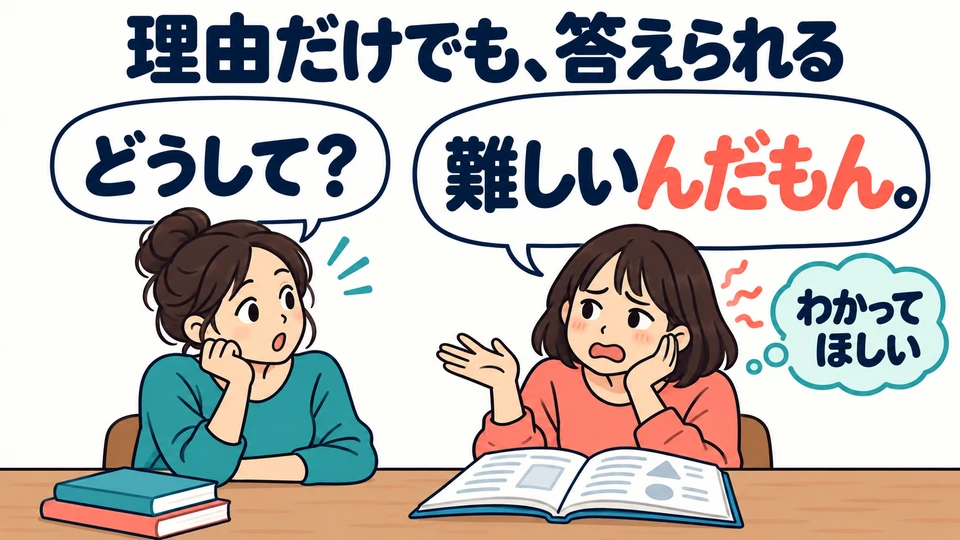
Look at her expression and sentence ending: is she calmly explaining, or hoping her friend understands her frustration?

››

Lesson notes · ≈ JLPT N3 · Intermediate 3

〜もん・〜んだもん~mon / ~n da mon

emotional reason or plea

Use 「〜もん/〜んだもん」 casually to give a reason while hoping someone close understands your feelings.

How it works
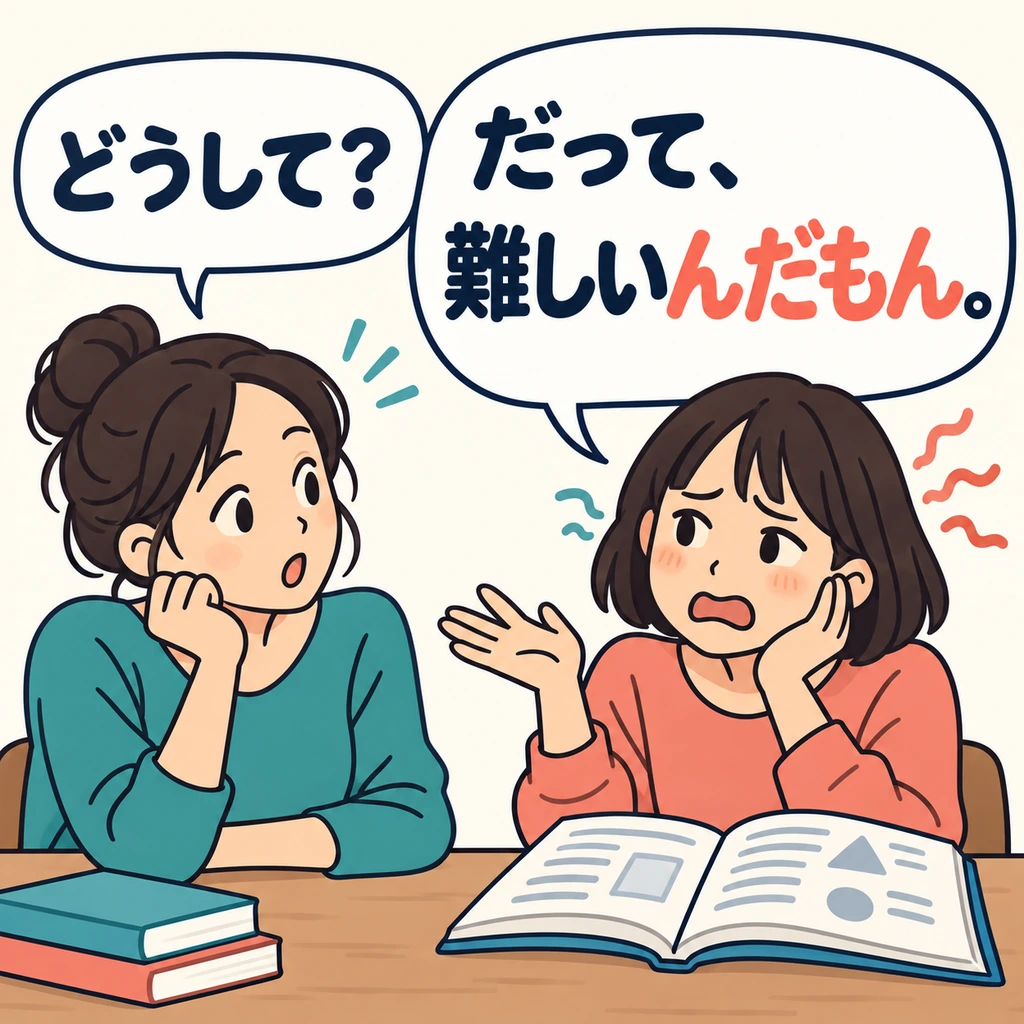
  1. Look at her expression and sentence ending: is she calmly explaining, or hoping her friend understands her frustration?
    Look at her expression and sentence ending: is she calmly explaining, or hoping her friend understands her frustration?

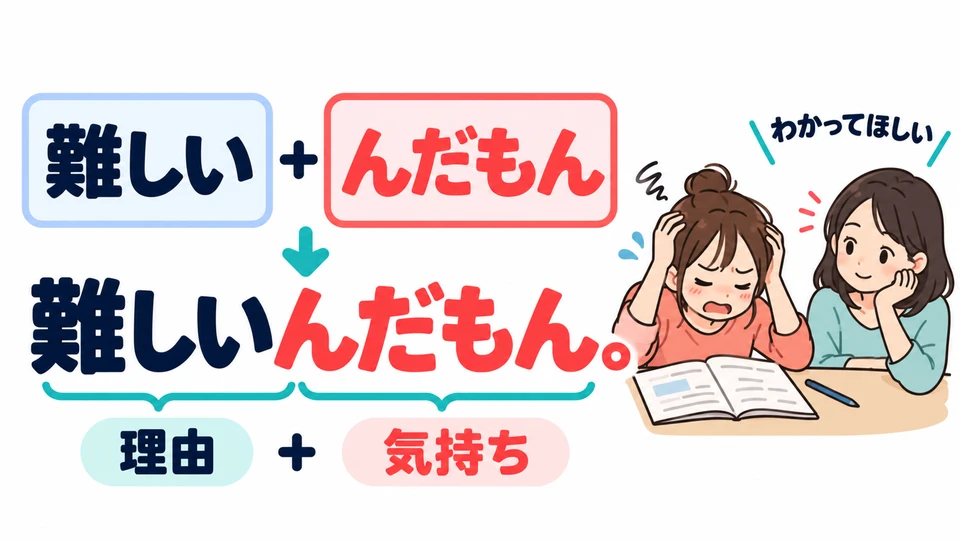
  2. In casual speech, 「もん/んだもん」 gives a reason with an emotional wish for the listener to understand.
    In casual speech, 「もん/んだもん」 gives a reason with an emotional wish for the listener to understand.

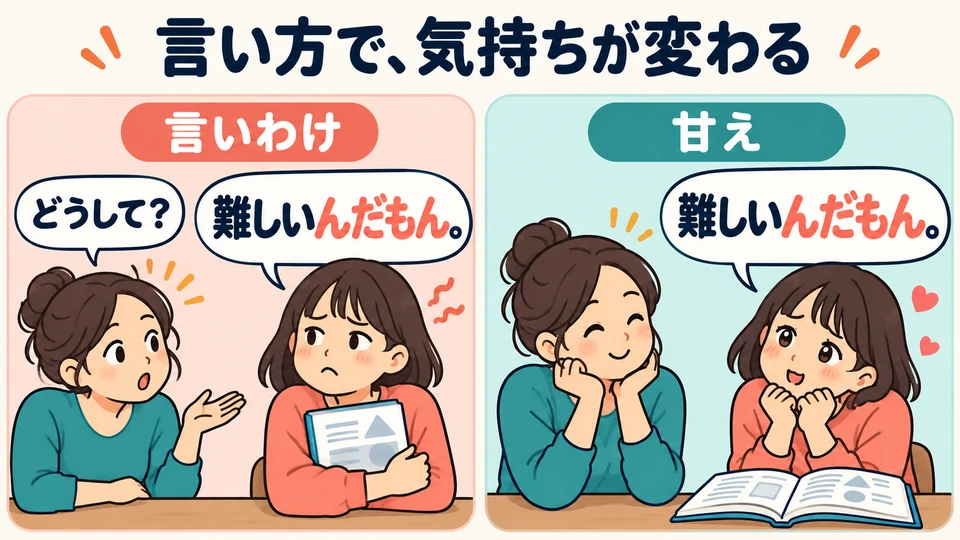
  3. When asked why, you can use it to defend yourself; with a softer tone, it can also sound like an affectionate plea.
    When asked why, you can use it to defend yourself; with a softer tone, it can also sound like an affectionate plea.

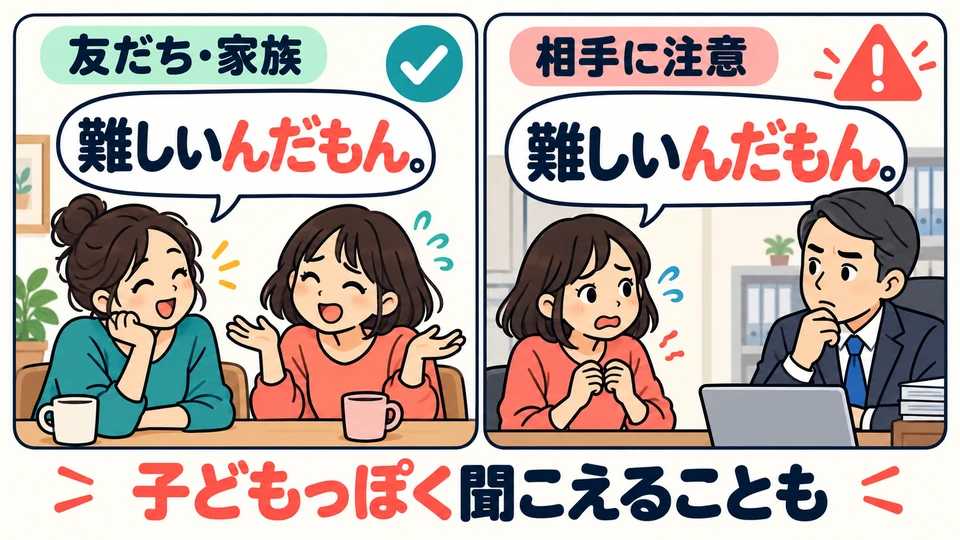
  4. It is common among close friends and family. It may sound childish, so consider who you are speaking to.
    It is common among close friends and family. It may sound childish, so consider who you are speaking to.

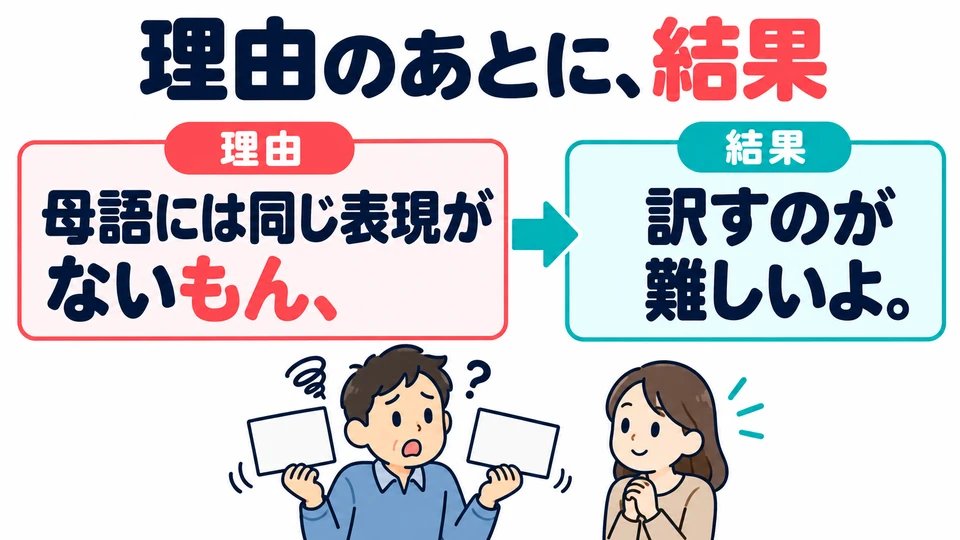
  5. The first example gives the reason with 「ないもん」, then says translation is difficult. A result can follow the reason.

    The first example gives the reason with 「ないもん」, then says translation is difficult. A result can follow the reason.

  • The second example answers why with just 「難しいんだもん」. The wish for the listener’s understanding comes through more clearly.

    The second example answers why with just 「難しいんだもん」. The wish for the listener’s understanding comes through more clearly.

  • Example sentences

    • 母語ぼごbogoにniはわwa同じおなじonaji表現ひょうげんhyougenがgaないnaiもん、mon、訳すやくすyakusuのnoがga難しいむずかしいmuzukashiiよ。yo。

      It's hard to translate because there's no equivalent expression in my native language.

    • 難しいむずかしいmuzukashiiんnだdaもんmon

      Because it's difficult.

    In a conversation

    • A
      「どうどうして擬音ぎおん語ごの練習れんしゅうをそんなに嫌がるそんなにいやがるの?」の

      A: "Why do you hate practicing onomatopoeia so much?"

    • B
      「だだって使い分けつかいわけが難しいむずかしいんだもん、いらいらしてくるんだよ。」よ。

      B: "Because it's hard to use them properly, and it gets frustrating."

    • A
      「ででも、感覚かんかくで覚えおぼえていくうちにすっきりするよ。」よ。

      A: "But as you learn them by feel, it will become much clearer."

    Check yourself

    1. Level 1 · Recognise

      Which sentence is correct?

    2. Level 1 · Recognise

      Listen and choose the meaning

    3. Level 2 · Build

      Put the words in order

      There isn't an equivalent expression in my native language, so it's hard to translate.

    4. Level 3 · Use

      What goes in the blank?

      母語には同じ表現がない____、訳すのが難しいよ。

      There isn't an equivalent expression in my native language, so it's hard to translate.

    More grammar in this theme

    • 〜がたいsubjectively hard to do
    • 〜のようにlike; in the manner of
    • 〜とともにalong with; as … changes
    • 〜をもとに(して)・〜をもとにしたbased on; using as a basis
    • 〜でしょう?seeking agreement
    • 〜っけrecalling and checking
    • 〜というわけだthat explains why
    • 〜っこないabsolutely impossible
    • 〜もん・〜んだもんemotional reason or plea
    • 〜ほど・〜くらい・〜ぐらいdegree shown by an example
    • 〜ところだったsomething almost happened
    • 〜てたまらないoverwhelmingly intense feeling
    • 〜というわけではないthat does not mean
    • 〜くらい・〜ぐらいdegree shown by a situation
    Previous〜っこないNext〜ほど・〜くらい・〜ぐらい

    Keep practising

    Test your Japanese vocabulary12 adaptive questions, freeCheck your pronunciationRead aloud and get a scorePractise verb forms10-question conjugation quizSee the whole courseGrammar, vocabulary and quizzes by theme
    See the whole course
    Intermediate 3
    Richness and Beauty of Japanese Expression